Heat Pump for a Terraced House: Is It Feasible?
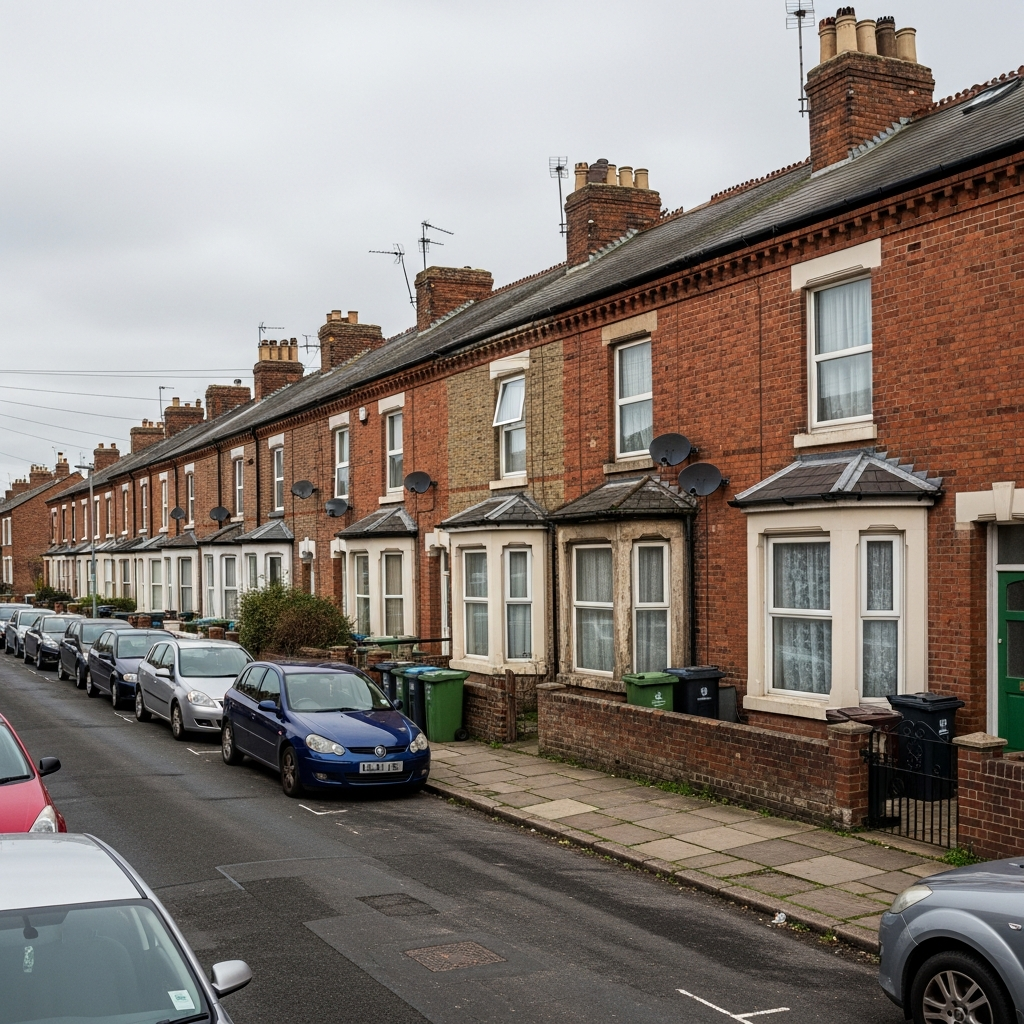
Terraced houses make up a huge proportion of the UK housing stock — around 26% of all homes. From Georgian townhouses to Victorian workers' cottages to 1930s bay-fronted rows, the terrace is quintessentially British. But can these narrow, often tightly packed homes work with a heat pump? The short answer is yes — thousands already do. The longer answer involves some careful thinking about space, noise, and system design.
This guide covers everything terraced homeowners need to know, from where to put the outdoor unit to how to keep neighbours happy, and why the compact footprint of a terrace can actually be an advantage when it comes to heating efficiency.
The Terraced House Advantage: Lower Heat Loss
Before we get to the challenges, let us start with the good news. Terraced houses — particularly mid-terrace properties — have significantly less heat loss than detached or even semi-detached homes. With shared party walls on both sides, a mid-terrace house only loses heat through its front wall, back wall, roof, and floor. Those party walls, shared with heated neighbouring properties, are essentially free insulation.
This means a mid-terrace house typically needs a smaller heat pump than a detached house of the same size. A three-bedroom mid-terrace might have a peak heat demand of just 5 to 7 kW, compared with 8 to 12 kW for an equivalent detached property. That translates to a smaller, cheaper heat pump and lower running costs.
End-of-terrace houses fall somewhere in between — they have one shared wall and three exposed walls, so their heat loss is higher than a mid-terrace but lower than a semi-detached.
The Space Challenge
The biggest practical challenge for terraced house heat pump installations is where to put the outdoor unit. An air source heat pump needs an outdoor space with decent airflow, and terraced houses often have limited options.
Rear gardens and yards
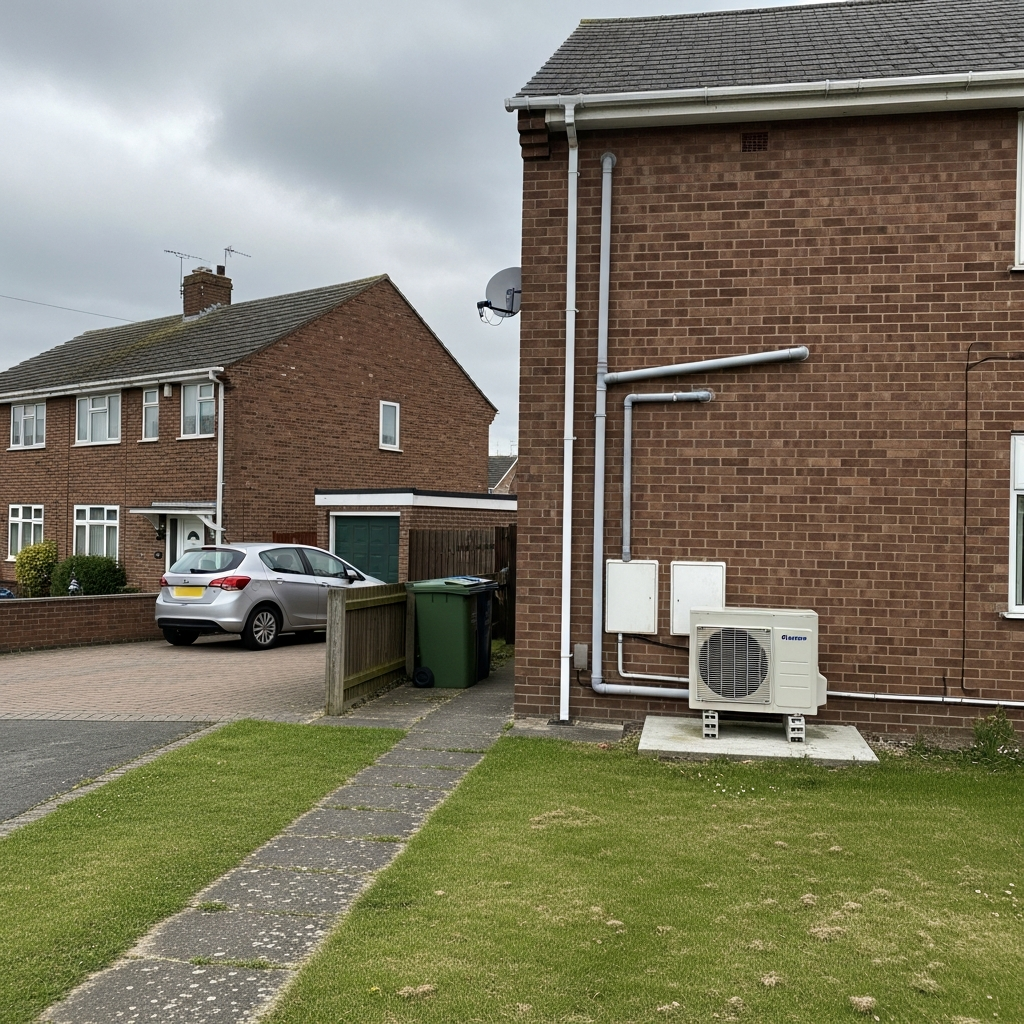
Most terraced houses have a rear garden or paved yard, and this is the most common location for the outdoor unit. Even a small yard can accommodate a heat pump — modern compact units are no bigger than a large suitcase and can sit on a concrete plinth or wall brackets. The key requirement is adequate airflow: the unit needs clear space in front of the fan outlet (typically at least one metre) and should not be boxed into a tight corner where air cannot circulate.
Front gardens
Some terraced houses have small front gardens or forecourts. Placing a heat pump at the front is possible but less common, as it is more visible and the noise may be closer to bedrooms (both yours and your neighbours'). Some local authorities have specific guidance about front-of-property installations — check with your planning department if this is your only option.
Side passages (end-of-terrace only)
If you live in an end-of-terrace, you may have a side passage or alley. This can be a good location for a heat pump, provided there is enough width (at least 600mm is needed for the unit plus clearance) and the passage is not completely enclosed, which would restrict airflow.
What if space is extremely tight?
For properties with very limited outdoor space, there are still options. Wall-mounted air source units can be fixed to an external wall above head height, keeping the ground clear. Some manufacturers now produce ultra-compact units specifically designed for tight urban sites. And in rare cases where an air source unit simply cannot be accommodated, a shared ground source heat pump system serving multiple terraced properties may be an option — several social housing schemes in the UK have successfully used this approach.
Noise Considerations for Terraced Houses
Noise is the second major consideration for terraced house installations. With neighbours in close proximity — sometimes less than a metre away on the other side of a fence — the sound from your heat pump matters more than it would for a detached house.
How loud are modern heat pumps?
A modern air source heat pump typically produces 40 to 50 decibels at one metre from the unit. For context, that is about the same as a quiet conversation or a household fridge. At three metres — roughly the distance to a neighbour's fence in a typical terraced setup — the sound drops to around 30 to 40 decibels, which is barely noticeable over normal background noise.
MCS planning standards
Under permitted development rights, an air source heat pump must comply with MCS 020 planning standards, which require that the noise level at the nearest neighbour's window does not exceed certain limits. Your installer must carry out a noise assessment as part of the design process. This is not just good practice — it is a legal requirement for installations claiming the BUS grant.
Practical steps to minimise noise impact
- Position the unit away from neighbours' bedroom windows: Even if this means a slightly longer pipe run, it is worth it for good neighbourly relations.
- Use anti-vibration feet or mounts: These prevent structure-borne noise from transferring through the ground or wall.
- Choose a quiet model: Some heat pumps are significantly quieter than others. Ask your installer about models with low noise ratings, particularly at full load.
- Avoid recirculated air: Position the unit so that its fan outlet does not face a wall or fence that could reflect sound back.
- Consider a low-noise operating mode: Many modern heat pumps have a night mode that reduces fan speed (and therefore noise) during sleeping hours.
Sizing a Heat Pump for a Terraced House
Terraced houses benefit from lower heat demand, which typically means a smaller and more affordable system. Here are rough sizing guidelines:
- 2-bedroom mid-terrace: 4 to 6 kW
- 3-bedroom mid-terrace: 5 to 7 kW
- 3-bedroom end-of-terrace: 6 to 9 kW
- 4-bedroom mid-terrace (Victorian): 6 to 9 kW
- 4-bedroom end-of-terrace: 8 to 11 kW
Actual figures depend heavily on insulation, window quality, and ceiling heights. A well-insulated modern terrace could need as little as 4 kW, while a draughty Victorian mid-terrace with single glazing and no wall insulation might need 10 kW or more. A proper heat loss calculation is essential.
Insulation Considerations for Terraced Houses
The insulation approach depends largely on when your terrace was built.
Victorian and Edwardian terraces (pre-1919)
These typically have solid brick walls with no cavity. Internal wall insulation (IWI) or external wall insulation (EWI) are the options, but both have significant implications. IWI reduces room sizes — a real concern in homes that are already compact. EWI changes the external appearance, which may require planning permission. Many Victorian terrace owners accept that solid wall insulation is impractical and instead focus on other improvements: loft insulation, draught-proofing, underfloor insulation (for suspended timber floors), and high-performance glazing.
Even without wall insulation, a Victorian terrace can work well with a heat pump if other insulation measures are thorough. The shared party walls help enormously — it is only the front and back walls that are uninsulated, and modern secondary glazing or well-fitted shutters can reduce window heat loss significantly.
Inter-war and post-war terraces (1919-1970s)
These usually have cavity walls that can be filled relatively cheaply. Cavity wall insulation, combined with loft insulation and double glazing, typically brings these homes to a good standard for heat pump installation. See our 1970s house guide for detailed insulation advice.
Modern terraces (1980s onwards)
Houses built after the 1980s generally have reasonable insulation already. Those built after 2006 have good insulation by regulation. These homes are often heat pump-ready with minimal or no insulation upgrades needed.
Indoor Space and Hot Water Cylinders
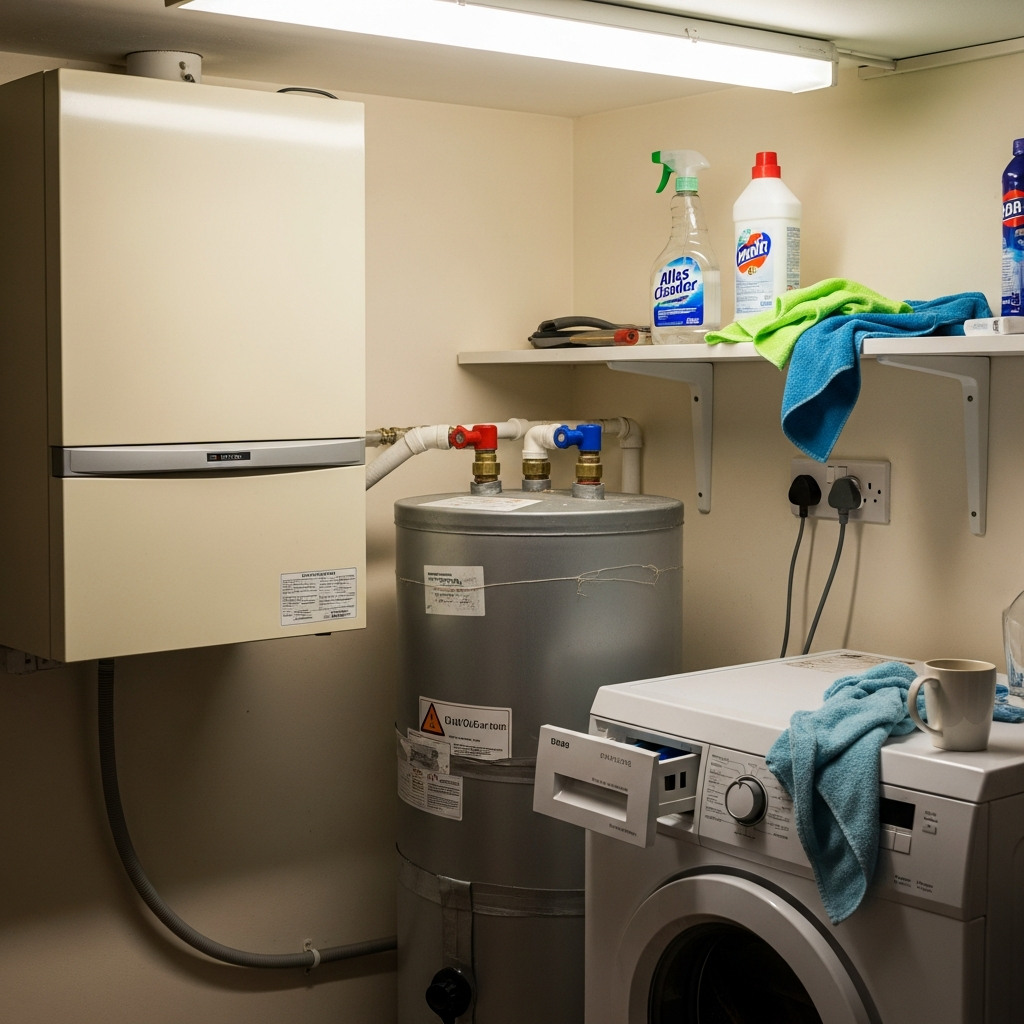
Terraced houses are often compact, and finding room for a hot water cylinder can be a challenge — particularly if your home currently has a combi boiler and no cylinder.
A heat pump needs a hot water cylinder (typically 150 to 210 litres) to store hot water because it heats water more slowly than a gas boiler. In a terraced house, this usually goes in an airing cupboard, under the stairs, or in a utility area. If none of these spaces is available, slimline cylinders are made specifically for tight spaces — some are only 475mm in diameter.
The internal heat pump unit (the controller and hydraulic components) is typically wall-mounted and about the size of a small boiler, so it takes up roughly the same space as your existing boiler.
Costs for a Terraced House Heat Pump
The good news is that terraced houses are usually at the more affordable end of the heat pump cost spectrum, because the systems are smaller.
- Air source heat pump (mid-terrace, 2-3 bed): £8,000 to £12,000 installed
- Air source heat pump (end-terrace, 3-4 bed): £10,000 to £14,000 installed
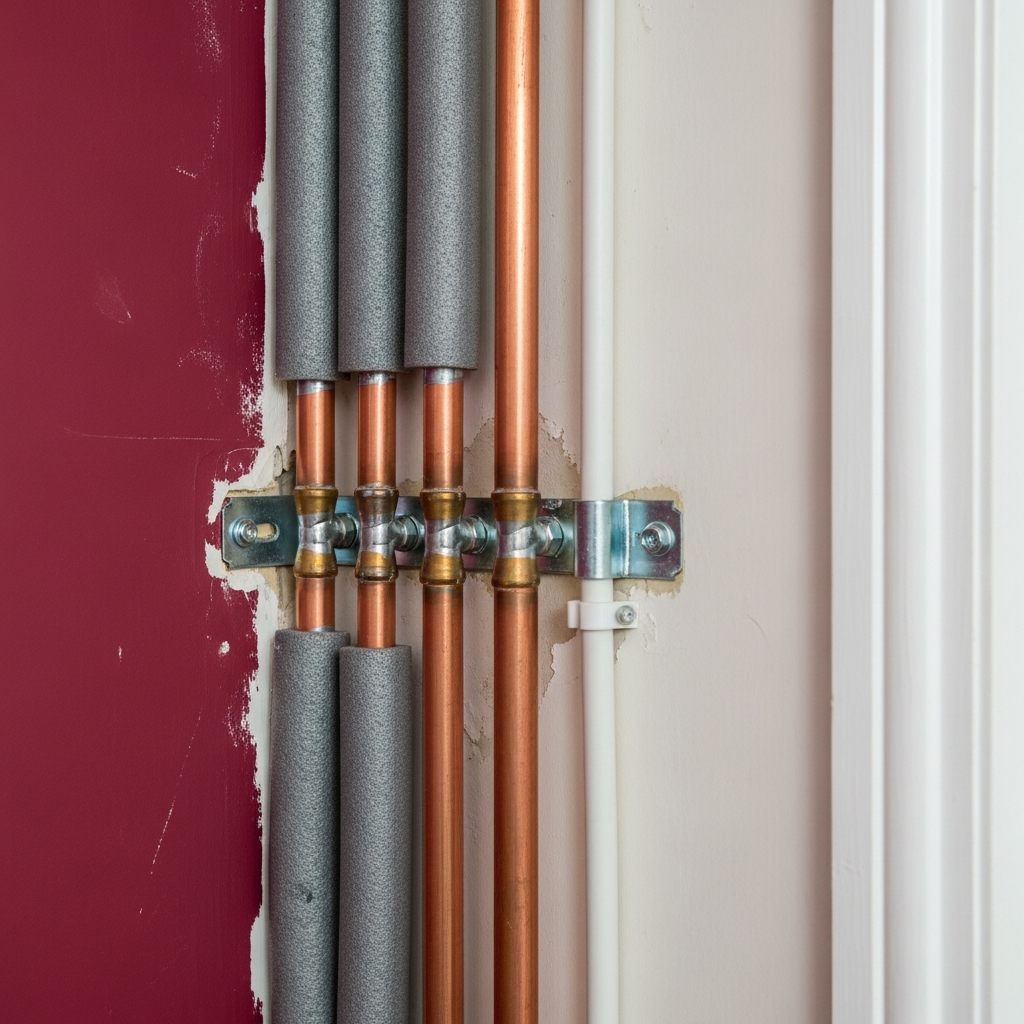
- Radiator upgrades: £400 to £1,200
- Hot water cylinder: Included or £500 to £1,000 if separate
- BUS grant deduction: -£7,500
After the BUS grant, most terraced homeowners pay £2,000 to £7,000 for a complete installation. This makes terraced houses some of the most affordable properties to transition to a heat pump. For full details, see our cost guide.
Real-World Examples
Thousands of UK terraced houses already have heat pumps, from large-scale social housing retrofits to individual homeowner installations. The Electrification of Heat demonstration project included hundreds of terraced properties and found that they performed well — often better than larger homes because the lower heat demand allows the heat pump to run more steadily and efficiently.
Several local authorities, including Nottingham, Plymouth, and various Welsh councils, have completed terraced house heat pump programmes involving hundreds of homes. These projects have demonstrated that terraced installations are practical, affordable, and popular with residents once they experience the steady, even warmth that a heat pump provides.
Frequently Asked Questions
Can I install a heat pump in a mid-terrace house?
Yes. Mid-terrace houses are actually easier to heat than detached properties because shared party walls reduce heat loss. The main consideration is finding a suitable outdoor space for the unit — a rear garden, yard, or even a wall-mounted position. Thousands of mid-terrace homes across the UK already have heat pumps.
Will my neighbours hear the heat pump?
Modern heat pumps are very quiet — around 40 to 50 decibels at one metre, dropping to 30 to 40 decibels at three metres. Your installer must conduct a noise assessment to ensure compliance with MCS standards. In practice, most neighbours never notice the unit. Choose a quiet model and position it thoughtfully, and noise should not be an issue.
Do I need planning permission for a heat pump on a terraced house?
Usually no. Air source heat pumps fall under permitted development rights for most terraced houses. Exceptions include listed buildings, homes in conservation areas, and properties that already have one heat pump installed. If your home is listed or in a conservation area, you will need to apply — but permission is generally granted for sensitively positioned installations.
What if I do not have a garden?
Even a small paved yard is usually sufficient. Wall-mounted heat pump units are an option for very tight spaces. If you truly have no outdoor space at all (for example, a terraced flat above a shop), options are more limited but may include a communal system or a shared ground source arrangement. An experienced installer can advise on your specific situation.
Is a ground source heat pump possible in a terraced house?
Individual ground source heat pumps are rarely practical for terraced houses because the gardens are too small for ground loops and access for borehole drilling is often restricted. However, communal ground source schemes — where multiple terraced properties share a single ground array — are increasingly common and very effective.
How long does installation take for a terraced house?
A typical terraced house installation takes two to three days. If significant radiator upgrades or pipework changes are needed, it may extend to four days. The process is the same as for any property — read our complete installation guide for a step-by-step walkthrough.