Heat Pump for a Victorian House
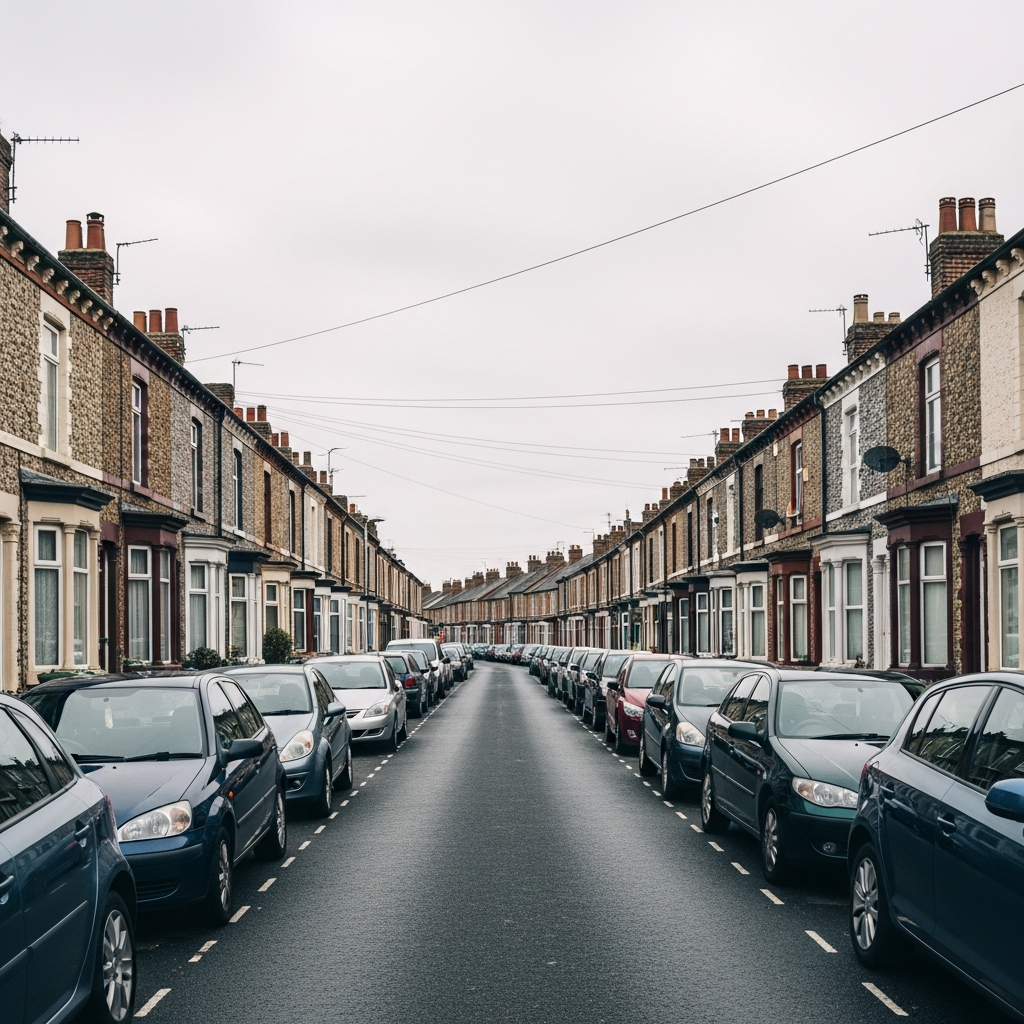
Victorian houses are beautiful, characterful, and often the homes people love most. They are also among the most challenging properties to heat efficiently — solid brick walls, tall ceilings, original sash windows, and more draughts than you can count. So can a Victorian house have a heat pump? Absolutely. Thousands already do, and they work well when designed and installed correctly.
This guide is specifically for owners of Victorian properties (built roughly 1837 to 1901) who are considering the switch from gas or oil to a heat pump. We cover the specific challenges these homes present, the solutions available, and the realistic costs and performance you can expect.
The Victorian House Challenge
Victorian homes were built to last — many are now well over 120 years old and still structurally sound. But they were built in an era when coal was cheap and energy efficiency was not a consideration. Understanding the specific heat loss characteristics of these homes is essential for a successful heat pump installation.
Solid brick walls
The defining feature of Victorian construction is solid brick walls — typically 225mm (one brick) or 340mm (one and a half bricks) thick. Unlike cavity walls found in later homes, there is no gap to inject insulation into. Solid walls have a U-value of around 1.6 to 2.1 W/m2K — roughly three times worse than an insulated cavity wall.
For a three-bedroom Victorian semi, solid walls can account for 35 to 45 per cent of total heat loss — by far the biggest single factor. This is the challenge that makes Victorian homes need larger heat pumps than equivalent modern properties.
High ceilings
Victorian rooms typically have ceiling heights of 2.7 to 3.2 metres, compared to the standard 2.4 metres in modern homes. Taller rooms contain more air volume to heat, and the increased wall height means more surface area for heat to escape through. A room that is 0.6 metres taller contains roughly 25 per cent more air and 20 per cent more wall area.
Original sash windows
Many Victorian homes still have their original timber sash windows — single-glazed, draughty, and often in varying states of repair. While these are beautiful and contribute to the property's character, they are among the worst performers for heat retention, with U-values of 4.8 to 5.8 W/m2K.
Draughts everywhere
Victorian homes are notoriously draughty. Gaps around sash windows, between floorboards, around door frames, up chimneys, and through countless small openings in the building fabric allow cold air to pour in. Uncontrolled ventilation can account for 25 to 35 per cent of heat loss in an unimproved Victorian house.
Suspended timber floors
Ground floors in Victorian homes are almost always suspended timber — floorboards on joists with a ventilated void beneath. Without insulation, these contribute 10 to 15 per cent of total heat loss. See our guide on floor insulation and heat pump performance.
Solution 1: High-Temperature Heat Pump
For Victorian homes where significant insulation upgrades are not practical — perhaps due to listed status, conservation area restrictions, or budget constraints — a high-temperature heat pump is often the best approach.
How high-temperature units work
Standard heat pumps deliver water at 35 to 45 degrees Celsius, achieving their highest efficiency. High-temperature models can deliver water at 60 to 75 degrees — similar to a gas boiler — using a different refrigerant cycle. This higher temperature compensates for the greater heat losses of a Victorian home.
Performance and efficiency
A high-temperature heat pump in a Victorian house typically achieves a COP of 2.2 to 2.8 — lower than the 3.0 to 4.0 a standard unit achieves in a well-insulated home, but still two to three times more efficient than a gas boiler. Running costs are generally comparable to or slightly lower than gas, while carbon emissions are dramatically reduced.
Advantages for Victorian homes
- Existing radiators can usually be retained without upgrading — they are designed for 60 to 70 degree water
- No insulation work required (though any improvements still help)
- No loss of room size from internal wall insulation
- Original features and character fully preserved
- Faster and cheaper installation than a fabric-first approach
Available models
Several manufacturers now offer high-temperature air source heat pumps suitable for UK homes, including models from Daikin, Vaillant, Samsung, and Mitsubishi. Your MCS-certified installer can recommend the most appropriate unit based on your home's specific requirements.
Solution 2: Insulation + Standard Heat Pump
If budget allows and the property is not listed, insulating a Victorian house before installing a standard heat pump delivers the best long-term performance and lowest running costs. This "fabric first" approach is more expensive upfront but pays dividends for decades.
Internal wall insulation
Since there is no cavity to fill, insulation must go on the inside or outside of the walls. Internal wall insulation (IWI) is most common for Victorian homes because it does not alter the external appearance.
- Method: Rigid insulation boards (typically 50 to 100mm PIR) fixed to the internal face of external walls, finished with plasterboard.
- Cost: £5,000 to £10,000 for a typical Victorian semi (external walls only).
- U-value improvement: From 2.0 to approximately 0.3 W/m2K — a dramatic reduction in heat loss.
- Drawbacks: Reduces room sizes by 60 to 110mm per insulated wall. Disrupts decorating. Can affect original coving and skirting boards. Requires careful detailing to avoid damp issues.
External wall insulation
External wall insulation (EWI) wraps the outside of the house in insulation and a new render finish. It is more effective than internal insulation (no thermal bridges at floor and ceiling junctions) but changes the external appearance significantly.
- Cost: £8,000 to £15,000 for a typical Victorian semi.
- Suitability: Not appropriate for listed buildings or properties in conservation areas where the original brickwork must be preserved. Fine for non-listed Victorian homes on standard streets.
- Advantage: No loss of internal room size. Better thermal performance than internal insulation.
Glazing improvements
For non-listed Victorian homes, replacing single-glazed sash windows with double-glazed timber sash units preserves the appearance while dramatically improving performance. Costs are higher than standard casement windows — typically £800 to £1,500 per window for bespoke timber sash replacements.
For listed buildings, secondary glazing (an additional pane fitted internally) is usually acceptable. It reduces heat loss by 50 to 65 per cent and virtually eliminates draughts around the window.
Draught-proofing
Draught-proofing a Victorian house is one of the most cost-effective improvements available. Professional sash window draught-proofing costs £150 to £300 per window and makes a remarkable difference to both comfort and energy efficiency. Combined with sealing floorboards, blocking unused chimneys, and fitting door seals, a complete draught-proofing job can reduce heat loss by 15 to 25 per cent.
Solution 3: The Hybrid Approach
Many Victorian homeowners take a pragmatic middle path — doing affordable insulation improvements while choosing a heat pump sized to handle the remaining heat losses.
A practical improvement package
- Draught-proofing throughout: £400 to £700. Immediate comfort improvement and 15 to 25 per cent reduction in ventilation heat loss.
- Loft insulation top-up: £300 to £600. If the loft is accessible and not converted.
- Floor insulation: £800 to £2,000 for suspended timber ground floors.
- Secondary glazing: £100 to £300 per window. Preserves original windows while cutting heat loss.
- Chimney solutions: £20 to £80 per chimney. Balloons, sheep, or caps for unused fireplaces.
Total for the improvement package: £2,000 to £5,000.
This package typically reduces total heat demand by 20 to 35 per cent. Combined with a mid-to-high-temperature heat pump (capable of 55 to 65 degrees), this approach balances performance, cost, and preservation of the building's character.
Sizing a Heat Pump for a Victorian House
Victorian homes typically need larger heat pumps than equivalent modern properties. Here are realistic sizing ranges:
- 2-bedroom Victorian terrace (no improvements): 8 to 10 kW
- 2-bedroom Victorian terrace (with improvements): 6 to 8 kW
- 3-bedroom Victorian semi (no improvements): 10 to 14 kW
- 3-bedroom Victorian semi (with improvements): 7 to 10 kW
- 4-bedroom Victorian detached (no improvements): 14 to 18 kW
- 4-bedroom Victorian detached (with improvements): 10 to 14 kW
The "with improvements" figures assume the practical improvement package described above. Full internal or external wall insulation would reduce these further.
Running Costs: Realistic Expectations
Running costs for a heat pump in a Victorian house depend heavily on the insulation level and heat pump type:
- Unimproved Victorian home + high-temp HP: £1,000 to £1,500 per year (COP 2.2 to 2.8)
- Partly improved Victorian home + standard HP: £700 to £1,100 per year (COP 2.8 to 3.5)
- Well-insulated Victorian home + standard HP: £500 to £800 per year (COP 3.0 to 3.8)
Compare this to gas boiler costs of £800 to £1,200 per year for the same homes. The heat pump may not always be cheaper to run in an unimproved Victorian house (depending on your electricity tariff), but it will dramatically reduce your carbon footprint and protect you against future gas price rises.
See our heat pump running costs guide and calculator for detailed estimates based on your specific home.
Listed Buildings and Conservation Areas
If your Victorian house is listed (Grade I, II*, or II) or in a conservation area, additional considerations apply:
Listed building consent
Any changes to the external appearance of a listed building require listed building consent from your local planning authority. This includes installing an air source heat pump if the outdoor unit is visible. Interior changes — like internal wall insulation — also need consent if they affect the building's character.
Conservation area rules
In conservation areas, permitted development rights for heat pumps may be restricted. You may need planning permission for an outdoor unit that is visible from the street. Units positioned in rear gardens or out of public view are usually less problematic.
Solutions for listed Victorian homes
- Ground source heat pump: No visible outdoor equipment. A vertical borehole drilled in the garden is the most discreet option.
- Rear-positioned air source: If the unit can be placed where it is not visible from public areas, consent is more likely to be granted.
- Acoustic enclosure: A sympathetically designed enclosure around an air source unit can help it blend with the property.
- Secondary glazing (not replacement): Preserves original windows while improving performance.
- Professional draught-proofing of sash windows: Specialist companies can draught-proof original sash windows without altering their appearance.
Engage with your local conservation officer early in the process. Many are supportive of sympathetic renewable energy installations, especially when the homeowner demonstrates they have considered the building's character.
Radiators in Victorian Homes
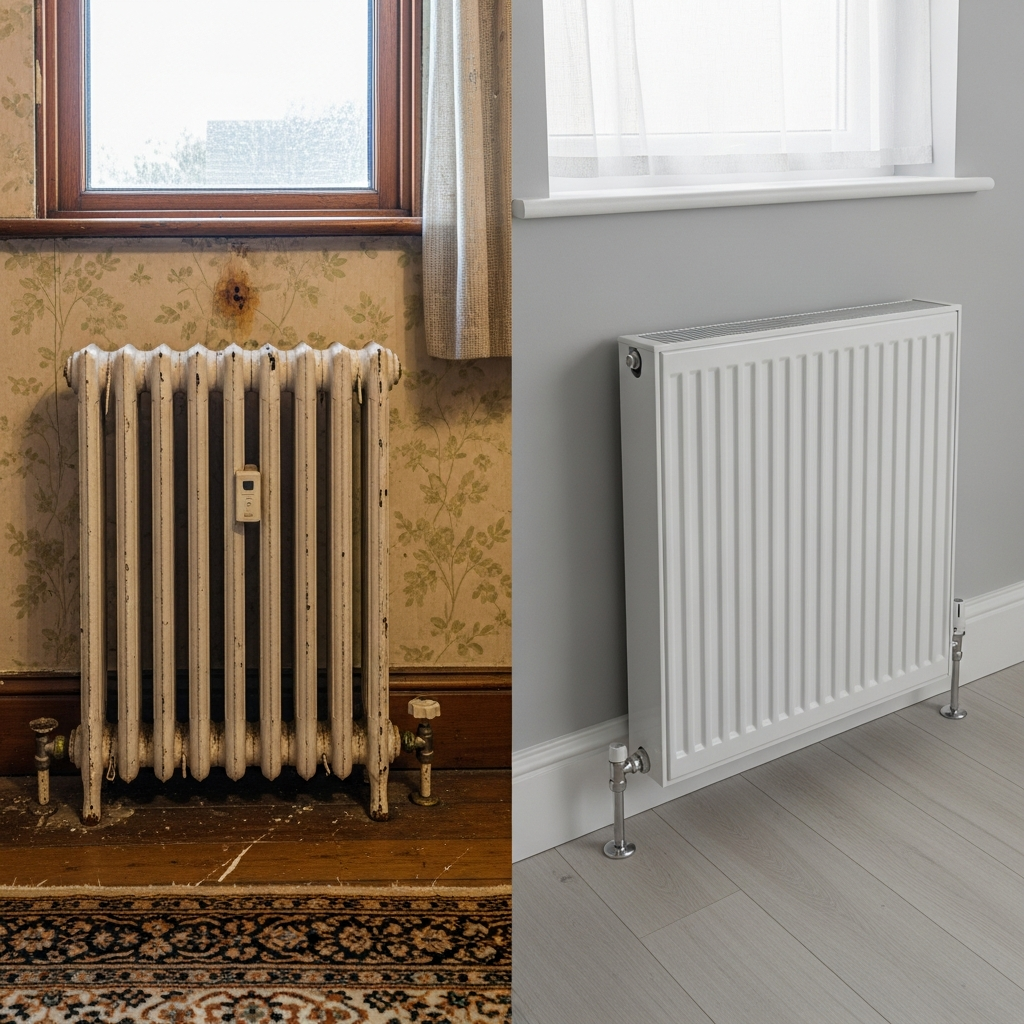
Victorian homes often have large, older radiators — sometimes cast iron originals. This can actually be an advantage for heat pump installations, because larger radiators are more effective at delivering heat at lower temperatures.
If you are using a high-temperature heat pump (60 to 65 degrees), your existing radiators will almost certainly be adequate. If you opt for a standard heat pump at lower flow temperatures (40 to 50 degrees), some radiators may need upgrading — particularly in the coldest rooms.
Cast iron radiators, if they are in good condition, can work well with heat pumps because they have a large surface area. Your installer will calculate whether each radiator is adequate during the heat loss survey. See our guide on whether you need new radiators for a heat pump.
Real-World Examples
Case study: 3-bedroom Victorian semi in Manchester
A three-bedroom Victorian semi (1895) with solid walls, original sash windows, and no previous insulation upgrades. The owners chose a practical improvement package (draught-proofing, loft insulation, secondary glazing, floor insulation) costing £3,500, followed by a 10 kW air source heat pump. Total cost after BUS grant: approximately £8,500 including improvements. Annual running cost: approximately £850. Previous gas cost: £1,050. Comfort dramatically improved.
Case study: 2-bedroom Victorian terrace in Bristol
A two-bedroom mid-terrace (1880) in a conservation area. Listed building constraints meant no external changes. The owners installed secondary glazing, draught-proofed sash windows, and fitted a 7 kW high-temperature heat pump in the rear garden. Total cost after BUS grant: approximately £5,000 including improvements. Annual running cost: approximately £700. Previous gas cost: £800.
Frequently Asked Questions
Can a Victorian house have a heat pump?
Yes. Thousands of Victorian homes across the UK already have heat pumps. The key is choosing the right approach — either improving insulation first, using a high-temperature heat pump, or a combination of both.
Do I need to insulate a Victorian house before installing a heat pump?
It is not essential but strongly recommended. At minimum, draught-proofing, loft insulation, and chimney solutions are affordable and highly effective. Wall insulation makes the biggest difference but is more expensive and may not be appropriate for listed buildings.
What size heat pump does a Victorian house need?
Typically 8 to 14 kW for a three-bedroom Victorian semi, depending on insulation levels. Unimproved homes need larger units; those with good insulation improvements can use smaller, more efficient models.
Will a heat pump keep a Victorian house warm?
Yes, when correctly sized and installed. A properly designed system — whether using a high-temperature pump or a standard pump with insulation improvements — will keep your home consistently and comfortably warm. Many owners report better comfort than with their old gas boiler because the heat pump delivers steady, even warmth rather than bursts of heat.
Is a heat pump cheaper to run than gas in a Victorian house?
It depends on the insulation level. In a well-improved Victorian home with a standard heat pump, running costs are typically 10 to 30 per cent lower than gas. In an unimproved home with a high-temperature pump, costs may be similar to gas — but with much lower carbon emissions and better comfort.
Can I keep my original sash windows with a heat pump?
Yes. Secondary glazing and professional draught-proofing of sash windows are effective solutions that preserve the original windows. A high-temperature heat pump compensates for the remaining heat loss through single glazing. You can enjoy period character and modern heating.