Home Heat Pump Guide

Heat Pump for a 1970s House: What You Need to Know

Houses built in the 1970s occupy an interesting middle ground in the UK housing stock. They are old enough to have some significant thermal shortcomings, but young enough that retrofitting them is usually straightforward. If you own a 1970s home and are thinking about a heat pump, you are in a strong position — provided you address insulation first.

This guide covers everything specific to 1970s housing: the construction methods, the insulation challenges, and the practical steps to make a heat pump work brilliantly in your home. Whether you have a system-built property, a traditional brick-and-block house, or one of the many flat-roofed designs from the era, there is almost certainly a path to efficient low-carbon heating.

Why 1970s Houses Are Good Heat Pump Candidates

The 1970s was a transitional decade for UK construction. Building regulations were tightening after the energy crisis of 1973, and many homes from this period already have some energy-saving features that earlier properties lack. Cavity walls became standard during this decade, double glazing started appearing in new builds towards the end of the era, and loft insulation — even if thin by modern standards — was increasingly common.

These features give 1970s houses a head start over older properties. A Victorian terrace might need solid wall insulation costing £8,000 to £15,000 before a heat pump becomes viable. A 1970s house with unfilled cavity walls can often be insulated for £500 to £1,500 — a fraction of the cost with a dramatic improvement in thermal performance.

The layout of 1970s homes also tends to suit heat pumps well. Open-plan kitchens and living areas were becoming fashionable, rooms are generally a reasonable size, and most properties have decent garden space for an outdoor unit. Compare that with cramped Victorian terraces or post-war flats, and the advantages become clear.

Common Construction Types in 1970s Housing

Not all 1970s houses were built the same way. Understanding your construction type is the first step to planning a successful heat pump installation.

Traditional brick-and-block cavity walls

This is the most common construction method for 1970s homes. An outer skin of brick, a cavity gap of typically 50mm to 75mm, and an inner skin of lightweight concrete block. If the cavity has never been filled, you are losing a significant amount of heat through your walls. Cavity wall insulation is one of the most cost-effective improvements you can make, and it is often available through government grant schemes or ECO funding.

Once filled, a 1970s cavity wall performs reasonably well — not as good as a modern wall with 100mm of insulation, but adequate for a heat pump to work efficiently. A typical three-bedroom 1970s semi with filled cavities might have a peak heat loss of 7 to 9 kW, well within the range of a standard air source heat pump.

System-built and non-traditional construction

The 1970s saw a boom in system-built housing, particularly from local authorities. These include steel-framed, timber-framed, concrete panel, and various proprietary systems like BISF, Wimpey No-Fines, and Reema. If you live in a system-built home, you face some additional considerations.

Some system-built homes have solid concrete walls with no cavity, making insulation more challenging. Others have steel frames that can create thermal bridges — cold spots where heat escapes rapidly. A specialist surveyor who understands non-traditional construction is essential. They can identify the specific system your home uses and recommend the right insulation approach before a heat pump is specified.

The good news is that system-built homes are not excluded from heat pump installations. They simply need more careful assessment. External wall insulation (EWI) can transform the thermal performance of a concrete panel house, and internal wall insulation (IWI) may be appropriate where external changes are impractical or undesirable.

Flat-roofed extensions and garages

Many 1970s houses feature flat-roofed extensions, garages, or entire flat-roofed designs. Flat roofs from this era are notorious for poor insulation — often just a thin layer of fibreboard between you and the elements. They also tend to develop leaks as the felt deteriorates over time.

If your home has a flat roof, consider upgrading it with modern insulation when it next needs replacing. A warm deck flat roof with 100mm to 150mm of rigid insulation board will dramatically reduce heat loss from above. This is especially important if the flat-roofed section contains habitable rooms rather than just a garage.

Insulation First: The Golden Rule

For any 1970s house, the single most important step before installing a heat pump is to improve insulation wherever possible. This is not optional — it is fundamental to getting a system that performs well and costs less to run.

Cavity wall insulation

If your cavities are unfilled, this should be your first action. The process takes a few hours, costs £500 to £1,500 for a typical semi-detached house, and can reduce heat loss through walls by up to 35%. It may even be available free or heavily subsidised through the ECO4 scheme if you meet the eligibility criteria.

Loft insulation

Many 1970s homes have some loft insulation, but rarely enough by modern standards. The current recommendation is 270mm of mineral wool or equivalent. If your loft insulation is less than 100mm deep — common in homes from this era — topping it up is one of the cheapest and most effective improvements available. Materials cost under £300 for a typical loft, and you can do it yourself or have it done professionally for around £500.

Windows and doors

Original 1970s windows are typically single-glazed metal or timber frames. If yours have never been replaced, upgrading to double glazing (or even triple glazing for north-facing windows) will make a noticeable difference to comfort and heat retention. Modern A-rated double glazing costs £4,000 to £8,000 for a whole house and will reduce window heat loss by around 50% compared with single glazing.

Floor insulation

1970s houses often have solid concrete ground floors with no insulation. While insulating a solid floor is disruptive and expensive, it is worth considering if you are already planning major renovation work. Suspended timber floors, found in some 1970s homes, are easier to insulate from below if there is access to the void underneath.

Choosing the Right Heat Pump System

Once your insulation is in order, choosing the right heat pump becomes straightforward. Most 1970s houses are well suited to an air source heat pump, which is the most common and cost-effective option for UK homes.

A typical three-bedroom 1970s semi-detached house with good insulation will need a heat pump of around 7 to 10 kW. This is a standard size that many manufacturers offer, and it will comfortably heat both your rooms and your hot water. Your installer will conduct a detailed heat loss calculation to determine the exact size for your property.

If you have a large garden or live in a rural area, a ground source heat pump is also worth considering. Ground source systems are more efficient than air source — particularly in cold weather — and they are silent in operation. The higher upfront cost (typically £15,000 to £25,000 before the grant) is offset by lower running costs over the system's 25 to 30 year lifespan.

Radiators and underfloor heating

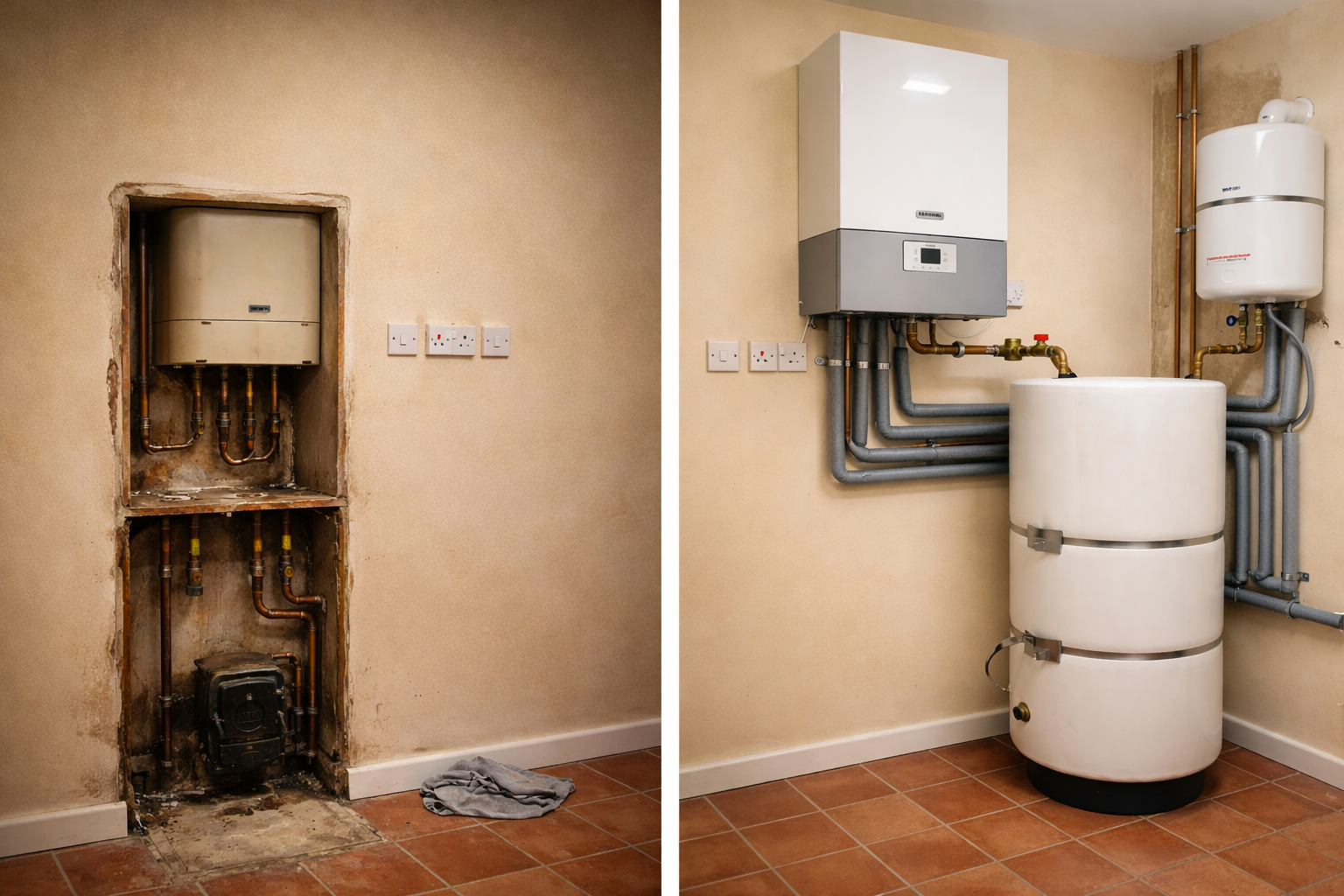
Heat pumps work best at lower flow temperatures than gas boilers — typically 35 to 45 degrees Celsius rather than 60 to 75 degrees. This means some of your existing radiators may need to be upsized or replaced to deliver the same warmth at a lower temperature.

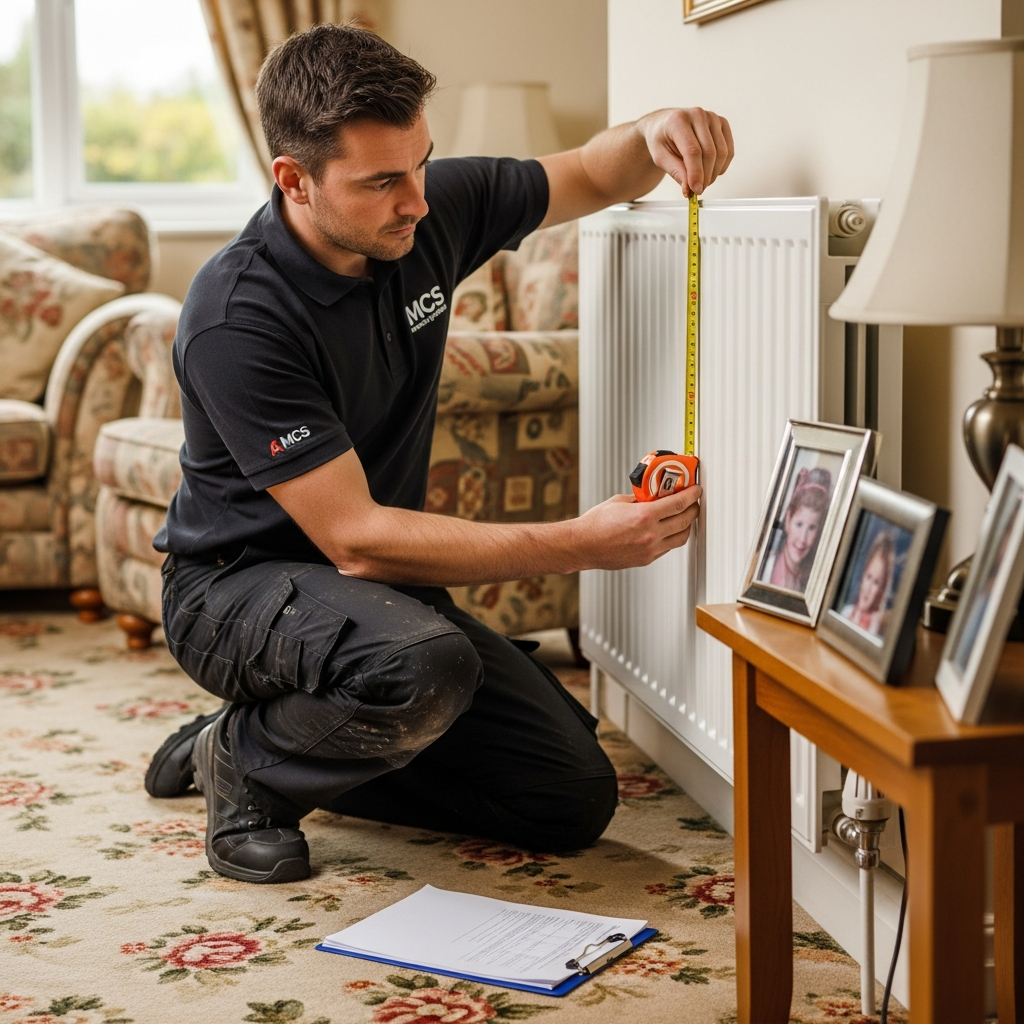
In a 1970s house, the original radiators are often undersized by modern standards anyway, so replacement is frequently worthwhile. Your installer will calculate the required output for each room and identify which radiators need upgrading. Typically, three or four radiators in a three-bedroom house need to be swapped for larger models — not every single one.

If you are doing a full renovation, underfloor heating is the ideal partner for a heat pump. It operates at very low flow temperatures (25 to 35 degrees) which allows the heat pump to run at peak efficiency. A 1970s house with solid concrete floors is actually well suited to underfloor heating, as the screed can be laid directly on insulation boards placed over the existing slab.

Costs and Grants for 1970s House Heat Pump Installation

The total cost of installing a heat pump in a 1970s house depends on how much preparatory work is needed. Here is a rough breakdown for a three-bedroom semi-detached house:

  • Cavity wall insulation: £500 to £1,500 (may be free via ECO4)
  • Loft insulation top-up: £300 to £500
  • Air source heat pump (installed): £10,000 to £14,000
  • Radiator upgrades: £500 to £1,500
  • Hot water cylinder: Included in heat pump quote or £500 to £1,000 separately
  • BUS grant deduction: -£7,500

After the Boiler Upgrade Scheme grant of £7,500, most homeowners with a 1970s house can expect to pay between £4,000 and £10,000 for the complete transition including insulation and radiator upgrades. Check our full cost guide for more detailed breakdowns by property type and region.

Real-World Performance in 1970s Homes

1970s houses consistently perform well with heat pumps once the basic insulation work has been done. The Electrification of Heat demonstration project — which monitored thousands of UK heat pump installations — found that homes from this era typically achieve a seasonal coefficient of performance (SCOP) of 2.8 to 3.2 for air source systems. That means for every 1 kW of electricity consumed, the heat pump delivers 2.8 to 3.2 kW of heat.

At current electricity prices (around 24p per kWh) and gas prices (around 6p per kWh), a heat pump with an SCOP of 3.0 costs roughly the same per unit of heat as a gas boiler running at 90% efficiency. But gas boilers rarely maintain that efficiency as they age, while heat pumps can sustain their performance for decades with minimal maintenance.

The environmental benefits are clear-cut. A heat pump in a 1970s house typically reduces carbon emissions by 60 to 70% compared with a gas boiler, even accounting for the current carbon intensity of the electricity grid. As the grid gets greener — and it is decarbonising rapidly — those savings will only increase.

Frequently Asked Questions

Is a 1970s house too poorly insulated for a heat pump?

Not at all. 1970s houses with cavity walls are among the easiest older properties to insulate to a good standard. Cavity wall insulation, loft insulation, and double glazing bring most 1970s homes to a level where a heat pump will work efficiently and affordably. The key is to do the insulation work before or alongside the heat pump installation.

Do I need to insulate before installing a heat pump?

It is strongly recommended. While a heat pump can technically heat any house, poor insulation means you need a larger (more expensive) system and it costs more to run. Insulating first reduces the size and cost of the heat pump needed and ensures lower running costs for decades to come.

What about system-built 1970s houses?

System-built homes need a specialist assessment but are not excluded from heat pump installations. Non-traditional construction types like Wimpey No-Fines, BISF, or concrete panel homes may need external or internal wall insulation rather than cavity fill. An experienced surveyor will know how to approach your specific construction type.

Will a heat pump work with my existing 1970s radiators?

Some may need replacing with larger models to deliver adequate heat at lower flow temperatures. Typically, three or four radiators in a three-bedroom house need upsizing — not all of them. Your installer will calculate exactly which ones need changing during the design stage.

How much will I save on energy bills?

Savings depend on your current system, insulation levels, and electricity tariff. Most 1970s homeowners switching from a gas boiler see similar running costs initially, with savings growing as electricity tariffs become more favourable and gas prices rise. Those switching from oil, LPG, or electric storage heaters typically save £500 to £1,500 per year from day one.

Can I get the BUS grant for a 1970s house?

Yes. The Boiler Upgrade Scheme grant of £7,500 is available regardless of when your house was built. You need an MCS-certified installer, adequate loft and cavity wall insulation (your installer can confirm this), and a valid EPC. Most 1970s homes qualify without difficulty.