Improving Your EPC Before Installing a Heat Pump
Spending £500 on insulation before your heat pump goes in can save you £2,000 on the unit and £200+ per year in running costs for the next 20 years. That is a return on investment most savings accounts can only dream of. While there is no minimum EPC requirement for the Boiler Upgrade Scheme grant, targeting EPC band C or above before your heat pump goes in will deliver the best results.

See how insulation improvements affect your heat pump costs
Try the free calculatorCompare costs at different insulation levels for your property.
Quick Win 1: Loft Insulation Top-Up
Loft insulation is the single most cost-effective energy improvement for most UK homes. Heat rises, and without adequate insulation, up to 25 per cent of your home's heat escapes through the roof. Current building regulations recommend 270mm of mineral wool or equivalent.
Many homes have insulation, but only 100mm or so — the standard when it was installed in the 1980s or 1990s. Topping up from 100mm to 270mm can reduce loft heat loss by 40 to 50 per cent.
Quick Win 2: Cavity Wall Insulation
If your home was built between the 1920s and the 1990s, it probably has cavity walls. If that cavity is empty, filling it with insulation is one of the most effective improvements available — costing £400 to £800 for a typical semi-detached house and improving your EPC by 10 to 20 points.
Cavity wall insulation should not be installed if your walls are exposed to severe driving rain, if the cavity is narrower than 50mm, or if there are existing damp problems. For homes with solid walls — typically pre-1920s properties — see our guide to heat pumps in Victorian houses.
Quick Win 3: Draught-Proofing
Draught-proofing is arguably the best value energy improvement you can make. Focus on external doors (£10-£30 per door), windows (£3-£10 per window), loft hatches (£10-£20), floorboard gaps (£20-£50 per room), and chimney balloons (£20-£40). Total DIY cost for a whole house: £100 to £300. See our complete guide to draught-proofing before a heat pump.
Quick Win 4: Glazing Improvements
If you still have single glazing, upgrading to double glazing is a significant improvement. Double glazing costs £400 to £800 per window with 5 to 15 EPC points improvement for a full house. Secondary glazing at £100 to £350 per window offers approximately 60 to 70 per cent of the benefit. If you already have double glazing, this is not a priority.
Quick Win 5: LED Lighting
Replacing old halogen or incandescent bulbs with LEDs improves your EPC score and reduces electricity consumption — which matters more when your heating also runs on electricity. Cost: £30 to £200 for a full house. Most homeowners can replace all the bulbs in an afternoon.
Quick Win 6: Hot Water Cylinder Insulation
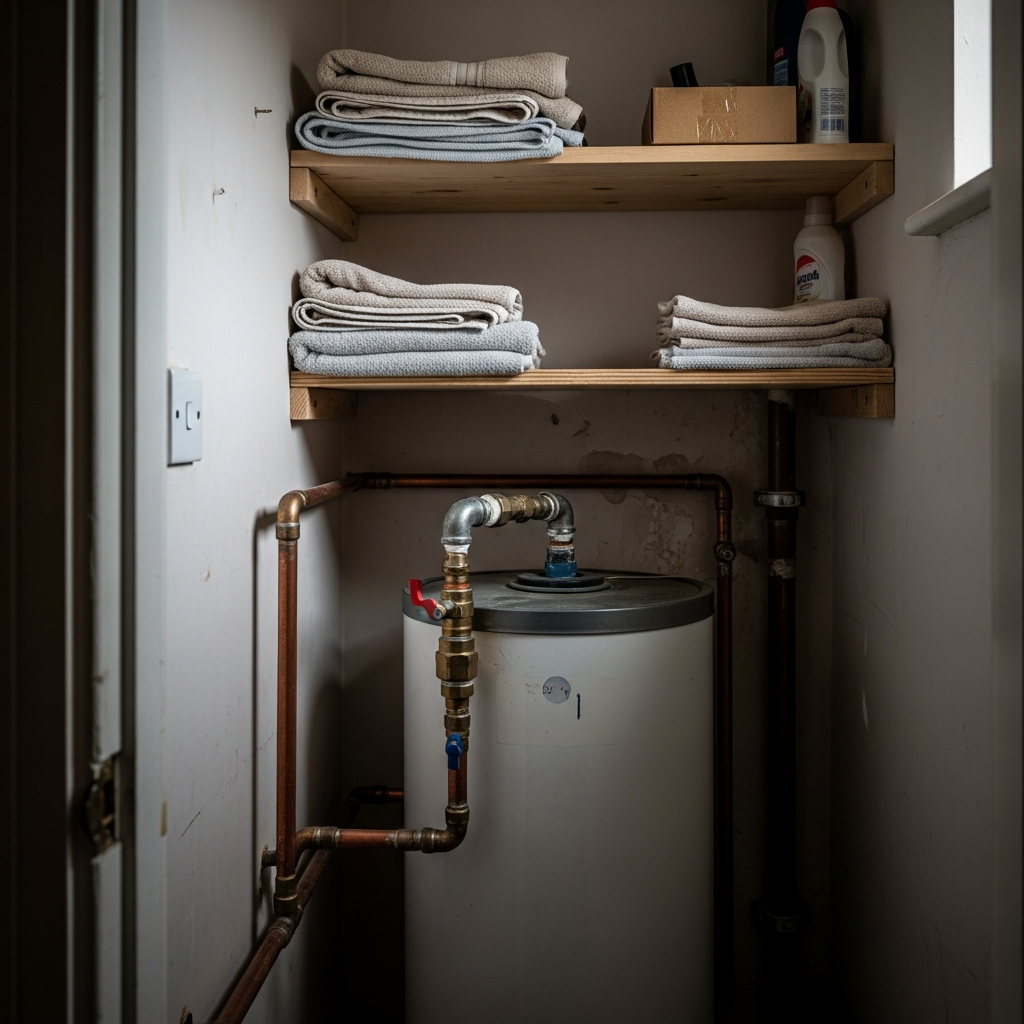
If you have an existing hot water cylinder, ensure it has a factory-fitted foam jacket or a separate insulation jacket at least 80mm thick. An uninsulated cylinder loses heat constantly. Cost: £15 to £30. When your heat pump is installed, you will likely get a new, well-insulated cylinder as part of the package.
Check your home's overall heat pump readiness
Free suitability checkerInstant assessment covering insulation, glazing, and property type.
Bigger Investments: When They Make Sense
Solid wall insulation: For pre-1920s homes, internal (£5,000-£10,000) or external (£8,000-£15,000) wall insulation can improve an EPC by 15 to 30 points and reduce heat demand by 3 to 6 kW.
Floor insulation: Insulating a suspended timber floor costs £800 to £2,500 depending on access. EPC impact is typically 3 to 8 points.
Solar panels: While not directly affecting heat pump performance, solar panels improve your EPC score by 10 to 15 points and can significantly offset your heat pump electricity costs. A typical 4 kW system costs £5,000 to £7,000 and can provide 30 to 50 per cent of a heat pump's annual electricity needs. Learn more at our Home Solar Guide.
Prioritising Your Improvements
| Priority | Improvement | Cost | EPC impact |
|---|---|---|---|
| 1 | Draught-proofing | £100 - £300 | 1-5 points |
| 2 | Loft insulation top-up | £300 - £500 | 5-15 points |
| 3 | LED lighting | £30 - £200 | 1-5 points |
| 4 | Hot water cylinder jacket | £15 - £30 | 1-3 points |
| 5 | Cavity wall insulation | £400 - £800 | 10-20 points |
| 6 | Glazing upgrades | £4,000 - £8,000 | 5-15 points |
| 7 | Floor insulation | £800 - £2,500 | 3-8 points |
| 8 | Solid wall insulation | £5,000 - £15,000 | 15-30 points |
Items 1-4 can typically be completed for under £500 total.
Timing: Before or After the Heat Pump?
The ideal sequence is to complete insulation improvements before the heat pump is installed. This allows your installer to size the heat pump for your improved home. However, perfection should not be the enemy of progress. If you can only afford the heat pump now and insulation later, go ahead with the installation.
The most important thing is to make the switch from fossil fuels. You can always improve insulation incrementally — each improvement will reduce your running costs further. Use our heat pump calculator to see how different insulation levels affect costs.

Funding and Grants for EPC Improvements
Several schemes can help with costs: the Great British Insulation Scheme covers homes in council tax bands A to D; ECO4 is available to households on qualifying benefits; local authority grants vary by area; Scottish HEEPS and the Welsh Nest scheme provide regional support. Your heat pump installer or local energy advice centre can help navigate the options.
Ready to get started?
Get free quotes from MCS-certified installersInstallers will advise on the best insulation improvements for your specific home.
Frequently Asked Questions
What is the cheapest way to improve my EPC rating?
Draught-proofing (£100-£300), loft insulation top-up (£300-£500 DIY), LED lighting (£30-£200), and a hot water cylinder jacket (£15-£30) are the cheapest improvements. Together, they can improve your EPC by 5 to 20 points for under £1,000.
How much can I improve my EPC by?
It depends on your starting point. A D-rated home with unfilled cavity walls, inadequate loft insulation, and old lighting could realistically reach high C or low B with the improvements listed in this guide.
Do I need to get a new EPC after making improvements?
Not necessarily. Your heat pump installer will conduct a detailed heat loss survey that accounts for your actual insulation levels, regardless of what the EPC says.
Can my heat pump installer advise on insulation?
Good installers will advise on the most impactful improvements during the survey. They can show you how different insulation levels affect heat pump size and running costs.
Is it worth improving insulation if I am renting?
If you are a tenant, speak to your landlord. Rental properties must meet a minimum EPC of E in England and Wales (likely increasing to C in the future). Landlords may be eligible for grants to fund improvements.
Will improving my EPC make my home warmer right away?
Yes. Insulation and draught-proofing improvements reduce heat loss immediately, making your home more comfortable with your existing heating system. You will notice the difference before the heat pump arrives.
Improving your EPC before installing an air source heat pump is the most cost-effective way to reduce system size and running costs. The Boiler Upgrade Scheme provides £7,500 towards installation, while separate grants may fund insulation work. Combining insulation improvements with solar panel installations delivers the best overall energy economics for UK homeowners.