Air Source Heat Pump for Flats: Is It Possible?
Over four million households in England live in flats, and most assume a heat pump is off the table. For ground-floor flats with private outdoor space, that assumption is wrong — a standard air source heat pump can often be installed for as little as £2,000 after the £7,500 BUS grant. Upper floors are harder, but communal systems and alternatives are closing the gap fast.
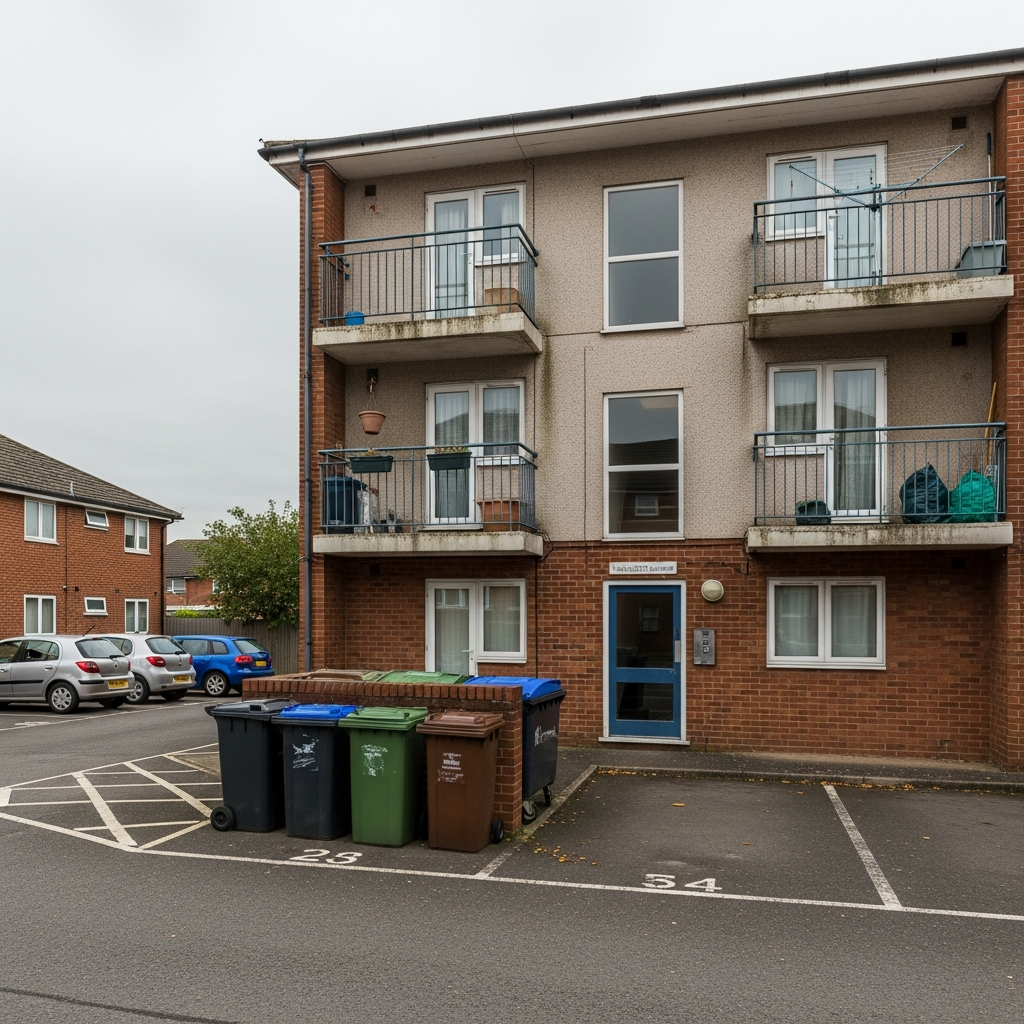
Heat pumps are quickly becoming the default replacement for gas boilers in UK homes — but what if you live in a flat? The conversation around heat pumps tends to focus on detached and semi-detached houses with gardens and driveways, leaving flat owners and leaseholders wondering whether they have been left behind.
The short answer is: it depends. A ground-floor flat with its own garden or patio area can often accommodate an air source heat pump without too much difficulty. An upper-floor flat in a shared building? That is a much harder proposition, though not always impossible.
This guide walks you through exactly what is and is not feasible, the permissions you will need, and the alternative low-carbon heating options available if a standard heat pump is not practical for your situation.
Check if a heat pump could work for your flat
Use the free suitability checkerTakes 60 seconds. No email required.
Why Flats Present a Challenge for Heat Pumps
Air source heat pumps need three things that many flats struggle to provide: outdoor space for the unit, a hot water cylinder inside, and permission from whoever owns or manages the building.
Outdoor Space
An air source heat pump unit is roughly the size of a large suitcase — typically around 1 metre tall, 1 metre wide, and 40cm deep. It needs adequate airflow around it and should be positioned at least 30cm from any wall. It also needs somewhere for condensate to drain.
For a house, this is straightforward — the unit sits on a concrete pad in the garden or beside the house. For a flat, the question is: where does it go? Understanding the best position for a heat pump is especially critical in flats where space is limited.
Ground-floor flats with a private garden, yard, or patio usually have a viable location. Upper-floor flats rarely do, unless the building has accessible flat roof space or a large balcony — and even then, structural and noise considerations make it complicated.

Indoor Space for a Hot Water Cylinder
Heat pumps work with a hot water cylinder, not a combi boiler setup. You will need space for a cylinder of at least 150 litres — ideally 200 litres. In a flat, especially a smaller one, finding space for this can be difficult. Many flats had their airing cupboards converted or removed when combi boilers became popular in the 1990s and 2000s.
Building Permission
If you are a leaseholder — which most flat owners in England and Wales are — you will almost certainly need permission from the freeholder or management company before installing a heat pump. This can be the single biggest barrier, regardless of whether the installation is physically possible.
Ground-Floor Flats: The Best Candidate
If you live in a ground-floor flat with direct access to an outdoor area — a garden, patio, or yard — you are in the strongest position. The installation can work in a very similar way to a house.
What You Need
- A flat concrete base or mounting brackets for the outdoor unit, positioned with adequate airflow clearance
- A route for refrigerant pipework from the outdoor unit through the external wall into your flat (a small hole, typically 50-80mm)
- Space inside for a hot water cylinder — an airing cupboard, utility area, or even a tall kitchen cupboard space
- An electrical supply capable of handling the heat pump (most domestic ASHPs run on a standard single-phase supply)
Realistic Costs
For a ground-floor flat, costs are broadly similar to a house installation — typically between £8,000 and £14,000 before the Boiler Upgrade Scheme grant of £7,500. After the grant, you could be looking at £2,000 to £6,500 depending on the size of the system and any additional work needed.
Use our heat pump calculator to get a more specific estimate for your property.
Sizing Considerations
Flats generally have lower heat loss than houses because they share walls, floors, and ceilings with neighbouring properties. A flat that would be in a 3-bedroom semi-detached house might only need a 5kW heat pump, compared to 8-10kW for the house itself. This works in your favour — smaller units are cheaper, quieter, and more efficient. For more on sizing, see our guide on heat pump sizing.
Find out exactly what a heat pump would cost for your flat
Try the calculatorInstant estimate based on your property details.
Upper-Floor Flats: The Difficult Cases
If you live above the ground floor, installing a standard air source heat pump becomes significantly more challenging. The main issues are:
Where Does the Unit Go?
The outdoor unit needs to sit somewhere accessible. Options for upper-floor flats include:
- Balcony: If you have a large, structurally sound balcony, it may be possible to mount a small heat pump unit there. However, noise and vibration need careful consideration — the unit would be close to your neighbours' windows and potentially your own living areas.
- Flat roof: Some buildings have flat roof areas that could theoretically accommodate a heat pump, but access for installation and maintenance is essential, and the roof must be structurally adequate.
- Ground level with long pipework runs: In some cases, the outdoor unit can be placed at ground level with refrigerant pipes running up the outside of the building to your flat. This adds cost and complexity, and the freeholder is unlikely to approve external pipework running up the building.
In practice, very few upper-floor flat installations go ahead with a standard air source heat pump. The barriers are too numerous.
Noise Concerns
In a block of flats, the outdoor unit will inevitably be closer to neighbours than in a house installation. Most modern heat pumps operate at around 40-50 dB at one metre — roughly the level of a quiet conversation. But on a balcony or near bedroom windows, even this level can cause friction with neighbours.
Planning rules (permitted development) require the unit to be at least one metre from the property boundary and must not exceed 42 dB at the nearest neighbour's window. In a flat, meeting this requirement can be very difficult.
Freeholder and Leaseholder Permissions
If you are a leaseholder, your lease will almost certainly require you to get written permission from the freeholder before making external alterations to the building. Installing a heat pump counts as an external alteration.
What You Will Likely Need
- Freeholder consent: Written permission to install the outdoor unit and run pipework through the building fabric
- Management company approval: If a management company looks after the building, they will usually need to approve the works too
- Neighbour consultation: Some leases require you to consult neighbours about external works
- Licence to alter: A formal legal document giving you permission to make the changes, sometimes at a cost of £500 to £1,500 in legal fees
There is no legal right for leaseholders to install heat pumps in England and Wales at present. The government has consulted on potential changes to leasehold law that would make it easier, but as of early 2026, freeholders can still refuse permission without giving a reason.
Right to Manage and Share of Freehold
If you collectively own the freehold or have exercised the Right to Manage, the decision-making process is in your hands (and your neighbours'). This makes things considerably easier, though you will still need majority agreement for works affecting the building exterior.
Communal and Shared Heat Pump Systems
For blocks of flats, a communal heat pump system can be a far more practical solution than individual installations. A single larger heat pump (or several units) serves the entire building through a shared heat network.
How Communal Systems Work
A large commercial heat pump is installed in a plant room or external enclosure. It heats water that is distributed through insulated pipes to each flat, where a heat interface unit (HIU) provides heating and hot water on demand — similar to how a district heating system works.
This approach avoids the need for individual outdoor units, individual hot water cylinders, and individual planning considerations. It is particularly well-suited to larger blocks and new-build developments.
The Social Housing Angle
Many social housing providers are now retrofitting communal heat pump systems into their blocks of flats as part of decarbonisation programmes funded by the Social Housing Decarbonisation Fund. If you are a social housing tenant, your landlord may already have plans to install communal heat pumps — it is worth asking.
Alternatives to Heat Pumps for Flat Owners
If an air source heat pump is not practical for your flat, there are other low-carbon heating options to consider.
Electric Radiators and Panel Heaters
Modern electric radiators are far more sophisticated than the storage heaters of old. Smart electric radiators with individual room controls can be surprisingly efficient and cost-effective, especially in well-insulated flats. They require no outdoor unit, no hot water cylinder, and no freeholder permission (in most cases).
The downside is running cost — direct electric heating costs roughly three times more per kWh than a heat pump, because there is no efficiency multiplication. Pairing electric heating with solar panels can offset some of this cost if your flat has a suitable roof or communal solar arrangement.
Infrared Heating Panels
Infrared panels heat objects and people directly rather than warming the air. They are slim, can be mounted on walls or ceilings, and are completely silent. For a well-insulated flat, they can be an effective and affordable option. However, they are still direct electric heating, so running costs are higher than a heat pump.
Hot Water Heat Pumps (Cylinder Heat Pumps)
If space heating is not the main concern — perhaps you have efficient electric radiators already — a hot water heat pump could be a useful addition. These are compact units that sit inside your flat (often in a utility cupboard) and use heat from the surrounding air to heat your hot water cylinder. They are much smaller than a full ASHP and do not need an outdoor unit.
The trade-off is that they cool the room they are in (since they extract heat from indoor air) and they only provide hot water, not space heating.
Air-to-Air Heat Pumps
These are essentially reversible air conditioning units. They can heat and cool individual rooms and are easier to install in flats — the outdoor unit is smaller and can often be wall-mounted. However, they do not heat your hot water, and they are not eligible for the Boiler Upgrade Scheme grant. Read more in our guide to air-to-air heat pumps.
Is Your Flat Suitable? A Quick Checklist
Before going further, run through this checklist:
- Ground floor with private outdoor space? Strong candidate for a standard ASHP
- Upper floor with large balcony? Potentially possible, but investigate noise and structural issues first
- Upper floor with no outdoor space? Standard ASHP is very unlikely — consider alternatives
- Leaseholder? You will need freeholder permission — start this conversation early
- Share of freehold or Right to Manage? Easier, but still need collective agreement
- Space for a hot water cylinder? Essential for an air-to-water heat pump
For a more detailed assessment, try our heat pump suitability checker — it will tell you whether your property is a good fit based on your specific circumstances.
Costs at a Glance
Here is a realistic comparison of heating options for flat owners:
| Option | Upfront Cost | Annual Running Cost (2-bed flat) | BUS Grant Eligible? |
|---|---|---|---|
| ASHP (ground-floor flat) | £2,000 – £6,500 (after grant) | £490 – £690 | Yes (£7,500) |
| Communal heat pump (share) | £2,000 – £5,000 per flat | £500 – £800 | Varies |
| Smart electric radiators | £1,500 – £3,500 | £1,200 – £1,800 | No |
| Air-to-air heat pump | £2,000 – £5,000 | £600 – £900 | No |
| Gas boiler (remain on gas) | £2,000 – £3,500 | £700 – £1,000 | No |
Costs based on a typical 2-bedroom flat with moderate insulation. Running costs at 2026 Ofgem cap rates. See our running costs guide for detailed figures.
Government Policy and the Future
The UK government recognises that flats present a challenge for heat pump adoption. The Clean Heat Market Mechanism and Future Homes Standard are pushing the industry to develop solutions for multi-occupancy buildings.
There are also ongoing consultations about changing leasehold law to give leaseholders a right to install low-carbon heating, similar to the existing right to install electric vehicle charge points. If this becomes law, it would remove the biggest non-physical barrier to heat pump installation in flats.
In the meantime, the Boiler Upgrade Scheme is available to flat owners who can install a qualifying heat pump — there is no exclusion for flats specifically. Flat owners considering renewable energy grants should also explore what solar options might be available for their building.
Getting Quotes for a Flat Installation
If you believe your flat could accommodate a heat pump, the next step is to get professional assessments. Not all installers have experience with flat installations, so look for MCS-certified installers who specifically mention experience with flats or apartments.
A good installer will carry out a thorough site survey covering outdoor unit placement, noise assessment, cylinder location, and pipework routing — all critical for a flat installation. You can read about what the full installation process involves.
You can get free heat pump quotes through our service — we will match you with installers in your area who can assess your specific situation.
Ready to find out if a heat pump works for your flat?
Get free quotes from local installersMCS-certified installers experienced with flat installations.
Frequently Asked Questions
Can I install a heat pump in a flat without freeholder permission?
Almost certainly not. Most leases require freeholder consent for external alterations, and installing an outdoor heat pump unit qualifies. Proceeding without permission could put you in breach of your lease, which has serious legal consequences.
Are there grants for heat pumps in flats?
Yes. The Boiler Upgrade Scheme grant of £7,500 is available for flats, provided the installation meets the standard eligibility criteria (MCS-certified installer, qualifying heat pump, valid EPC). There is no restriction based on property type.
How noisy is a heat pump on a balcony?
Most modern ASHPs operate at 40-50 dB at one metre — comparable to a quiet fridge. On a balcony, this could be noticeable if your or your neighbours' windows are nearby. Acoustic enclosures and anti-vibration mounts can help, but they add cost and reduce airflow efficiency.
What size heat pump does a flat need?
Flats typically need smaller heat pumps than houses because shared walls and floors reduce heat loss. A typical two-bedroom flat might need a 4-6kW unit, compared to 8-12kW for a comparable semi-detached house. A proper heat loss survey will determine the exact size needed.
Can a communal heat pump system be retrofitted?
Yes, though it is a major project. It requires agreement from the freeholder and a majority of leaseholders, plus significant investment. Social housing providers are leading the way on communal retrofits, but private blocks are beginning to explore them too. Costs are shared between all flats in the building.
Will the government change the rules for flats?
The government has consulted on giving leaseholders a right to install low-carbon heating without needing freeholder permission. As of early 2026, no firm legislation has been passed, but it remains a policy priority. Watch this space.
About Heat Pumps, Flats, and Low-Carbon Heating
Air source heat pumps are an established renewable heating technology used across the UK and Europe. In multi-occupancy buildings, communal heat pump systems offer a practical route to decarbonisation. The Boiler Upgrade Scheme provides £7,500 towards individual installations, while the Social Housing Decarbonisation Fund supports larger communal projects. Flat owners can also benefit from combining heat pumps with solar energy where communal roof space allows, further reducing electricity costs and carbon emissions. The UK government's Heat and Buildings Strategy recognises that tailored solutions are needed for different property types, including purpose-built flats and converted houses.