Air Source Heat Pump Noise Levels: How Loud Are They?
Modern air source heat pumps produce just 40-50 decibels at one metre — quieter than a dishwasher and comparable to a fridge humming. With the right placement and model selection, most homeowners and their neighbours find the noise perfectly acceptable, even at night.
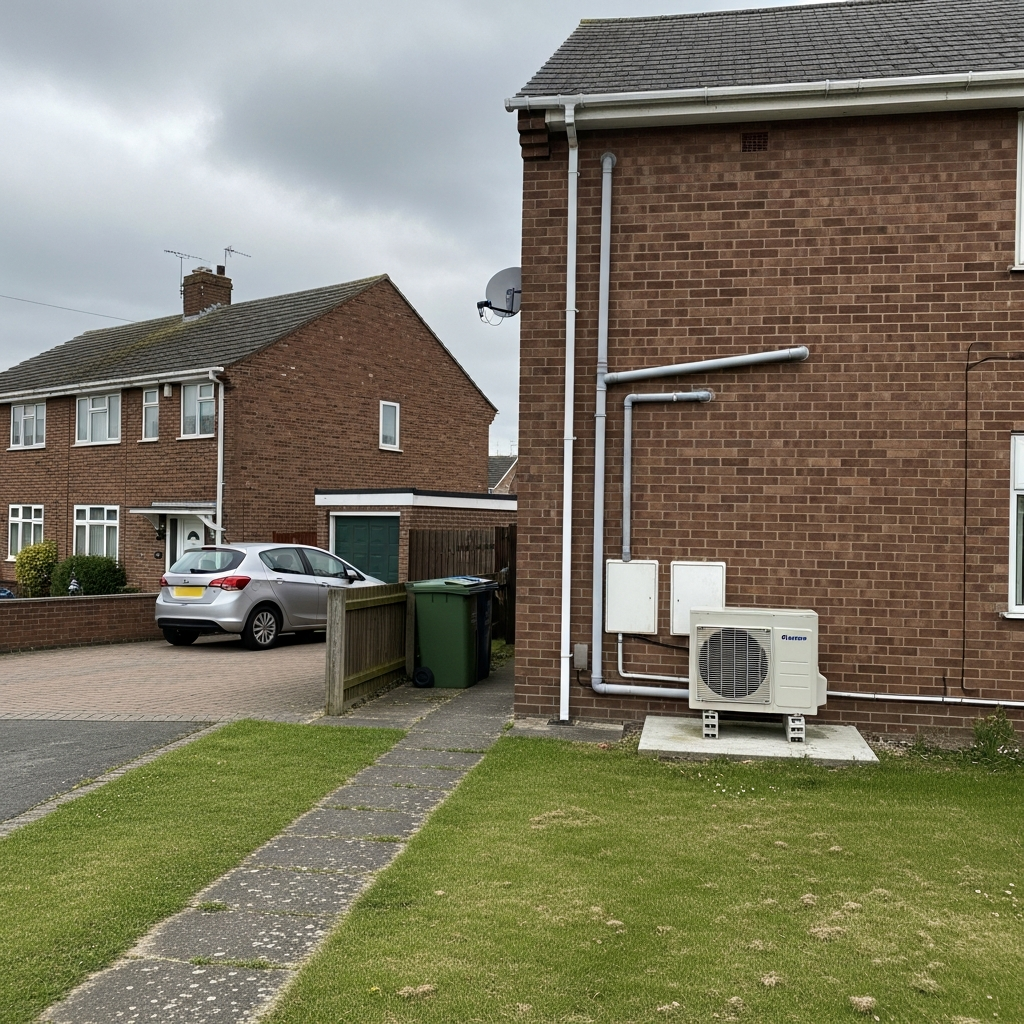
Noise is one of the most common concerns people raise about air source heat pumps. You've probably seen the outdoor unit on a neighbour's property and wondered whether that constant hum would drive you mad. It's a fair question — and one that deserves an honest answer.
The short version: modern air source heat pumps are quieter than most people expect, typically producing 40-50 decibels at one metre — roughly the volume of a fridge or a quiet conversation. But there are important nuances around placement, planning rules, and what "quiet" really means when a unit is running outside your bedroom window at 2am.
Check whether a heat pump suits your property layout
Use the free calculatorNo email required. Instant results based on your property details.
How Loud Is an Air Source Heat Pump?
Most modern air source heat pumps produce between 40 and 60 decibels (dB) measured at one metre from the unit. The specific noise level depends on the brand, model, and how hard the system is working at any given moment.
Here's how that compares to sounds you already know:
| Sound | Decibel Level |
|---|---|
| Whisper | 20-30 dB |
| Quiet library | 35-40 dB |
| Refrigerator humming | 40 dB |
| Modern heat pump (at 1m) | 40-50 dB |
| Quiet conversation | 50-60 dB |
| Dishwasher | 55-65 dB |
| Gas boiler (operating) | 45-60 dB |
| Washing machine (spin cycle) | 70-75 dB |
| Lawnmower | 85-90 dB |
It's worth noting that decibels work on a logarithmic scale. A 50 dB sound isn't just "a bit louder" than a 40 dB sound — it's perceived as roughly twice as loud. So the difference between the quietest and loudest heat pumps is significant.
Noise at Distance
The 40-50 dB figure is measured at one metre from the outdoor unit. Sound drops off with distance. As a rough guide:
- At 1 metre: 40-50 dB (as stated)
- At 3 metres: 30-40 dB
- At 5 metres: 25-35 dB
- At 10 metres: 20-30 dB (barely audible)
By the time you're inside your home with windows closed, a well-placed heat pump is typically inaudible or barely noticeable.
What Does the Noise Actually Sound Like?
A heat pump doesn't produce a single constant sound. The noise profile changes depending on what the system is doing:
- Normal operation: A low, steady hum from the compressor and a gentle whoosh from the fan. Most people describe it as similar to an air conditioning unit or a large fridge.
- High demand: When the heat pump is working hard (very cold days, heating from cold), the compressor speeds up and the fan runs faster. Noise can increase by 5-10 dB.
- Defrost cycle: In cold weather, frost builds up on the outdoor coil and the heat pump periodically reverses to melt it. This produces a brief (2-5 minute) change in sound.
- Start-up: When the compressor kicks in, there can be a brief (1-2 second) start-up noise. Modern inverter-driven heat pumps have much smoother start-ups than older fixed-speed models.
Planning Permission and Noise Rules
In England and Wales, air source heat pumps are generally covered by permitted development rights, meaning you don't need planning permission provided certain conditions are met. The key noise-related requirement is:
The heat pump must not exceed 42 dB(A) at the nearest neighbour's property boundary.
This is known as MCS 020 (the noise planning standard) and is assessed by your installer as part of the MCS certification process. If the unit would exceed 42 dB at the boundary, your installer must either:
- Choose a quieter unit
- Move the unit further from the boundary
- Install noise barriers or acoustic enclosures
- Apply for full planning permission
In Scotland, the permitted development rules are similar but slightly different in detail. In conservation areas and listed buildings, you may need planning permission regardless of noise levels.
What If My Property Is Terraced or Semi-Detached?
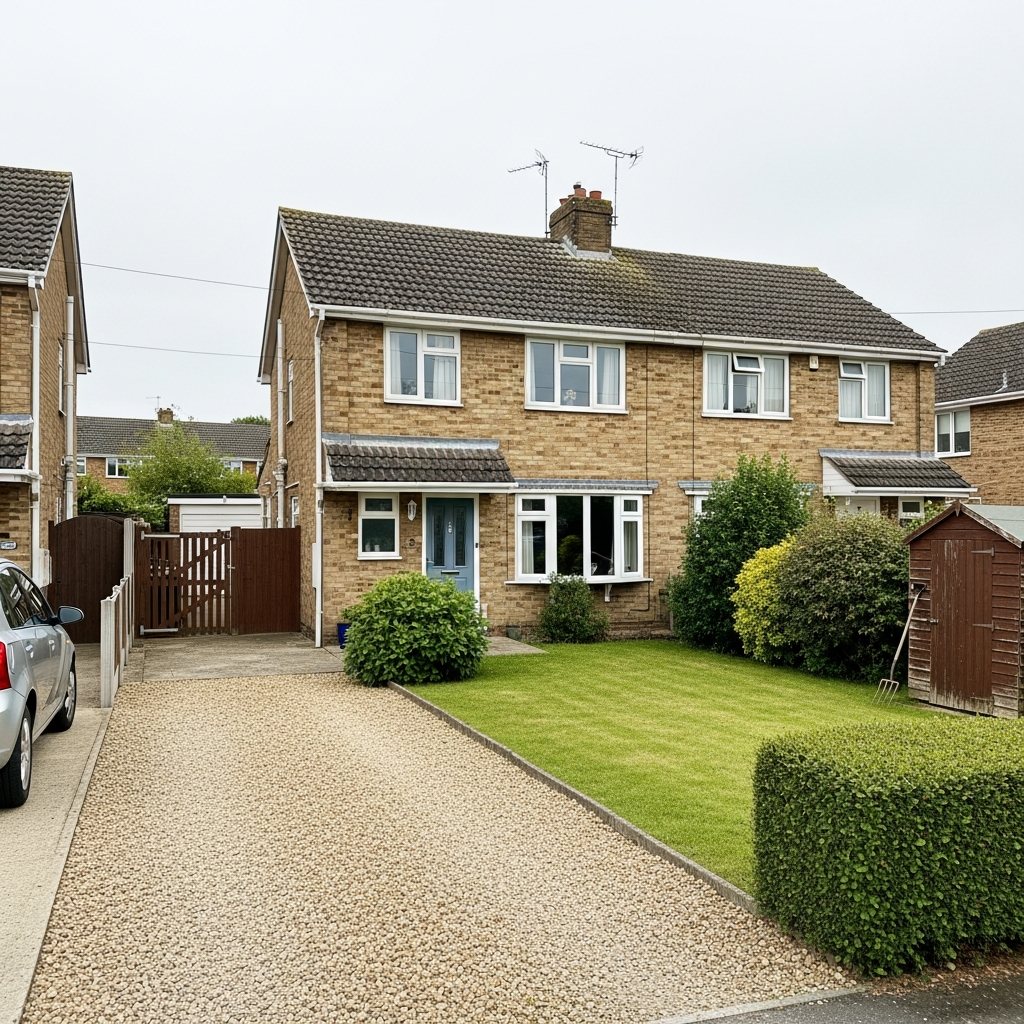
This is where noise planning gets more challenging. With limited space between your property and your neighbour's boundary, meeting the 42 dB requirement can be tighter. Your installer will need to select a particularly quiet model (some achieve 35-40 dB at 1m), position the unit as far from the shared boundary as possible, and consider acoustic barriers if space is limited.
Thousands of heat pumps are successfully installed on terraced and semi-detached properties every year. It's not a dealbreaker — it just needs careful planning. For property-specific advice, see our guides for 3-bed semis and 4-bed detached homes.
Which Heat Pumps Are the Quietest?
Noise levels vary considerably between brands and models:
| Category | Typical Noise Level (at 1m) | Examples |
|---|---|---|
| Very quiet | 35-42 dB | Some Vaillant, Samsung, and Daikin models |
| Average | 42-50 dB | Most mainstream brands |
| Louder | 50-60 dB | Older models, some budget brands, larger units |
If noise is a primary concern, make it a key factor when choosing your system. Check the product data sheet for the stated sound power level (LwA) — this is the standardised noise measurement that allows fair comparison between models. For a broader look at how different brands compare, see our complete guide to air source heat pumps.
Get matched with quiet heat pump models for your property
Get free installer quotesMCS-certified installers assess noise as part of every survey. Free, no obligation.
How to Minimise Heat Pump Noise
Placement
Where you put the outdoor unit has the biggest impact on perceived noise — for both you and your neighbours. Key placement principles:
- Away from bedrooms: Yours and your neighbours'. The unit will run overnight, and even a quiet 40 dB hum can be noticeable in the dead of night.
- Away from enclosed corners: Sound can bounce off walls and fences, amplifying the perceived noise. Avoid placing the unit in a corner between two walls.
- Ensure good airflow: The unit needs adequate clearance around it (typically 300mm+ to the sides and rear, 1m+ at the front). Restricting airflow forces the fan to work harder, increasing noise.
- On a solid base: The unit should sit on a concrete plinth or anti-vibration mounts to prevent vibration transferring to the building structure.
Anti-Vibration Measures
Vibration can transmit noise through the ground and into your home's structure. Solutions include rubber anti-vibration mounts between the unit and its base, flexible pipe connections rather than rigid ones, and ensuring pipes are properly insulated and clipped with rubber-lined clips where they enter the building.
Acoustic Barriers
If placement alone isn't sufficient, acoustic barriers can reduce perceived noise by 5-10 dB. Options include purpose-built acoustic enclosures, solid fencing or walls between the unit and the sensitive area, and dense planting. Important: never fully enclose a heat pump — it needs airflow to function.
Night-Time Noise: The Real Concern
The main noise concern isn't daytime operation. During the day, background noise from traffic, wind, and general activity means a heat pump is barely noticeable. The concern is night-time, when background noise drops to 20-25 dB and even a quiet hum can become apparent.
Modern heat pumps address this in several ways:
- Night mode/quiet mode: Many models have a setting that reduces fan speed overnight, dropping noise by 3-5 dB at the cost of slightly reduced output.
- Inverter technology: Modern inverter-driven compressors ramp up and down smoothly rather than switching on and off at full power.
- Lower overnight demand: If your home is well-insulated and the thermostat is set back slightly overnight, the heat pump runs at lower output and therefore lower noise.
What About Neighbour Complaints?
Most heat pump installations don't generate neighbour complaints. The MCS data shows that noise complaints related to heat pumps are uncommon — far less frequent than complaints about barking dogs, loud music, or building work.
However, complaints do happen, usually because the unit was placed too close to a neighbour's bedroom window, an older or noisier model was installed, or the installation didn't properly account for sound reflection from walls.
The best approach is to talk to your neighbours before installation. Show them where the unit will go, explain the noise levels, and reassure them that the installer is following MCS noise standards. For a balanced view of all the considerations, see our pros and cons guide.

Noise Compared to What You Already Have
It's worth putting heat pump noise in context. Your existing heating system isn't silent:
- Gas boiler: 45-60 dB when firing, plus the noise of the flue fan
- Oil boiler: 60-70 dB during operation — significantly louder than a heat pump
- External boiler flue: The plume and noise from a gas boiler flue is noticeable from outside
- Air conditioning units: Similar technology to a heat pump, and widely accepted
A heat pump replaces an internal noise source (boiler) with an external one. The trade-off is different, not necessarily worse.
Frequently Asked Questions
Can I hear a heat pump inside my house?
With modern double or triple glazing and the unit positioned on an external wall that doesn't adjoin a bedroom, most people can't hear the heat pump indoors. You might notice it with windows open on a quiet night, but it should be unobtrusive with windows closed.
Are heat pumps louder in winter?
Yes, slightly. In cold weather, the compressor runs at higher capacity and the defrost cycle activates periodically. Noise might increase by 3-8 dB during the coldest weather compared to mild conditions. However, winter also tends to have more background noise from wind and rain, which masks the sound.
Do ground source heat pumps make less noise?
Ground source heat pumps don't have an outdoor fan unit, so they produce virtually no external noise. The compressor is typically located indoors and is comparable in noise to a fridge-freezer. If noise is your primary concern and budget allows, a ground source system eliminates the issue entirely.
What is the 42 dB planning limit?
Under permitted development rules in England and Wales, an air source heat pump must not exceed 42 dB(A) at the nearest neighbouring property's boundary. This is measured or calculated by your MCS-certified installer as part of the installation process. If the limit can't be met, you'll need full planning permission.
Can a faulty heat pump be noisier than normal?
Yes. Unusual noises like rattling, grinding, or loud vibration can indicate a fault — typically a failing fan bearing, loose component, or refrigerant issue. If your heat pump suddenly becomes noticeably louder, contact your installer or maintenance provider.
Will the noise get worse over time?
A well-maintained heat pump should not get significantly louder over its lifespan. Fan bearings may wear over many years, but regular servicing will identify and address this before it becomes a problem. Most units have a lifespan of 15-20 years with proper maintenance.
The Bottom Line
Air source heat pump noise is a legitimate consideration, but it's rarely a dealbreaker. Modern units operating at 40-50 dB are comparable to a fridge or quiet conversation. With proper placement, a quality installation, and sensible model selection, most homeowners and their neighbours find the noise perfectly acceptable.
The key is getting it right at the design stage. Work with an experienced, MCS-certified installer who takes noise seriously, and you'll have a system that heats your home efficiently without disturbing the peace.
Ready to explore your options? Get free quotes from MCS-certified installers who will assess noise requirements as part of their survey. If you are considering pairing a heat pump with solar panels, the combination generates free electricity to offset your running costs.
Get noise-assessed quotes from certified installers near you
Get your free quotesMCS-certified installers include noise assessment as standard. Free, no obligation.
Understanding Heat Pump Noise in Context
Noise management is one element of a well-designed air source heat pump installation. MCS 020 noise standards, permitted development rules, and proper acoustic planning all work together to ensure heat pumps integrate smoothly into residential areas. Modern inverter-driven compressors, quiet-mode settings, and careful unit placement mean noise is rarely a barrier to installation. Combined with high efficiency ratings, government grants, and the option to pair with solar energy, heat pumps continue to be the most practical low-carbon heating choice for UK homes.