Air Source Heat Pump for Older Houses: Victorian, Edwardian & Pre-War Homes
The myth that heat pumps cannot work in older houses is costing UK homeowners thousands. With the right fabric-first approach, a Victorian terrace owner in Bristol cut their heating bills from £1,400 to £1,050 — and qualified for the full £7,500 BUS grant. Here is exactly how to make a heat pump work in a pre-war home.
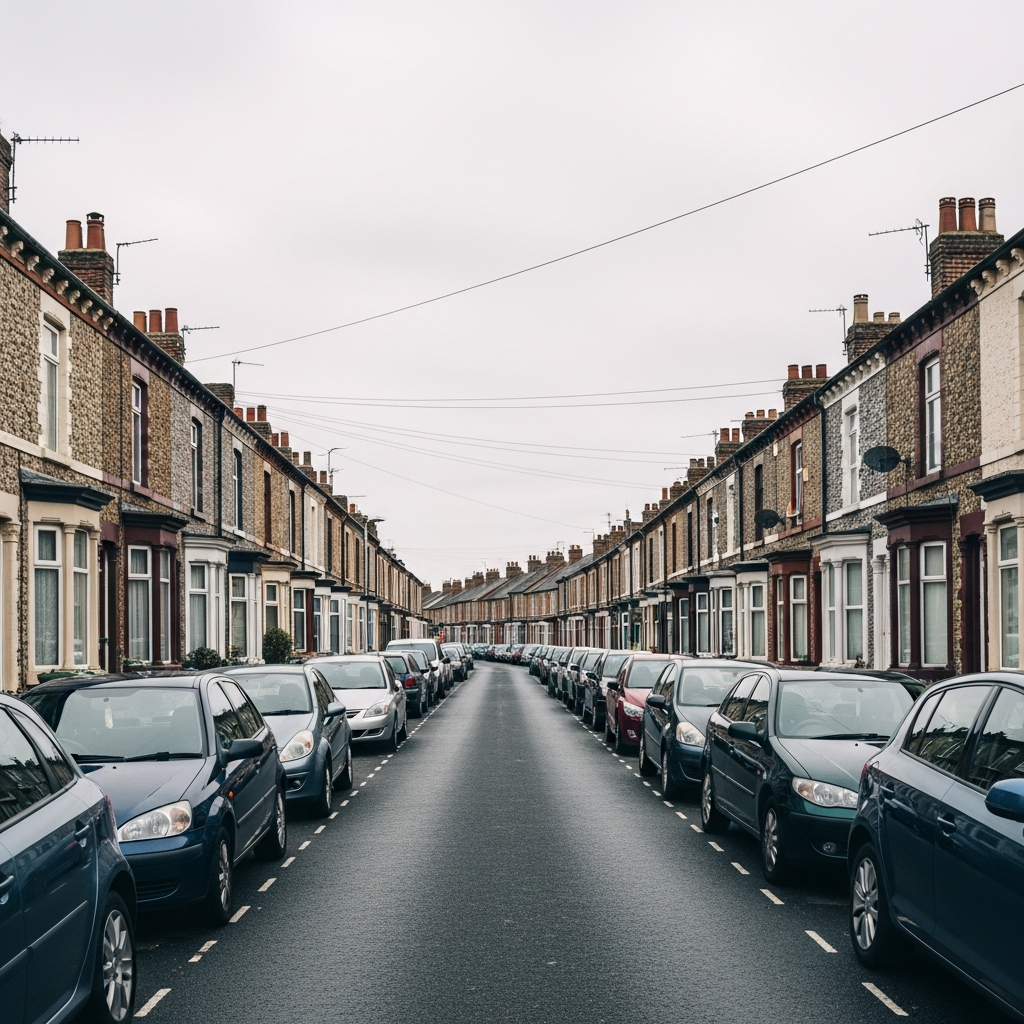
The UK has some of the oldest housing stock in Europe. Millions of us live in Victorian terraces, Edwardian semis, and inter-war houses that were built long before anyone thought about energy efficiency. When the conversation turns to heat pumps, a common reaction from owners of these homes is: "That would never work in my house."
It is an understandable concern. Older houses tend to be draughty, poorly insulated, and designed around high-temperature heating systems. But the idea that air source heat pumps simply cannot work in older homes is a myth — one that is costing homeowners money and delaying the UK's transition to cleaner heating.
The truth is more nuanced. Heat pumps can work in older houses, but the approach needs to be different. This guide explains exactly what is involved, what it costs, and where to start.
Is your older home suitable for a heat pump?
Check suitability in 60 secondsFree tool — no email required. Based on your property details.
Why Older Houses Are Different
To understand why older houses need a different approach, you need to understand what makes them different from modern builds.
Solid Walls
The single biggest factor. Most houses built before 1930 have solid brick walls — either single-skin (225mm) or double-skin without a cavity. Solid walls lose heat roughly twice as fast as unfilled cavity walls and three to four times faster than insulated cavity walls.
This matters because heat pumps are most efficient when running at low flow temperatures (35-45°C). If the building loses heat quickly, the heat pump either needs to work harder (reducing efficiency) or run at higher temperatures (also reducing efficiency).
Single Glazing and Draughts
Many older houses still have original single-glazed sash windows, or early double glazing that has lost its seal. Draughts around doors, windows, floorboards, and chimneys contribute to high heat loss. The building was designed to breathe — which is good for managing moisture in solid walls, but terrible for keeping heat in.
Smaller Radiators
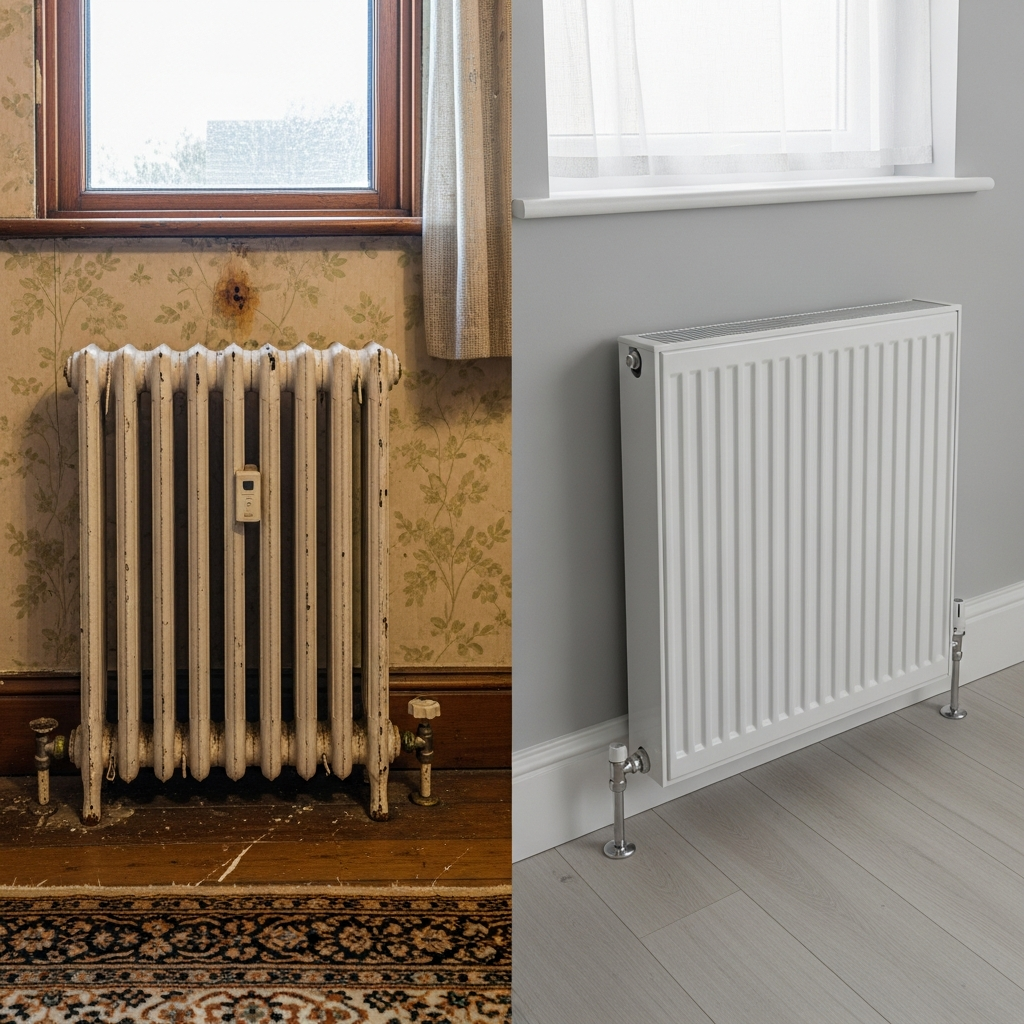
Older heating systems often have relatively small radiators because they were designed to run at very high flow temperatures (70-80°C) from a gas or oil boiler. At the lower flow temperatures a heat pump prefers, these radiators may not emit enough heat to keep rooms comfortable.
For more on this topic, see our detailed guide on whether you need new radiators for a heat pump.
Heritage Considerations
If your older house is listed or in a conservation area, there are additional restrictions on what you can do to the building's fabric and appearance. This can limit insulation options and heat pump placement.
The Fabric-First Approach
The most important principle for installing a heat pump in an older house is "fabric first." This means improving the building's insulation and airtightness before (or alongside) installing the heat pump.
The logic is simple: the less heat the building loses, the less work the heat pump has to do, and the lower your running costs will be. It also means you can use a smaller, cheaper heat pump.
What Fabric-First Looks Like in Practice
You do not need to turn your period home into a Passivhaus. Practical, cost-effective improvements make a significant difference:
- Loft insulation: Topping up to 270mm of mineral wool is cheap (often free through ECO schemes) and makes a big difference. Many older homes have little or no loft insulation.
- Draught-proofing: Sealing gaps around windows, doors, floorboards, and chimneys. This is relatively inexpensive and can reduce heat loss by 10-15%.
- Floor insulation: Suspended timber floors (common in Victorian and Edwardian houses) can be insulated from below if there is a crawl space, or from above when replacing flooring.
- Wall insulation: The big one. Internal wall insulation (IWI) adds 50-100mm of insulation to the inside of external walls. It reduces room sizes slightly but cuts heat loss through walls dramatically. External wall insulation (EWI) is more effective but changes the building's appearance — rarely acceptable on period properties.
- Window upgrades: Secondary glazing preserves original windows while significantly improving thermal performance. Replacement double or triple glazing is more effective but may not be permitted on listed buildings or in conservation areas.
How Much Fabric Improvement Do You Actually Need?
This is where it gets practical. You do not necessarily need to do everything. A proper heat loss survey will show you where the biggest gains are and help you prioritise.
In many older houses, loft insulation, draught-proofing, and floor insulation — the cheapest measures — get you 60-70% of the way there. Wall insulation delivers the remaining improvement but costs significantly more.
The question is often: what is the most cost-effective combination of fabric improvements and heat pump sizing? A good installer or energy assessor will help you work this out. Check your suitability with our heat pump suitability checker.
What would a heat pump cost for your older home?
Get an instant estimateFactors in insulation level and property type.
High-Temperature Heat Pumps: A Game Changer for Older Homes
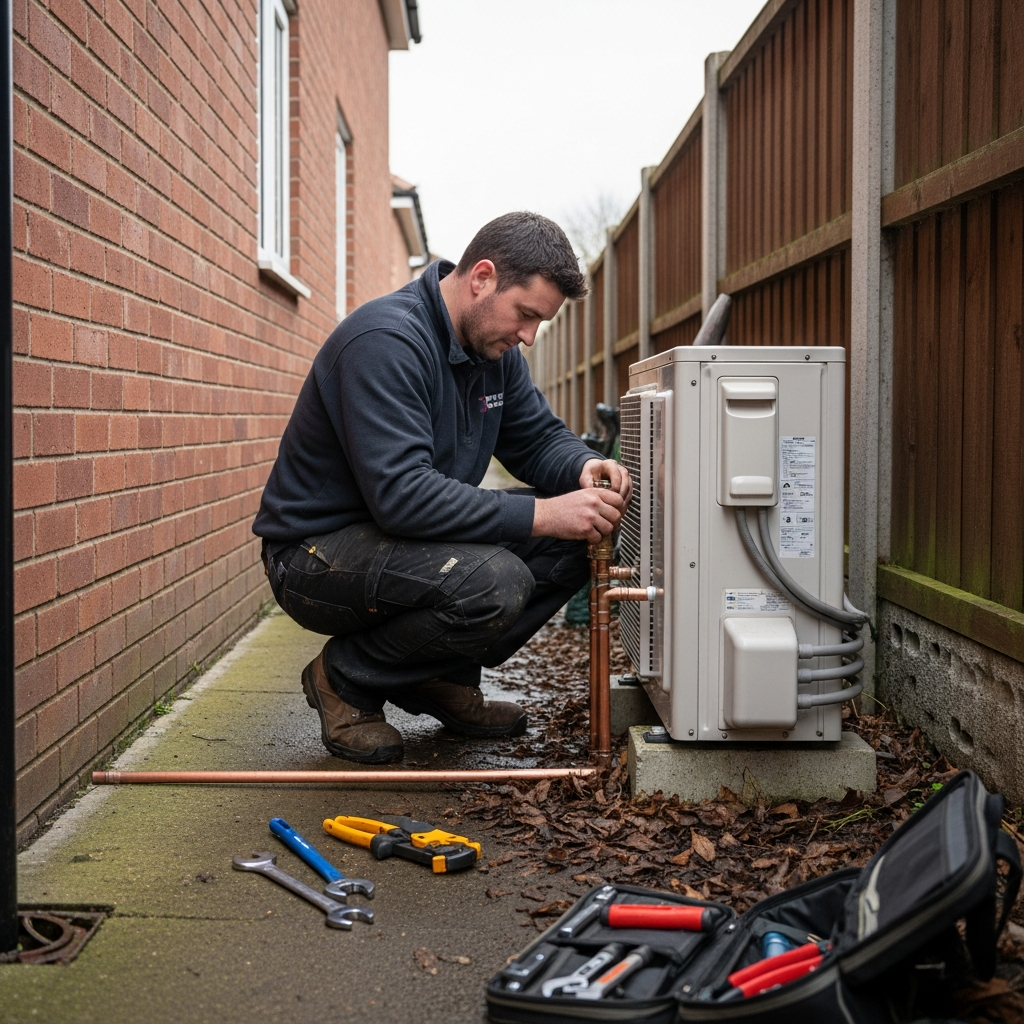
One of the most significant developments in heat pump technology for older houses is the high-temperature heat pump. Standard air source heat pumps typically deliver water at 35-55°C. High-temperature models can deliver 65-80°C — comparable to a gas boiler.
Why This Matters
If your older house has small radiators designed for high flow temperatures, a high-temperature heat pump can work with them as they are. This avoids the cost and disruption of replacing every radiator in the house.
It also means the heat pump can adequately heat a poorly insulated building without requiring extensive fabric improvements first. You still save on running costs compared to gas (because the heat pump is still more efficient than a boiler), but the efficiency gains are smaller than with a standard heat pump in a well-insulated home.
The Trade-Off
High-temperature heat pumps are less efficient at higher flow temperatures. A standard ASHP running at 35°C might achieve a COP of 4.0 — meaning four units of heat for every one unit of electricity. At 65°C, a high-temperature ASHP might achieve a COP of 2.0-2.5. Still better than direct electric heating or a gas boiler, but not as efficient as a heat pump running at lower temperatures.
They also cost slightly more to buy — expect an additional £1,000 to £2,000 on top of the price of a standard unit. For a detailed look at costs, visit our heat pump cost guide.
A Staged Approach
A smart strategy for older houses is to install a high-temperature heat pump now and improve the building fabric over time. Start with the heat pump running at higher temperatures to keep the house comfortable. As you add insulation, draught-proofing, and potentially new radiators, you can gradually reduce the flow temperature and improve efficiency.
This avoids the need to do everything at once — a significant advantage when budgets are tight.
Radiators in Older Houses
There is a common misconception that you must replace every radiator when installing a heat pump. In older houses, this is not always true — and the reason is quite interesting.
Oversized Radiators Can Be an Advantage
Many older heating systems were designed with generous radiator sizing. Plumbers in the 1960s and 1970s tended to oversize radiators as standard practice. If your house has large cast-iron radiators or oversized steel panel radiators, they may already be big enough to work at the lower flow temperatures a heat pump prefers.
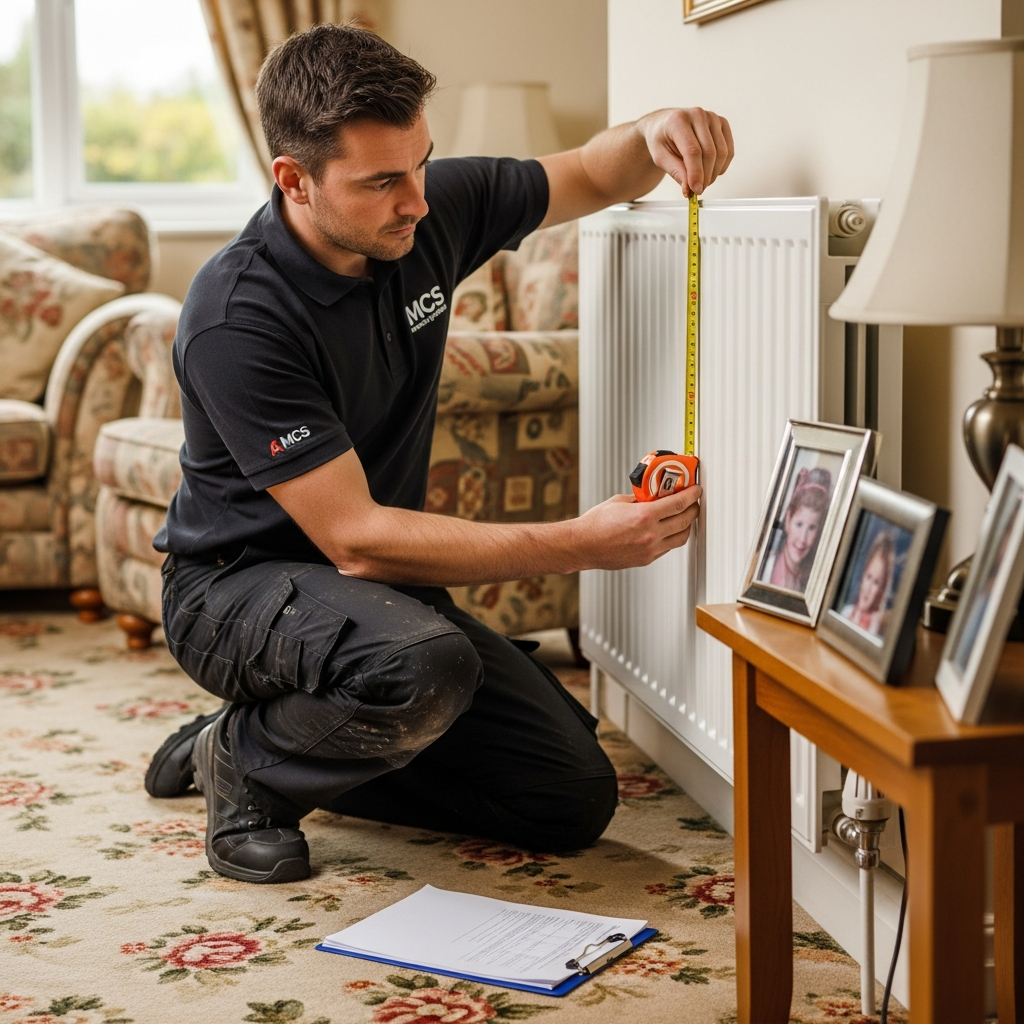
A heat loss survey and radiator assessment will tell you exactly which radiators need upgrading and which are fine as they are. It is common to find that only two or three radiators in the house need replacing — not all of them. Read more in our guide on using existing radiators with a heat pump.
Read our full guide on radiators and heat pumps for more detail.
Real-World Examples
These examples show what is achievable in practice:
| Property | Fabric Improvements | Heat Pump Size | Flow Temp | Gas Bill Before | HP Electricity After |
|---|---|---|---|---|---|
| 3-bed Victorian terrace, Bristol (1895) | Loft, draught-proofing, secondary glazing, floor insulation | 9kW high-temp | 55°C | £1,400/yr | £1,050/yr |
| 4-bed Edwardian semi, Leeds (1910) | IWI on exposed walls, loft, new double glazing | 11kW standard | 45°C | £1,800/yr | £900/yr |
| 3-bed 1930s semi, Surrey | Cavity wall already done, loft top-up, new windows | 8kW standard | 40°C | £1,200/yr | £680/yr |
Running costs at 2026 Ofgem cap rates. Individual results vary based on usage patterns and tariff.
Costs for Older Houses
Installing a heat pump in an older house typically costs more than in a modern one, because of the additional fabric improvements and potentially larger radiators needed. Here is a rough breakdown:
- Heat pump and installation: £9,000-£16,000 (before the £7,500 BUS grant)
- Radiator upgrades (if needed): £200-£600 per radiator, typically 2-6 radiators need upgrading
- Loft insulation top-up: £300-£600 (often free through ECO)
- Draught-proofing: £200-£500
- Floor insulation: £500-£2,000
- Internal wall insulation: £4,000-£12,000 (varies hugely depending on property size and access)
- Secondary glazing: £100-£400 per window
After the BUS grant, the total investment for a heat pump with moderate fabric improvements might be £5,000 to £15,000. It is not cheap, but spread over the 20-25 year lifespan of a heat pump, the economics work — especially as gas prices continue to rise.
Homeowners who also invest in solar panels can reduce running costs further by generating their own electricity to power the heat pump.
Our guide on whether heat pumps are worth it runs through the full financial picture, and you can also read about what to expect during the process in our installation guide.
Common Concerns Addressed
"My House Is Too Old for a Heat Pump"
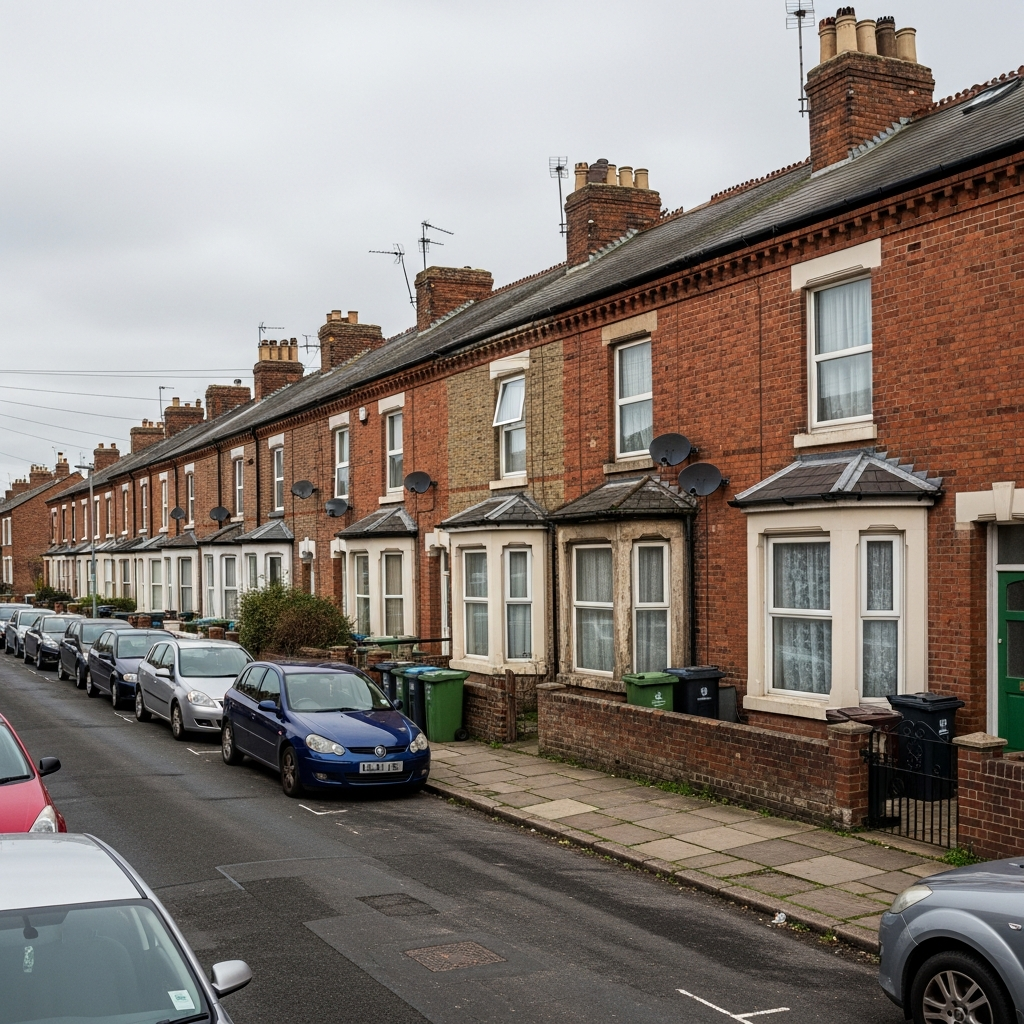
No house is too old for a heat pump. The National Trust has installed heat pumps in buildings dating back to the 1500s. The question is not whether it can work, but what preparation the building needs and what it will cost.
"I Will Have to Rip Out All My Original Features"
Not necessarily. Internal wall insulation can be fitted sympathetically, preserving cornices, picture rails, and skirting boards. Secondary glazing preserves original windows. A good installer and conservation-aware builder will find solutions that respect the character of the building.
"The Running Costs Will Be Huge"
Running costs depend on the building's heat loss and the heat pump's electricity consumption. In a poorly insulated older house with no fabric improvements, yes — costs could be higher than expected. But with even moderate fabric improvements and a properly designed system, most older houses see lower running costs than they had with gas. Check our running costs guide for detailed figures.
Find out what a heat pump would cost for your period home
Get free quotes from experienced installersMCS-certified installers with older property experience in your area.
Frequently Asked Questions
Can I install a heat pump in a listed building?
Yes, but you will need listed building consent for any works that affect the building's character or appearance. The outdoor heat pump unit may need to be positioned out of sight, and internal wall insulation or window changes will require approval. Some local authorities are more sympathetic than others — consult your conservation officer early.
Do I need to insulate my walls before installing a heat pump?
Not necessarily. Wall insulation helps significantly, but it is not always essential — especially if you choose a high-temperature heat pump. A proper heat loss survey will tell you what level of fabric improvement is needed for the system to work efficiently. Loft insulation and draught-proofing are almost always worth doing regardless.
What is a heat loss survey?
A room-by-room assessment of how much heat your building loses through walls, floors, roof, windows, and ventilation. This determines the size of heat pump needed and identifies which radiators (if any) need upgrading. Any reputable installer will carry out a heat loss survey before quoting — if they do not, find a different installer.
Are high-temperature heat pumps less reliable?
No. High-temperature heat pumps use the same proven technology as standard models, with some modifications to the refrigerant and compressor. They are manufactured by the same major brands and come with comparable warranties. The only difference is slightly lower efficiency at higher flow temperatures.
Can I get the BUS grant for an older house?
Yes. The Boiler Upgrade Scheme has no restrictions based on property age. Your home needs a valid EPC (Energy Performance Certificate) and the installation must be carried out by an MCS-certified installer using a qualifying heat pump. The £7,500 grant applies equally to a Victorian terrace and a new-build estate house.
How long will the installation take in an older house?
The heat pump installation itself takes 2-4 days, similar to a newer property. If you are also doing fabric improvements (insulation, draught-proofing, window upgrades), that work should ideally be completed first, which could add several weeks to the overall project timeline depending on scope.
About Heat Pumps, Older Homes, and Energy Efficiency
Air source heat pumps are a proven renewable heating technology installed in millions of homes across Europe, including in countries with housing stock older than the UK's. The fabric-first approach combines building insulation improvements with efficient heating technology to minimise energy consumption and carbon emissions. The Boiler Upgrade Scheme provides £7,500 towards heat pump installation regardless of property age, while ECO schemes can fund insulation improvements in qualifying homes. Homeowners looking to maximise energy savings in older properties may also benefit from combining solar panels with a heat pump, reducing electricity costs and further lowering their carbon footprint.