Air Source Heat Pump Planning Permission UK: Do You Need It?
Over 90% of domestic air source heat pump installations in England need no planning application at all. Permitted development covers most situations — but there are specific conditions around noise, placement, and property type that you must meet. Get them wrong and your local council can require removal. Here is the full picture.
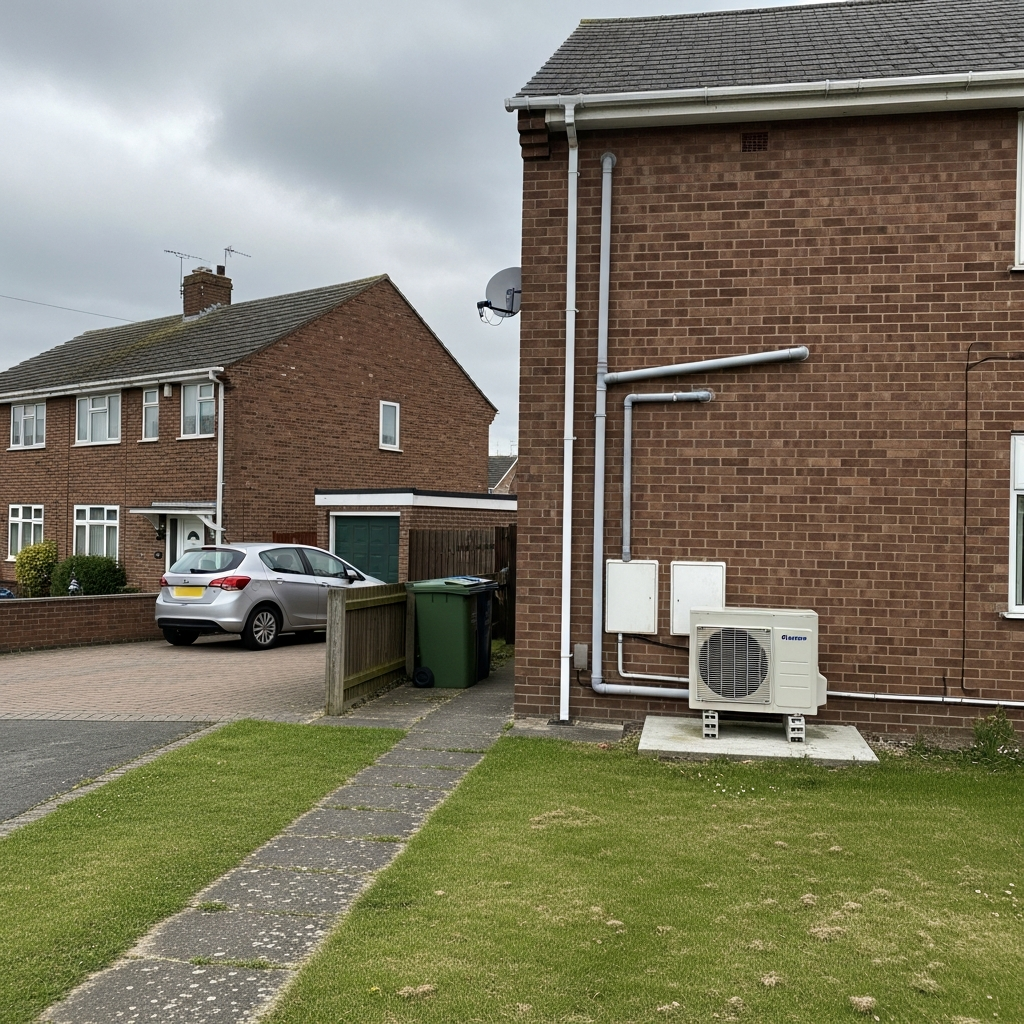
One of the most common questions homeowners ask before installing an air source heat pump is whether they need planning permission. The good news is that most domestic air source heat pump installations in England do not require a formal planning application — they fall under "permitted development." But there are conditions, and getting them wrong can cause problems.
This guide covers the full picture: what permitted development allows, what the conditions are, when you do need to apply for planning permission, and how the rules differ across the UK.
Check if your home qualifies for a heat pump
Use the free suitability checkerIncludes planning and placement considerations.
What Is Permitted Development?
Permitted development is a set of rights that allow homeowners to make certain changes to their property without needing to apply for planning permission. It covers things like small extensions, loft conversions (within limits), and — relevant here — the installation of certain types of renewable energy equipment, including air source heat pumps.
The key legislation is the Town and Country Planning (General Permitted Development) (England) Order 2015, specifically Part 14 (Class G for air source heat pumps). Scotland, Wales, and Northern Ireland have their own rules, which we cover later in this guide.
Permitted Development Conditions for Air Source Heat Pumps in England
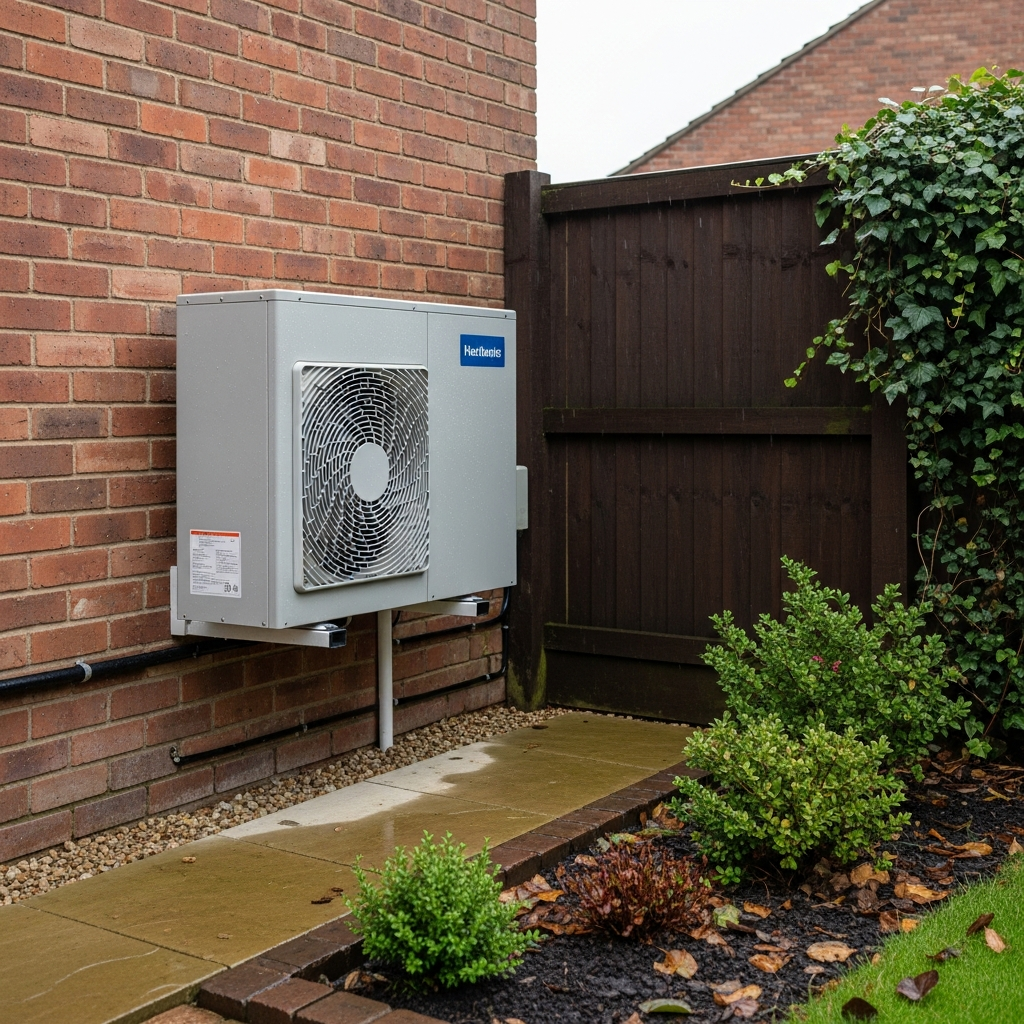
You can install an air source heat pump without planning permission in England, provided all of the following conditions are met:
1. Only One Unit Per Property
Permitted development allows one air source heat pump per property. If you want to install two units (for example, one for heating and one for hot water), you will need planning permission for the second.
2. The Unit Must Comply With MCS Planning Standards
The heat pump installation must comply with the MCS Planning Standards (MIS 3005), which set requirements for noise levels and placement. This is not optional — it is a condition of permitted development.
3. Noise Limits
This is the condition that catches people out most often. The installation must not exceed 42 dB(A) at the nearest neighbouring property's habitable room window or door. This is measured as the rated sound power level of the unit, adjusted for distance and any shielding.
Most modern domestic air source heat pumps have a sound power level of 55-62 dB(A) at one metre. At a distance of three metres, this drops to roughly 42-50 dB(A). So positioning is critical — the unit needs to be far enough from neighbours' windows to meet the 42 dB limit.
Your installer should carry out a noise assessment as part of the design process. If the assessment shows the 42 dB limit cannot be met, you have two options: reposition the unit, or apply for planning permission.
4. Placement Rules
| Rule | Requirement |
|---|---|
| Distance from boundary | At least 1 metre |
| Highway-facing wall or roof | Not permitted |
| Listed building curtilage | Not permitted under PD |
| Flat roof protrusion | Max 1 metre above highest roof point |
| Pitched roof | Must not protrude above ridge line |
| Noise at neighbour's window | Max 42 dB(A) |
| Units per property | Maximum 1 under PD |
5. Visual Impact
The installation should be sited, so far as practicable, to minimise its effect on the external appearance of the building and its impact on amenity. In practice, this means positioning the unit at the side or rear of the property rather than prominently at the front.
6. Removal Condition
If the heat pump is no longer needed for heating, it must be removed as soon as reasonably practicable. In practice, this condition is rarely enforced, but it does mean you cannot leave a disused unit permanently installed.
When You DO Need Planning Permission
Even though most installations qualify as permitted development, there are several situations where you will need to submit a planning application:
Listed Buildings
If your home is a listed building (Grade I, II*, or II), you will need listed building consent for any external alterations, including installing a heat pump. You may also need planning permission. The key concern is the visual impact of the outdoor unit and any associated pipework on the building's historic character. For more on heat pumps in period homes, see our guide on heat pumps for older houses.
Conservation Areas
If your property is in a conservation area, permitted development rights for heat pumps are more restricted. In conservation areas, the unit must not be installed on a wall or roof that fronts a highway and is visible from the highway. If the only practical location is on a wall or roof facing a road, you will need planning permission.
Some conservation areas have Article 4 directions that remove specific permitted development rights. Check with your local planning authority whether an Article 4 direction applies to your property.
Flats and Maisonettes
Permitted development rights for heat pumps apply to houses, not flats or maisonettes. If you live in a flat, you will need planning permission for an external heat pump unit, in addition to any freeholder permissions required. See our guide on heat pumps for flats for more detail.
If Permitted Development Rights Have Been Removed
In some areas, permitted development rights have been removed entirely or partially through conditions on newer housing developments or through Article 4 directions. Your property deeds or a call to the local planning department will confirm whether your permitted development rights are intact.
If You Cannot Meet the Noise Condition
If the 42 dB noise limit at the nearest neighbour's window cannot be achieved — perhaps because your property is very close to the neighbours — you will need planning permission. The planning application will need to include a noise assessment and may require mitigation measures.
For a comprehensive overview of the installation process including planning considerations, see our heat pump installation guide.
Find out what a heat pump would cost for your home
Try the free calculatorInstant estimate based on your property type and size.
Scotland: Different Rules
Scotland has its own permitted development rules for air source heat pumps, set out in the Town and Country Planning (General Permitted Development) (Scotland) Order 1992 (as amended).
The conditions are broadly similar to England but with some differences:
- Only one heat pump per property (same as England)
- The unit must comply with MCS Planning Standards
- The 42 dB noise limit at the nearest neighbour applies
- The unit must not be installed on a wall fronting a road
- In conservation areas and for listed buildings, the same additional restrictions and consent requirements apply
Wales: Broadly Aligned
Wales follows a similar framework under the Town and Country Planning (General Permitted Development) Order 1995 (as amended for Wales). The conditions mirror England's rules closely, including the 42 dB noise limit, the one-unit-per-property rule, and the placement restrictions.
Northern Ireland: Slightly Different
Northern Ireland has its own planning system under the Planning Act (Northern Ireland) 2011. Permitted development for heat pumps exists but is defined in The Planning (General Permitted Development) Order (Northern Ireland) 2015. The principles are similar — one unit, noise limits, placement conditions — but the specific wording and thresholds can differ. Check with your local council's planning department if you are in Northern Ireland.
The Planning Application Process
If you do need planning permission, here is what to expect:
What You Need to Submit
- Application form: Available through the Planning Portal (or equivalent in Scotland, Wales, and Northern Ireland)
- Site plan: Showing the proposed location of the heat pump unit
- Elevations/drawings: Showing the unit's appearance and position on the building
- Noise assessment: Demonstrating the expected noise level at neighbouring properties
- Design and access statement: Explaining why the chosen position is appropriate
- Planning fee: Currently £258 for a householder application in England
Timeline and Approval Rates
Householder planning applications have a statutory determination period of eight weeks. In practice, straightforward heat pump applications are often decided within six weeks. Planning applications for domestic heat pumps have very high approval rates — well over 90% in most local authority areas. The most common reason for refusal is noise impact on neighbours.
Practical Tips for Staying Within Permitted Development
Most homeowners can avoid the planning process entirely by following these tips:
- Position the unit at the side or rear of the house: This avoids the "fronting a highway" restriction and usually makes the noise condition easier to meet
- Check the distance to your neighbour's nearest window: Use the manufacturer's noise data and the inverse square law to estimate the noise level at that point
- Choose a quieter unit: There is significant variation in noise levels between models. If your property has tight boundaries, prioritise a low-noise model (some are as low as 50 dB(A) at one metre)
- Use acoustic barriers if needed: A purpose-built acoustic fence or enclosure can reduce noise levels by 5-10 dB, potentially bringing you within the 42 dB limit
- Keep the unit at least one metre from the boundary: This is a hard rule — there is no flexibility
For more on where to position your heat pump, see our guide on the best position for an air source heat pump.
What About Ground Source Heat Pumps?
Ground source heat pumps have their own permitted development rules. Horizontal ground loops (buried in trenches) are generally permitted development, as the work is underground and has no visible impact. Vertical boreholes may require planning permission in some circumstances, particularly if the drilling equipment or access arrangements affect highways or neighbours.
Building Regulations
Regardless of whether you need planning permission, all heat pump installations must comply with Building Regulations. This covers the electrical installation, the heating system design, and energy efficiency. Your MCS-certified installer will handle Building Regulations compliance as part of the installation — you should not need to make a separate Building Regulations application.
For a complete overview of the full installation process, read our heat pump installation guide. Homeowners interested in combining renewable technologies should also consider how solar panels can complement a heat pump system — solar installations have their own permitted development rules, and your installer can advise on both.
Ready to move forward with a heat pump?
Get free quotes from MCS-certified installersInstallers handle noise assessment and planning compliance for you.
Frequently Asked Questions
Do I need planning permission for an air source heat pump?
In most cases, no. Air source heat pumps are permitted development in England, Scotland, and Wales, provided you meet the conditions on noise, placement, and number of units. You will need planning permission if your home is listed, if you cannot meet the noise limits, or if your permitted development rights have been removed.
What is the 42 dB noise limit?
The noise from your heat pump must not exceed 42 dB(A) measured at the nearest neighbouring property's habitable room window or door. This is a condition of permitted development. Your installer should carry out a noise assessment to confirm compliance before installation.
Can I put a heat pump on the front of my house?
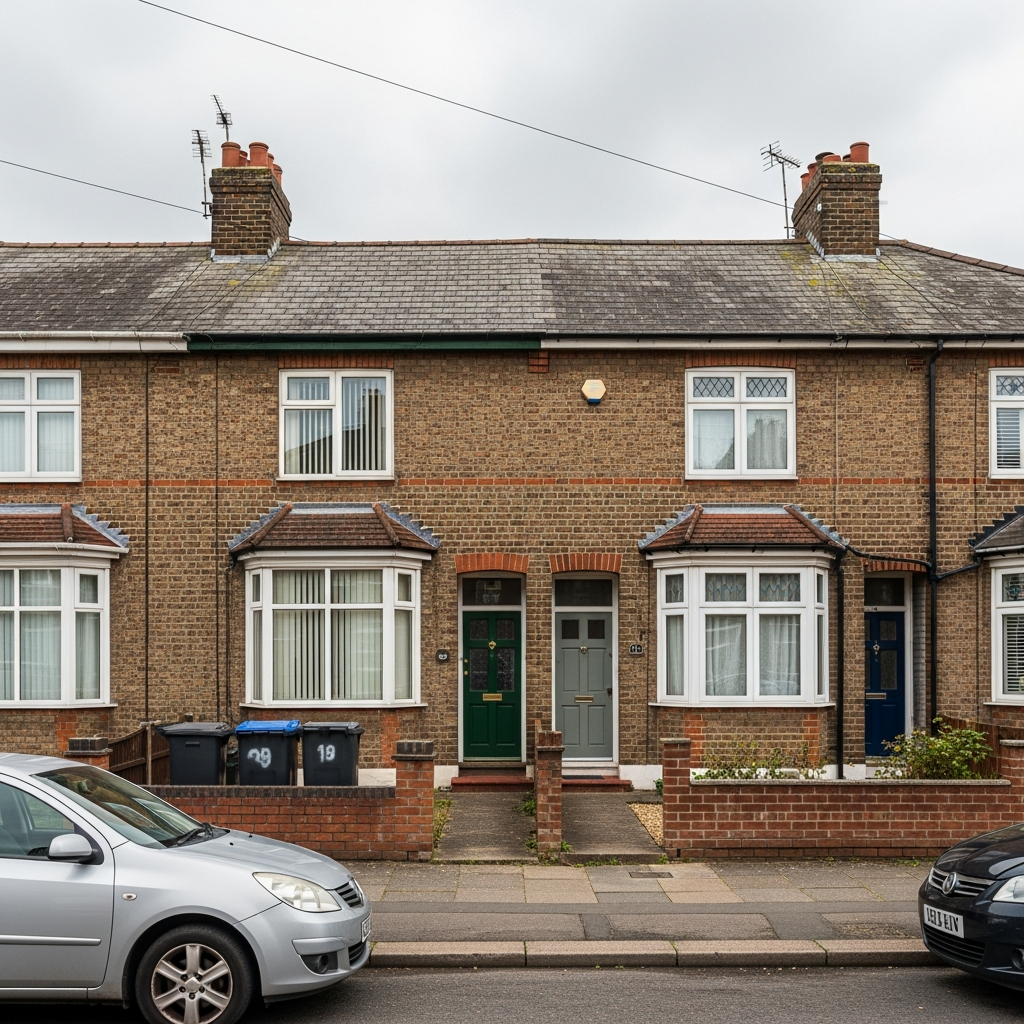
Under permitted development, no — the unit must not be on a wall or roof that fronts a highway. You could apply for planning permission to do this, but approval is unlikely as it would affect the streetscape. Side and rear positions are strongly preferred.
Do I need planning permission in a conservation area?
Not necessarily, but the rules are stricter. In a conservation area, the unit must not be on a wall or roof facing a highway if it would be visible from the highway. If the only practical position is road-facing, you will need planning permission. Check whether any Article 4 directions apply to your property.
How close to my boundary can I put the heat pump?
The permitted development rules require the unit to be at least one metre from the property boundary. This is a hard limit — you cannot go closer without applying for planning permission.
Does my installer handle the planning side?
A good MCS-certified installer will check whether your installation qualifies as permitted development and carry out the noise assessment. If planning permission is needed, they may help with the application or recommend a planning consultant. Always confirm what is included in their quote.
About Planning Permission, Heat Pumps, and UK Regulations
Air source heat pumps fall under permitted development rights in England, Scotland, and Wales, governed by specific conditions around noise, placement, and visual impact. The MCS (Microgeneration Certification Scheme) sets the installation standards that determine planning compliance. Building Regulations approval is separate from planning permission and covers the technical aspects of installation. The UK government continues to simplify planning rules for renewable energy installations as part of its Net Zero strategy, recognising that straightforward planning processes encourage uptake of low-carbon heating technologies including heat pumps and solar energy systems.