Air Source Heat Pump Sizing: What Size Do You Need?
Getting the right size heat pump is critical — an oversized system wastes money and runs less efficiently, while an undersized one leaves you cold. Most UK homes need between 6kW and 12kW, but only a proper heat loss calculation can tell you exactly what your home requires.
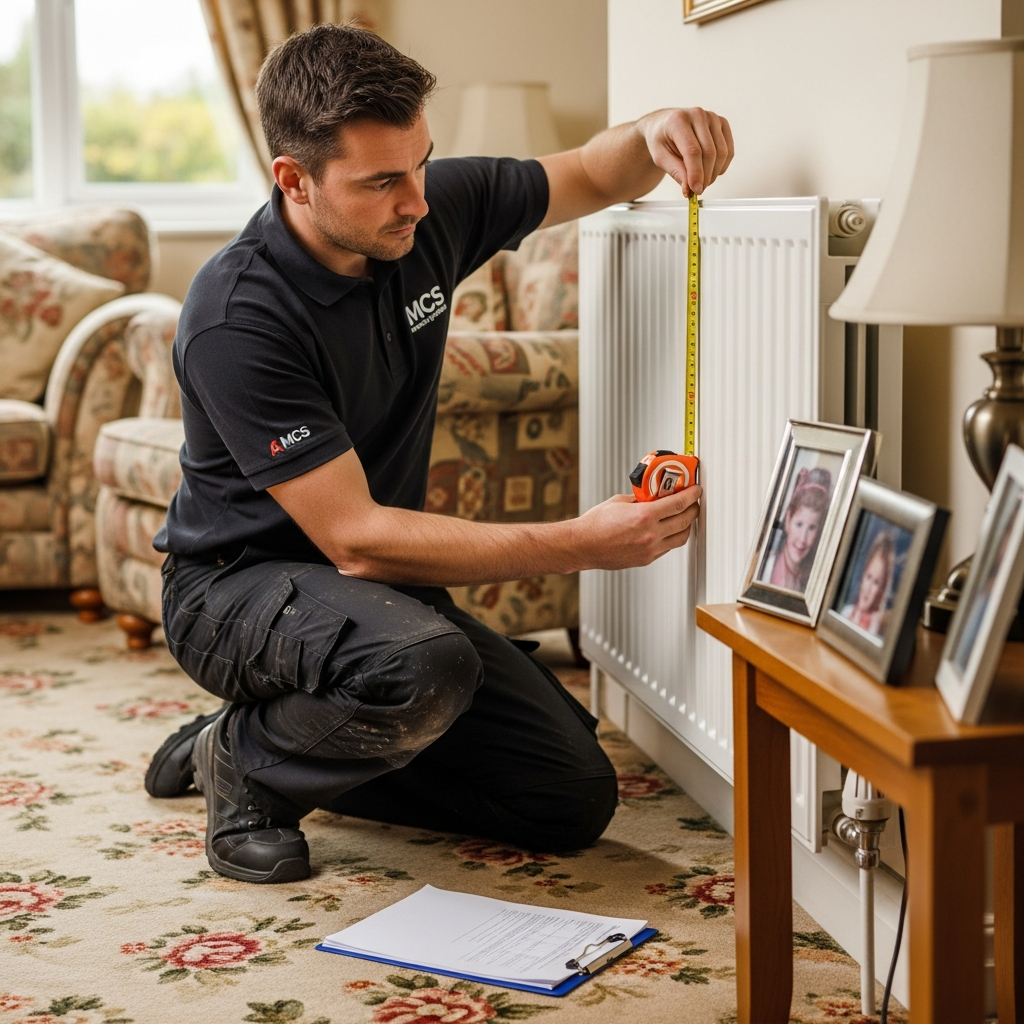
Getting the right size heat pump is one of the most important decisions in the entire installation process. Too small and your home will not be warm enough on the coldest days. Too large and you waste money upfront, the system runs inefficiently, and your running costs are higher than they should be.
Unlike a gas boiler, where a slight oversize does not cause major problems, an oversized heat pump actively harms performance. This guide explains how sizing works, what size you are likely to need, and how your installer should be calculating it.
Get a rough size estimate for your property
Use the free calculatorNo email required. Instant estimate based on your property details.
How Heat Pump Sizing Works
The size of your heat pump is measured in kilowatts (kW) of heat output. Common residential sizes range from 5kW to 16kW, with most UK homes needing between 6kW and 12kW.
The correct size is determined by a heat loss calculation — a room-by-room assessment of how much heat your home loses on the coldest day of the year. The heat pump needs to be large enough to replace this heat as fast as it escapes.
What Is a Heat Loss Calculation?
A heat loss calculation considers:
- Room dimensions: Height, width, and length of every heated room
- Wall construction: Solid brick, cavity (insulated or uninsulated), timber frame, etc. Each has a different rate of heat transfer (U-value)
- Window area and type: Single, double, or triple glazing. Larger windows lose more heat
- Roof/loft insulation: Depth and type of insulation above heated rooms
- Floor construction: Solid or suspended, insulated or uninsulated
- Ventilation rate: How much heat is lost through air changes — draughty homes lose more
- Design temperature: The coldest outdoor temperature the system should cope with (typically -3°C to -5°C for the UK)
- Indoor target temperature: Usually 21°C for living areas, 18°C for bedrooms
The calculation produces a total heat loss figure in kilowatts — this is the output your heat pump needs to deliver at design conditions.
MCS requires a room-by-room heat loss calculation for every heat pump installation. Any installer who sizes a heat pump based on floor area alone, or who uses a "rule of thumb" without a proper calculation, is not following MCS standards.
Common Sizes by Property Type
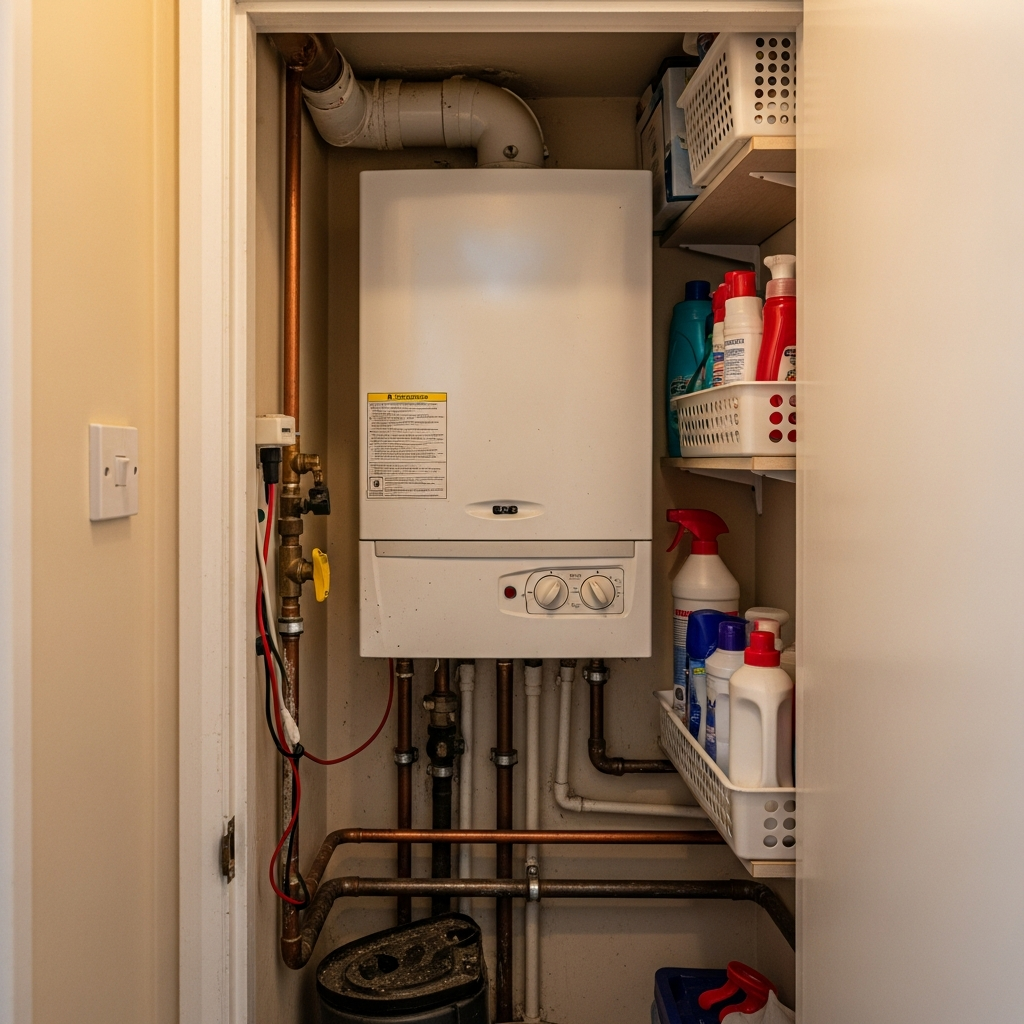
While every property is different, here are typical sizes based on UK housing stock. These assume reasonably well-insulated homes (cavity walls insulated, 270mm loft insulation, double glazing).
| Property Type | Typical Floor Area | Typical Heat Loss | Common Heat Pump Size |
|---|---|---|---|
| 1-bed flat | 40 – 55 m² | 2.5 – 3.5 kW | 4 – 5 kW |
| 2-bed terrace | 55 – 75 m² | 3.5 – 5 kW | 5 – 6 kW |
| 3-bed semi | 80 – 110 m² | 5 – 8 kW | 6 – 10 kW |
| 3-bed detached | 100 – 130 m² | 7 – 10 kW | 8 – 12 kW |
| 4-bed detached | 130 – 180 m² | 9 – 14 kW | 10 – 14 kW |
| 5-bed large detached | 180 – 250 m² | 12 – 18 kW | 14 – 16 kW |
Guidelines only — actual requirements depend on insulation, building fabric, location, and target temperatures. Always rely on a professional heat loss calculation.
For poorly insulated homes (solid walls without insulation, single glazing, minimal loft insulation), heat loss can be 50-100% higher than the figures above. This often means either a larger heat pump or — more sensibly — improving insulation before installation.
Why Correct Sizing Matters So Much
What Happens If the Heat Pump Is Too Small
- The heat pump runs at maximum output constantly on cold days, operating at its least efficient
- The house does not reach the desired temperature during cold snaps
- Some systems have a backup electric immersion heater that kicks in to cover the shortfall — this is extremely expensive to run (100% electric, no COP benefit)
- Hot water production is compromised because the system prioritises space heating
What Happens If the Heat Pump Is Too Large
Counter-intuitively, an oversized heat pump is often worse than an undersized one:
- Short cycling: The heat pump reaches the target temperature quickly and switches off, then switches on again shortly after. This constant on-off cycling is highly inefficient and wears out the compressor faster
- Lower COP: Heat pumps are most efficient when running continuously at part load. An oversized system never gets to settle into efficient continuous operation
- Higher upfront cost: You paid more for a larger unit than you needed
- Higher running costs: The efficiency penalty of short cycling can increase running costs by 10-20%
- More noise: Larger units produce more noise, even if they are running at part load
The ideal outcome is a heat pump that is just large enough to maintain comfort on the coldest design day, and that runs for extended periods at moderate output for most of the heating season.
Find an installer who does proper heat loss calculations
Get free quotesAll our partner installers perform MCS-compliant room-by-room surveys.
Hot Water Sizing
Your heat pump also needs to heat your domestic hot water. This requires additional capacity, but not as much as you might think — most of the time, the heat pump can switch between heating and hot water without any issue.
The key sizing consideration for hot water is the cylinder size:
| Household Size | Recommended Cylinder Size | Recovery Time (from cold) |
|---|---|---|
| 1-2 people | 170 – 200 litres | 2 – 3 hours |
| 3-4 people | 200 – 250 litres | 3 – 4 hours |
| 5+ people | 250 – 300 litres | 3.5 – 5 hours |
Recovery time is from cold. In practice, the cylinder rarely empties completely.
The Role of Insulation in Sizing
Insulation and heat pump sizing are directly linked. Better insulation means lower heat loss, which means a smaller (and cheaper) heat pump.
Consider a 3-bed semi-detached house:
6-8 kW
well insulated
Cavity filled, 300mm loft, double glazing — ~£10,000 install
8-10 kW
moderately insulated
Cavity filled, 100mm loft, double glazing — ~£12,000 install
12-14 kW
poorly insulated
Uninsulated solid walls, minimal loft — ~£15,000 install
In the worst case, spending £2,000-£3,000 on insulation improvements could reduce the heat pump size needed by 4-6kW, saving £2,000-£4,000 on the heat pump and hundreds of pounds per year in running costs. Insulation improvement almost always pays for itself.
What About Variable Speed Heat Pumps?
Most modern air source heat pumps are inverter-driven, meaning they can vary their output. A 10kW heat pump does not always run at 10kW — it modulates down to perhaps 3-4kW when less heat is needed.
This modulation is what makes heat pumps efficient in mild weather. But there are limits:
- Modulation range: Most units can modulate down to about 30-40% of their maximum output. A 10kW unit can modulate down to about 3-4kW
- If demand is below the minimum modulation, the heat pump will cycle on and off — which is less efficient
- The best sizing ensures the heat pump's minimum output is below the property's heat demand in mild weather — keeping it running continuously as much as possible
This is another reason why oversizing is harmful — a 16kW unit in a house that only needs 6kW will be cycling on and off even in cold weather because its minimum output (5-6kW) already meets the demand. For more on how this affects efficiency, read our guide to how heat pumps work.
How Your Installer Should Size the System
A competent installer will follow this process:
- Room-by-room heat loss calculation: Using software (such as the MCS Heat Pump Calculator or similar tools), measuring every room and accounting for all building fabric elements
- Total heat loss at design temperature: The sum of all room heat losses gives the total property heat loss at the coldest expected outdoor temperature
- Add hot water demand: A small allowance for domestic hot water production (though this is usually handled by scheduling rather than additional capacity)
- Select the appropriate heat pump size: The heat pump output at the design outdoor temperature should match or slightly exceed the calculated heat loss
- Check output at design conditions: Important — a heat pump's output varies with outdoor temperature. A unit rated at 10kW at 7°C might only deliver 8kW at -3°C. The installer must check the output at the design temperature, not just the headline rating
Red Flags in the Sizing Process
Be cautious if your installer:
- Sizes based on floor area alone (e.g., "100 m² = 10kW")
- Does not visit the property for measurements
- Cannot show you a room-by-room heat loss calculation
- Recommends a significantly larger unit than other installers
- Does not discuss your insulation levels or radiator sizes
A proper heat loss calculation takes time and expertise. It is one of the key differences between a good and a poor installation. For more on choosing the right installer, read our installation guide. For brand comparisons at different sizes, see our best heat pump brands guide.
Can You Size a Heat Pump Yourself?
You can get a rough estimate using our heat pump calculator, but a professional calculation is essential before installation. The rough estimate is useful for:
- Understanding approximately what size system you need
- Getting a ballpark on costs before requesting quotes
- Checking whether an installer's recommendation seems reasonable
You can also use our suitability checker to assess whether your property is a good candidate for a heat pump based on its characteristics.

Frequently Asked Questions
What size heat pump do I need for a 3-bed house?
Most 3-bedroom houses in the UK need a heat pump between 6kW and 10kW, depending on insulation quality, building age, and location. A well-insulated 3-bed semi might need only 6-7kW. A poorly insulated 3-bed detached might need 10-12kW. The only way to know for certain is a proper heat loss calculation.
Is bigger always better?
No — this is one of the biggest misconceptions. An oversized heat pump is less efficient, more expensive, noisier, and more prone to problems than a correctly sized one. Correct sizing is always better than oversizing.
What if my heat demand is between two heat pump sizes?
If your calculated heat loss falls between two available sizes (say 8kW and 10kW), your installer will consider several factors: the modulation range of each unit, your insulation plans, and whether a buffer tank is included. In many cases, the smaller unit with good system design is the better choice.
Does the heat pump need to be sized for the coldest day?
Yes. The design temperature for the UK is typically -3°C to -5°C, depending on your location. The heat pump should be able to maintain comfort at this temperature without relying on backup electric heating. However, it does not need to cope with extreme outlier temperatures — a few hours per year below design temperature is acceptable.
Can I add a second heat pump later if one is not enough?
It is technically possible but expensive and rarely the right approach. Getting the sizing right first time is far better than retrofitting a second unit. If your installer suggests a cascade system (two heat pumps working together), this should be part of the initial design, not an afterthought.
What about the hot water — does that need extra capacity?
Usually not. Most residential heat pumps can switch between space heating and hot water production. The hot water is typically scheduled (e.g., reheating the cylinder overnight and mid-afternoon) so it does not coincide with peak heating demand. Your installer should design the schedule so both needs are met comfortably.
Ready to find out what size heat pump your home needs?
Get free installer quotesMCS-certified installers who perform proper room-by-room heat loss calculations.
Understanding Heat Pump Sizing in Context
Correct sizing is the foundation of a successful heat pump installation. It directly affects upfront costs (larger systems cost more), running costs (oversized systems are less efficient), and owner satisfaction (as confirmed by real owner reviews). The sizing decision connects to installation quality, brand selection, and the £7,500 BUS grant which applies regardless of system size. For homes also considering solar PV, a correctly sized heat pump paired with solar panels offers the optimal balance of cost and performance.