What Is the Best Position for an Air Source Heat Pump?
The position of your heat pump directly affects its efficiency by up to 10%, determines whether you need planning permission, and can make the difference between happy and unhappy neighbours. Side or rear placement with unrestricted airflow is ideal for most UK homes — here is exactly how to get it right.
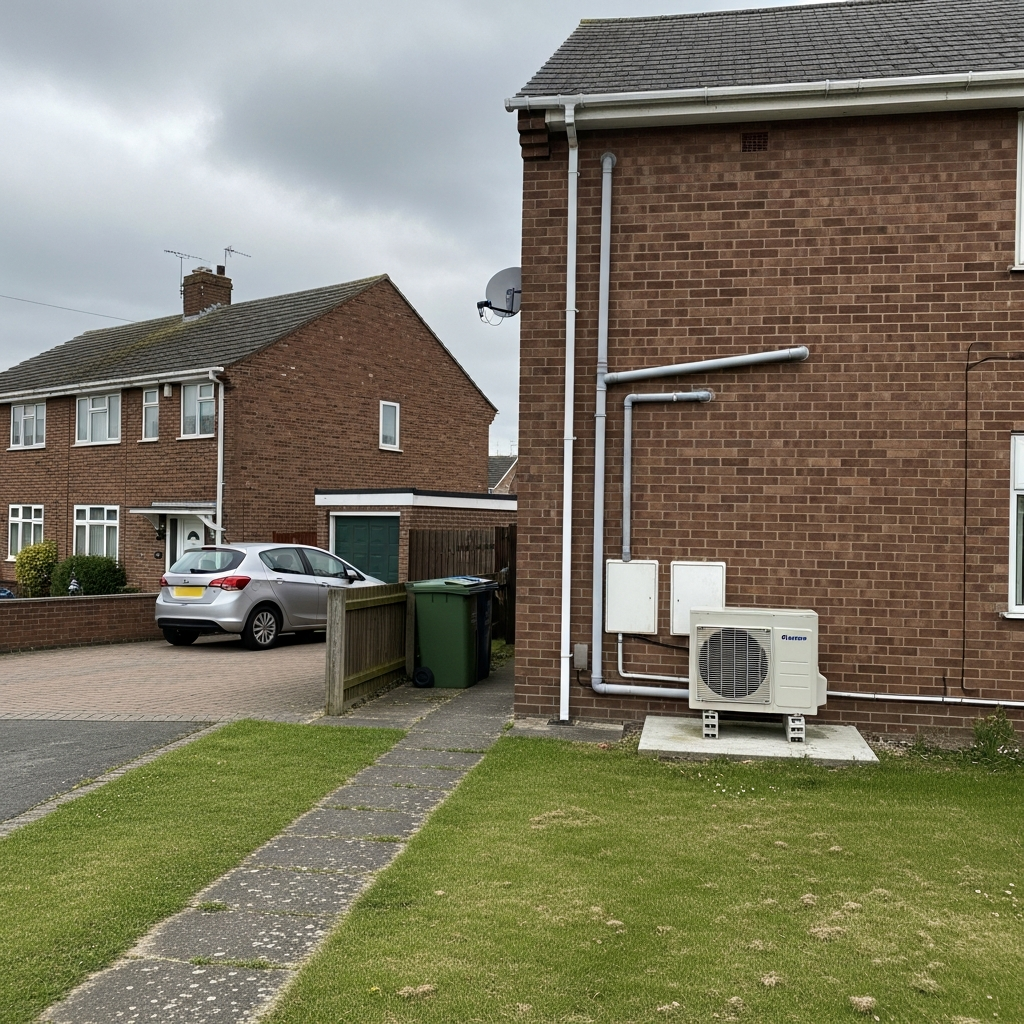
The position of your air source heat pump matters more than most people realise. Get it right and the unit runs efficiently, quietly, and within planning rules. Get it wrong and you face reduced performance, neighbour complaints, or even enforcement action from the council.
This guide covers everything you need to consider when choosing where to place your heat pump — from the technical requirements to the practical and aesthetic considerations.
Is your home suitable for a heat pump?
Check suitability in 60 secondsIncludes placement and space assessment.
The Basics: What Every Position Needs
Adequate Airflow
| Clearance | Minimum Distance | Notes |
|---|---|---|
| Behind unit (wall side) | 300mm | Prevents recirculation of cold exhaust air |
| In front (discharge side) | 500-1000mm | Ideally open with no obstructions |
| Each side | 300mm | For airflow and maintenance access |
| Above | No overhangs | Avoid canopies, low eaves, close-fitting shelters |
| From property boundary | 1 metre | Permitted development hard rule |
A Solid, Level Base
The unit needs to sit on a firm, level surface. A concrete slab at least 100mm thick is the most common approach. The base should be slightly raised (50-100mm) above ground level to prevent flooding and allow condensate drainage. In snowy areas, raise it higher (300mm or more).
Condensate Drainage
Heat pumps produce condensate water — sometimes several litres per day in cold, humid weather. Options include a soakaway, a drain, or draining onto a gravel bed.
The Best Positions: Ranked
1. Side of the House (Preferred)
The side passage or side return is the most popular and generally the best position. Benefits include being out of sight from the front, usually sufficient airflow clearances, short pipework runs, and meeting the permitted development requirement of not fronting a highway.
2. Rear of the House
The back garden is another good option, particularly if the side passage is too narrow. Position close to the house to minimise pipework length. Consider proximity to outdoor living areas.
3. Front of the House (Limited)
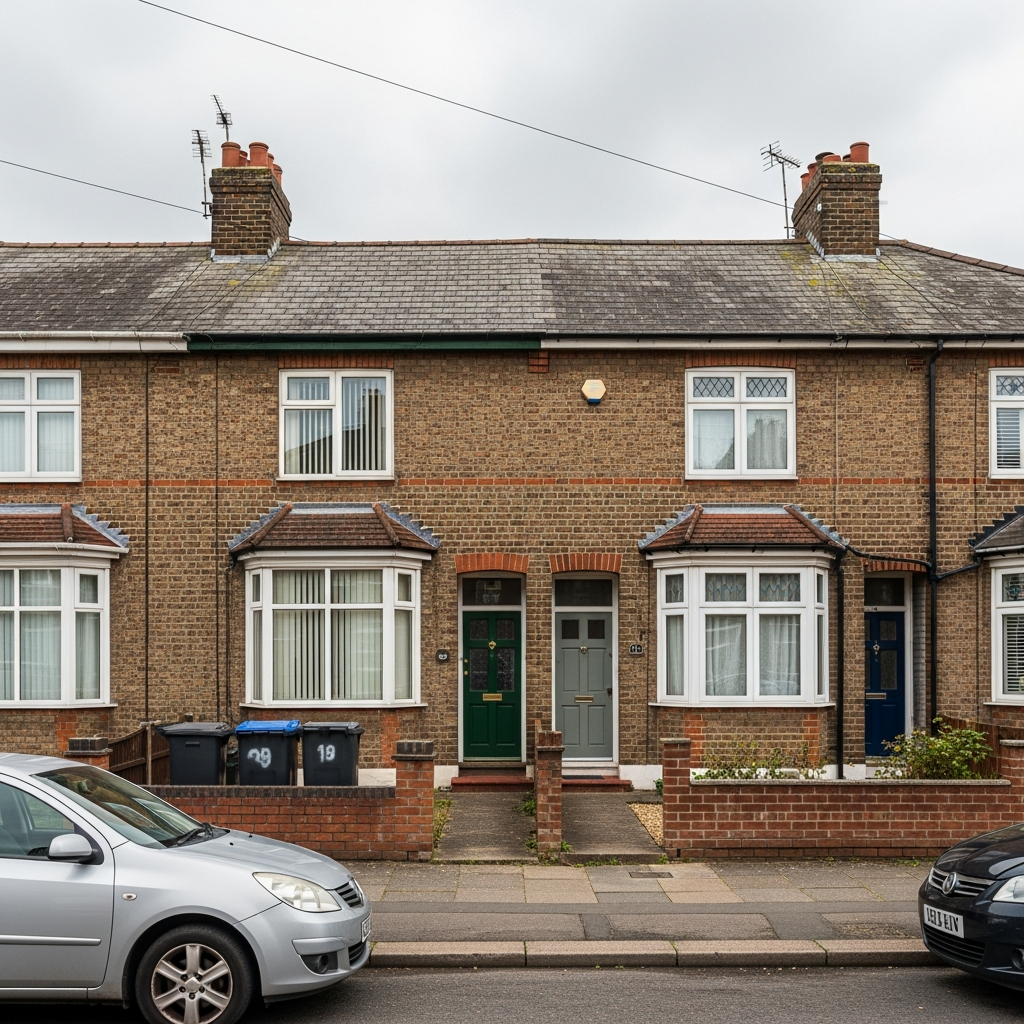
Front positioning is generally the least preferred. Under permitted development rules, the unit must not be on a wall or roof that fronts a highway.
4. Flat Roof or Elevated Position
Mounting on a flat roof (garage, extension) can work well where ground-level space is limited. Good airflow and reduced ground-level noise impact. Under PD, must not protrude more than one metre above the highest roof point.
What would a heat pump cost for your property?
Get an instant estimateFactors in your property type and layout.
Noise Considerations
Noise is often the deciding factor. The noise limit for permitted development is 42 dB(A) at the nearest neighbour's habitable room window.
How Sound Reduces with Distance
Sound levels decrease by approximately 6 dB for every doubling of distance. A unit producing 55 dB at 1 metre drops to approximately 43 dB at 4 metres and 37 dB at 8 metres.
Reducing Noise
- Acoustic barrier or fence: Can reduce noise by 5-10 dB without restricting airflow
- Anti-vibration mounts: Prevent vibration transmission through the ground and building
- Choosing a quieter model: Some units produce as little as 48-50 dB at one metre
- Night mode: Drops fan speed and output, reducing noise by 3-5 dB
Distance from the Indoor System
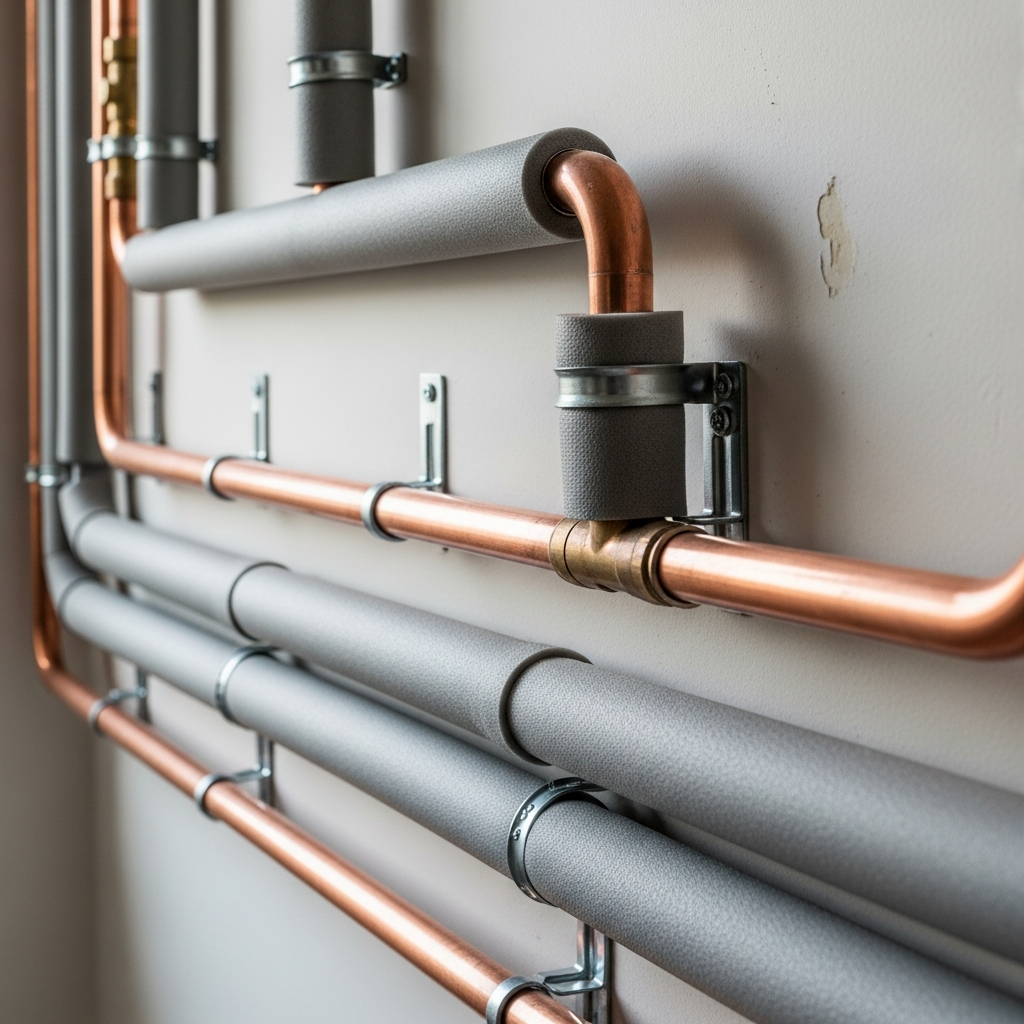
Shorter pipe runs mean less heat loss, lower installation cost, and staying within manufacturer limits (most split systems have a maximum of 15-30 metres). Ideally, position the outdoor unit close to the hot water cylinder or main heating manifold.
Aesthetics and Screening
- Trellis with climbing plants: Attractive but ensure plants do not block airflow
- Slatted timber screen: Use horizontal slats with gaps, at least 500mm from unit
- Low hedge or shrubs: Keep trimmed and away from clearance zones
Avoid fully enclosed boxes or sheds — the unit needs to breathe.
Planning Rules on Position
- At least 1 metre from the property boundary
- Not on a wall or roof fronting a highway
- Must meet the 42 dB noise limit at the nearest neighbour's habitable room
- Positioned to minimise visual impact
For full details, see our dedicated guide to air source heat pump planning permission. For the complete installation process, visit our heat pump installation guide.
Common Positioning Mistakes
- Placing in a tight corner: Restricts airflow, amplifies noise, hinders maintenance
- Under a bedroom window: Noise enters directly; cold air discharge causes draughts if window opened
- Too far from the house: Long pipe runs reduce efficiency and increase cost
- Forgetting maintenance access: Leave at least 600mm on the service side for an engineer to work
Get expert advice on positioning for your property
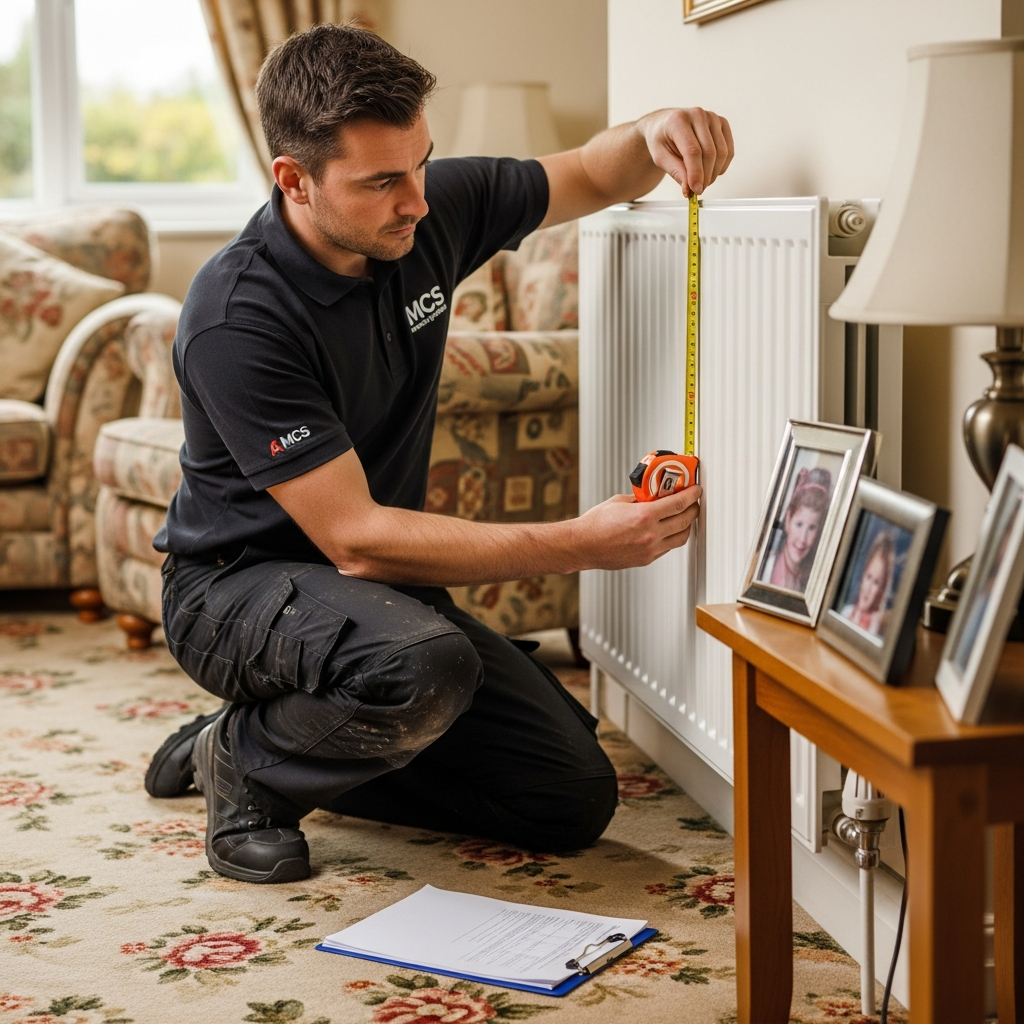
Get free quotes from local installersMCS-certified installers will assess the best position during their survey.
Frequently Asked Questions
How far from my house should the heat pump be?
As close as practical while meeting the minimum clearances — typically 300mm from the wall behind the unit. There is no benefit to placing it further away, and longer pipe runs reduce efficiency.
Can I put a heat pump in my garage?
Not inside it — the unit needs outdoor air. However, positioning on the outside wall of a garage is often a good option, as garages are frequently on the side of the property.
Does the heat pump need to be off the ground?
The base should be raised 50-100mm above ground level for drainage. In areas with heavy snowfall, raise it higher. Wall-mounting on brackets is another option.
Can I move the heat pump after installation?
Yes, but it costs £1,000-£2,000 or more and requires an F-gas certified engineer. Get the position right first time.
Does positioning affect efficiency?
Yes. A well-positioned unit with unrestricted airflow will typically be 5-10% more efficient than one in a tight, enclosed spot.
What if my only option is the front of the house?
You will need planning permission if the unit fronts a highway. If approved, consider screening with a slatted fence or planting. A well-screened heat pump at the front is better than no heat pump at all.
About Heat Pump Positioning and Home Energy Systems
Correct positioning of an air source heat pump is governed by MCS Planning Standards (MIS 3005) and the Town and Country Planning (General Permitted Development) Order 2015. These regulations ensure installations meet noise, airflow, and visual impact requirements. The position also affects system efficiency, with unrestricted airflow improving COP by up to 10%. Homeowners installing both a heat pump and solar panels should consider positioning both systems during the initial site survey to optimise the layout and minimise installation costs.