Air Source Heat Pump Hot Water: Can It Heat Your Water?
Air source heat pumps heat your hot water and your home from the same system — no separate boiler needed. With a properly sized 200-litre cylinder, a typical family gets continuous hot water at 50°C, instant delivery at mains pressure (often better flow than a combi boiler), and summer hot water costs of just 70p-£1.25 per day.
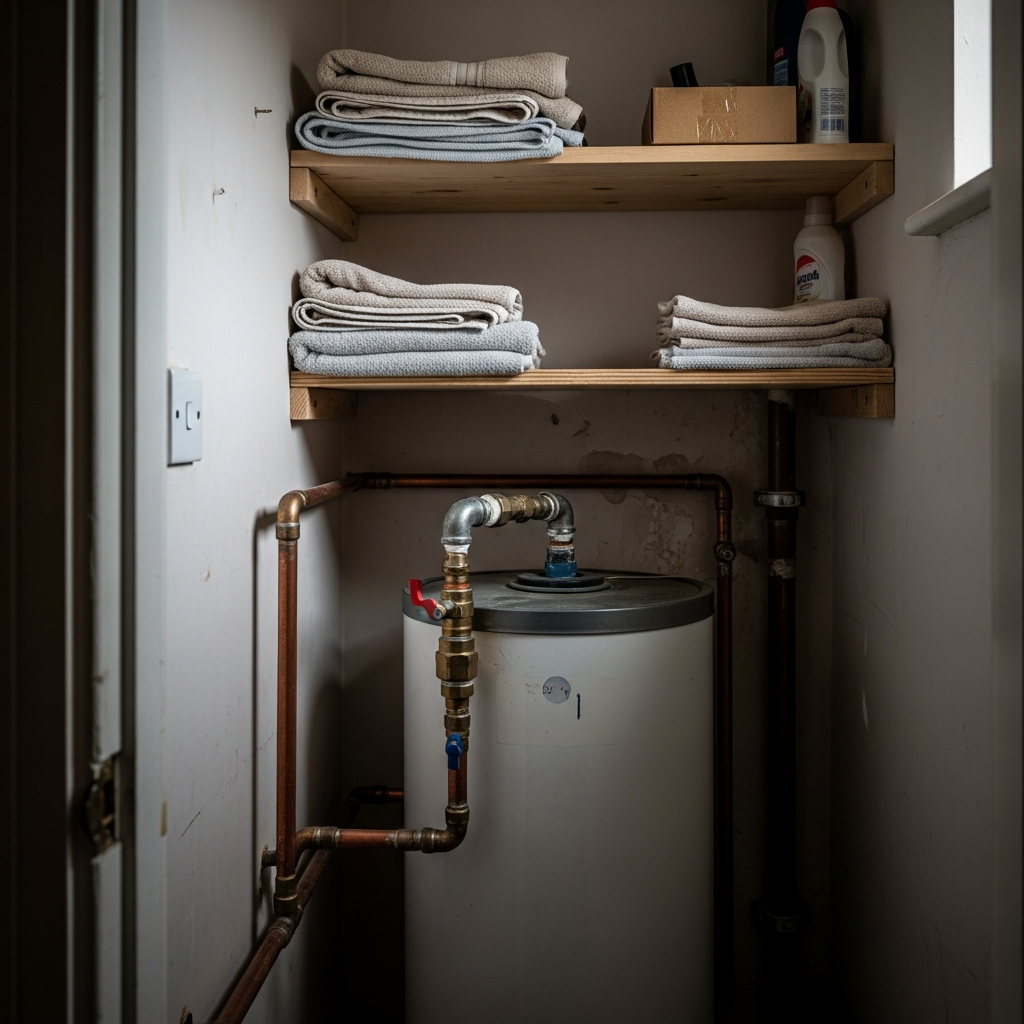
One of the most common questions about air source heat pumps is whether they can heat your domestic hot water as well as your home. The answer is a clear yes — air-to-water heat pumps are designed to do both. But the way they heat water is different from a gas boiler, and understanding those differences helps you get the best performance.
Calculate your heat pump running costs including hot water
Use the free calculatorIncludes hot water electricity consumption. Instant results.
How a Heat Pump Heats Your Hot Water
An air-to-water heat pump heats water in a cylinder — not on demand like a combi boiler. The heat pump circulates warm water through a coil inside the cylinder, gradually raising the stored water to the target temperature (typically 48-52°C). This takes 1-3 hours from cold.
Efficiency During Hot Water Production
Heating hot water to 50°C is less efficient than space heating at 40°C, because the higher temperature reduces the COP. During hot water production, expect a COP of 2.0-2.8, compared to 3.0-4.0 during space heating with underfloor heating or oversized radiators.
Hot water typically accounts for 15-25% of a household's total heat pump electricity consumption. For a detailed breakdown, see our running costs guide.
What Temperature Does a Heat Pump Heat Water To?
| Temperature Zone | Range | Purpose |
|---|---|---|
| Standard storage | 48-52°C | Normal daily use — showers, baths, washing up |
| Legionella pasteurisation | 60°C (weekly) | Kills bacteria — immersion heater assists |
| Danger zone (Legionella growth) | 20-45°C | Bacteria can multiply — avoid storing water here |
| Comfortable shower | 38-42°C | Hot water blended with cold at the tap |
The lower storage temperature (48-52°C vs 60-65°C with gas) is a deliberate efficiency choice. The legionella pasteurisation cycle to 60°C runs once or twice per week, using the immersion heater for the final 8-10°C boost. This typically uses 3-5 kWh per cycle — a small energy cost for essential safety.
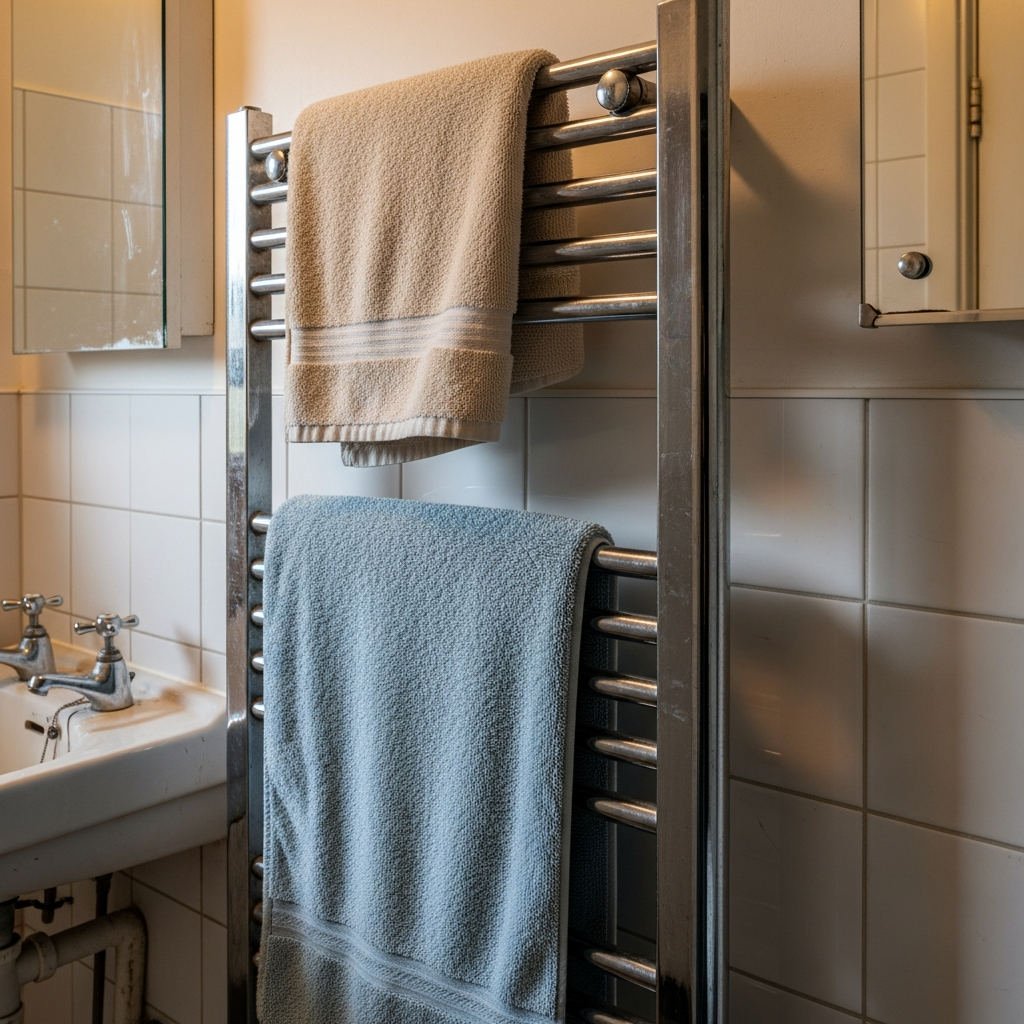
What Size Hot Water Cylinder Do You Need?
These are larger than traditional gas boiler cylinders (120-180 litres). The larger size compensates for the slower reheat time — you store more so you are less likely to run out.
Types of Cylinder
- Unvented (pressurised): Most common with heat pumps. Delivers hot water at mains pressure with strong flow rates.
- Vented (gravity-fed): Relies on a cold water tank in the loft. Lower flow rates but simpler.
- Heat pump-specific: Larger coils for better heat transfer at lower temperatures. More efficient but pricier.
Switching from a Combi Boiler: What You Need to Know
If you currently have a combi boiler, switching to a heat pump means adding a hot water cylinder. Finding space is often the biggest practical challenge.
Where to Put the Cylinder
- Reinstated airing cupboard: Many homes still have the space from before the combi switch
- Utility room or garage: Insulate around the cylinder in a garage
- Under the stairs: Common for 150-200L cylinders
- Bedroom cupboard: Not ideal aesthetically, but practical
- Purpose-built cupboard: £300-£800 to construct
Need help working out where a cylinder could go?
Get a free home surveyInstallers will assess cylinder placement as part of the survey.
Cylinder vs Combi: A Fair Comparison
| Feature | Combi Boiler | Heat Pump + Cylinder |
|---|---|---|
| Flow rate (multiple taps) | Struggles with 2+ taps | Handles multiple outlets easily |
| Instant hot water | Few seconds delay to fire up | Truly instant — water already stored |
| Temperature consistency | Can fluctuate when another tap opens | Steady temperature |
| Running out risk | Never runs out (on-demand) | Can run out if undersized |
| Storage temperature | 55-60°C | 48-52°C (barely noticeable difference) |
| Space needed | Wall-mounted, compact | Cylinder: ~500-600mm dia, 1-1.8m tall |
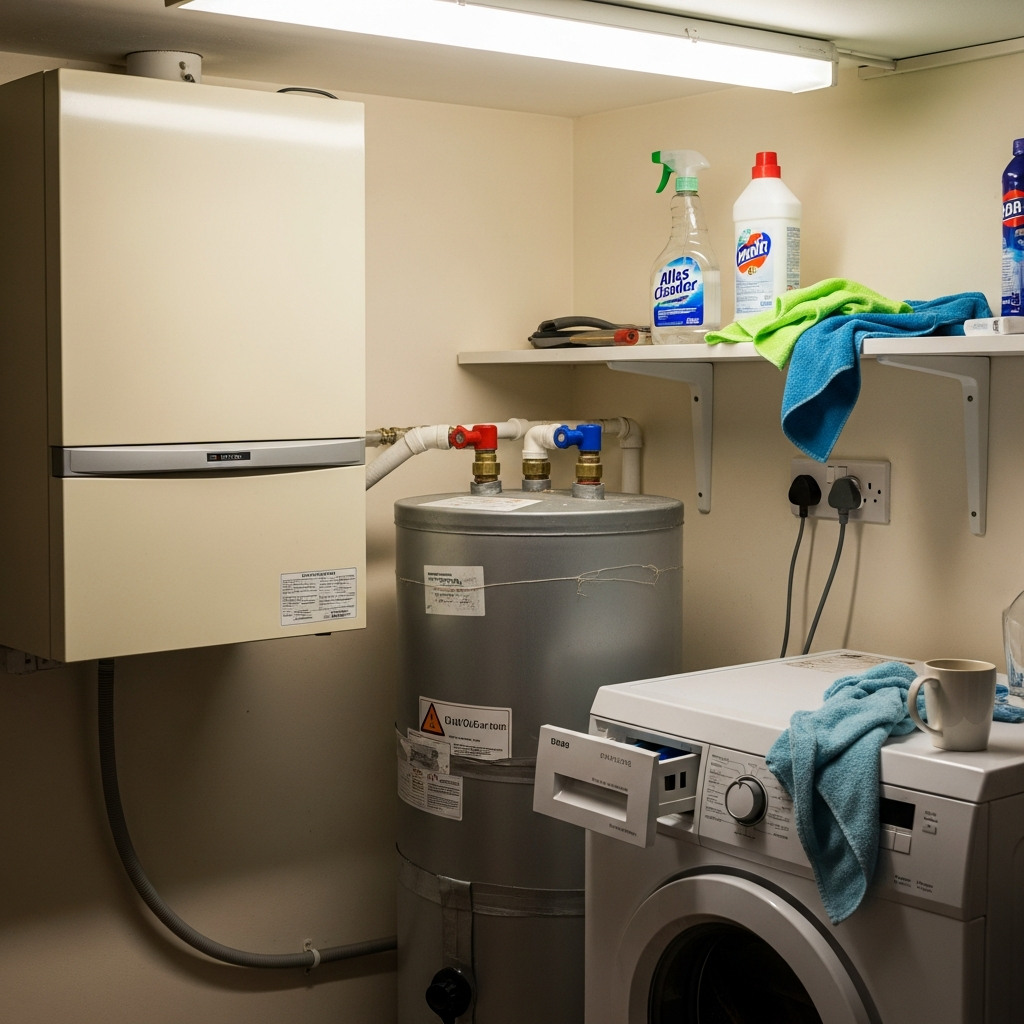
Maximising Hot Water Efficiency
- Set the right storage temperature: 48-50°C rather than 55°C — lower target = better COP
- Schedule heating wisely: Use off-peak electricity times if on a time-of-use tariff
- Insulate the cylinder: Modern cylinders have factory insulation; older ones may need upgrading
- Consider solar pre-heating: Solar thermal or PV diverters can pre-heat water using free solar energy
- Use mixer showers and taps: Thermostatic blending makes stored water last longer
Heat Pump Hot Water in Summer
In summer, the heat pump only runs for hot water — no space heating. This is actually very efficient: warm outdoor air means high COP, and the unit only runs for short periods each day.
Typical summer hot water electricity consumption is 3-5 kWh per day — roughly 70p to £1.25 at current rates. Comparable to or slightly less than gas. Homeowners with solar panels can often cover all summer hot water costs with free solar generation.
For an overview of the full installation process, see our heat pump installation guide.
Ready to switch to a heat pump for heating and hot water?
Get free quotes from MCS-certified installersIncludes cylinder sizing and placement advice.
Frequently Asked Questions
Can a heat pump heat hot water?
Yes. Air-to-water heat pumps heat both your home and your domestic hot water. The heat pump heats water in a storage cylinder, typically to 48-52°C.
What temperature does a heat pump heat water to?
Standard operating temperature is 48-52°C, with a weekly legionella pasteurisation cycle to 60°C. The immersion heater usually assists. Some high-temperature heat pumps can reach 60°C without immersion assistance.
Do I need a hot water cylinder with a heat pump?
Yes, for an air-to-water heat pump. Unlike a combi boiler, heat pumps do not heat water on demand. You will need a cylinder of at least 150 litres, ideally 200-250 litres for a family home.
Will I run out of hot water with a heat pump?
With the right cylinder size, it should be rare. A 200-litre cylinder provides enough for 2-3 consecutive showers and a washing-up session. Correct sizing prevents this from being a regular issue.
Is the hot water as hot as with a gas boiler?
Slightly cooler — 50°C stored vs 55-60°C from a combi. In practical use, most people do not notice the difference. Water at 50°C is still hot enough to cause scalding.
How much does a hot water cylinder cost?
A quality unvented cylinder costs £600-£1,200 plus £300-£500 for installation. The cost is typically included in the overall heat pump installation quote.
Can I use my existing hot water cylinder?
Possibly, if it is in good condition with a coil suitable for heat pump use. Heat pumps work best with cylinders that have a large coil for efficient heat transfer at lower flow temperatures. Your installer will assess.
About Heat Pump Hot Water and UK Homes
Air-to-water heat pumps provide both space heating and domestic hot water through a single system. Hot water is stored in an insulated cylinder, typically at 48-52°C, with periodic legionella pasteurisation cycles to 60°C as required by UK Building Regulations (Part G). The Boiler Upgrade Scheme grant of £7,500 covers the full system including the hot water cylinder. Approximately 12 million UK homes currently use combi boilers and will need to add a hot water cylinder when switching to a heat pump. Pairing the system with solar panels or a solar PV diverter can significantly reduce hot water costs, particularly in summer when solar generation is highest and the heat pump's COP for hot water production peaks due to warm outdoor temperatures.