Air to Air Heat Pumps UK: How They Differ from Air to Water
Air-to-air heat pumps cost £3,000-£8,000 to install, deliver both heating and cooling, and achieve SCOP ratings of 3.5-5.0 — but they can't heat your hot water and don't qualify for the £7,500 BUS grant. Here's when they make sense and when air-to-water is the better choice.

When most people in the UK talk about heat pumps, they mean air-to-water systems — the kind that connects to your radiators and hot water cylinder. But there's another type worth knowing about: the air-to-air heat pump.
Air-to-air heat pumps are essentially reversible air conditioning systems. They're cheaper to buy, simpler to install, and can both heat and cool your home. But they can't provide hot water, and they don't qualify for the Boiler Upgrade Scheme grant. So when does an air-to-air system make sense?
Not sure which heat pump type suits your home?
Use the free calculatorNo email required. Instant results based on your property details.
How Air-to-Air Heat Pumps Work
An air-to-air heat pump works on the same fundamental principle as an air-to-water system: it uses a refrigerant cycle to extract heat from outdoor air and move it indoors. The difference is in how that heat is delivered to your rooms.
- Air-to-water: Transfers heat to water, which circulates through radiators or underfloor heating. Can also heat a hot water cylinder.
- Air-to-air: Transfers heat directly to room air via wall-mounted, ceiling-mounted, or ducted indoor units.
Each room or zone needs its own indoor unit, connected by refrigerant pipes to the outdoor unit. A single outdoor unit can typically serve 2-5 indoor units (a "multi-split" system).
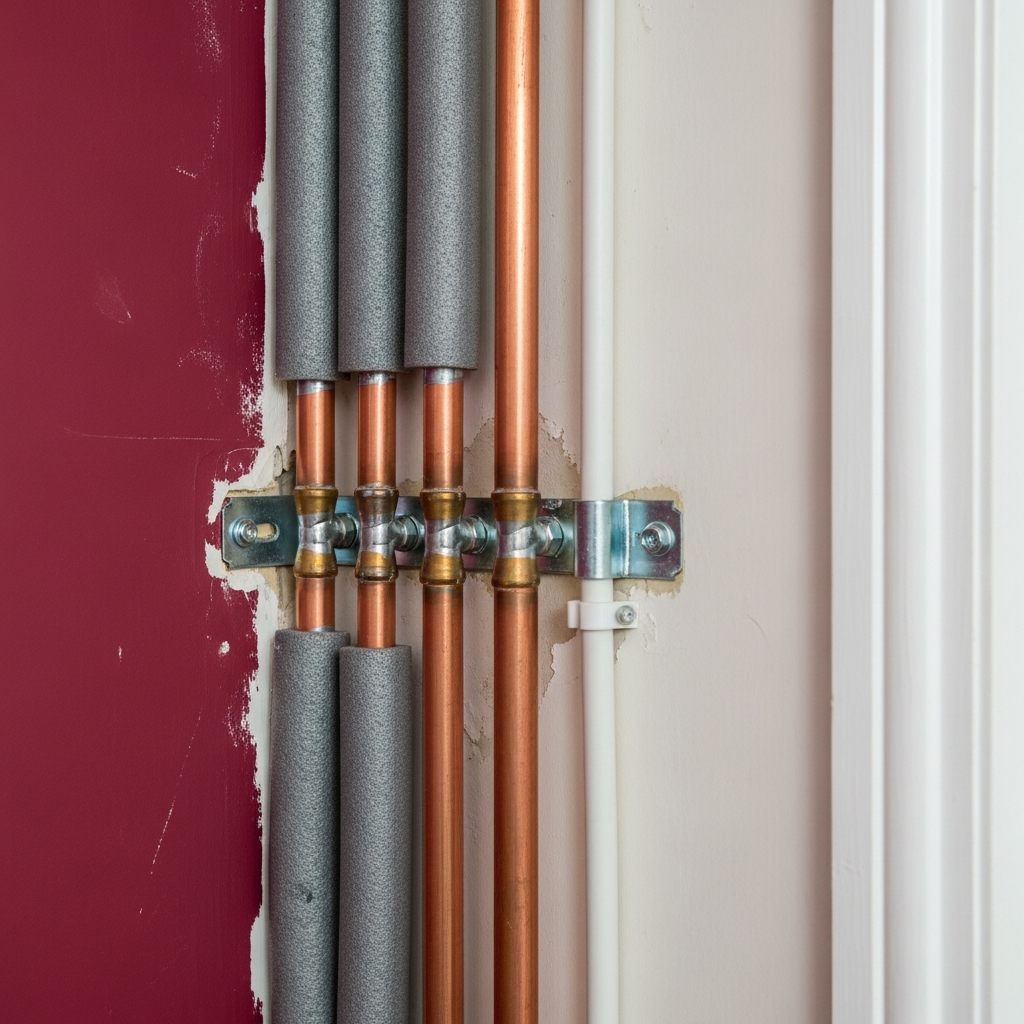
Air-to-Air vs Air-to-Water: Key Differences
| Feature | Air-to-Air | Air-to-Water |
|---|---|---|
| How heat is delivered | Warm air blown into rooms | Hot water to radiators/UFH |
| Hot water | No — separate system needed | Yes — heats your hot water cylinder |
| Cooling | Yes — built-in reverse cycle | Limited — requires special setup |
| Installation cost (typical 3-bed) | £3,000 – £8,000 | £8,000 – £15,000 |
| BUS grant eligible | No | Yes (£7,500) |
| Works with existing radiators | No — needs indoor units | Yes (may need upgrading) |
| Installation disruption | Low — mainly pipe runs and mounting | Moderate — plumbing changes often needed |
| Efficiency (typical SCOP) | 3.5 – 5.0 | 2.8 – 3.8 |
| Indoor noise | Audible fan noise from indoor units | Silent (radiators/UFH make no noise) |
Costs: Air-to-Air Heat Pumps
Purchase and Installation Costs
- Single room (one indoor unit): £1,200 – £2,500 installed
- 2-3 rooms (multi-split): £3,000 – £5,500 installed
- Whole house (4-5 rooms): £5,000 – £8,000 installed
The Grant Issue
Air-to-air heat pumps do not qualify for the BUS grant of £7,500. After the grant, an air-to-water system can actually be cheaper:
- Air-to-air (whole house): £5,000 – £8,000 (£2,500 grant since 28 April 2026)
- Air-to-water (whole house): £8,000 – £15,000 minus £7,500 grant = £500 – £7,500
Pros of Air-to-Air Heat Pumps
- Lower upfront cost (before grants): Significantly cheaper if you can't access the BUS grant
- Cooling in summer: Built-in reverse cycle for UK heatwaves
- Quick response time: Heats a room almost immediately
- Easy room-by-room control: Each indoor unit operates independently
- Minimal disruption to install: No need to modify existing plumbing
- Higher efficiency for space heating: SCOP ratings of 3.5-5.0
Cons of Air-to-Air Heat Pumps
- No hot water: You'll need a separate solution for domestic hot water
- No BUS grant: Missing out on £7,500 is significant
- Indoor units in every room: Some find them visually intrusive
- Fan noise indoors: 20-45 dB depending on fan speed
- Moving air can feel draughty: Different from radiant heat
- Less even heat distribution: Warm air rises, creating temperature stratification
Compare air-to-air and air-to-water costs for your property
Get free installer quotesMCS-certified installers can advise on the best system type. Free, no obligation.
When Does Air-to-Air Make Sense?
Best Suited For:
- Properties without wet heating systems (replacing electric panel or storage heaters)
- Supplementary heating for specific rooms (home office, conservatory, extension)
- Properties where cooling is a priority (south-facing flats, top-floor apartments)
- Rental properties and landlords (quick, low-disruption installation)
- Budget-conscious homeowners when the BUS grant isn't available
- Holiday homes and second properties (quick heat-up time)
Less Suited For:
- Replacing a gas boiler — air-to-water handles both heating and hot water with the £7,500 grant
- Homes with existing radiators in good condition
- Households prioritising aesthetics over visible indoor units
Installation: What to Expect
Air-to-air installation is simpler and quicker than air-to-water: typically 1-2 days for a 3-room installation. Indoor units are wall-mounted high in each room, with copper refrigerant pipes running through small holes in external walls. The system needs a dedicated electrical circuit.
Brands Available in the UK
Major air-to-air heat pump brands include Daikin, Mitsubishi Electric, Samsung, LG, Panasonic, and Fujitsu. Ensure your installer is F-Gas registered and experienced with heat pump installations.
Frequently Asked Questions
Can an air-to-air heat pump heat my whole house?
Yes, if you install indoor units in each room that needs heating. A multi-split system with one outdoor unit can serve 4-5 rooms. Hallways and rooms without units rely on indirect warmth from adjacent heated rooms.
Are air-to-air heat pumps eligible for the BUS grant?
No. The Boiler Upgrade Scheme grant (currently £7,500) is only available for air-to-water and ground source heat pumps that provide space heating and hot water.
Can I use an air-to-air heat pump alongside my existing boiler?
Yes. Some homeowners use air-to-air heat pumps as the primary heating system while retaining a gas boiler solely for hot water. Others use air-to-air units to supplement existing heating in specific rooms.
How much does it cost to run an air-to-air heat pump?
For a typical 3-bed house, annual heating costs with an air-to-air system are around £400-700 for space heating. You'll need to add hot water costs separately (typically £200-400/year with an immersion heater).
Are air-to-air heat pumps noisy indoors?
Modern indoor units operate at 19-25 dB on the lowest fan speed — barely audible. On higher speeds, noise can reach 35-45 dB. Night modes reduce fan speed and noise for sleeping.
Do air-to-air heat pumps need planning permission?
Usually not, as they typically fall under permitted development rights. However, there are conditions around noise levels, and conservation areas or listed buildings may require consent.
The Bottom Line
Air-to-air heat pumps are a viable heating option for UK homes, particularly where cooling is valued, where there's no existing wet heating system, or where budget (without grant access) is the primary concern. They're cheaper, simpler, and more efficient for space heating alone.
However, for most UK homeowners replacing a gas boiler, an air-to-water heat pump remains the better all-round choice — especially with the £7,500 BUS grant. It handles both heating and hot water, works with your existing radiators, and integrates seamlessly as a complete boiler replacement. If you are also considering solar panels, the electricity generated pairs well with either heat pump type.
Find out which heat pump type is right for your home
Get your personalised recommendationFree, instant, no obligation. Based on your property type and current heating system.
Understanding Air-to-Air Heat Pumps in Context
Air-to-air heat pumps represent one option within the broader UK heat pump market. While air-to-water systems dominate for boiler replacements thanks to BUS grant eligibility and hot water capability, air-to-air units fill an important niche for properties with electric heating, those needing cooling, and budget-conscious installations. The choice between types depends on property characteristics, hot water needs, grant availability, and personal preferences. For a complete overview of all options, see our pillar guide to air source heat pumps. Pairing either type with home solar panels maximises energy independence and cost savings.