Heat Pump Time of Use Tariffs Explained
Heat your home at 10p per kWh instead of 26.11p — that is the power of a time-of-use tariff. By shifting when your heat pump runs to match cheap electricity windows, you can cut annual heating costs by £300-450. But these tariffs are not for everyone — they require a smart meter, disciplined scheduling, and a home that holds heat between cheap windows.
This guide explains exactly how time-of-use tariffs work for heat pump owners, the different types available, what you need to make them work, and how to schedule your heating for maximum savings.
See how much you could save with the right tariff
Use Our Free CalculatorInstant running cost estimate for your property
What Is a Time-of-Use Tariff?
On a standard electricity tariff, you pay the same unit rate (currently around 26.11p per kWh) regardless of when you use electricity. A time-of-use tariff changes this, dividing the day into rate bands:
Off-Peak
7-12p/kWh
Typically overnight
Standard
22-28p/kWh
Normal daytime hours
Peak
30-40p/kWh
Usually 4-7pm
Heat pumps are ideal for time-of-use tariffs because heating can be shifted. Unlike cooking or watching television, you can pre-heat your home and hot water cylinder during cheap hours and coast on stored heat during expensive hours. A well-insulated home heated to 21 degrees at 7am will still be 19-20 degrees at midday.
Types of Time-of-Use Tariff
| Type | Example | Off-Peak Hours | Best For |
|---|---|---|---|
| Two-Rate (Overnight) | EDF GoElectric, E.ON Next Drive | 6-7 hrs overnight | Well-insulated homes + EVs |
| Multi-Rate (Multiple Windows) | Octopus Cosy | 9 hrs across 3 windows | Most heat pump homes |
| Dynamic (Half-Hourly) | Octopus Agile | Varies daily | Technically engaged owners |
Multi-rate tariffs like Octopus Cosy are the most forgiving. Even if your home loses heat during the morning, the afternoon off-peak window lets you boost cheaply before the expensive peak period.
What You Need for a Time-of-Use Tariff
- Smart meter (essential): Enables half-hourly billing. Free installation from your supplier
- Programmable heat pump (essential): Built-in timer or app control to schedule operation around cheap windows
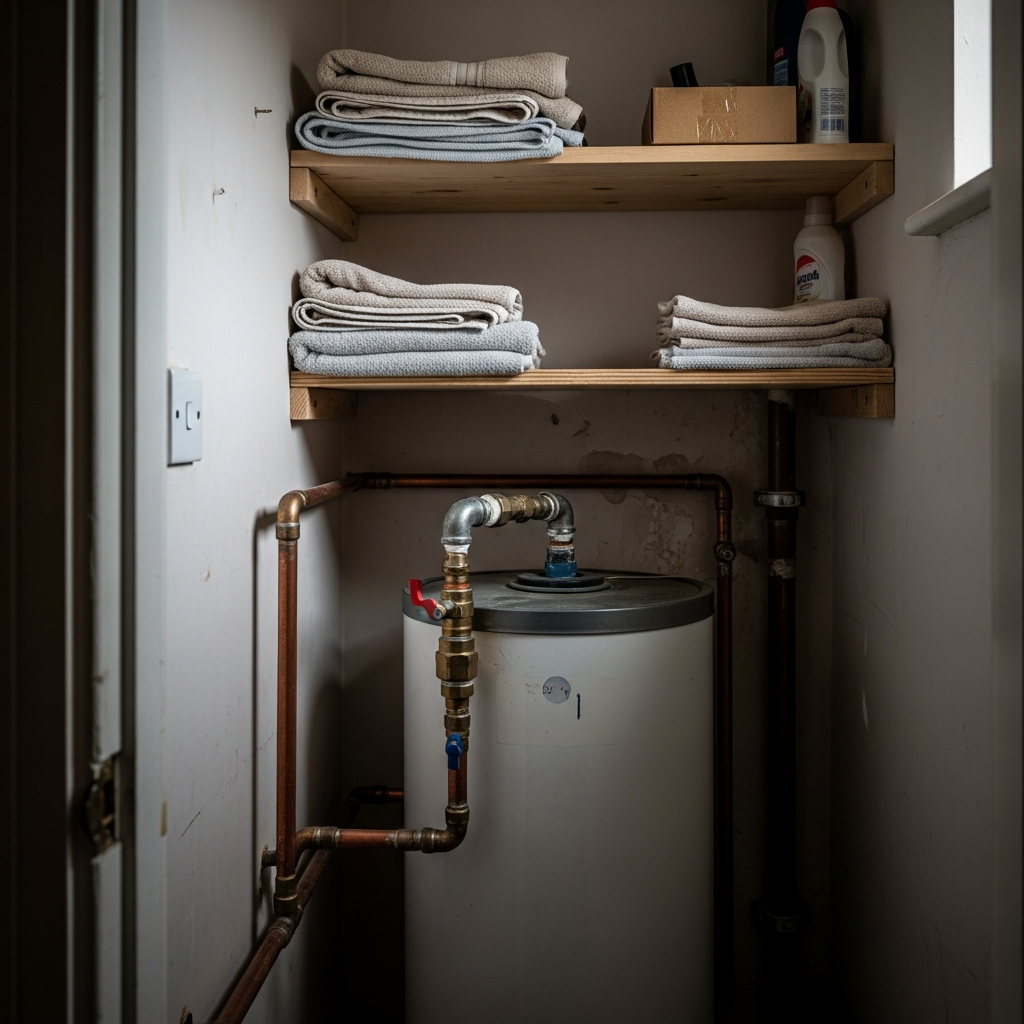
- Hot water cylinder (highly recommended): Acts as thermal storage — heat it cheaply, use it all day. Minimum 150L, ideal 200-300L
- Reasonable insulation (important): Your home needs to hold heat between off-peak windows. Minimum: cavity walls, double glazing, 270mm loft insulation
How to Schedule Your Heat Pump
For Multi-Rate Tariffs (e.g., Octopus Cosy)
- 4am-7am (off-peak): Full pre-heat. House reaches target temperature by 7am
- 7am-1pm (standard): Heat pump off or setback mode. House coasts
- 1pm-4pm (off-peak): Afternoon boost before the peak window
- 4pm-7pm (peak): Heat pump off. Do not run during the most expensive electricity
- 7pm-10pm (standard): Light top-up if needed
- 10pm-midnight (off-peak): Heat hot water cylinder for next day
How Long Your Home Holds Heat
| Home Type | Thermal Mass | Temperature Drop/Hour | Time-of-Use Suitability |
|---|---|---|---|
| Solid brick/stone, well insulated | High | 0.5-1.0 degrees | Excellent |
| Cavity walls, standard insulation | Medium | 1.0-1.5 degrees | Good |
| Timber frame, poor insulation | Low | 1.5-2.5 degrees | Poor — flat rate better |
Real-World Savings Examples
If you fall into that last category, improving insulation first would be a far better investment than switching tariff. See our insulation requirements guide.
Common Mistakes to Avoid
- Forgetting non-heating electricity: Time-of-use rates apply to everything. Shift laundry and dishwasher cycles to off-peak using delay timers
- Cranking the heat pump too high during off-peak: Running at high flow temperatures (above 45 degrees) reduces COP, eating into savings. Run at normal efficiency for longer instead
- Not monitoring and adjusting: Review your half-hourly data weekly for the first few months
- Choosing the wrong tariff type: Match the tariff to your home's capability. If in doubt, start with Octopus Cosy — it is more forgiving
Time-of-Use Tariffs vs Economy 7
| Feature | Economy 7 | Modern ToU (e.g., Cosy) |
|---|---|---|
| Daytime rate | 28-32p/kWh (very high) | 22-28p/kWh (moderate) |
| Flexibility | Single overnight window | Multiple windows or overnight |
| Meter | Old two-register meter | Smart meter with half-hourly data |
| Verdict for heat pumps | Outdated — switch away | Recommended — significant savings |
If you are still on Economy 7, switching to a modern time-of-use tariff will likely save you money even before accounting for the more flexible windows.
Should You Switch to a Time-of-Use Tariff?
Yes, if: You have a smart meter, your heat pump is programmable, your home has at least average insulation, you have a 150L+ hot water cylinder, and you are willing to schedule heating around cheap windows.
No, if: Your home has poor insulation and loses heat quickly, you cannot adjust your heating schedule, you have no hot water storage, or most of your electricity use happens during peak hours.
If you fall into the "no" category, consider a flat reduced rate like Scottish Power SmartGen instead. See our best tariff guide and full comparison table for all options.
Is your home suitable for a heat pump?
Check SuitabilityFree assessment of your property's heat pump potential

Calculate your potential tariff savings
Try the Free CalculatorSee running costs for your property in under 2 minutes
Frequently Asked Questions
What is the cheapest time-of-use tariff for heat pumps?
Octopus Cosy typically delivers the lowest annual costs for most heat pump owners due to three daily off-peak windows. Octopus Intelligent Go can be slightly cheaper if you can shift 70%+ of usage overnight. See our full comparison.
Do I need a separate meter for my heat pump on a time-of-use tariff?
No. A single smart meter covers all your household electricity. The time-of-use rates apply to everything.
Can I go back to a flat-rate tariff if time-of-use does not suit me?
Yes. Most time-of-use tariffs are variable with no exit fees. You can switch back at any time.
What is weather compensation and does it work with time-of-use tariffs?
Weather compensation automatically adjusts your heat pump's output based on outdoor temperature. It works with time-of-use tariffs but does not account for pricing — you may need to override it during peak hours for best results.
Will time-of-use tariffs get cheaper in future?
Off-peak rates are likely to remain cheap or get cheaper as more renewable energy feeds the grid overnight. Combined with solar panels for daytime generation, heat pump electricity costs should continue falling.
Can I use a battery to arbitrage time-of-use pricing?
Yes, in theory. A home battery charged during off-peak hours can discharge during peak periods. However, battery costs (£5,000-10,000) mean the payback period is long. Simply scheduling the heat pump is more cost-effective for most owners currently.
Time-of-Use Pricing and the Future of UK Home Energy
Time-of-use tariffs are becoming the norm as smart meters reach most UK homes and renewable generation makes electricity prices increasingly variable. For heat pump owners, this trend is positive — it means cheaper off-peak electricity as wind generation exceeds overnight demand. Combined with the Boiler Upgrade Scheme, home solar installations, and ongoing improvements to building insulation standards, time-of-use pricing is a key enabler of affordable heat pump systems for UK households.