Heat Pump COP: What It Means for Your Electricity Bill

If you have spent any time researching heat pumps, you will have encountered the term COP — Coefficient of Performance. It is the single most important number for understanding how a heat pump translates electricity into heat, and it has a direct, measurable impact on your electricity bill.
This guide explains COP in plain language, shows you how it affects what you pay, and helps you understand what a "good" COP looks like for a UK home.
What Is COP?
COP stands for Coefficient of Performance. It is a ratio that tells you how much heat a heat pump produces for each unit of electricity it consumes.
A COP of 3.2 means that for every 1 kWh of electricity the heat pump uses, it delivers 3.2 kWh of heat to your home. The extra energy comes from the outside air (for an air source heat pump) or the ground (for a ground source heat pump) — the heat pump is not creating energy, it is moving it.
COP Compared to Other Heating Systems
- Gas boiler: COP equivalent of 0.85 to 0.92 (a boiler converts 85% to 92% of the gas energy into heat — the rest goes up the flue)
- Electric radiator/immersion heater: COP of 1.0 (1 kWh of electricity produces exactly 1 kWh of heat)
- Air source heat pump: COP of 2.5 to 4.5 depending on conditions
- Ground source heat pump: COP of 3.0 to 5.0 depending on conditions
This is the fundamental advantage of heat pumps. They are not 100% efficient — they are 250% to 450% efficient, because they harvest free environmental heat and deliver it into your home using a relatively small amount of electricity.
COP vs SCOP: What Is the Difference?
You will also see the term SCOP — Seasonal Coefficient of Performance. While COP measures efficiency at a single point in time under specific conditions, SCOP is an average over an entire heating season, accounting for variations in outside temperature, defrost cycles, and standby losses.
SCOP is the more useful figure for predicting your actual electricity bill, because it reflects real-world performance rather than laboratory conditions. A heat pump might have a COP of 4.5 on a mild October day but 2.5 on a freezing January night — the SCOP captures the average across the whole season.
For UK homes, a typical SCOP for an air source heat pump is 2.8 to 3.5. Ground source heat pumps typically achieve an SCOP of 3.5 to 4.5.
How COP Directly Affects Your Electricity Bill
Here is where the numbers matter for your wallet. Let us work through a concrete example.
The Calculation
Suppose your home needs 12,000 kWh of heat per year (a typical 3-bed semi-detached house). Here is what different SCOP values mean for your electricity consumption and bill:
SCOP 2.5 (Below Average Performance)
- Electricity needed: 12,000 / 2.5 = 4,800 kWh
- Annual cost at 24p/kWh: £1,152
SCOP 3.0 (Average UK Performance)
- Electricity needed: 12,000 / 3.0 = 4,000 kWh
- Annual cost at 24p/kWh: £960
SCOP 3.5 (Good Performance)
- Electricity needed: 12,000 / 3.5 = 3,429 kWh
- Annual cost at 24p/kWh: £823
SCOP 4.0 (Excellent Performance)
- Electricity needed: 12,000 / 4.0 = 3,000 kWh
- Annual cost at 24p/kWh: £720
The difference between a below-average SCOP of 2.5 and an excellent SCOP of 4.0 is £432 per year — or over £8,600 across the 20-year lifespan of the system. This illustrates why getting a good COP is not just a technical detail — it is one of the biggest factors in your ongoing costs.
How COP Compares to Gas Boiler Running Costs
The question most homeowners really want answered is: will a heat pump cost more or less to run than my gas boiler? COP is the key variable.
At 2026 UK energy prices (electricity at 24p/kWh, gas at 6p/kWh):
- Gas boiler (90% efficiency): Cost per kWh of heat = 6p / 0.9 = 6.7p
- Heat pump SCOP 2.5: Cost per kWh of heat = 24p / 2.5 = 9.6p
- Heat pump SCOP 3.0: Cost per kWh of heat = 24p / 3.0 = 8.0p
- Heat pump SCOP 3.5: Cost per kWh of heat = 24p / 3.5 = 6.9p
- Heat pump SCOP 4.0: Cost per kWh of heat = 24p / 4.0 = 6.0p
At an SCOP of 3.5 or above, the heat pump is essentially cost-neutral with gas. At 4.0, it is cheaper. Below 3.0, the heat pump costs noticeably more to run than gas — though you do eliminate the gas standing charge (around £100 per year), which narrows the gap.
If the Government follows through on plans to rebalance electricity and gas prices, these numbers shift heavily in the heat pump's favour. A 5p reduction in electricity prices would make even an SCOP of 2.5 cheaper than gas.
What Affects Your Heat Pump's COP?
Understanding what influences COP helps you take practical steps to maximise it — and minimise your bill.
1. Flow Temperature
This is the single biggest controllable factor. Flow temperature is the temperature of the water your heat pump sends to your radiators or underfloor heating.
- 35°C flow temperature: COP typically 3.5 to 4.5
- 45°C flow temperature: COP typically 2.8 to 3.5
- 55°C flow temperature: COP typically 2.0 to 2.8
Every degree you lower the flow temperature improves COP by roughly 1% to 3%. This is why heat pump systems work best with underfloor heating (which runs at 30°C to 40°C) or oversized radiators (which can heat rooms at 40°C to 45°C). Running a heat pump at 55°C through undersized radiators kills the COP and your bank balance.
2. Outside Air Temperature
You cannot control the weather, but it helps to understand the effect. COP drops as outside temperature falls because the heat pump must work harder to extract heat from colder air. The seasonal variation in your electricity bill is largely driven by this factor.
3. System Design and Installation Quality
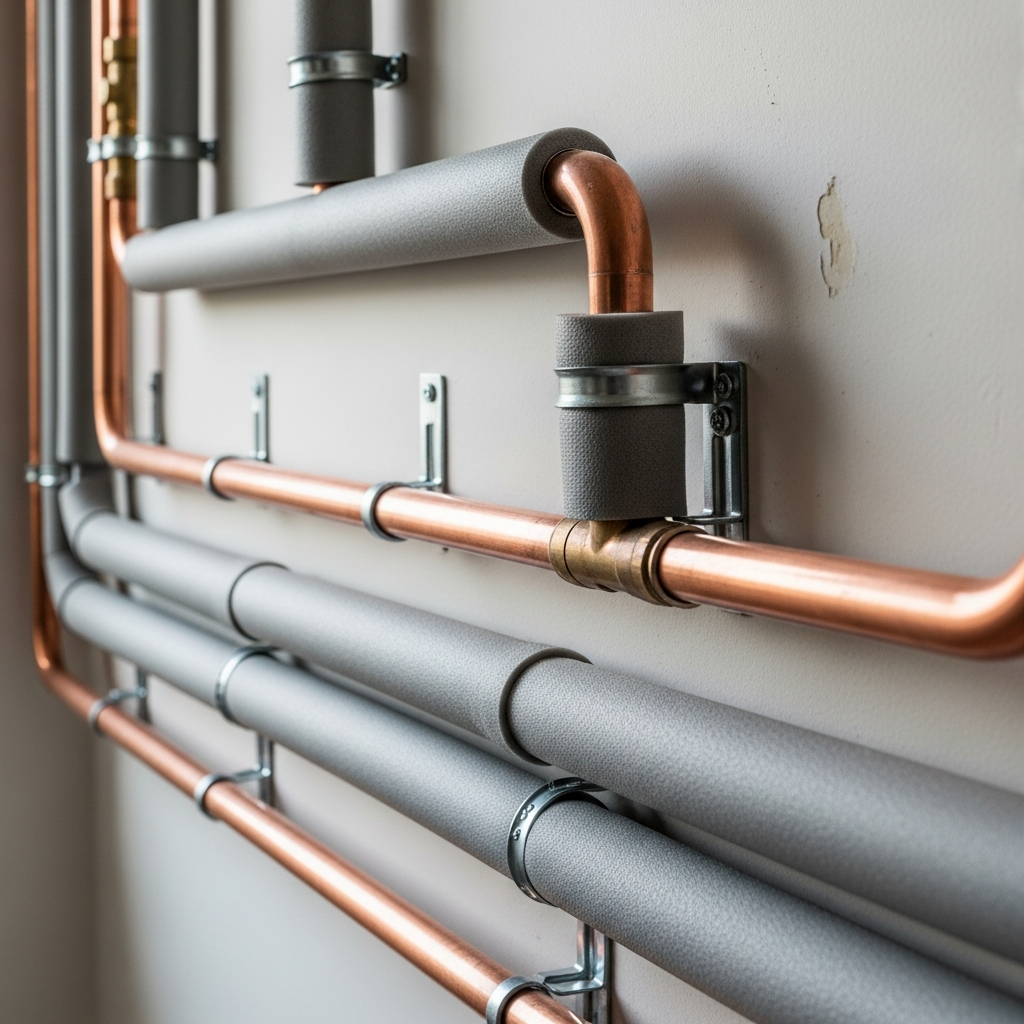
A well-designed system with correct pipe sizing, good insulation on pipework, proper refrigerant charge, and accurate heat loss calculations will achieve a significantly better COP than a poorly designed one. This is why choosing a qualified, MCS-certified installer matters enormously.
4. Weather Compensation
Weather compensation is a control feature that automatically adjusts the flow temperature based on outside air temperature. When it is mild, the system runs at a lower flow temperature (higher COP). When it is cold, the flow temperature rises (lower COP, but necessary). This optimises COP across the entire heating season rather than running at a fixed, unnecessarily high temperature.
5. Hot Water Production
Heating your hot water cylinder to 50°C to 55°C requires a higher flow temperature than space heating, which reduces COP. A Legionella cycle (heating to 60°C periodically) reduces it further. Hot water production typically runs at a COP of 2.0 to 2.8, pulling down the overall SCOP.
How to Check Your Heat Pump's COP
Most modern heat pumps display COP data through their controller or smartphone app. Here is how to monitor it:
Heat Pump App
Manufacturers like Vaillant (myVaillant), Daikin (Daikin Residential Controller), Samsung (SmartThings), and Mitsubishi (MELCloud) all provide apps showing real-time and historical COP data. Check the daily or weekly COP figures rather than the instantaneous reading, which fluctuates constantly.
Heat Meter
An MCS-compliant installation should include a heat meter that measures the actual heat output. Combined with an electricity meter on the heat pump supply, you can calculate the true COP: heat output (kWh) divided by electricity input (kWh).
Smart Meter Data
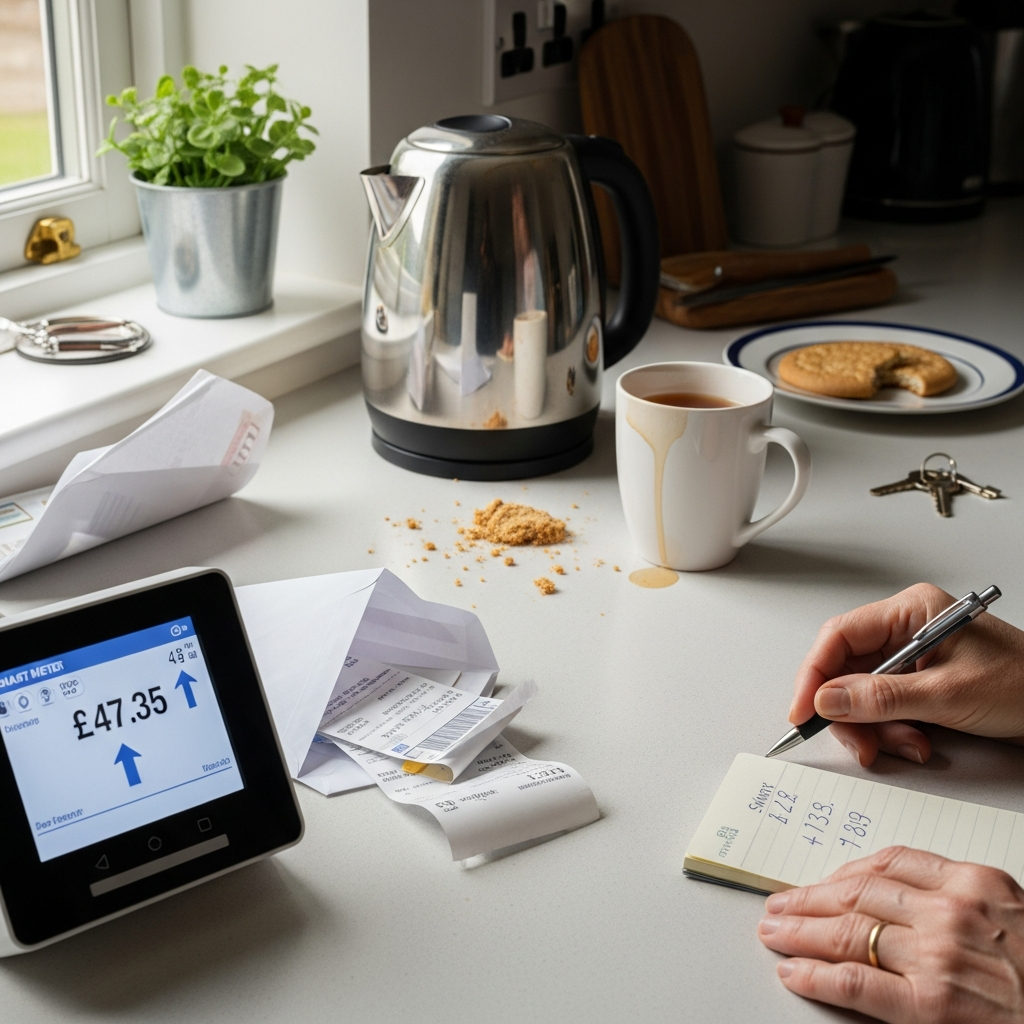
Your smart meter shows total electricity consumption, but unless you have a dedicated sub-meter for the heat pump, it includes all household electricity. A dedicated energy monitor like the myenergi harvi can isolate the heat pump's consumption.
What Is a "Good" COP for a UK Home?
Based on data from the Energy Saving Trust and the Electrification of Heat project:
- Below 2.5 SCOP: Underperforming — investigate settings, flow temperature, and system design.
- 2.5 to 3.0 SCOP: Below average but within range for older or less-than-ideal installations.
- 3.0 to 3.5 SCOP: Average to good for UK air source heat pumps.
- 3.5 to 4.0 SCOP: Good to excellent — typically achieved with low flow temperatures and good insulation.
- Above 4.0 SCOP: Exceptional — usually ground source heat pumps or very well-optimised air source systems with underfloor heating.
If your system is consistently below 2.5, something is likely wrong. Common culprits include flow temperatures set too high, undersized radiators forcing the system to work harder, incorrect refrigerant charge, or poor system design. Contact your installer for a review.
Improving Your COP: Practical Steps
- Lower the flow temperature as far as your radiators will allow while still keeping rooms comfortable. Drop it by 2°C at a time and give each change a few days to settle.
- Enable weather compensation if it is not already active. This is the single most impactful setting on most systems.
- Upgrade undersized radiators so the system can operate at lower flow temperatures. Larger radiators cost £200 to £400 each but pay for themselves through reduced electricity usage.
- Insulate your home to reduce heat demand, allowing the system to run at lower output and lower flow temperatures.
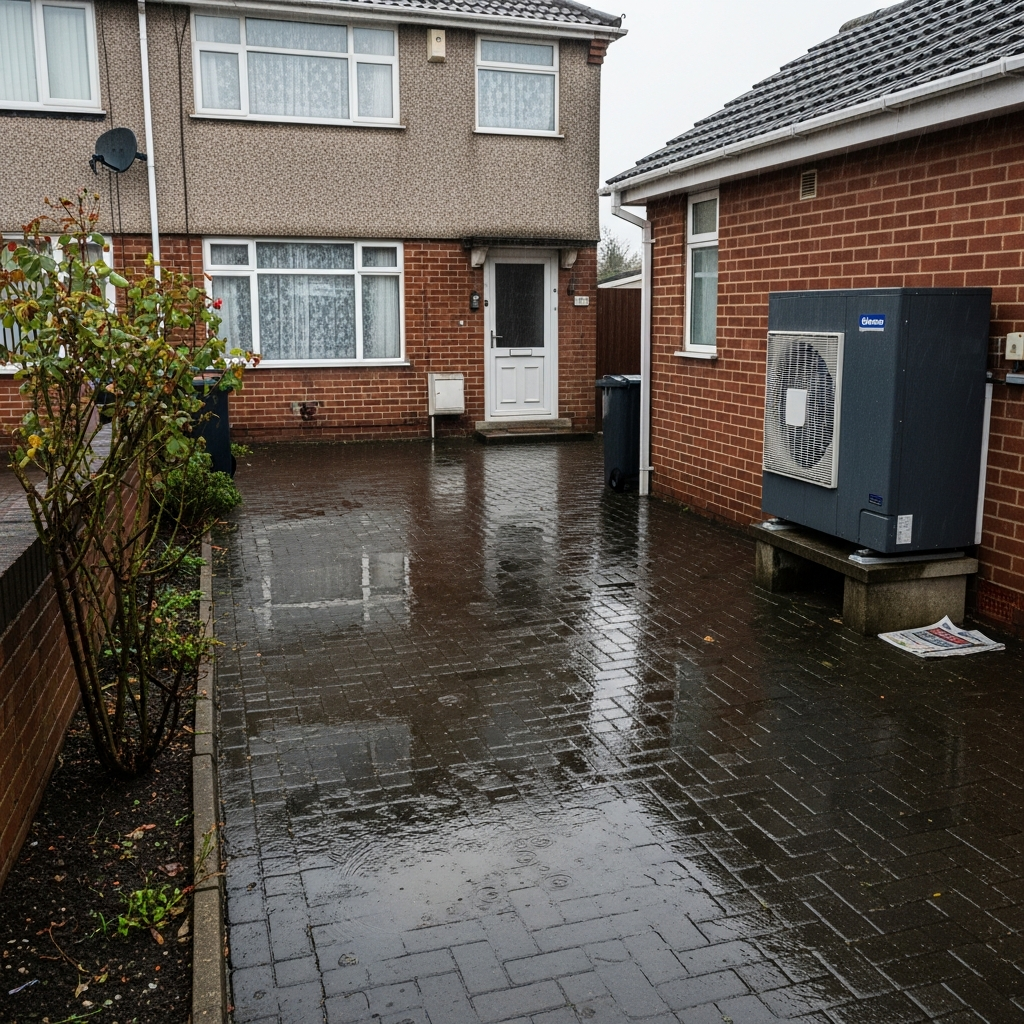
- Ensure the outdoor unit has clear airflow — obstructions force the fan to work harder and can reduce performance.
- Schedule hot water heating wisely — heating the cylinder during milder parts of the day improves the COP for hot water production.
- Have the system serviced annually — a refrigerant check and general service ensures the heat pump operates at peak efficiency.
Frequently Asked Questions
What COP should I expect from a new heat pump?
A new, well-installed air source heat pump should achieve a seasonal COP (SCOP) of 3.0 to 3.5 in a typical UK home. With underfloor heating and good insulation, 3.5 to 4.0 is achievable. The manufacturer's datasheet will show COP at various conditions, but real-world SCOP is typically 10% to 20% lower than the best laboratory figure.
Does COP matter more than the purchase price?
Over 20 years, yes. A heat pump with a higher SCOP might cost £500 to £1,000 more upfront but save £200 to £400 per year in electricity. The more efficient unit pays for the price difference within 2 to 5 years and keeps saving money for the remaining 15+ years.
Why is my COP lower when heating hot water?
Because the heat pump must reach a higher temperature (50°C to 55°C for hot water versus 35°C to 45°C for space heating). The larger the temperature "lift" — the difference between the source temperature and the delivery temperature — the harder the heat pump works and the lower the COP. This is normal and unavoidable.
Can I improve COP without spending money?
Yes. Lowering the flow temperature, enabling weather compensation, and adjusting the heating curve are all free changes that can improve SCOP by 0.2 to 0.5 points. Check your heat pump's settings or ask your installer for help — many underperforming systems can be significantly improved through settings alone.
Is a higher COP always better?
In terms of electricity costs, yes. However, chasing the highest possible COP by running very low flow temperatures can leave rooms feeling cold if your radiators are not large enough. The goal is the best COP that still keeps your home comfortable — not the theoretical maximum at the expense of warmth.
The Bottom Line
COP is the bridge between your heat pump's electricity consumption and your bill. A COP of 3.2 means every unit of electricity you buy delivers 3.2 units of heat — making heat pump heating cost roughly the same as gas at current UK energy prices. Push that COP higher through good design, low flow temperatures, and proper insulation, and the heat pump becomes noticeably cheaper to run than gas.
Monitor your COP, understand what affects it, and take practical steps to improve it. The difference between a COP of 2.5 and 3.5 is hundreds of pounds a year — money that stays in your pocket rather than going to your energy supplier.