Home Insulation Requirements for a Heat Pump
Insulation is the single most important factor determining how well your heat pump performs and how much it costs to run. A well-insulated home needs less heat, allows the heat pump to run at lower flow temperatures, achieves a higher COP, and delivers lower bills. It is no exaggeration to say that insulation is the foundation upon which successful heat pump ownership is built.
This guide covers everything you need to know about insulation requirements for a heat pump in the UK — what you need, what you might already have, what to improve, and the fabric-first approach that every expert recommends. Whether you are planning a new air source heat pump installation or trying to improve the performance of an existing system, start here.
Why Insulation Matters So Much for Heat Pumps
To understand why insulation is critical, you need to understand how heat pumps differ from gas boilers.
A gas boiler can produce water at 60-80°C. It overwhelms heat loss through brute force — blasting hot water through radiators to heat rooms quickly, even if the building is losing heat rapidly through poor insulation. It is inefficient, but it works.
A heat pump is different. It produces water at 35-55°C — significantly cooler than a boiler. It heats your home gently and steadily rather than in short, intense bursts. This approach is far more efficient (which is why heat pumps achieve COPs of 3-4), but it only works well if your home retains heat effectively.
If your home leaks heat quickly through uninsulated walls, a thin loft, draughty windows, and bare floors, the gentle warmth from a heat pump may not keep up. The system will be forced to run harder, at higher flow temperatures, pushing the COP down and pushing your bills up. In the worst cases, the heat pump may struggle to reach comfortable temperatures at all.
The flow temperature connection
Here is the technical chain: better insulation means lower heat demand, which means smaller radiators can deliver enough warmth, which means the heat pump can run at lower flow temperatures, which means a higher COP, which means lower running costs.
Every degree you can reduce the flow temperature improves the COP by roughly 1-3%. Dropping from 55°C to 35°C — which good insulation makes possible — can improve your seasonal COP from 2.8 to 4.0+. That is a 30-40% reduction in electricity consumption for the same amount of heat delivered.
The Fabric-First Approach
The "fabric-first" approach means improving your home's thermal envelope (walls, roof, floor, windows, and airtightness) before or alongside installing a heat pump. It is universally recommended by heating engineers, energy assessors, and the government's own guidance.
Why fabric-first makes sense
- Reduces heat pump size needed: A well-insulated home might need a 5-7 kW heat pump instead of 10-12 kW, saving £1,000-3,000 on the unit
- Avoids radiator upgrades: With lower heat demand, existing radiators may be adequate, saving £1,000-3,000 on replacements
- Lowers running costs permanently: Insulation lasts 40+ years. The savings compound every year
- Improves comfort: Insulated rooms feel warmer because wall and ceiling surfaces are warmer, reducing radiant heat loss from your body
- Reduces carbon emissions: Less energy consumed means fewer emissions, even with a heat pump
The cost-benefit reality
Many insulation measures are surprisingly affordable and deliver rapid payback. Loft insulation top-up costs £300-600 and can reduce heat loss through the roof by 50-75%. Cavity wall insulation costs £500-1,500 and can cut wall heat loss by 60-70%. These are among the best investments a homeowner can make, regardless of whether a heat pump is involved.
By contrast, solid wall insulation is more expensive (£5,000-15,000) but has a dramatic impact on older homes. If you have solid walls and are planning a heat pump, addressing the walls is the single most important upgrade you can make.
Insulation Standards: What Does Your Home Need?
There is no single "pass or fail" insulation standard for heat pump installation. Your MCS-certified installer will conduct a room-by-room heat loss calculation that accounts for your actual insulation levels. However, there are recommended benchmarks that represent good practice.
Loft insulation
- Minimum recommended: 270mm of mineral wool or equivalent
- Ideal: 300-400mm for maximum benefit
- Current building regulations: 270mm for new builds
- U-value target: 0.16 W/m²K or lower
Many UK homes have only 100-150mm of loft insulation. Topping up to 270mm+ is one of the cheapest and most effective improvements you can make. See our dedicated loft insulation guide.
Cavity wall insulation
- Status: Essential if walls are unfilled cavities
- Typical improvement: Reduces wall U-value from 1.5 to 0.5 W/m²K
- Suitable for: Most homes built 1920s-1990s with unfilled cavities
An estimated 5 million UK homes still have unfilled cavity walls. If yours is one of them, filling the cavity is almost certainly the most impactful single upgrade before installing a heat pump. Full details in our cavity wall insulation guide.
Solid wall insulation
- Status: Highly recommended for pre-1920s solid-wall homes
- Options: Internal (60-100mm boards) or external (50-100mm render system)
- Typical improvement: Reduces wall U-value from 2.1 to 0.3-0.5 W/m²K
Solid wall homes lose roughly twice as much heat through their walls as unfilled cavity walls. Insulating solid walls transforms heat pump performance but is a significant investment. See our solid wall insulation guide for costs, options, and advice.
Floor insulation
- Suspended timber floors: Insulate between joists with mineral wool or rigid board (U-value target: 0.25 W/m²K)
- Solid concrete floors: Difficult to insulate retrospectively; consider when replacing flooring
- Impact: Moderate — floors account for roughly 10-15% of heat loss in a typical home
Windows and doors
- Minimum: Double glazing throughout
- Ideal: Triple glazing for new installations, particularly on north-facing elevations
- U-value targets: 1.4 W/m²K or lower for windows; 1.0 W/m²K for doors
- Quick win: Replace any remaining single glazing — the improvement is dramatic
Draught-proofing
- Priority areas: Around windows, doors, letterboxes, keyholes, loft hatches, and where pipes enter walls
- Cost: £100-300 for a whole house (DIY) or £300-600 professional
- Impact: Significant — draughts can account for 15-25% of heat loss
How to Assess Your Current Insulation
Before spending money on insulation upgrades, you need to know what you already have. Here are practical methods:
Loft insulation
Simply stick your head into the loft hatch with a torch and a ruler. Measure the depth of insulation between and over the joists. If it is less than 270mm, topping up is worthwhile.
Cavity walls
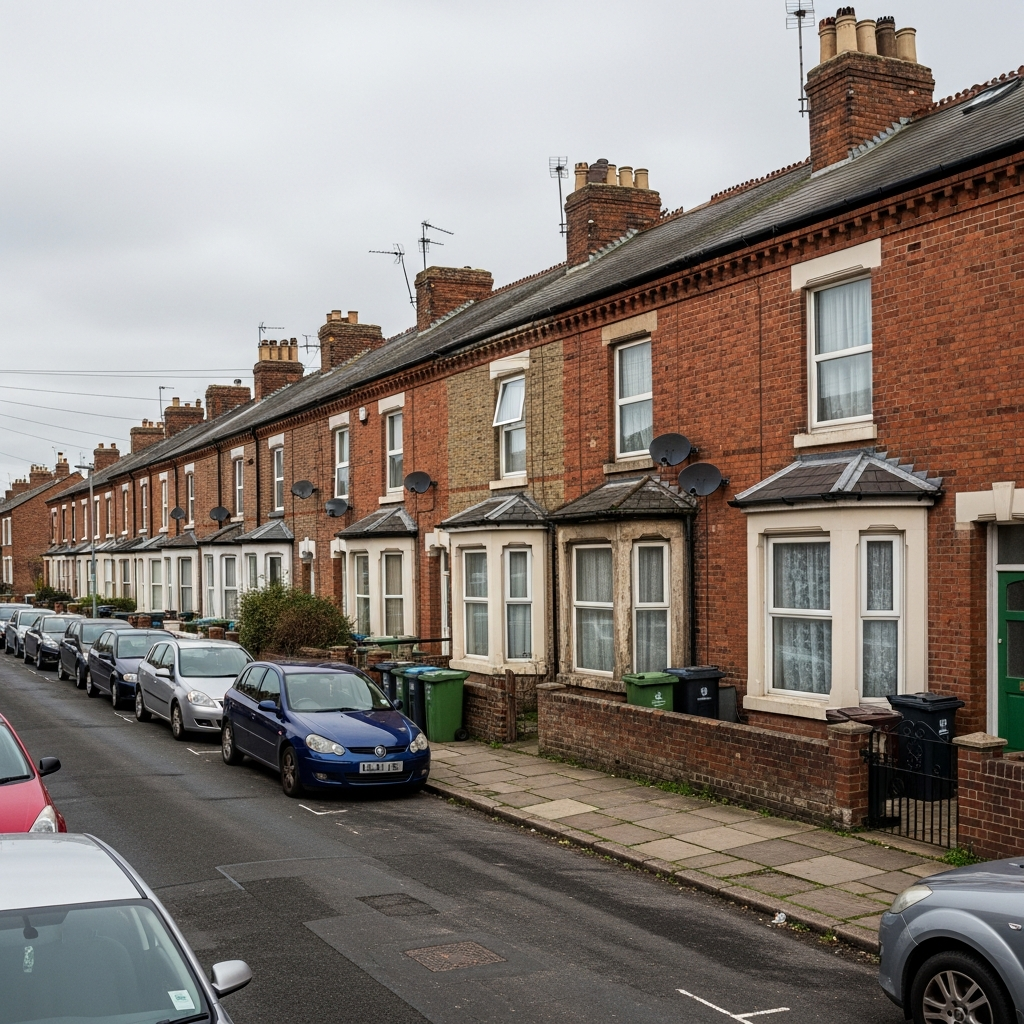
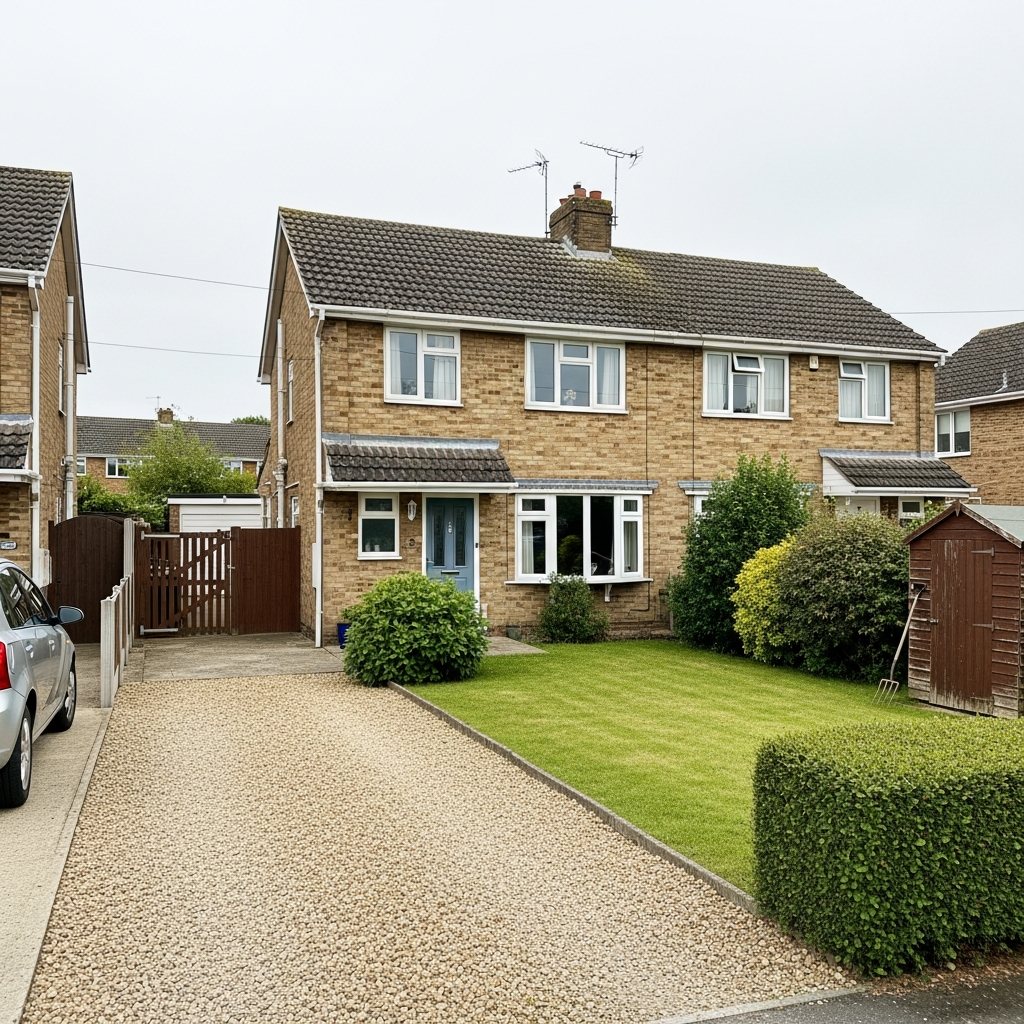
Check whether your walls are cavity or solid. Cavity walls (built 1920s onwards) have a regular brick pattern. Solid walls (pre-1920s) show alternating headers and stretchers. If you have cavity walls, a borescope inspection (drilling a small hole) can confirm whether they are filled or empty. Many cavity wall insulation companies offer free inspections.
EPC report
Your property's Energy Performance Certificate (EPC) includes information about insulation levels and recommendations for improvement. While EPCs are not always perfectly accurate, they provide a useful starting point. You can find your property's EPC at the government's EPC register.
Professional thermal survey
A thermal imaging survey (£150-300) uses an infrared camera to identify exactly where heat is escaping from your home. This reveals hidden problems like gaps in cavity wall insulation, thermal bridges, and areas of missing loft insulation that visual inspection might miss. It is particularly valuable for older homes where insulation quality may be uneven.
Insulation Upgrade Priority Order
If budget is limited, prioritise insulation upgrades in this order for maximum impact on heat pump performance:
- Draught-proofing: Cheapest and often most impactful per pound spent. £100-600
- Loft insulation top-up: Huge impact for minimal cost. £300-600
- Cavity wall insulation: The biggest single upgrade for most homes. £500-1,500
- Hot water cylinder jacket/insulation: If not already insulated. £20-50
- Pipe insulation: Lagging exposed heating pipes. £50-150
- Window upgrades: Replace single glazing; consider triple glazing for new. £3,000-10,000
- Solid wall insulation: Major investment but transformative. £5,000-15,000
- Floor insulation: Moderate impact, often done alongside renovation. £500-2,500
Items 1-5 can typically be completed for under £2,000 and will make a noticeable difference to heat pump performance. Items 6-8 are larger investments best planned alongside other renovation work or when the opportunity arises naturally.
Grants and Funding for Insulation
Several funding schemes can help with insulation costs:
- ECO4 (Energy Company Obligation): Free or subsidised insulation for qualifying households, typically those on means-tested benefits or in fuel poverty
- Great British Insulation Scheme: Targets homes in council tax bands A-D in England and Scotland. Covers cavity wall, loft, and solid wall insulation
- Local authority grants: Many councils offer additional insulation grants. Check your local authority's website
- Home Upgrade Grant (HUG2): For off-gas-grid homes with EPC ratings of D or below. Can cover insulation alongside heat pump installation
These schemes can be combined with the Boiler Upgrade Scheme for the heat pump itself. A coordinated approach — insulation funding plus BUS grant — can significantly reduce the total cost of the whole-home upgrade.
Can You Install a Heat Pump Without Perfect Insulation?
Yes — and this is important to state clearly. You do not need a perfectly insulated home to install a heat pump. The MCS installer will design the system based on your actual heat loss, not an idealised version of your home.
A poorly insulated home can have a heat pump, but it will need a larger unit, possibly larger radiators, may need to run at higher flow temperatures, and will have higher running costs. The system will work — it just will not be as efficient as it could be.
The fabric-first approach is not about achieving perfection before installing a heat pump. It is about doing the sensible, cost-effective upgrades first so that your heat pump works at its best. If you can top up your loft insulation, fill your cavity walls, and draught-proof your home before the heat pump goes in, you will have a system that is smaller, cheaper to buy, cheaper to run, and more comfortable to live with.
Use our suitability checker to get an initial assessment of how your home's insulation affects heat pump viability, and talk to MCS-certified installers about a combined insulation and heat pump plan.
Frequently Asked Questions
What is the minimum insulation needed for a heat pump?
There is no legal minimum insulation requirement for heat pump installation. However, for a comfortable and efficient system, we recommend at least 270mm of loft insulation, filled cavity walls (if applicable), double glazing throughout, and reasonable draught-proofing. Your MCS installer will design the system around your actual insulation levels.
Do I need to insulate my home before getting a heat pump?
You do not need to, but it is strongly recommended to address the easy wins (loft, cavity walls, draught-proofing) before or alongside installation. These upgrades are cheap relative to the heat pump and can reduce the size (and therefore cost) of the heat pump you need, as well as lowering running costs permanently.
How much can insulation reduce my heat pump running costs?
The impact depends on your starting point. A home with no loft insulation and unfilled cavity walls could see heat demand drop by 30-50% after insulating both — directly reducing heat pump electricity consumption by the same proportion. For a home that already has decent insulation, improvements might save 10-20%. The savings are permanent and compound every year.
Will my installer check my insulation?
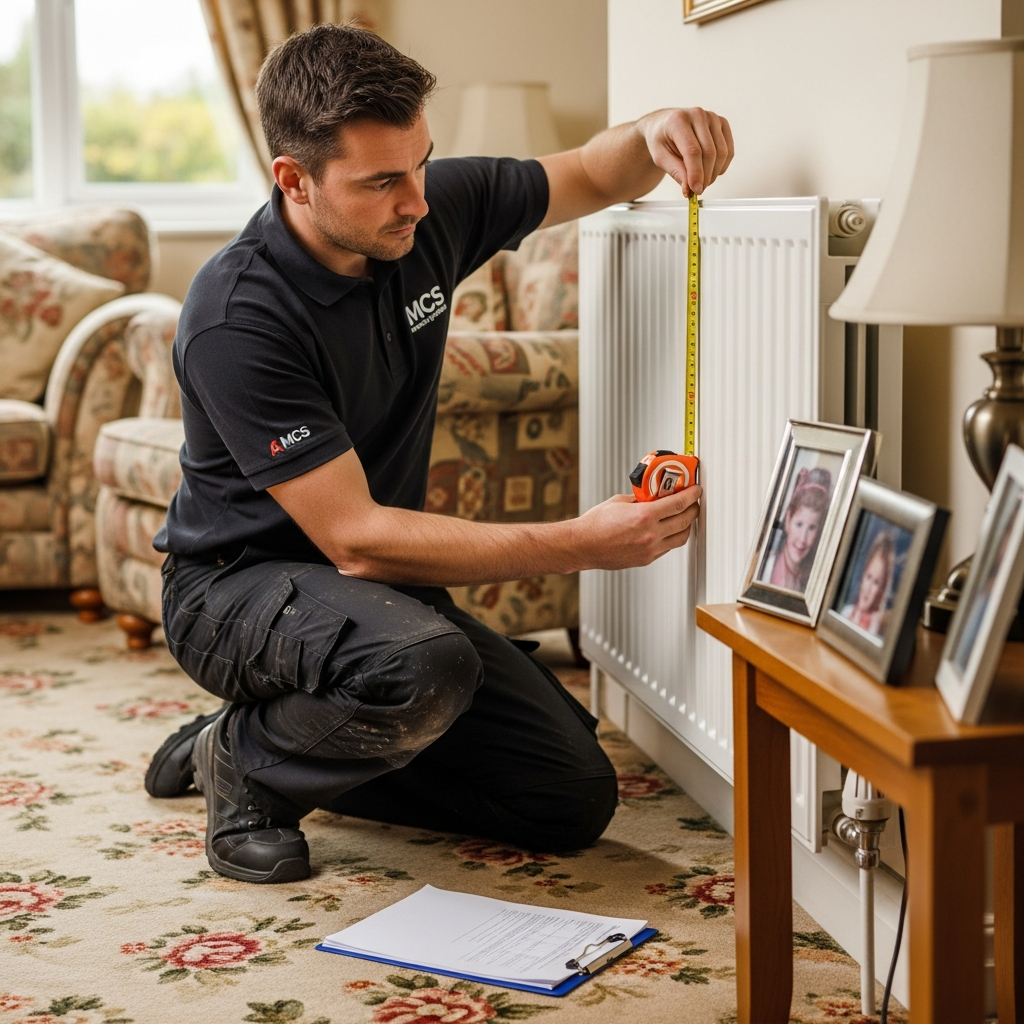
Yes. An MCS-certified installer is required to carry out a full heat loss survey that assesses insulation levels in every room. They may recommend specific insulation upgrades before or alongside the heat pump installation. A good installer will discuss the fabric-first approach and help you prioritise the most cost-effective improvements.
Can I claim grants for insulation and a heat pump together?
Yes. The BUS grant (£7,500 for a heat pump) is separate from insulation funding schemes like ECO4, the Great British Insulation Scheme, and HUG2. You can potentially access funding for both, significantly reducing the total cost of a combined upgrade. Eligibility varies by scheme — check each programme's criteria.
Is it worth insulating a home I plan to sell?
Absolutely. Insulation improvements raise your EPC rating, which is increasingly important for property values and mortgage eligibility. A home with good insulation and a heat pump will be more attractive to buyers than one with high energy bills and a low EPC rating. The insulation investment typically adds more to property value than it costs to install.