Heat Pump Installers Near Me: How to Choose

The installer makes the difference between a heat pump that saves you money for 20 years and one that frustrates you from day one. A brilliant heat pump installed badly will underperform, cost more to run, and cause years of frustration. A good heat pump installed properly will keep your home warm and your bills low for two decades or more.
This guide will help you find, compare, and choose the best heat pump installer in your area — whether you are in London, Manchester, rural Wales, or the Scottish Highlands.
Let us find MCS-certified installers near you
Get free quotes nowCompare up to 3 vetted installers in your area — completely free.
Step 1: Get Multiple Quotes
Always get at least three quotes from different MCS-certified installers. This is not just about finding the cheapest price — it is about comparing approaches, designs, and people. Three quotes let you see where they agree (giving you confidence in the consensus) and where they differ (which raises useful questions).
How to get quotes efficiently
- Use a matching service: Our free quote service connects you with MCS-certified installers who cover your area. You fill in your details once and receive multiple quotes
- Search the MCS database: The official MCS website lets you search for certified installers by postcode
- Ask for recommendations: Neighbours, local Facebook groups, and community forums can point you to installers with good local reputations
- Check manufacturer lists: Heat pump manufacturers maintain directories of approved installers trained on their specific products

Step 2: Compare Quotes Properly
Heat pump quotes can look very different from each other, even for the same property. Here is how to compare them on a like-for-like basis:
| Element | What to look for | Why it matters |
|---|---|---|
| Heat pump model and size | Brand, kW output, SCOP rating | Determines efficiency and running costs |
| Cylinder specification | Litres, coil size, brand | Affects hot water performance |
| Radiator upgrades | How many, which rooms, why | Determines comfort levels |
| Controls | Thermostat type, weather comp, zones | Affects daily convenience and efficiency |
| Grant deduction | £7,500 BUS clearly shown | Must be itemised separately |
| Warranty | Manufacturer + installer warranty | Long-term peace of mind |
If one quote is significantly cheaper than the others, ask why. It might be a different brand, fewer radiator upgrades, or a less comprehensive approach. If one is significantly more expensive, the same question applies — it might include extras that the others do not.
Step 3: Check Credentials
Every installer on your shortlist should have:
- Current MCS certification: Verify on mcscertified.com — do not just take their word for it
- Public liability insurance: At least £2 million cover
- Relevant experience: Ask how many heat pumps they have installed in the last 12 months and specifically in properties similar to yours
- References: At least two or three previous customers you can contact
- Part P registration: For the electrical work (or they use a registered sub-contractor)
Step 4: Assess Their Approach
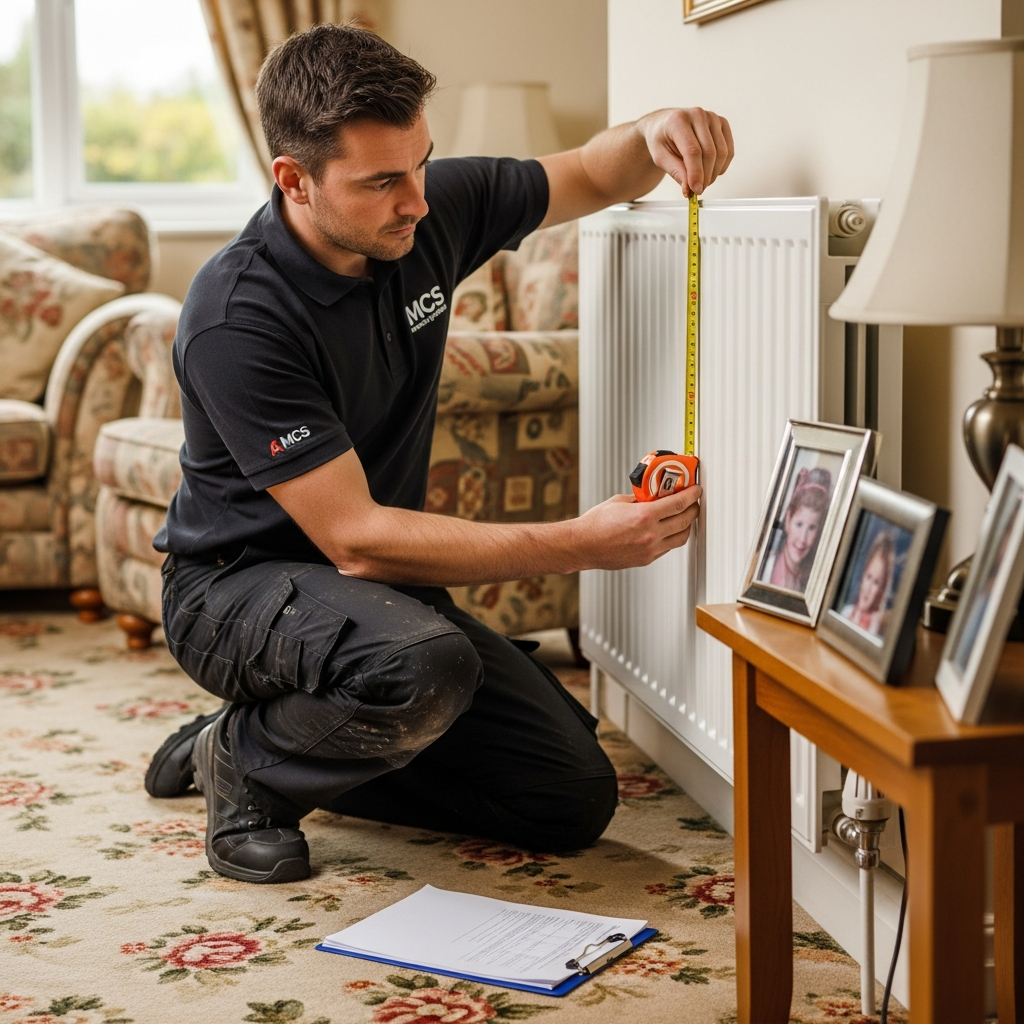
The survey visit is your best opportunity to assess quality. A great installer will:
- Spend 90 minutes to three hours measuring every room
- Measure each radiator and calculate whether it is adequate at lower flow temperatures
- Discuss where the outdoor unit will sit and explain the positioning requirements
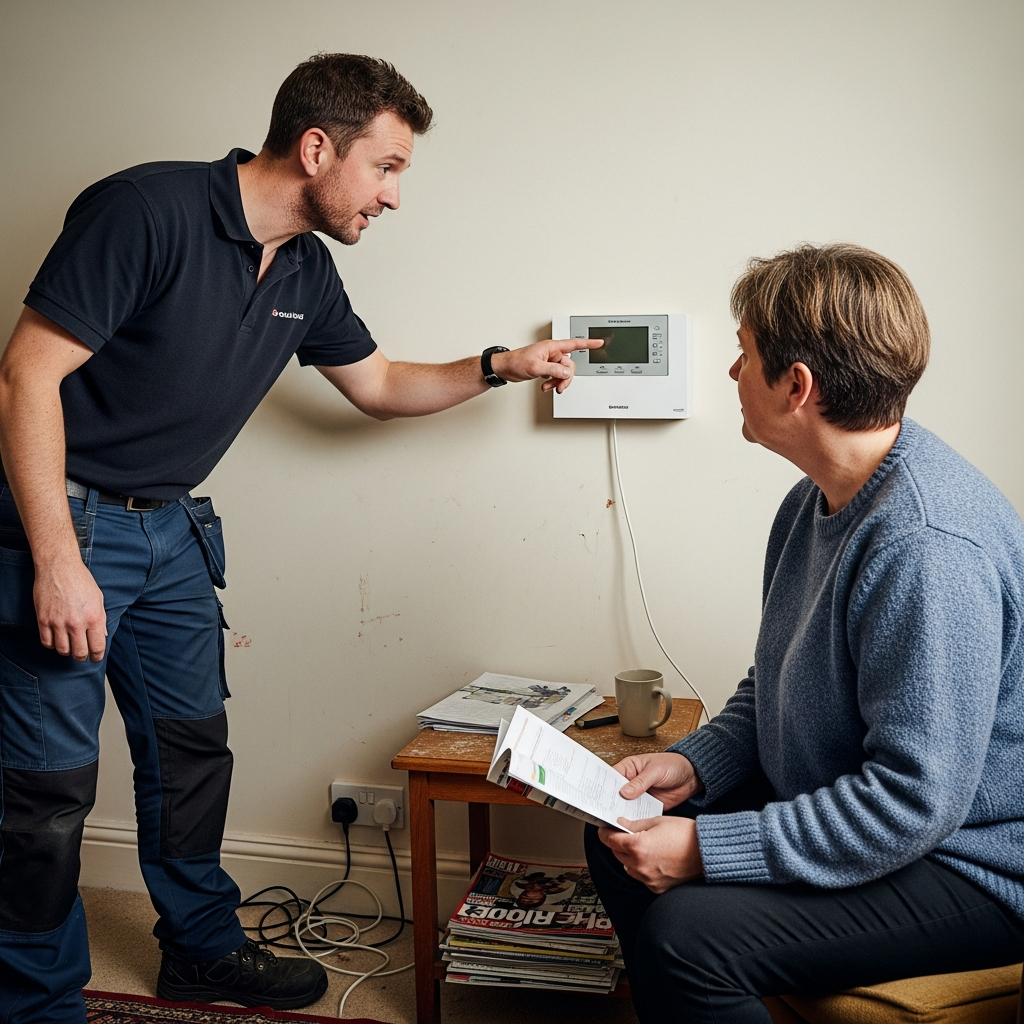
- Explain their design philosophy and why they are recommending a specific system
- Ask about your hot water usage patterns to size the cylinder correctly
- Be honest about any limitations or challenges with your property
Not sure what a fair price looks like for your home?
Try the free calculatorGet a baseline estimate to help you evaluate quotes more confidently.
Red Flags That Should Stop You
- No home visit before quoting: This is the biggest red flag. A proper quote is impossible without a detailed survey
- Vague or missing MCS certification: If they cannot prove current certification, do not proceed
- Pressure to decide immediately: Legitimate installers welcome comparison. Pressure tactics suggest desperation
- One-size-fits-all approach: If they recommend the same system for every home, they are not designing properly
- No mention of radiator assessment: Ignoring emitter sizing is a sign of a superficial approach
- Cash payments or no paperwork: Professional companies provide written quotes, contracts, and receipts
What to Expect on Price
The mid range covers most standard installations with a quality heat pump, proper cylinder, and necessary radiator upgrades. Budget quotes may cut corners on components or commissioning. Premium quotes typically involve high-end brands, extensive radiator upgrades, or complex properties. See our full cost guide for detailed breakdowns.
Combining your heat pump with solar panels can offset electricity costs significantly — ask your installer whether they offer bundled solar and heat pump packages.
Frequently Asked Questions
How many heat pump quotes should I get?
At least three quotes from different MCS-certified installers. This gives you a range of prices, approaches, and system designs to compare. More than five quotes can become overwhelming without adding much additional insight.
Why do heat pump quotes vary so much?
Quotes vary because of differences in heat pump brand and model chosen, the number of radiator upgrades recommended, pipework routing approach, hot water cylinder specification, and the installer's own labour rates and margin. Differences of £2,000 to £4,000 between quotes for the same property are common.
Should I choose a local or national heat pump installer?
Both can be excellent. Local installers may offer more personal service and faster response times for follow-up visits. National companies may have more purchasing power and standardised processes. Judge on quality, references, and MCS certification rather than company size.
Can I negotiate heat pump installation prices?
You can always ask whether there is flexibility, but be cautious about pushing too hard on price. A lower price might mean lower-quality components, less thorough commissioning, or a less experienced team. Focus on value rather than just cost.
Ready to find the best installer near you?
Get matched with local MCS installersFree, no-obligation quotes from up to 3 vetted professionals in your area.
About Choosing Heat Pump Installers
Selecting the right heat pump installer is a critical decision that affects system performance, running costs, and homeowner satisfaction for 20+ years. The UK heat pump market has grown rapidly, with over 3,500 MCS-certified installation companies now operating across the country. The Boiler Upgrade Scheme requires MCS certification for grant eligibility, and quality of installation directly correlates with long-term efficiency. Homeowners who also install solar panels can maximise their return by choosing installers experienced in integrated renewable energy systems.