How to Find an MCS-Certified Heat Pump Installer

No MCS certification, no £7,500 grant. It really is that simple. But MCS certification matters far beyond grant eligibility. If you want a heat pump installed properly — designed correctly, fitted to a high standard, and commissioned so it actually delivers the efficiency it promises — you need an installer who has earned and maintained their MCS certification.
This guide explains what MCS certification means in practice, how to find certified installers in your area, what to check before committing, and how to tell a great installer from a merely adequate one.
Skip the search — we will match you with MCS-certified installers
Get free quotes nowAll installers in our network are MCS-certified and vetted for quality.
What Is MCS Certification?
MCS stands for Microgeneration Certification Scheme. It is an industry-led quality assurance scheme that certifies both the products (heat pumps themselves) and the installers who fit them. An MCS-certified installer has demonstrated that they have the training, competence, and business processes to design and install heat pump systems to a defined standard.
The certification process is not a formality. Installers must pass technical assessments, demonstrate proper system design capabilities, submit to regular audits, and maintain ongoing professional development. MCS can and does revoke certification from companies that fail to meet standards.
Why MCS Certification Matters
Design Quality
MCS Standard
Proper heat loss calculations and system sizing are mandatory
Consumer Protection
RECC Code
Formal dispute resolution if anything goes wrong
- Grant eligibility: You cannot receive the £7,500 Boiler Upgrade Scheme grant unless your installer is MCS-certified. This is a legal requirement, not a recommendation
- Design quality: MCS requires installers to carry out proper heat loss calculations and system design — not just fit a heat pump and hope for the best
- Consumer protection: MCS-certified installations come with the RECC consumer code that provides dispute resolution if things go wrong
- Warranty validity: Many manufacturers require MCS-certified installation for their warranty to be valid
- Resale value: An MCS certificate proves to future buyers that the installation was done properly
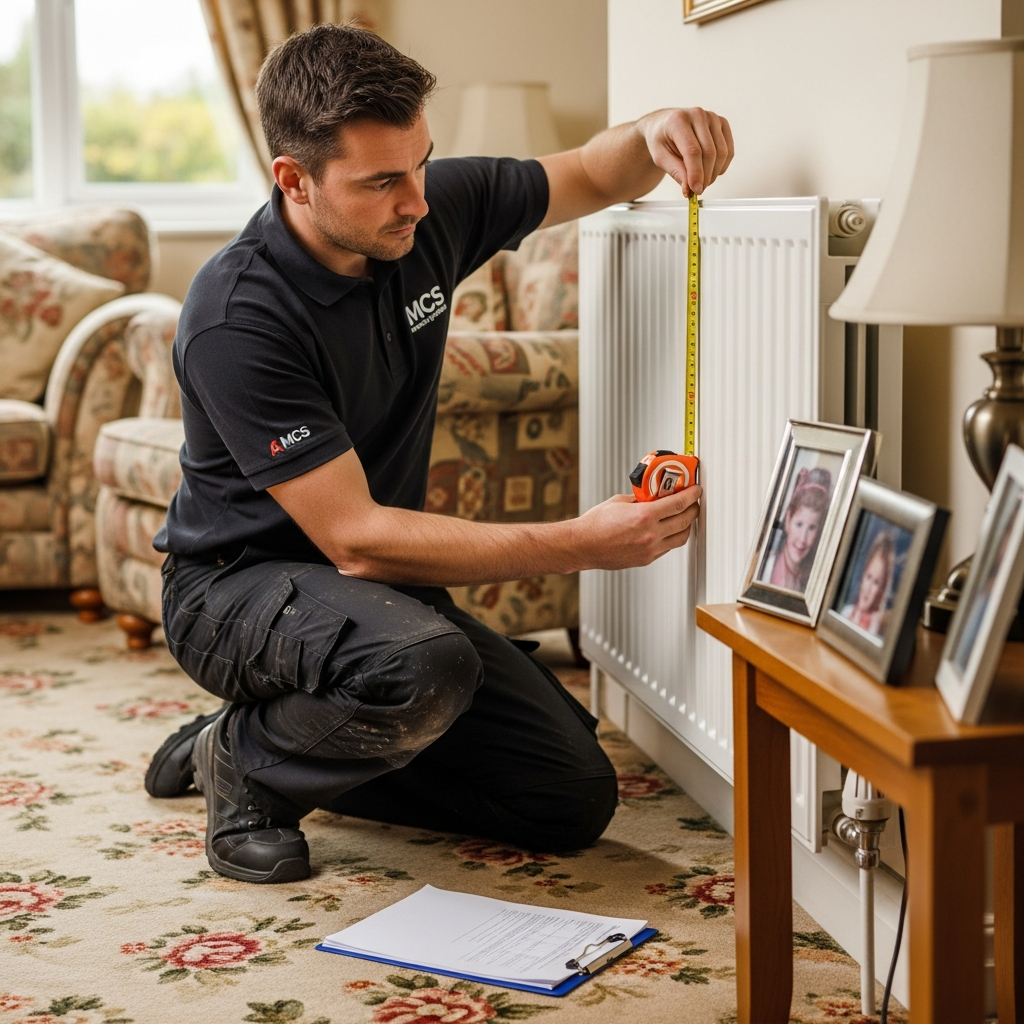
How to Find MCS-Certified Installers
1. Use a matching service
Our free quote service connects you with MCS-certified installers who cover your area. You fill in your details once and receive multiple quotes — saving hours of searching and phoning around.
2. Search the MCS database directly
The official MCS website (mcscertified.com) lets you search for certified installers by postcode. You can filter by technology type (air source, ground source, or both) and see each company's certification status and scope.
3. Ask for recommendations
Neighbours who already have heat pumps, local Facebook groups, and community forums can point you to installers with good local reputations. Always verify the MCS certification of any recommended installer before proceeding.
4. Check manufacturer directories
Heat pump manufacturers maintain lists of approved installers who are specifically trained on their products. These installers have additional product-specific training on top of their MCS certification.
What to Check Before Hiring
| Check | Where to verify | Why it matters |
|---|---|---|
| MCS certification is current | mcscertified.com | Expired or suspended certification means no grant |
| Public liability insurance | Ask for certificate | Protects you if damage occurs during installation |
| Previous installations (references) | Ask installer for contacts | Real homeowner feedback is invaluable |
| Specific heat pump experience | Ask directly | Experience with your chosen brand/model matters |
| Full heat loss survey included | Ask in writing | No survey = no proper design |
Red Flags to Watch For
Avoid any installer who:
- Quotes without a home visit: A proper quote requires a room-by-room heat loss survey. Remote quotes based on photos alone are not acceptable
- Cannot show MCS certification: If they are vague about certification status, walk away
- Pressures you for an immediate decision: Good installers are confident enough to let you compare quotes
- Recommends a specific size without surveying: Heat pump sizing depends entirely on your home's heat loss — guessing is unacceptable
- Has no local references: Ask for contact details of previous customers in your area
- Offers unusually low prices: Significantly below-market quotes usually mean corners will be cut somewhere

Want to compare vetted MCS installers side by side?
Get your free quotesWe only work with MCS-certified companies with proven track records.
Questions to Ask Every Installer
- How many heat pump installations have you completed in the last 12 months?
- Can you provide references from customers with similar properties to mine?
- What heat pump brand and model are you recommending, and why?
- Will you carry out a full room-by-room heat loss calculation?
- Do any of my radiators need upgrading, and how will you determine which ones?
- What is included in the quoted price, and what might be extra?
- Who handles the BUS grant application?
- What warranty do you offer on top of the manufacturer's warranty?
- Do you offer a follow-up visit after installation to fine-tune settings?
- What happens if the installation takes longer than planned?
The quality of the answers — and the installer's willingness to answer them thoroughly — tells you a lot about the quality of service you will receive. If you are also considering solar panels alongside your heat pump, ask whether they install solar too or can recommend a trusted partner.
Frequently Asked Questions
Can I get the BUS grant without an MCS-certified installer?
No. MCS certification is a mandatory requirement for the £7,500 Boiler Upgrade Scheme grant. Without it, your installation will not qualify.
How many MCS-certified heat pump installers are there in the UK?
As of 2026, there are over 3,500 MCS-certified heat pump installation companies in the UK, with numbers growing rapidly as the market expands.
What is the difference between MCS and RECC?
MCS certifies the technical competence of installers and the quality of products. RECC (Renewable Energy Consumer Code) is the associated consumer protection code that provides dispute resolution and standards of conduct for MCS-certified companies.
Should I choose the cheapest MCS-certified installer?
Not necessarily. The cheapest quote may reflect a less thorough approach to system design, lower-quality components, or less experienced engineers. Compare at least three quotes and evaluate the design approach, equipment specified, and company reputation alongside the price.

Find the right installer for your home
Get matched with MCS-certified installersFree, no-obligation quotes from up to 3 local professionals.
About MCS Certification for Heat Pumps
The Microgeneration Certification Scheme (MCS) is the UK's recognised quality standard for small-scale renewable energy installations, including air source and ground source heat pumps. MCS certification ensures installers meet defined technical standards for system design, installation quality, and consumer protection. It is a mandatory requirement for the Boiler Upgrade Scheme (BUS) grant and is also recognised by the solar panel industry, where the same certification framework applies to solar PV installations.