Home Heat Pump Guide

Will My House Be Warm Enough with a Heat Pump?

This is the number one concern for UK homeowners considering a heat pump. You have heard that heat pumps run at lower temperatures than gas boilers. You have touched a heat pump radiator and thought it felt lukewarm. You are wondering whether your house will actually feel warm enough when January arrives.

The short answer: yes. A correctly sized and installed heat pump will keep every room in your home at a comfortable 21°C, even on the coldest days of a UK winter. But it does it differently from a gas boiler, and understanding that difference is key to trusting the system.

How Heat Pump Warmth Differs from Boiler Warmth

A gas boiler heats water to 60°C to 80°C and blasts it through your radiators. The radiators get scorching hot, the room warms up quickly, and then the boiler switches off. The room cools, the boiler fires again, and the cycle repeats. You get peaks of warmth followed by dips — a sawtooth pattern.

A heat pump takes a different approach. It heats water to 35°C to 50°C and runs for longer periods — often continuously during cold weather. The warmth builds gradually and is maintained steadily. There are no peaks and troughs. The room sits at a consistent temperature, hour after hour.

This feels different. Not worse — different. Many heat pump owners describe it as more comfortable than their old boiler system once they adjust. No cold draughts between heating cycles. No overheating followed by cooling. Just steady, even warmth.

MCS Sizing Guarantees Comfort

Every heat pump installed under the Microgeneration Certification Scheme (MCS) must be sized according to a detailed room-by-room heat loss calculation. This is not guesswork. Your installer measures every wall, window, door, floor, and ceiling in every room. They account for insulation levels, construction type, orientation, and local climate data.

The calculation determines exactly how much heat each room needs to reach the design temperature — typically 21°C in living rooms and 18°C in bedrooms — even when the outside temperature is at the UK design minimum (usually -3°C to -5°C depending on your region).

The heat pump is then selected to deliver at least that amount of heat. If the calculations say your home needs 8kW of heat output, the installer specifies a heat pump that delivers 8kW or more at the design conditions. There is no shortfall. The system is engineered to maintain comfort.

What About Really Cold Days?

The UK's climate is relatively mild compared to countries like Sweden, Norway, and Finland, where heat pumps are standard. Our typical winter temperatures hover between 0°C and 7°C, with occasional dips to -5°C or below. Heat pumps work well across this entire range.

Performance in Cold Weather

Modern air source heat pumps operate effectively down to -20°C or below. At 0°C, a good heat pump still delivers a COP of 2.5 to 3.0. Even at -10°C, it maintains a COP of 1.8 to 2.5. The system works harder, yes, but it still works. It still heats your home. Millions of Scandinavian homes prove this every winter.

Most UK heat pump installations include a small electric backup heater (usually built into the heat pump or the hot water cylinder) that provides supplementary heat during the coldest hours of the coldest days. This might run for 20 to 50 hours per year in total — a tiny fraction of the heating season.

The "Beast from the East" Test

During the severe cold snap of February 2018, temperatures in parts of the UK dropped to -10°C or colder for several days. Heat pump owners consistently reported that their homes stayed warm. The heat pumps ran continuously, the backup heaters contributed on the coldest nights, and comfort was maintained. Modern heat pumps are even more capable than the models installed in 2018.

Why Radiators Feel Different

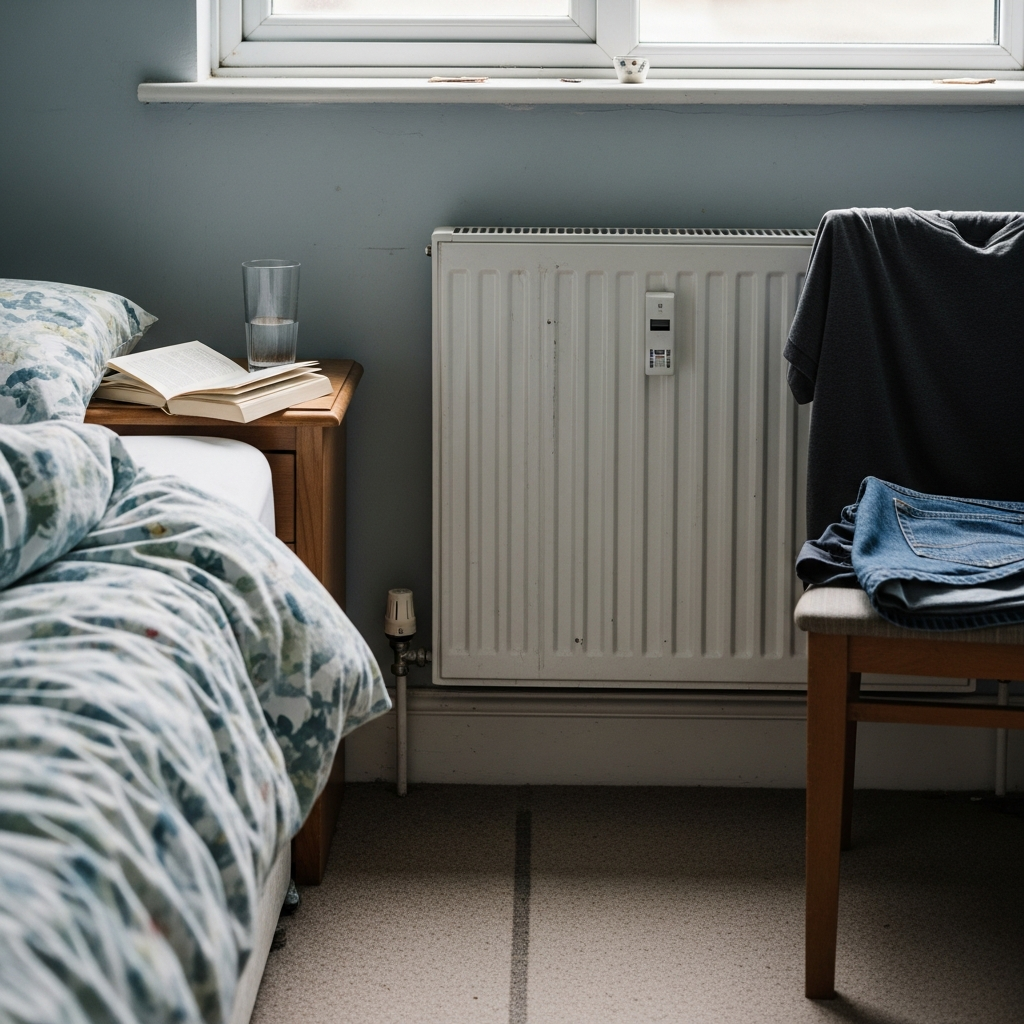
This is where most confusion arises. With a gas boiler, radiators are too hot to touch — 60°C to 70°C surface temperature. With a heat pump, radiators might be 35°C to 45°C — noticeably warm but not scalding.

Does this mean they are not heating the room? Absolutely not. The radiator is still emitting heat into the room. It is just doing it more gently, over a longer period. If your room thermostat says 21°C, the room is 21°C regardless of how hot the radiator surface feels. Trust the thermostat, not your hand.

If your existing radiators are too small to deliver enough heat at lower flow temperatures, your installer will recommend upgrading to larger radiators as part of the heat pump installation. This is a routine part of the design process. Typically, 30% to 50% of radiators in an existing home need upsizing.

Insulation and Heat Pumps

Good insulation makes any heating system work better, but it is especially beneficial for heat pumps. Better insulation means lower heat loss, which means the heat pump can run at lower flow temperatures, which means higher efficiency and lower running costs.

Do You Need to Insulate Before Getting a Heat Pump?

Not necessarily. A heat pump can be sized to heat any home, regardless of insulation level. However, improving insulation before or alongside installation gives you several advantages:

  • A smaller (cheaper) heat pump may be sufficient
  • Lower flow temperatures are possible, improving efficiency
  • Running costs are reduced
  • Existing radiators are more likely to be adequate without replacement

Common insulation upgrades that pair well with heat pumps include loft insulation (to 300mm), cavity wall insulation, draught-proofing, and double or triple glazing. These are often eligible for separate government grants and schemes.

The Steady Warmth Advantage

Once you live with a heat pump for a few weeks, most people prefer the steady warmth to the old boiler pattern. Here is why:

  • No cold mornings — the house maintains temperature overnight (with a small setback of 1-2°C), so you wake up to warmth
  • Even temperatures room to room — proper zone controls and balanced radiators mean consistent comfort everywhere
  • No overheating — the steady approach avoids the sweaty peaks that gas boilers can create
  • Warm floors — if you have underfloor heating, the floor itself is gently warm, adding to the sense of comfort
  • Safer for children and elderly — radiators at 40°C are warm to touch but will not burn skin

What Can Go Wrong

Heat pumps do not always deliver perfect comfort, but the reasons are almost always installation issues rather than fundamental problems with the technology.

Undersized Heat Pump

If the heat loss calculation is done poorly or shortcuts are taken, the heat pump may be too small for the property. This is why MCS certification matters — it enforces proper sizing methodology. Always use an MCS-certified installer.

Radiators Not Upsized

If existing radiators are too small for the lower flow temperatures, they cannot deliver enough heat to the room. A good installer will calculate whether each radiator is adequate and recommend replacements where needed.

Poor Controls Setup

Weather compensation set incorrectly, flow temperatures set too low, or controls that fight each other can all reduce comfort. A proper commissioning visit after installation should resolve these issues. If your heat pump is not performing as expected, ask your installer to revisit the controls.

Excessive Draughts

In very draughty homes, the gentle warmth from a heat pump can struggle to overcome rapid heat loss. Draught-proofing is a cheap and effective fix that benefits any heating system.

Real Experiences from UK Heat Pump Owners

The Electrify Heat survey of UK heat pump owners consistently finds that the vast majority — over 80% — report being satisfied or very satisfied with the warmth and comfort their heat pump provides. The most common comment is that the house feels "evenly warm" compared to the previous boiler system.

Dissatisfied owners almost always point to installation issues: incorrect sizing, poor commissioning, or inadequate radiators. When these issues are resolved, satisfaction ratings match those of happy owners.

How to Ensure Your Home Stays Warm

  1. Choose an MCS-certified installer — this guarantees proper sizing and design
  2. Accept radiator upgrades if recommended — do not refuse larger radiators to save money; they are essential for comfort
  3. Consider insulation improvements — even basic draught-proofing and loft insulation makes a noticeable difference
  4. Learn to use the controls — ask your installer to spend time explaining the settings; do not just leave everything on default
  5. Give it time — the first few days with a heat pump feel different; after two weeks, most people are fully adjusted
  6. Trust the thermostat — if it reads 21°C, your room is 21°C, regardless of how the radiator feels

Frequently Asked Questions

Will a heat pump keep my house at 21°C?

Yes. A correctly sized heat pump is designed to maintain 21°C in living rooms and 18°C in bedrooms even when outside temperatures drop to -3°C to -5°C. This is a design requirement under MCS standards.

Are heat pumps warm enough in winter?

Absolutely. Modern air source heat pumps operate effectively at temperatures well below anything the UK typically experiences. They keep millions of homes warm in Scandinavia, where winters are far colder than ours.

Why does my heat pump radiator not feel hot?

Because heat pump radiators run at 35°C to 45°C rather than 60°C to 80°C. They are warm, not scorching. But they still heat the room to the target temperature — they just do it more gently over a longer period. See our guide to why heat pump radiators feel lukewarm.

Do I need underfloor heating for a heat pump?

No. Heat pumps work perfectly well with radiators, as long as they are correctly sized. Underfloor heating is the ideal partner because it operates at very low temperatures, but it is not a requirement.

What if my house is old and poorly insulated?

A heat pump can still heat a poorly insulated home — it just needs to be sized larger to compensate for the higher heat loss. Improving insulation will reduce the heat pump size needed, lower running costs, and improve comfort. Many installers recommend a "fabric first" approach: insulate, then install the heat pump.

How long does it take for a heat pump to heat my house?

From cold, a heat pump takes longer than a gas boiler to reach full temperature — typically 2 to 4 hours depending on insulation and emitter type. This is why heat pumps work best with constant or near-constant heating rather than deep setbacks and recovery periods.