Solid Wall Insulation for Heat Pump Homes
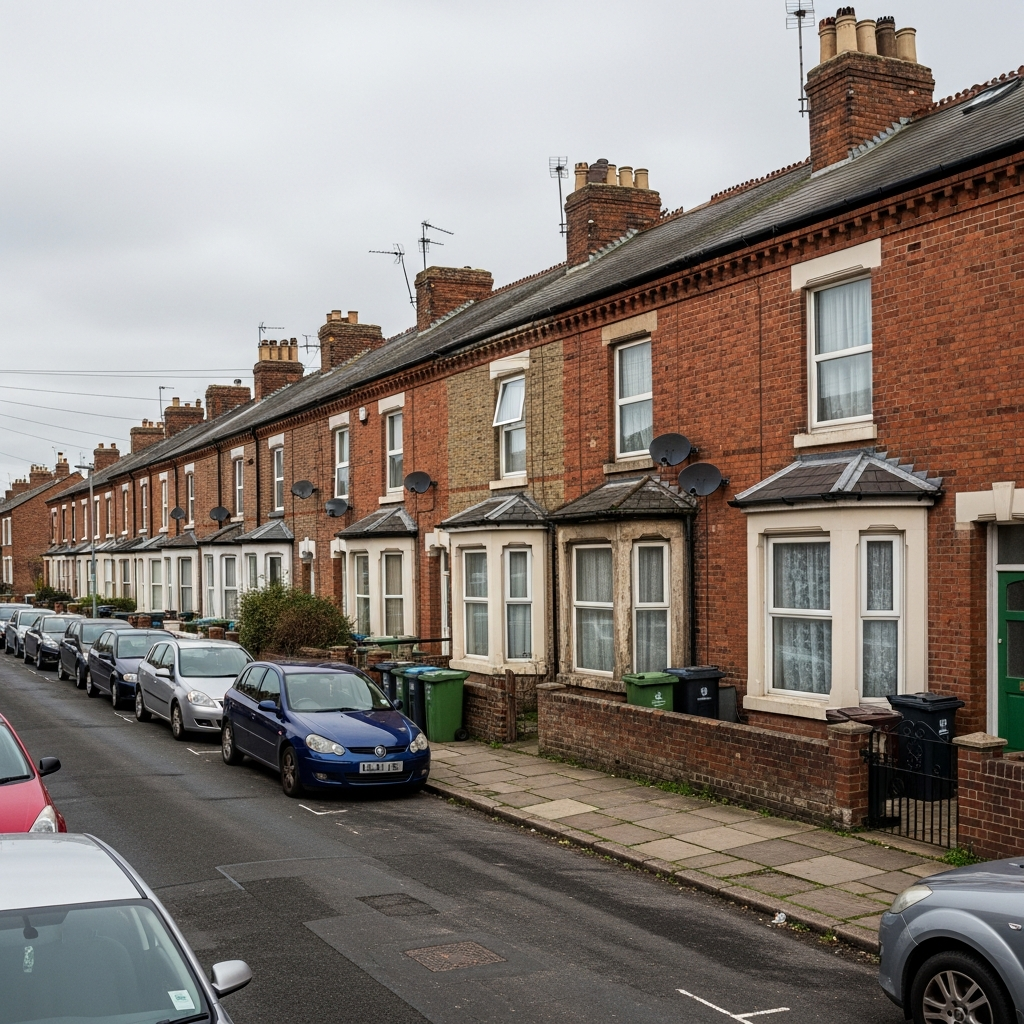
If you live in a pre-1920s home with solid brick or stone walls and you are considering a heat pump, solid wall insulation is the upgrade that will make the biggest difference to performance, comfort, and running costs. It is also the most expensive, the most disruptive, and the most complex — which is why it deserves careful consideration rather than a snap decision.
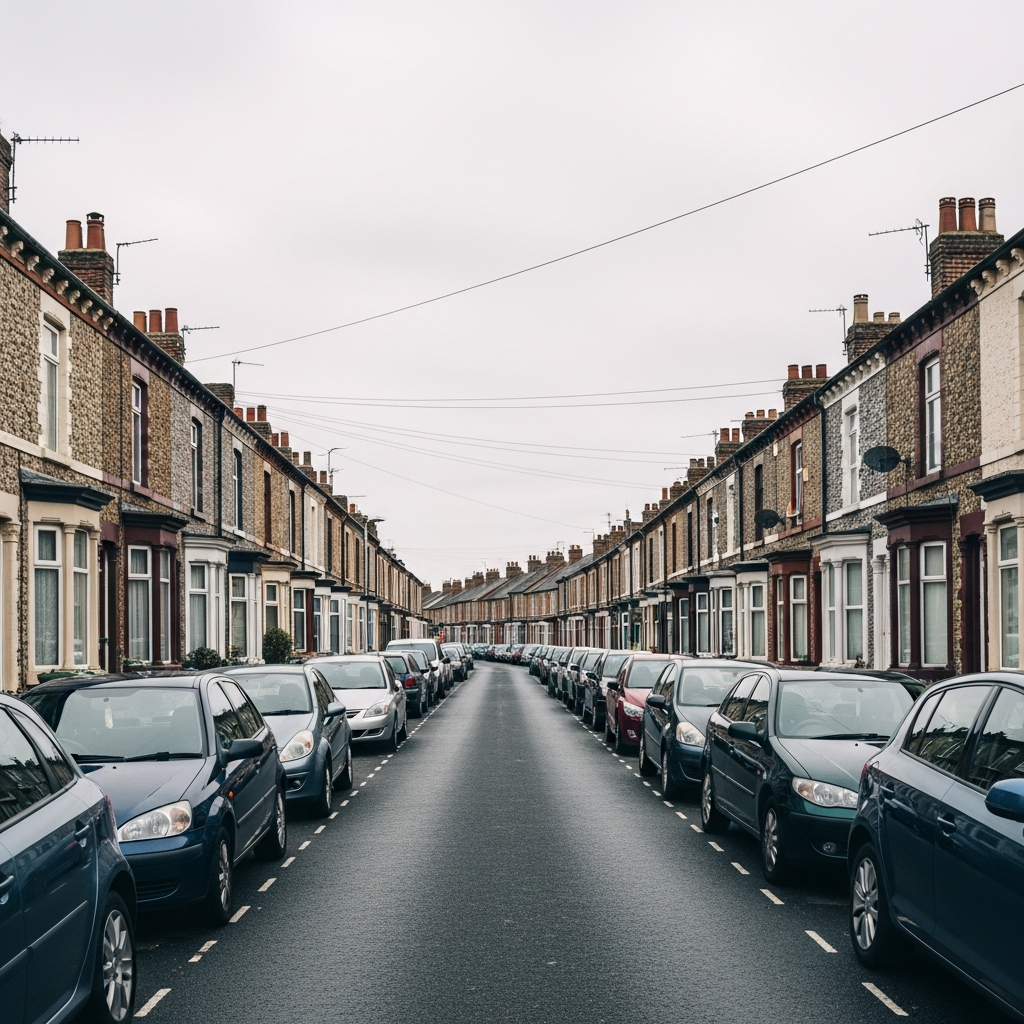
Roughly 8 million UK homes have solid walls — mostly Victorian and Edwardian terraces, cottages, and semi-detached houses. These walls lose roughly twice as much heat as unfilled cavity walls, making them the biggest single source of heat loss in older properties. Insulating them can reduce wall heat loss by 70-80% and transform a poorly insulated home into one where a heat pump works brilliantly.
Why Solid Walls Lose So Much Heat
A solid wall is typically a single layer of brick (220mm thick) or stone (often 300-600mm). Unlike cavity walls, there is no air gap to provide even basic thermal resistance. The wall conducts heat directly from the warm interior to the cold exterior.
The numbers
- Solid brick wall (uninsulated): U-value approximately 2.1 W/m²K
- Unfilled cavity wall: U-value approximately 1.5 W/m²K
- Filled cavity wall: U-value approximately 0.5 W/m²K
- Solid wall with internal insulation: U-value approximately 0.3-0.5 W/m²K
- Solid wall with external insulation: U-value approximately 0.2-0.35 W/m²K
An uninsulated solid wall loses heat at roughly four times the rate of an insulated cavity wall, and six to ten times the rate of a well-insulated solid wall. For a three-bedroom Victorian terrace with perhaps 70m² of solid external wall, this translates to roughly 4-5 kW of heat loss through the walls alone at design conditions — often exceeding the total heat loss of a modern, well-insulated home of the same size.
Impact on heat pump requirements
For a heat pump installer designing a system for a solid-walled home, the wall heat loss dominates the calculation. The heat pump needs to be significantly larger, flow temperatures may need to be higher (reducing COP), and more radiators may need upgrading. All of this increases both capital and running costs.
Solid wall insulation can change this picture entirely. Reducing wall heat loss from 4.5 kW to 1.5 kW means a smaller heat pump, lower flow temperatures, better COP, and dramatically lower running costs. This is why solid wall insulation, while expensive, often transforms the economics of a heat pump in an older home.
Internal Wall Insulation (IWI)
Internal wall insulation involves fixing insulation boards to the inside surfaces of external walls. It is generally cheaper and less disruptive than external insulation, but it does reduce room sizes slightly.
How it works
Rigid insulation boards (typically polyisocyanurate/PIR or phenolic foam, 50-100mm thick) are fixed directly to the wall or mounted on battens. A plasterboard finish is applied on top, providing a smooth surface for decoration. The total build-up typically adds 60-120mm to the wall thickness.
Advantages of internal insulation
- Lower cost: £40-80 per m², roughly £3,000-8,000 for a whole house
- No scaffolding needed: All work is done inside
- No change to external appearance: Important for conservation areas and listed buildings
- Can be done room by room: Spread the cost and disruption over time
- Works in flats: No need for freeholder permission for external changes
Disadvantages of internal insulation
- Reduces room size: Each insulated wall moves inward by 60-120mm. In a small Victorian terrace, this can be noticeable
- Disruption: Furniture must be moved, skirting boards removed, radiators temporarily disconnected, and rooms redecorated
- Thermal bridging: Where internal walls meet external walls, heat can bypass the insulation. Careful detailing is needed
- Window reveals: Insulating around windows requires careful work to avoid damp and maintain a neat finish
- Services: Electrical sockets, switches, and pipework on external walls need relocating
Cost breakdown
- Single room (15m² wall area): £600-1,200
- Whole house (semi-detached, 60-80m²): £3,000-6,500
- Whole house (detached, 100-140m²): £5,000-10,000
These costs include materials, labour, and making good (plasterboard, skimming, and decoration of insulated surfaces). They do not include rewiring or replumbing, which add to the total if services need relocating.
External Wall Insulation (EWI)
External wall insulation wraps the outside of your home in insulation boards, covered with a render or cladding finish. It is more expensive than internal insulation but more effective and less disruptive to daily life.
How it works
Insulation boards (expanded polystyrene, mineral wool, or phenolic foam, typically 80-120mm thick) are mechanically fixed and adhesive-bonded to the external wall surface. A reinforcing mesh is embedded in a base coat, followed by a coloured render finish or, alternatively, brick slips or timber cladding. The total system adds 100-150mm to the wall thickness.
Advantages of external insulation
- Better thermal performance: Wraps the entire wall envelope, eliminating thermal bridges
- No loss of internal space: Room sizes are unaffected
- No internal disruption: No need to move furniture, remove skirting, or redecorate
- Improved weatherproofing: The render system provides an additional weather barrier
- Can improve appearance: Transforms tired-looking brickwork with a clean render finish
- Thermal mass retained: The brick wall stays warm inside the insulation envelope, acting as thermal storage
Disadvantages of external insulation
- Higher cost: £80-150 per m², roughly £6,000-15,000 for a whole house
- Changes external appearance: Not suitable for listed buildings or some conservation areas
- Scaffolding required: Significant cost addition for multi-storey homes
- Cannot be done room by room: The entire external wall needs treating at once
- Window and door reveals: Details around openings require careful work
- Guttering, downpipes, and satellite dishes: Need removing and refitting
- Planning permission: May be required, particularly if changing the appearance of a front elevation
Cost breakdown
- Mid-terrace (two exposed walls): £5,000-9,000
- Semi-detached (three exposed walls): £7,000-12,000
- Detached (four exposed walls): £10,000-15,000
These costs include scaffolding, materials, labour, and making good around windows, doors, gutters, and other features. They represent typical 2026 prices for mineral render finish.
Internal vs External: Which Should You Choose?
The best choice depends on your specific circumstances:
Choose internal insulation if:
- Your home is listed or in a conservation area (external appearance cannot change)
- Budget is limited and you want to insulate room by room over time
- You are planning interior renovation anyway (combining the work reduces cost and disruption)
- You live in a flat or terrace where external access is restricted
- You want to preserve the external brick or stone character of your home
Choose external insulation if:
- You want the best thermal performance with minimal thermal bridging
- Your rooms are small and you cannot afford to lose internal space
- You want minimal disruption to daily life during installation
- The external appearance of your home could benefit from a refresh
- Budget allows for the higher upfront cost
- You have no planning restrictions preventing external changes
The hybrid approach
Some homeowners use a combination: external insulation on the rear and sides of the house (where appearance is less critical) and internal insulation on the front elevation (to maintain the street-facing character). This can deliver most of the thermal benefit at a lower cost than full external insulation while preserving the front of the house.
Grants and Funding for Solid Wall Insulation
The high cost of solid wall insulation means grants are particularly valuable. Several schemes can help:
ECO4
Free solid wall insulation for qualifying households on means-tested benefits. This is the most generous scheme and can cover the full cost of either internal or external insulation.
Home Upgrade Grant (HUG2)
For off-gas-grid homes with EPC ratings of D or below. HUG2 specifically targets the homes that benefit most from solid wall insulation and can fund the work alongside heat pump installation. Grants of up to £10,000 are available for insulation work.
Great British Insulation Scheme
Covers solid wall insulation for homes in council tax bands A-D. Eligibility is based on property type and council tax band rather than household income.
Local authority schemes
Many councils operate their own solid wall insulation programmes, sometimes fully funded, sometimes offering subsidised rates. Check with your local authority's housing or energy team.
Combining a solid wall insulation grant with the BUS grant for a heat pump can make the entire whole-house upgrade substantially more affordable. If you qualify for both, the combined funding could cover £15,000-20,000 of the total cost.
The Impact on Heat Pump Economics
Let us model the impact for a three-bedroom Victorian semi-detached house:
Without solid wall insulation
- Peak heat demand: 12 kW
- Heat pump size needed: 12 kW
- Flow temperature required: 50-55°C
- Seasonal COP: 2.7
- Annual heating electricity: 5,556 kWh
- Annual cost (at 24p/kWh): £1,333
With solid wall insulation
- Peak heat demand: 7 kW
- Heat pump size needed: 7-8 kW
- Flow temperature possible: 38-42°C
- Seasonal COP: 3.5
- Annual heating electricity: 3,000 kWh
- Annual cost (at 24p/kWh): £720
The difference
Annual saving: £613. Over 20 years (conservative heat pump lifespan): £12,260 in running cost savings alone. Plus a reduction in heat pump capital cost of perhaps £1,000-3,000 for a smaller unit. Against an insulation cost of £7,000-12,000, the investment pays for itself within 10-15 years — faster if electricity prices rise or if grants cover part of the cost.
For comparison, the equivalent cavity wall insulation for a home with unfilled cavities delivers similar proportional savings at a fraction of the cost. This is why cavity wall insulation is always prioritised first — but for solid-walled homes, it is not an option, making solid wall insulation the necessary alternative.
Practical Considerations for Older Homes
Breathability
Older homes with solid walls were designed to "breathe" — allowing moisture to pass through the wall fabric. Using the wrong insulation materials can trap moisture, causing damp, mould, and structural damage. For solid-walled homes, particularly those with lime mortar, use breathable insulation materials (mineral wool, wood fibre, or cork) rather than vapour-impermeable materials like foil-backed PIR boards.
A specialist surveyor experienced with older buildings should advise on appropriate materials. This is particularly important for stone-built properties, listed buildings, and any home where the internal walls currently show no signs of damp — you want to keep it that way.
Planning permission
External wall insulation usually falls under permitted development for most houses. However, you may need planning permission if:
- Your home is in a conservation area
- Your home is listed (Grade I, II*, or II)
- The insulation significantly alters the front elevation
- The insulation extends beyond the boundary of your property
Internal wall insulation does not require planning permission in most cases, though listed building consent may be needed for listed properties.
Party wall considerations
External insulation on a semi-detached or terraced house may extend beyond the party wall line. The Party Wall Act 1996 may apply, requiring formal notice to your neighbours. Your installer should advise on this.
Timing: When to Insulate Relative to Heat Pump Installation
Ideally: before the heat pump
If possible, complete solid wall insulation before the heat pump installation. This allows the installer to design the system for your improved (lower) heat demand, resulting in a smaller, cheaper, more efficient heat pump. The combined approach — insulate, then install — delivers the best overall economics.
Realistically: phased approach
Many homeowners cannot afford both simultaneously. A pragmatic approach:
- Do the affordable insulation upgrades now (loft insulation, draught-proofing) — £500-1,000
- Install the heat pump with the BUS grant — the installer sizes it for current conditions
- Add solid wall insulation when budget allows or grants become available
- Re-optimise the heat pump (lower flow temperatures, adjust weather compensation)
The heat pump will benefit from the solid wall insulation whenever it is done. You do not need everything in place before starting.
Frequently Asked Questions
How much does solid wall insulation cost in the UK?
Internal wall insulation typically costs £3,000-10,000 for a whole house. External wall insulation costs £5,000-15,000 including scaffolding and render. The exact cost depends on property size, number of exposed walls, and the system specified. Grants through ECO4, HUG2, and local schemes can significantly reduce or eliminate the cost for qualifying households.
Is solid wall insulation worth it for a heat pump?
For solid-walled homes, it delivers the single biggest improvement in heat pump efficiency — potentially reducing running costs by 40-50% and enabling a smaller, cheaper heat pump. The payback period is typically 10-15 years without grants, shorter with grant support. Given the insulation lasts 40+ years, it is a sound long-term investment.
Can I insulate solid walls internally myself?
Internal wall insulation is possible as a DIY project for experienced DIYers, particularly if done one room at a time. However, it requires careful attention to thermal bridging, moisture management, and finishing details around windows and sockets. For best results and to avoid damp issues in older properties, professional installation is recommended. Costs for professional installation include materials, labour, and making good.
Will solid wall insulation cause damp?
It can if the wrong materials are used or installation is poor. Older solid-walled homes need breathable insulation systems that allow moisture to pass through. Impermeable insulation can trap moisture, causing condensation, mould, and structural damage. Always use a specialist with experience in older buildings, and ensure a proper moisture risk assessment is carried out before work begins.
Internal or external insulation — which is better for a heat pump?
External insulation generally delivers better thermal performance because it wraps the entire wall envelope without thermal bridges. It also retains the thermal mass of the wall inside the insulated envelope, which helps maintain stable temperatures — ideal for heat pump operation. However, internal insulation is cheaper and may be the only option for listed buildings or conservation areas. Both deliver substantial improvement over an uninsulated solid wall.
How long does solid wall insulation last?
Both internal and external systems are designed to last 40+ years with minimal maintenance. External render systems may need repainting or patch repairs after 15-20 years. Internal insulation is effectively permanent once installed and finished. The insulation materials themselves (mineral wool, PIR, EPS) do not degrade over time.