Heat Pump Radiators: What You Need to Know
Your radiators are the final link between your heat pump and comfortable room temperatures. At 40°C flow temperature, a radiator produces only about 38% of its rated output — understanding this relationship is the key to a heat pump system that delivers genuine comfort without wasting electricity.
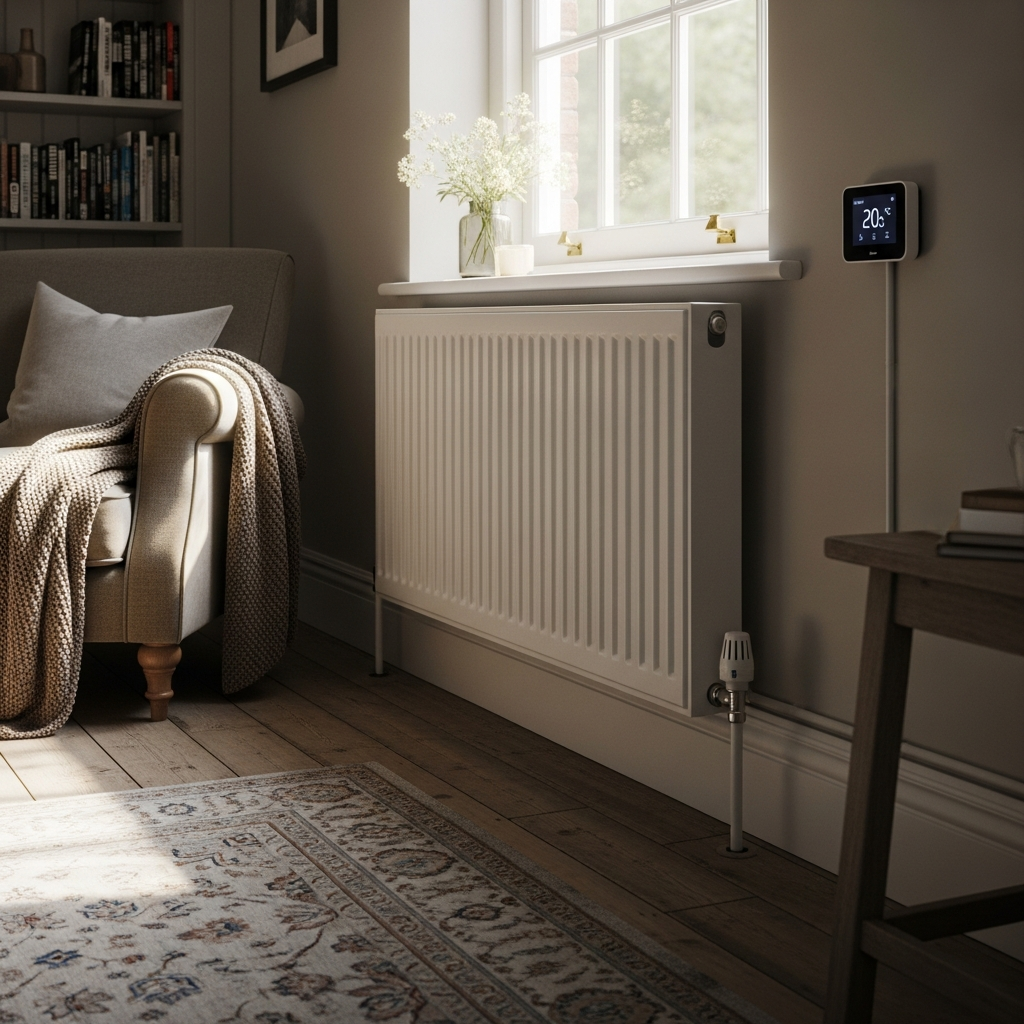
Heat pump radiators are not a special product — they are simply standard radiators that are correctly sized for the lower flow temperatures at which heat pumps operate. This guide explains the relationship between radiator size, flow temperature, and system efficiency, and helps you understand what your installer will recommend.
See your heat pump costs including any radiator upgrades
Use the free calculatorInstant estimate. Radiator costs included in the total.
How Radiators Work with Heat Pumps
A radiator works by transferring heat from hot water flowing through it to the surrounding air. The heat output depends on the temperature difference between the water and the room air. With a boiler at 70°C, that difference is large. With a heat pump at 40°C, it is much smaller — so the radiator needs more surface area to deliver the same amount of heat into the room.
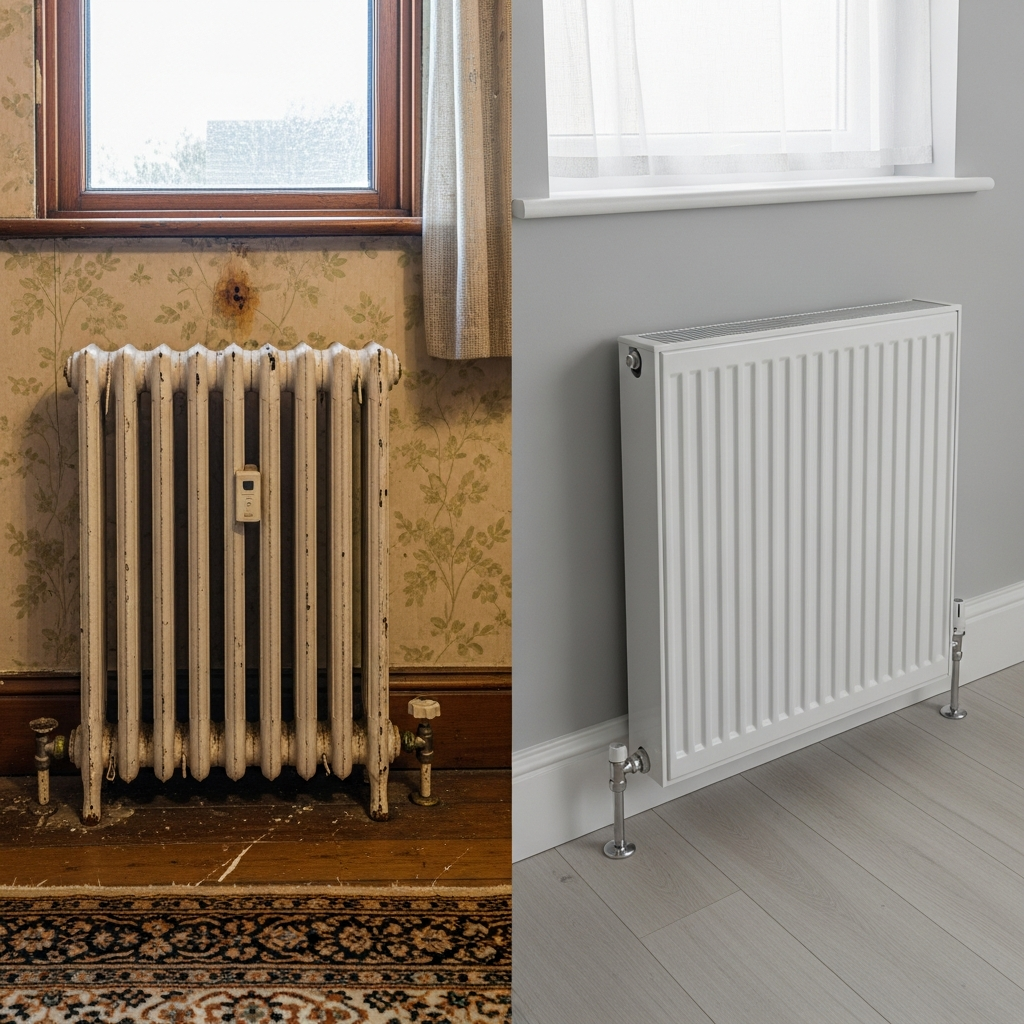
Radiator Types Compared
| Radiator Type | Output at 40°C Flow | Cost Per Unit | Best For |
|---|---|---|---|
| Single panel (Type 11) | Low | £80 – £150 | Low heat loss rooms only |
| Double panel convector (Type 22) | Good | £120 – £300 | Most rooms — standard choice |
| Fan convector | Excellent | £400 – £800 | Limited wall space rooms |
| Aluminium | Good (fast response) | £200 – £500 | Rapid heat-up, modern aesthetic |
| Column radiator | Moderate | £300 – £800 | Period properties |
For detailed comparisons, see our guides on fan convectors, aluminium vs steel, and column radiators.
Getting the Sizing Right
Radiator sizing for heat pumps starts with the heat loss calculation for each room. The installer then selects a radiator that can deliver that amount of heat at the planned flow temperature. Our radiator sizing calculator guide explains the process in detail.
Can You Keep Existing Radiators?

Often yes. The survey compares each radiator's output at the planned flow temperature against the room's heat loss. Where output exceeds heat loss, the existing radiator stays. Where it falls short, an upgrade is needed. See our pillar guide: do I need new radiators for a heat pump?
Get quotes including a full radiator assessment
Get free quotesEvery quote includes room-by-room radiator analysis.
Costs and Budgeting
Combining correctly sized radiators with solar panels powering your heat pump maximises both comfort and savings — the lower your flow temperature can go, the more efficient the system.
Calculate your full installation cost
Get your estimateIncludes radiators, cylinder, and all modifications.
Frequently Asked Questions
Are special radiators needed for heat pumps?
No special radiators are needed. Standard double-panel convector radiators work well — they just need to be large enough for the lower flow temperatures.
Why do heat pump radiators feel cooler than boiler radiators?
Heat pumps run at 35-45°C vs 60-75°C for boilers. Radiators feel warm rather than hot, but the room reaches the same temperature because the radiator is larger.
What is the best type of radiator for a heat pump?
Double-panel double-convector (Type 22) is the standard recommendation. Fan convectors are excellent where space is limited.
Heat pump radiators are central to system efficiency and home comfort. Understanding radiator output at different flow temperatures connects to radiator assessment, installation planning, and running cost optimisation. Pairing the right radiators with solar-powered electricity creates the most cost-effective heating system available.