Home Heat Pump Guide

Best Radiators for Heat Pumps UK

Choosing the right radiators for your heat pump is not about buying the most expensive option — it is about selecting radiators that deliver adequate heat output at the lower flow temperatures a heat pump uses, while fitting your rooms, your budget, and your aesthetic preferences.

This guide covers every radiator type that works well with heat pumps, explains the strengths and weaknesses of each, and provides practical recommendations for different room types and budgets.

What Makes a Radiator "Good" for a Heat Pump?

Before looking at specific types, here are the characteristics that matter most:

  • High output at low Delta T: The radiator must deliver sufficient heat at 40–50°C flow temperature, not just at the 75°C shown on the standard rating label.
  • Good convection: Convector fins increase heat output significantly compared to plain panels. More fins = more heat transfer at lower temperatures.
  • Appropriate physical size: The radiator must fit the available wall space while providing the required output.
  • Quality construction: A well-made radiator will last 25+ years. Cheap imports with thin steel corrode faster and can develop leaks.
  • Low water content: Lower water content means the system responds faster to temperature changes, which suits heat pump weather compensation controls.

Double-Panel Convector Radiators (Type 22)

Why They Are the Standard Choice

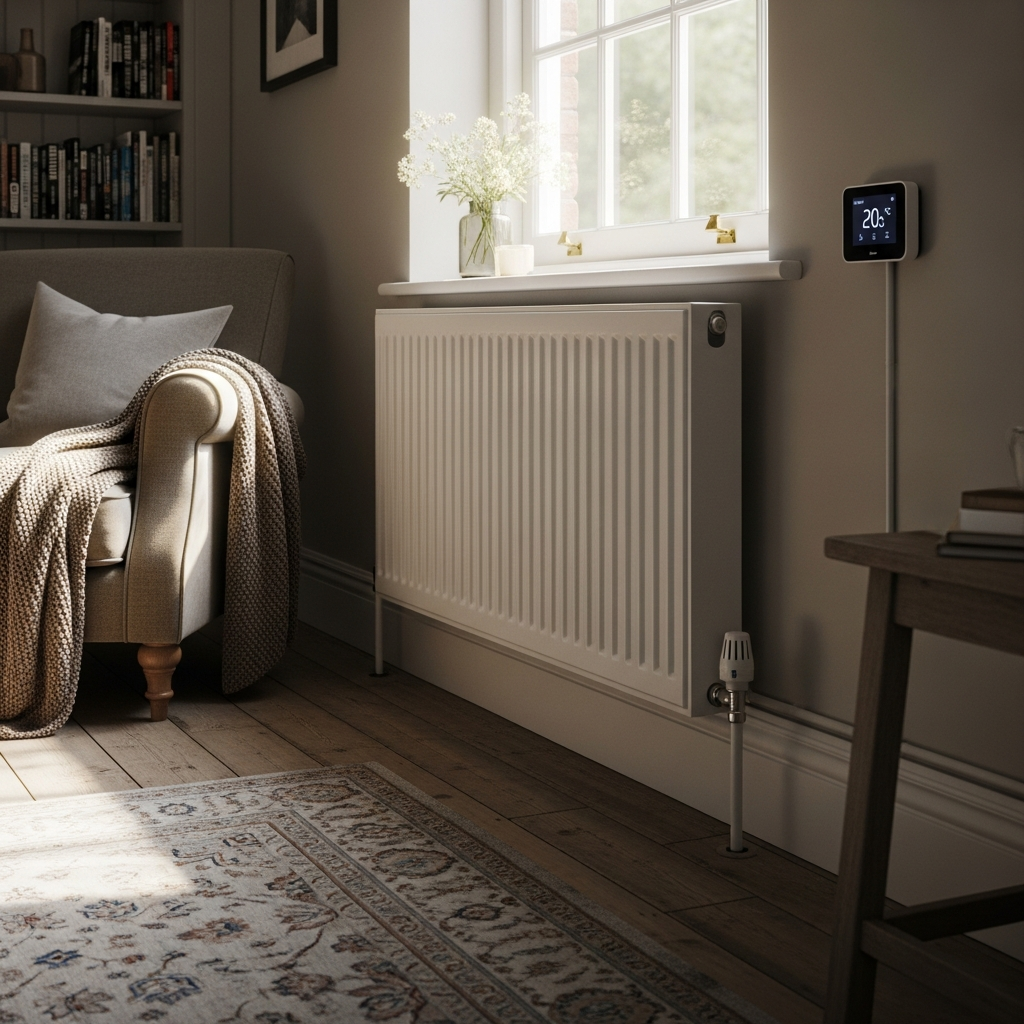
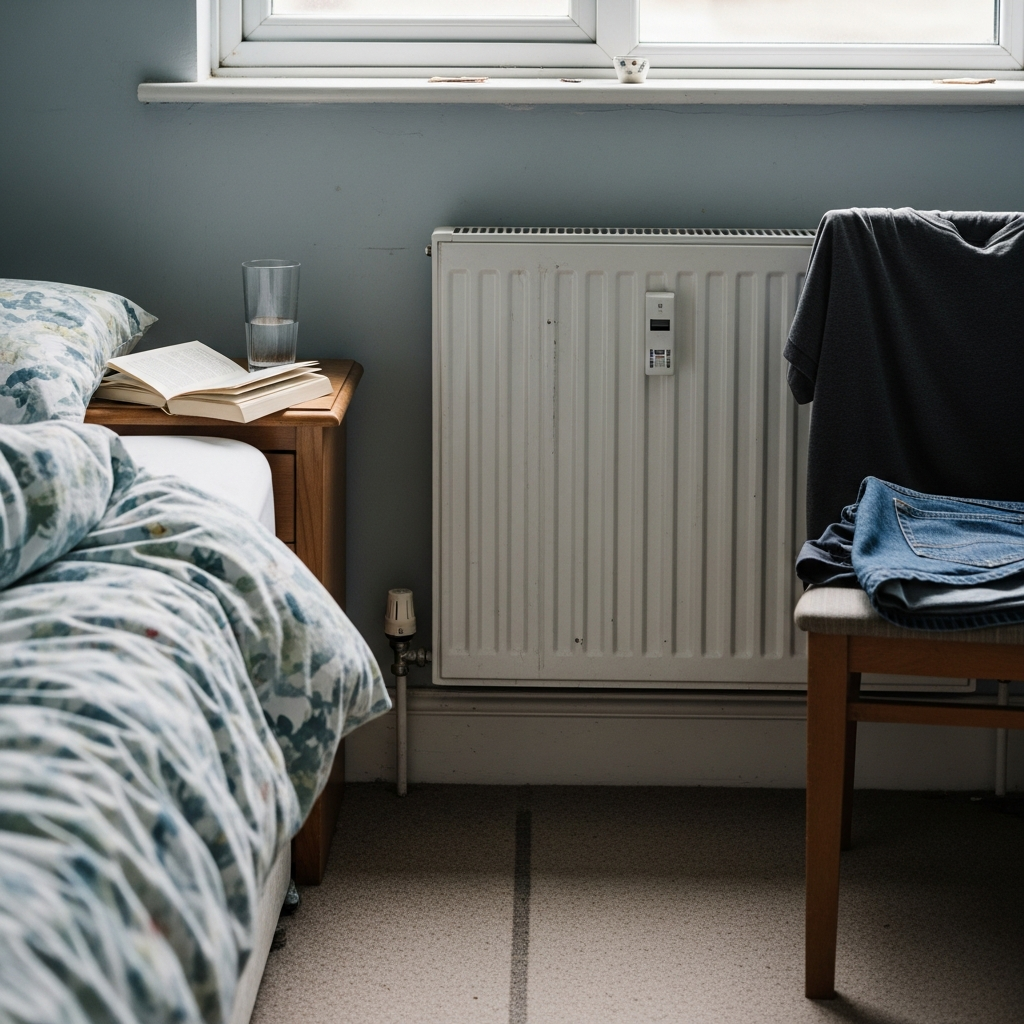
Type 22 double-panel convectors are the default recommendation for heat pump heating systems. They have two steel panels and two rows of convector fins between them. The fins dramatically increase the surface area for heat transfer, which is exactly what you need at lower flow temperatures.

Compared to a single-panel radiator (Type 11) of the same physical dimensions, a Type 22 produces roughly twice the heat output. This means that in many cases, simply upgrading from a Type 11 to a Type 22 of the same size provides enough additional output for heat pump operation — without needing to find more wall space.

Pros

  • Widely available from multiple manufacturers across the UK
  • Competitively priced — typically £100–£300 depending on size
  • Standard connection sizes, making swaps straightforward
  • Good balance of output, weight, and depth (~100mm deep)
  • Available in a vast range of sizes from 300mm to 900mm high and 400mm to 2,400mm wide

Cons

  • May need to be significantly larger than current radiators in some rooms
  • Standard white panel aesthetic is functional but not exciting
  • Heavier than aluminium alternatives

Recommended For

Every room where wall space allows an appropriately sized unit. They are the go-to choice for living rooms, bedrooms, hallways, and dining rooms.

Triple-Panel Convector Radiators (Type 33)

When You Need Maximum Output per Metre

Type 33 radiators have three panels and three rows of convector fins. They deliver approximately 50% more output than a Type 22 of the same height and width. If you need maximum heat from a limited wall width, Type 33 is the answer.

Pros

  • Highest output per metre of wall space among standard panel radiators
  • Can sometimes avoid the need for a larger radiator by stepping up from Type 22

Cons

  • Deeper profile (~160mm vs ~100mm for Type 22) — projects further from the wall
  • Heavier — may need stronger wall fixings
  • More expensive than Type 22 (typically 40–60% more)
  • Less commonly stocked, so may have longer lead times
  • Can collect more dust inside the fins, which is harder to clean

Recommended For

Rooms with high heat loss but limited wall width — for example, a living room with large windows and only one suitable wall for a radiator.

Fan Convector Radiators

The High-Performance Option

Fan convectors are the standout option for heat pump systems. They have an internal fan that actively draws air across the heat exchanger, delivering 2–3 times the output of a standard radiator of the same physical size at low flow temperatures.

This means a fan convector no bigger than a standard 600mm × 800mm radiator can deliver the heat output of a Type 22 twice its size. For homes where wall space is genuinely limited, fan convectors can be transformational.

Pros

  • Exceptional output at low flow temperatures (35–45°C)
  • Compact physical size relative to heat output
  • Fast response time — rooms heat up quickly
  • Some models include cooling mode (useful in summer if the heat pump can reverse)
  • Available as wall-mounted, floor-standing, or skirting-level units

Cons

  • More expensive — typically £400–£800 per unit
  • Produce some fan noise (25–35 dB on low speed — quieter than a fridge)
  • Require an electrical connection for the fan
  • Moving parts mean potentially higher long-term maintenance
  • Some models have a more industrial appearance, though designs are improving

Recommended For

Rooms where wall space prevents fitting a large enough standard radiator. Open-plan living areas, kitchens, and any room where a compact, powerful heat emitter is needed. Also excellent for hallways and entrance areas where fast warm-up is desirable.

Aluminium Radiators

Fast Response and Modern Design

Aluminium radiators have gained popularity in the UK for heat pump installations. Aluminium conducts heat roughly five times faster than steel, meaning these radiators heat up and cool down more quickly. This responsiveness works well with heat pump weather compensation controls, which constantly adjust flow temperatures.

Pros

  • Fast heat-up time — the room reaches temperature quicker
  • Lightweight — easier to mount on partition walls
  • Slightly higher output per kilogram than steel
  • Available in attractive modern column designs
  • Corrosion-resistant if the system is properly treated

Cons

  • More expensive than steel panel radiators (typically 30–50% more)
  • Require careful water treatment — aluminium can corrode if mixed with other metals in the system without proper inhibitor
  • Cool down quickly when the pump cycles — less thermal storage than cast iron
  • Not all plumbers are experienced with aluminium radiator connections

Recommended For

Homeowners who value design and responsiveness. Well-suited to living rooms and open-plan areas where the radiator is visible and a modern aesthetic is desired. Also good for rooms on partition (stud) walls where weight is a concern.

Cast Iron Radiators

Heritage Aesthetic, Lower Efficiency

Cast iron column radiators are popular in period properties for their traditional appearance. They retain heat well (high thermal mass), which can help maintain even room temperatures.

Pros

  • Excellent aesthetic in period homes — matches Victorian and Edwardian interiors
  • High thermal mass means they stay warm even after the heat pump cycles
  • Extremely durable — can last 50+ years with proper maintenance
  • Available in reproduction designs from specialist manufacturers

Cons

  • Lower output per square metre compared to modern convector designs — no convector fins
  • Very heavy — need strong wall fixings or floor standing
  • Slow to heat up — high thermal mass works both ways
  • Need to be significantly oversized to compensate for lack of convection enhancement
  • Expensive — both to buy and to install

Recommended For

Listed buildings and period properties where maintaining heritage appearance is a priority. Must be very generously sized for heat pump operation. Not the most efficient choice, but sometimes the right choice for aesthetic and planning reasons.

Vertical Radiators

When Horizontal Space Is Limited

Vertical radiators (also called tall radiators or upright radiators) are standard panel or column radiators oriented vertically. They are typically 1,400mm to 2,000mm tall and 300mm to 600mm wide. They can be Type 22, aluminium column, or even flat-panel designs.

Pros

  • Occupy minimal wall width — ideal for narrow walls between windows or doors
  • Can deliver high output in a tall format
  • Visually striking and modern
  • Available in steel, aluminium, and designer finishes

Cons

  • Heat rises, so the top of the radiator warms the ceiling rather than the room — slightly less efficient than horizontal placement
  • Less effective as a "curtain of warm air" under a window (the traditional rationale for horizontal radiators under windows)
  • More expensive than standard horizontal radiators of equivalent output

Recommended For

Hallways, kitchens, bathrooms, and any room where horizontal wall space is limited. Often used in combination with standard horizontal radiators in other rooms.

Skirting Board Radiators

Discreet and Space-Saving

Skirting radiators replace your standard skirting boards with low-profile heating elements that run along the base of the wall. They provide gentle, distributed heat from a large surface area — which suits heat pump flow temperatures well.

Pros

  • Virtually invisible — no wall space used
  • Distributed heat around the room perimeter
  • Work well at low flow temperatures due to their large surface area
  • No protruding radiator to obstruct furniture placement

Cons

  • Limited output per linear metre — typically 100–200W per metre at ΔT25
  • Only work if you have sufficient perimeter wall length
  • More expensive per watt than standard radiators
  • Installation is more involved — the entire skirting needs replacing
  • Not widely available from mainstream merchants

Recommended For

Homes where aesthetics are a top priority and wall space is at an absolute premium. Best suited to rooms with long, uninterrupted wall runs.

Choosing the Right Radiator: Room-by-Room Recommendations

Living Room

Type 22 double-panel convector in an appropriately large size. If wall space is limited, consider a fan convector or a vertical aluminium radiator. Prioritise output and comfort.

Kitchen

Fan convector (compact, powerful, fast warm-up) or a vertical radiator if wall space is tight around cabinets and appliances. A skirting radiator can work well in kitchens with long, unbroken runs of cabinetry.

Bedrooms

Type 22 double-panel convector. Bedrooms typically have lower heat loss than living rooms, so existing radiators may already be adequate. Avoid fan convectors in bedrooms if noise is a concern (even at 25–30 dB, some people find fan noise bothersome at night).

Bathroom

Upgraded towel radiator (look for models rated for low-temperature use with higher output) or a combination of towel rail plus a small panel radiator. Aluminium heated towel rails warm up faster, which suits intermittent bathroom use.

Hallway

Vertical radiator (saves space in narrow hallways) or a compact fan convector. Hallways often have lower insulation levels (front door, letterbox), so do not undersize the radiator.

Budget Considerations

Budget Option: Standard Type 22 Radiators

Cost: £100–£300 per radiator (supply and fit: £200–£500). Best value for money. Widely available. Works perfectly well for heat pumps when sized correctly. Choose this if budget is a priority and wall space is not a constraint.

Mid-Range: Aluminium Column Radiators

Cost: £200–£500 per radiator (supply and fit: £300–£600). Better aesthetics and faster response. Choose if you want your radiators to look good and work responsively with weather compensation.

Premium: Fan Convectors

Cost: £300–£600 per unit (supply and fit: £400–£800). Highest output from the smallest footprint. Choose for rooms where wall space is genuinely limited or where maximum performance matters.

Overall Budget

Most heat pump installations require 0–5 radiator upgrades. Using standard Type 22 radiators, the additional cost is typically £0–£2,500. With fan convectors in key rooms, budget £500–£4,000. This should be included in your overall installation quote.

Frequently Asked Questions

What is the best type of radiator for a heat pump?

Double-panel convector radiators (Type 22) are the best all-round choice for most UK homes. They offer excellent output at low flow temperatures, are widely available, and are cost-effective. Fan convectors are best where space is limited.

Are aluminium radiators better than steel for heat pumps?

Aluminium radiators heat up faster and are lighter, making them slightly more responsive to heat pump weather compensation. However, they are more expensive and require careful water treatment. Both materials work well — the choice often comes down to budget and aesthetics.

Can I use designer radiators with a heat pump?

Yes, provided the designer radiator delivers sufficient output at your design flow temperature. Some designer radiators prioritise appearance over performance, so check the output figures at ΔT25 or ΔT30 (not ΔT50) before committing. Your installer can advise.

Should I replace all my radiators at once or just the ones that need it?

Only replace the ones that need it based on the room-by-room heat loss calculation. There is no benefit to replacing radiators that are already adequate. Save the money for where it makes a real difference — the rooms with the biggest shortfall between existing output and required output.

Where can I buy radiators suitable for heat pumps in the UK?

Standard Type 22 radiators are available from all major plumbing merchants (Screwfix, Toolstation, Plumb Center, City Plumbing) and online retailers. Fan convectors are available from specialist suppliers like Jaga, Biddle, and Myson. Your MCS installer will usually source and supply radiators as part of the installation package.

Do I need to match radiator brands across the house?

No. Different rooms can have different radiator brands and types. What matters is that each radiator delivers the correct output for its room. Mixing standard panels in bedrooms with fan convectors in the living room is perfectly fine.

Summary

The best radiator for your heat pump is the one that delivers the right output for each room at the design flow temperature, fits the available space, and suits your budget. For most UK homes, that means Type 22 double-panel convectors in most rooms, with fan convectors or aluminium radiators in rooms where space or aesthetics demand something different.

Let your installer's room-by-room assessment guide your choices. A well-matched radiator system is the difference between a heat pump that impresses and one that disappoints.