The Complete Guide to Ground Source Heat Pumps UK
Ground source heat pumps deliver the highest efficiency of any home heating system — producing up to 4.5 units of heat for every unit of electricity used. With a £7,500 government grant and running costs as low as £500 per year, they offer the lowest long-term heating bills available to UK homeowners with the right property.
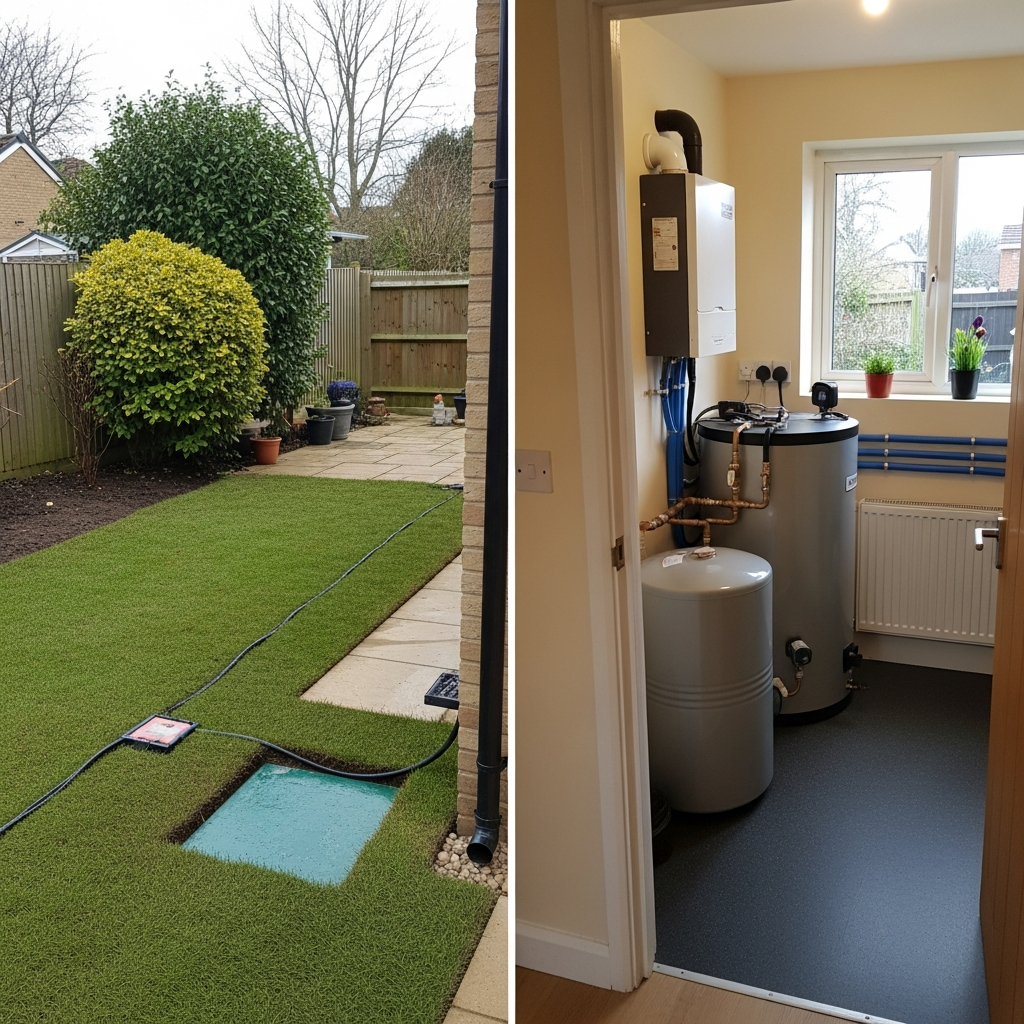
Ground source heat pumps are the most efficient heating system available to UK homeowners. They tap into the stable warmth stored just below the earth's surface — delivering consistent, reliable heat regardless of the weather above ground.
Yet despite their superior efficiency, ground source heat pumps account for a fraction of UK heat pump installations. The reasons are straightforward: higher upfront costs, the need for outdoor space, and a general lack of understanding about how the technology works.
This guide cuts through the confusion. Whether you are seriously considering a ground source heat pump or simply curious about how they compare to air source systems, you will find everything you need here — costs, grants, how installation works, land requirements, and an honest look at the pros and cons.
Find out what a ground source heat pump would cost for your home
Use the free calculatorNo email required. Instant results based on your property details.
What Is a Ground Source Heat Pump?
A ground source heat pump (GSHP) extracts heat energy from the ground and uses it to warm your home and hot water. It works on the same principle as a fridge — but in reverse — using a network of buried pipes filled with a water and antifreeze mixture to absorb warmth from the earth.
The key advantage is stability. While air temperatures in the UK swing wildly between seasons, the ground temperature at just a few metres below the surface stays remarkably constant at around 10-13°C all year round. This means a ground source heat pump delivers steady, efficient performance whether it is the middle of January or the height of summer.
For a deeper dive into the science, see our guide on how ground source heat pumps work.
How Does a Ground Source Heat Pump Work?
The process is elegantly simple, even if the engineering behind it is clever.
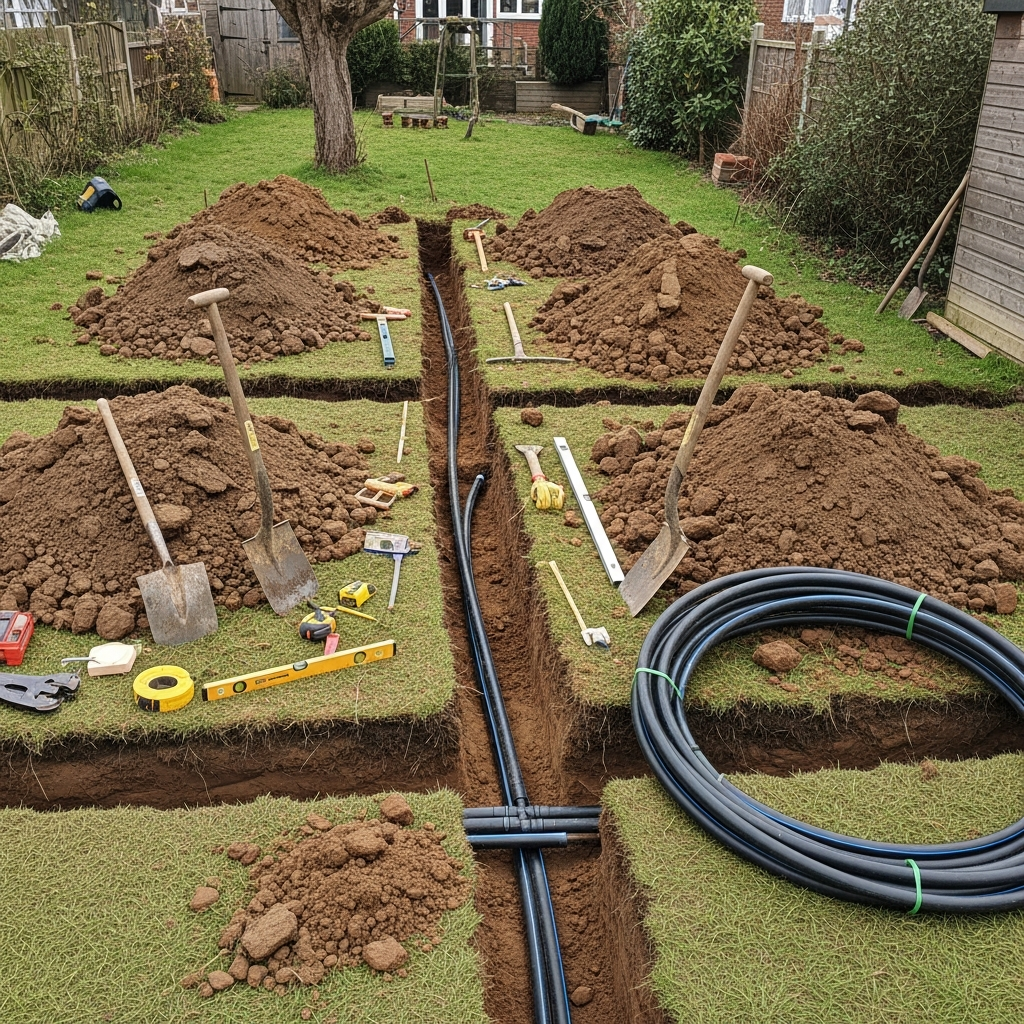
The Ground Loop
A network of pipes is buried in your garden — either horizontally in trenches or vertically in boreholes. These pipes contain a mixture of water and antifreeze that circulates continuously, absorbing low-grade heat from the surrounding soil or rock.
The Heat Pump Unit
The warmed fluid passes through a heat exchanger inside the heat pump, where the absorbed heat is transferred to a refrigerant. A compressor then concentrates this heat to a much higher temperature — typically 45-55°C — which is hot enough to warm your home through radiators, underfloor heating, or both.
Heat Distribution
The heated water is pumped around your central heating system and stored in a hot water cylinder, just as it would be with a conventional boiler. The cooled fluid in the ground loop is sent back underground to absorb more heat, and the cycle continues.
Horizontal vs Vertical Ground Loops
The biggest decision with any ground source heat pump installation is which type of ground loop to use. Each has distinct advantages and trade-offs. For a detailed comparison, read our guide on horizontal vs vertical ground source heat pumps.
Horizontal Ground Loops (Trenches)
Horizontal loops are laid in trenches dug to a depth of around 1.2 to 2 metres. The pipes are arranged in coils or straight runs, typically requiring a garden area roughly two to three times the floor area of the property being heated.
For a typical three-bedroom semi, you would need approximately 200-300 square metres of garden space. The trenches are backfilled after installation, and your garden returns to normal within a few months — though you should avoid planting deep-rooted trees directly over the loop.
Typical cost: £15,000-£25,000 fully installed.
Vertical Ground Loops (Boreholes)
Where garden space is limited, vertical boreholes are drilled to depths of 60 to 200 metres. A single property might need one to three boreholes, depending on the heating demand and the thermal conductivity of the rock.
Borehole systems take up far less surface space — the drilling rig needs roughly the same footprint as a car parking space. However, the drilling process is significantly more expensive than digging trenches. Read our dedicated borehole heat pump guide for full details.
Typical cost: £25,000-£40,000 fully installed.
Ground Source Heat Pump Costs in 2026
There is no getting around it — ground source heat pumps cost significantly more to install than air source systems. But the full picture is more nuanced than headline figures suggest.
Upfront Costs
| Component | Typical Cost |
|---|---|
| Heat pump unit | £4,000 - £8,000 |
| Horizontal ground loop | £5,000 - £10,000 |
| Vertical borehole(s) | £10,000 - £20,000 |
| Installation and commissioning | £3,000 - £5,000 |
| Hot water cylinder | £800 - £1,500 |
| Radiator upgrades (if needed) | £2,000 - £4,000 |
| Total (horizontal) | £15,000 - £25,000 |
| Total (borehole) | £25,000 - £40,000 |
Prices based on MCS installer quotes, March 2026. Includes all equipment, groundworks, labour, and commissioning.
For a full breakdown, see our heat pump cost guide and our dedicated page on ground source heat pump costs.
Government Grants
The Boiler Upgrade Scheme (BUS) offers £7,500 towards a ground source heat pump — that is £500 more than the grant for air source systems. In Scotland, additional funding through Home Energy Scotland can push the total support even higher.
After the BUS grant, a horizontal system could cost as little as £7,500-£17,500 out of pocket. Learn more on our heat pump grants page.

Running Costs
This is where ground source heat pumps really shine. With a seasonal coefficient of performance (SCOP) typically between 3.8 and 4.5, a well-installed GSHP produces 3.8-4.5 kWh of heat for every 1 kWh of electricity consumed.
For a typical UK home using 12,000 kWh of heat per year, annual running costs are roughly £500-£700 at current electricity prices. That compares favourably to both gas boilers (£700-£900) and air source heat pumps (£600-£850). If you have solar panels generating your own electricity, those running costs drop even further.
See our full analysis of heat pump running costs.
Compare ground source heat pump quotes from certified installers
Get free quotesMCS-certified installers only. No obligation. Save thousands by comparing.
Is Your Home Suitable for a Ground Source Heat Pump?
Not every property is a good fit. Here is what you need to consider.
Garden Space
For horizontal loops, you need a garden roughly two to three times the heated floor area of your home. A 100m² house typically needs 200-300m² of accessible garden. The ground cannot be covered by tarmac, decking, or structures that prevent digging.
For borehole systems, space requirements are much smaller — but access for a drilling rig is essential.
Ground Conditions
Different soil and rock types absorb and release heat at different rates. Clay and waterlogged ground are excellent. Dry sandy soil is less efficient but still workable. A ground survey before installation will confirm suitability.
Insulation
Like all heat pumps, ground source systems work best in well-insulated homes. If your property has solid walls with no insulation, a draughty roof, or single glazing, you should address these issues first — or at least factor them into the system design.
Heating System
Heat pumps deliver heat at lower temperatures than gas boilers. Underfloor heating is ideal, but oversized radiators work perfectly well too. Check our guide on whether you need new radiators for a heat pump.
Use our heat pump suitability checker to get a quick assessment of your home.
Ground Source Heat Pump Efficiency
Efficiency is measured by the coefficient of performance (COP) — the ratio of heat output to electricity input.
SCOP 3.8-4.5
Ground source heat pump
SCOP 2.8-3.5
Air source heat pump
0.90-0.94
Gas boiler efficiency
The higher efficiency of ground source systems comes from the stable ground temperature. An air source heat pump has to work harder when outdoor temperatures drop in winter — precisely when you need the most heat. A ground source heat pump maintains near-constant efficiency all year round because the ground temperature barely changes.
Over a 20-year lifespan, this efficiency advantage translates to thousands of pounds in lower running costs. Pairing a GSHP with solar panels to generate your own electricity can amplify these savings significantly.
Pros and Cons of Ground Source Heat Pumps
Advantages
- Highest efficiency — COP of 3.8-4.5 beats any air source system
- Lowest running costs — cheaper to run than gas, oil, or air source heat pumps
- No outdoor unit — completely silent from outside, no visual impact on your property
- Long lifespan — the heat pump unit lasts 20-25 years, the ground loop can last 50+ years
- Consistent performance — works just as well in a -10°C cold snap as on a mild autumn day
- Higher BUS grant — £7,500 compared to £7,000 for air source
- Low maintenance — fewer moving parts than air source, no defrost cycles needed
- Can provide cooling — some systems offer passive cooling in summer at virtually no cost
Disadvantages
- Higher upfront cost — £15,000-£40,000 compared to £8,000-£15,000 for air source
- Land requirements — horizontal loops need significant garden space
- Disruptive installation — trench digging or borehole drilling tears up your garden temporarily
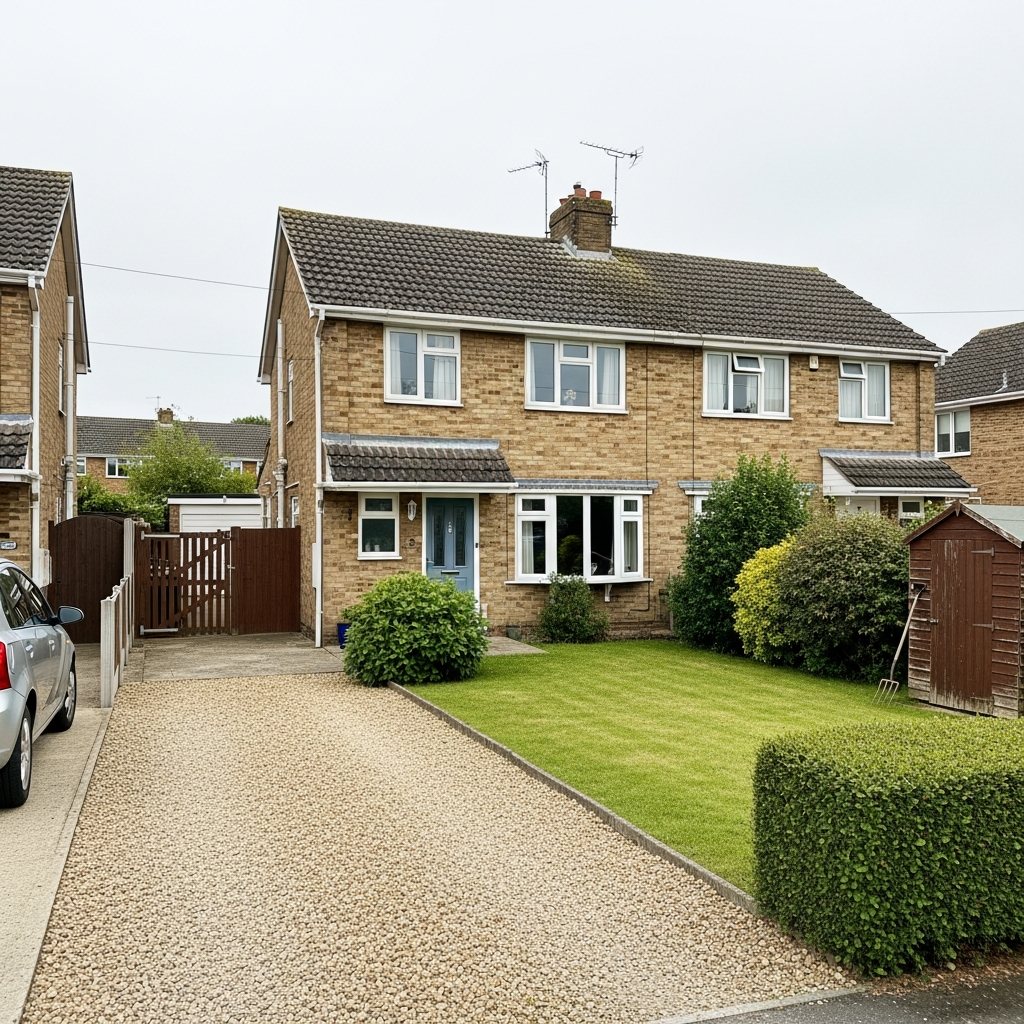
- Not suitable for all properties — flats, terraced houses, and homes with small gardens are typically ruled out
- Longer installation time — typically 1-2 weeks compared to 2-3 days for air source
- Planning considerations — borehole drilling may need planning permission in some areas
For a thorough breakdown, read our ground source heat pump pros and cons article.
Ground Source vs Air Source Heat Pumps
| Factor | Ground Source | Air Source |
|---|---|---|
| Typical SCOP | 3.8 - 4.5 | 2.8 - 3.5 |
| Install cost (after grant) | £7,500 - £32,500 | £3,000 - £8,000 |
| Annual running cost | £500 - £700 | £600 - £850 |
| Outdoor unit noise | None | 40-60 dB |
| Garden space needed | Significant (horizontal) or minimal (borehole) | Minimal |
| Installation time | 1-2 weeks | 2-3 days |
| Lifespan (unit) | 20-25 years | 15-20 years |
| BUS grant | £7,500 | £7,000 |
For most UK homes — especially those with limited outdoor space — an air source heat pump is the practical choice. Ground source systems make most sense for larger properties with ample garden space, properties in rural areas, or homeowners who prioritise the lowest possible running costs and the quietest possible system.
Read our full heat pump vs gas boiler comparison to see how both types stack up against conventional heating.
Installation: What to Expect
A ground source heat pump installation is a bigger project than fitting an air source system, but it is manageable with the right installer.
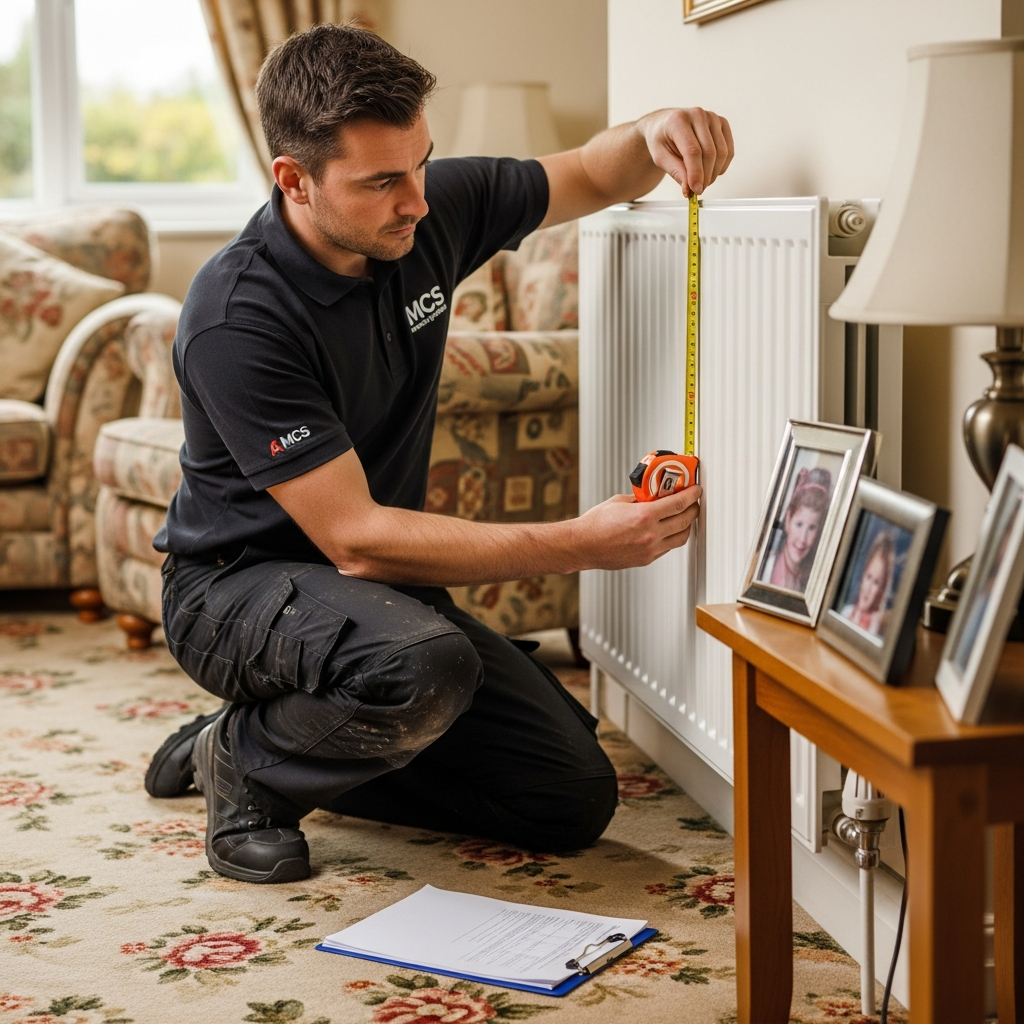
- Survey and design — a qualified installer assesses your property, garden, and heating requirements
- Ground works — trenches are dug or boreholes drilled, and the ground loop is laid and connected
- Indoor installation — the heat pump unit, hot water cylinder, controls, and any new pipework are fitted
- Commissioning — the system is tested, balanced, and handed over
The full process typically takes 1-2 weeks from start to finish. Read our detailed ground source heat pump installation guide for a step-by-step walkthrough. For a broader overview, see our heat pump installation guide.
Who Should Consider a Ground Source Heat Pump?
Ground source heat pumps are particularly well suited to:
- Detached houses with large gardens
- Rural properties currently on oil or LPG
- New builds where ground works are already happening
- Properties where noise from an outdoor air source unit would be an issue
- Larger homes with high heating demands — the efficiency advantage grows with usage
- Homeowners planning to stay in the property long term, making the higher upfront investment worthwhile
If you have a large property, a ground source heat pump is often the most cost-effective heating solution over its lifetime.
Frequently Asked Questions
How long does a ground source heat pump last?
The heat pump unit itself typically lasts 20-25 years. The ground loop — the buried pipework — can last 50 years or more with no maintenance, as there are no moving parts underground.
Do ground source heat pumps work in winter?
Yes, and this is one of their biggest advantages. The ground temperature at depth stays at 10-13°C throughout the year, so performance is virtually unaffected by even the coldest UK winters.
How much garden do I need?
For horizontal loops, roughly two to three times the floor area of your home. For borehole systems, you need much less surface space — just enough for the drilling rig to access.
Are ground source heat pumps noisy?
The indoor unit produces a low hum — similar to a fridge — but there is no outdoor unit, so neighbours will hear nothing at all. This is a significant advantage over air source heat pumps.
Do I need planning permission?
Horizontal ground loops generally fall under permitted development. Borehole drilling may require planning permission in some areas, particularly in conservation areas or near protected groundwater sources. Always check with your local authority.
Can a ground source heat pump heat my hot water?
Yes. A GSHP heats your domestic hot water and stores it in a cylinder, just like a conventional boiler system. Most systems heat water to 50-55°C, with a periodic legionella cycle to 60°C.
Is a ground source heat pump worth it?
For the right property, absolutely. The higher upfront cost is offset by lower running costs, a longer lifespan, and higher efficiency. If you have the garden space and plan to stay in your home long term, a GSHP can be an excellent investment. Read our full analysis on whether heat pumps are worth it.
Ready to explore ground source heating for your home?
Get your personalised cost estimateFree, instant, no obligation. See estimated costs and savings for your property.
Ground Source Heat Pumps in Context
Ground source heat pumps represent the most efficient end of the domestic renewable heating spectrum in the UK. They sit alongside air source heat pumps, solar energy systems, improved home insulation, and government incentives like the Boiler Upgrade Scheme as part of the wider shift towards low-carbon homes. For properties with sufficient land, the combination of a ground source heat pump and solar panels can virtually eliminate fossil fuel dependency while delivering the lowest possible energy bills. Understanding how these technologies complement each other helps homeowners make informed, long-term decisions about their home energy systems.