Ground Source Heat Pump for Large Properties
For homes with heating demands above 20,000 kWh per year, ground source heat pumps deliver annual savings of roughly £330-£660 over air source and well over £1,000 over oil at current oil prices. Large properties typically have the garden space needed, are often off the gas grid, and benefit most from the efficiency advantage that makes ground source the lowest-cost heating solution over its lifetime.
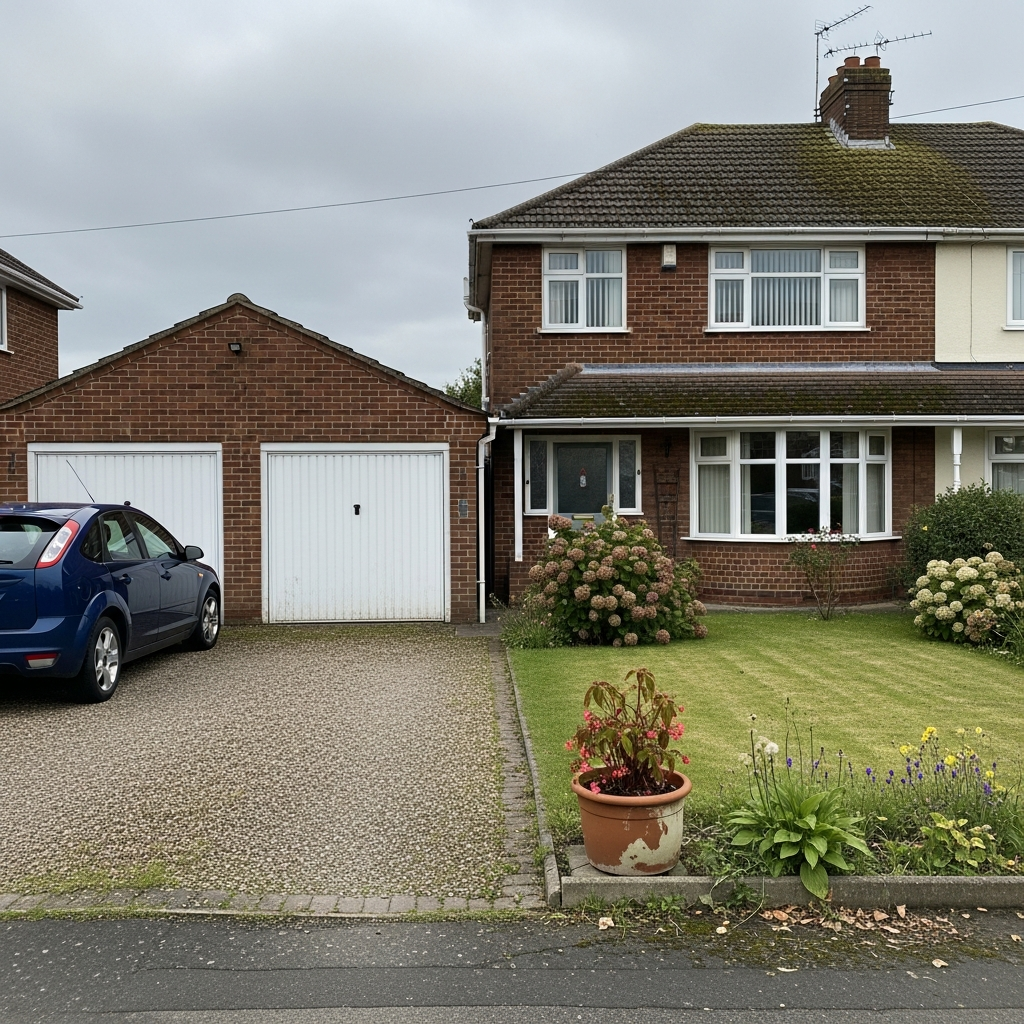
If you own a large home — a substantial detached house, a period property, a farmhouse, or a country estate — a ground source heat pump is likely the most efficient and cost-effective long-term heating solution available to you.
Large properties have high heating demands, often exceeding 20,000-30,000 kWh per year. At these levels, the efficiency advantage of ground source over air source translates into meaningful annual savings (if you do not have the land for a ground loop, see our guide to air source options for large houses). And because larger homes typically come with larger gardens, the space requirements for a ground loop are rarely an issue.
Get a personalised cost estimate for your large property
Use the free calculatorSee estimated costs, grant savings, and running costs. Instant results.
Why Ground Source Suits Large Properties
The Efficiency Advantage Scales Up
For a small home using 8,000 kWh of heat, the ground source efficiency advantage translates to a modest £100-£150 annual saving over air source. For a large property using 25,000 kWh or more, the same percentage advantage means £300-£500+ per year in lower running costs. Over a 20-year lifespan, that is £6,000-£10,000.
Large Gardens Solve the Space Problem
A 200m² house needs around 400-600m² of garden for horizontal loops. Most large detached homes and rural properties comfortably exceed this.
Often Off the Gas Grid
Many large properties are rural and rely on oil or LPG. Replacing these with a ground source heat pump typically delivers running cost savings of well over £1,000 per year compared with oil at current oil prices (LPG savings depend on the price you pay). These homes can also get a £9,000 Boiler Upgrade Scheme grant when replacing oil or LPG without a mains gas connection (until 31 March 2027, England and Wales).
Noise Is a Non-Issue
The complete absence of outdoor noise is significant for properties with outdoor entertaining spaces, garden rooms, or bedrooms near where an air source unit would be placed.
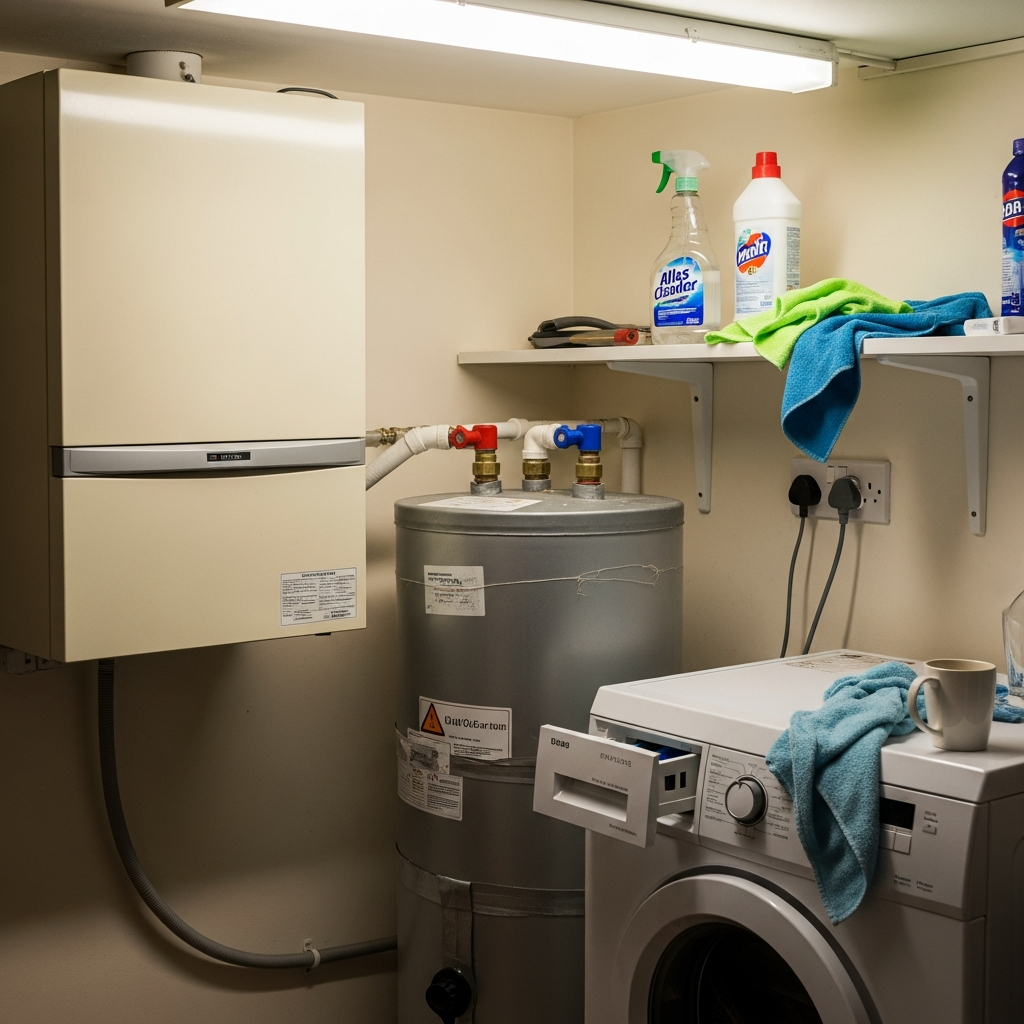
Sizing a Ground Source Heat Pump for a Large Home
| Property Type | Typical Heat Demand | Heat Pump Size |
|---|---|---|
| 4-bed detached (well insulated) | 14,000 - 18,000 kWh/yr | 12-16 kW |
| 5-bed detached | 18,000 - 25,000 kWh/yr | 16-20 kW |
| Period farmhouse | 25,000 - 40,000 kWh/yr | 20-30 kW |
| Large country house | 35,000 - 60,000+ kWh/yr | 25-45 kW |
Figures vary enormously depending on insulation levels, building age, ceiling heights, and heated area. Professional survey essential.
Single Unit vs Cascade Systems
For properties needing up to about 20 kW, a single unit is usually sufficient. Above this, a cascade system (two or more smaller heat pumps working in tandem) provides redundancy and more efficient partial-load operation. For properties over 25 kW, cascade systems are often preferred.
Ground Loop Sizing
- 16 kW system: 500-800m of pipework across 400-600m² of garden
- 25 kW system: 800-1,200m of pipework across 600-1,000m² of garden
- 40 kW system: 1,200-2,000m of pipework across 1,000-1,500m² of garden
Fields, paddocks, and large lawns can all be used for horizontal loops. For borehole sizing, see our borehole heat pump guide.
Costs for Large Properties
| System Size | Horizontal Loop | Borehole System |
|---|---|---|
| 16 kW | £20,000 - £28,000 | £30,000 - £42,000 |
| 25 kW | £28,000 - £38,000 | £40,000 - £55,000 |
| 40 kW | £38,000 - £55,000 | £55,000 - £80,000 |
After the £7,500 BUS grant (one per property, regardless of number of units). If the heat pump replaces oil or LPG in a home without mains gas, the grant is £9,000 until 31 March 2027, reducing these figures by a further £1,500.
Running Costs at Scale
| Annual Heat Demand | GSHP (SCOP 4.0) | ASHP (SCOP 3.2) | Oil Boiler (85%) |
|---|---|---|---|
| 18,000 kWh | £1,184 | £1,481 | £2,414 |
| 25,000 kWh | £1,645 | £2,056 | £3,353 |
| 40,000 kWh | £2,632 | £3,290 | £5,365 |
Unit costs only. Electricity at 26.32p/kWh (Ofgem price cap, 1 October 2026 to 31 December 2026). Oil at about 11.4p/kWh (roughly 117p/litre including VAT, October 2026, indicative, BoilerJuice); oil is not price-capped and changes often, so use your latest delivery price. Gas comparison not included as most large rural properties are off-grid.
For a large property using 40,000 kWh, a ground source heat pump saves around £660 per year over air source and around £2,700 per year over oil at current oil prices. If you also install solar panels, a larger array can offset a significant portion of the electricity consumption.
Request a quote for your large property
Request a heat pump quoteCheck if a heat pump suits your home and request a quote. No obligation.
Practical Considerations for Large Homes
Insulation First
Large, older properties often have poor insulation. Every pound spent on insulation reduces the size (and cost) of heat pump needed. A large farmhouse that needs a 35 kW heat pump without insulation might only need 20-25 kW with proper insulation — saving £10,000+ on the installation.
Heating Distribution
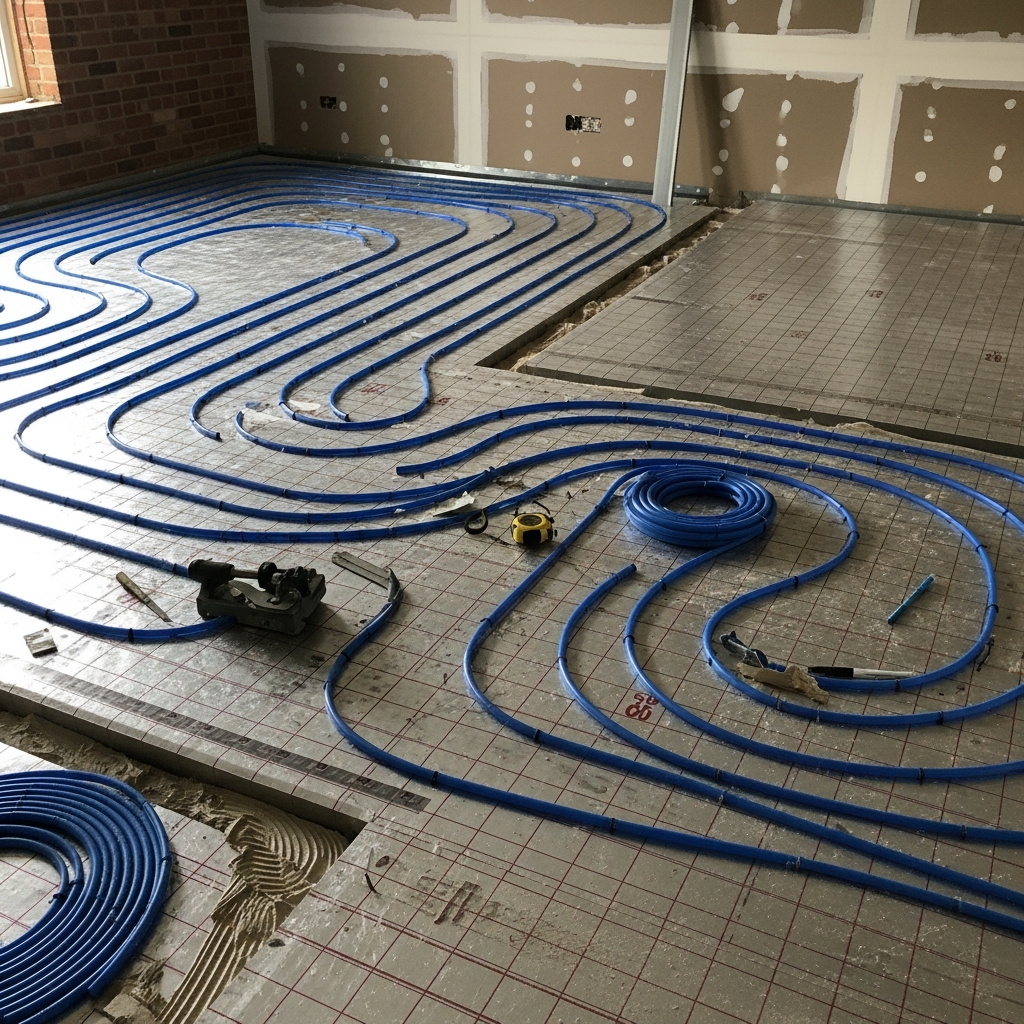
Large properties often have mixed heating — radiators in some rooms, underfloor heating in others. A ground source heat pump can feed both. If existing radiators need upgrading, see our radiator guide.
Zoning
Heating zones allow you to keep living areas warm while reducing temperatures in unused rooms. A well-designed zoning system can reduce effective heat demand by 20-30%, directly cutting running costs.
Period Properties and Listed Buildings
Ground source heat pumps are particularly well suited to period properties:
- No visible external equipment — important for listed buildings and conservation areas
- Compatible with existing large radiators — often already oversized for lower flow temperatures
- Large grounds — ample space for ground loops
- High heating demands — benefit most from the efficiency advantage
Worked Example: 5-Bed Victorian Farmhouse
This is an illustrative calculation, not a real installation, using current price-cap electricity and indicative oil prices.
| Property | 5-bedroom Victorian farmhouse, 280m² heated area |
| Previous heating | Oil boiler, 85% efficient (about £3,755 a year at current oil prices) |
| Heat demand | 28,000 kWh/year (after loft and partial wall insulation) |
| System installed | 20 kW ground source heat pump with horizontal loops |
| Installation cost | £32,000 (before grant) |
| BUS grant (replacing oil, no mains gas) | -£9,000 |
| Out-of-pocket cost | £23,000 |
| Annual running cost | £1,842 (SCOP 4.0) |
| Annual saving vs oil | £1,913 |
| Simple payback | Approximately 12 years |
Factor in the oil boiler's remaining lifespan (needing replacement within 5-8 years at £3,000-£5,000) and the effective payback shortens further, well within the 25-year heat pump lifespan. Oil prices are volatile and not price-capped, so the saving is sensitive to the oil price: recalculate with your own latest delivery price.
Alternatives for Very Large Properties
- Community ground loop schemes — shared borehole arrays reducing per-property costs
- Ground source with biomass backup — heat pump for base load, biomass for peak demand
- Multiple independent systems — separately heated zones with their own heat pumps

Frequently Asked Questions
What size ground source heat pump do I need for a large house?
It depends entirely on your property's heat loss. A well-insulated 5-bed might need 16-20 kW, while a poorly insulated Victorian farmhouse could need 30+ kW. A professional heat loss survey is the only way to get an accurate figure.
Can a ground source heat pump heat a 6-bedroom house?
Yes. Units are available up to 45 kW, and multiple units can be cascaded for larger demands.
Is ground source better than air source for a big house?
Generally, yes. The efficiency advantage delivers larger absolute savings, and the higher cost becomes proportionally less significant.
How many boreholes do I need for a large house?
A typical 20-25 kW system needs 2-3 boreholes at 100-130 metres each. Very large properties (35-45 kW) might need 4-5.
Can I heat a swimming pool with a ground source heat pump?
Yes. Pool heating at 28-30°C is well within the heat pump's optimal range. Many large-property installations include pool heating.
Ready to explore ground source for your large property?
Request a heat pump quoteCheck if a heat pump suits your home and request a quote. No obligation.
Large Property Heating in the Energy Transition
Large UK properties represent some of the highest-emitting homes in the country, making the switch to ground source heating particularly impactful for carbon reduction. Combined with solar panels (larger roofs mean more generation potential), improved insulation, and the £7,500 BUS grant, large property owners can dramatically cut both emissions and running costs. Ground source heat pumps offer the most efficient path, while air source systems provide a lower-cost alternative where ground loops are not feasible. The transition from fossil fuel heating is particularly compelling for rural properties currently reliant on oil or LPG.