Ground Source Heat Pump Installation: Step-by-Step Process
A ground source heat pump installation takes 1-2 weeks on site and involves trenching or borehole drilling in your garden, fitting the indoor unit, and connecting everything to your heating system. Knowing exactly what each stage involves — and how to prepare — prevents surprises and keeps the project running smoothly.
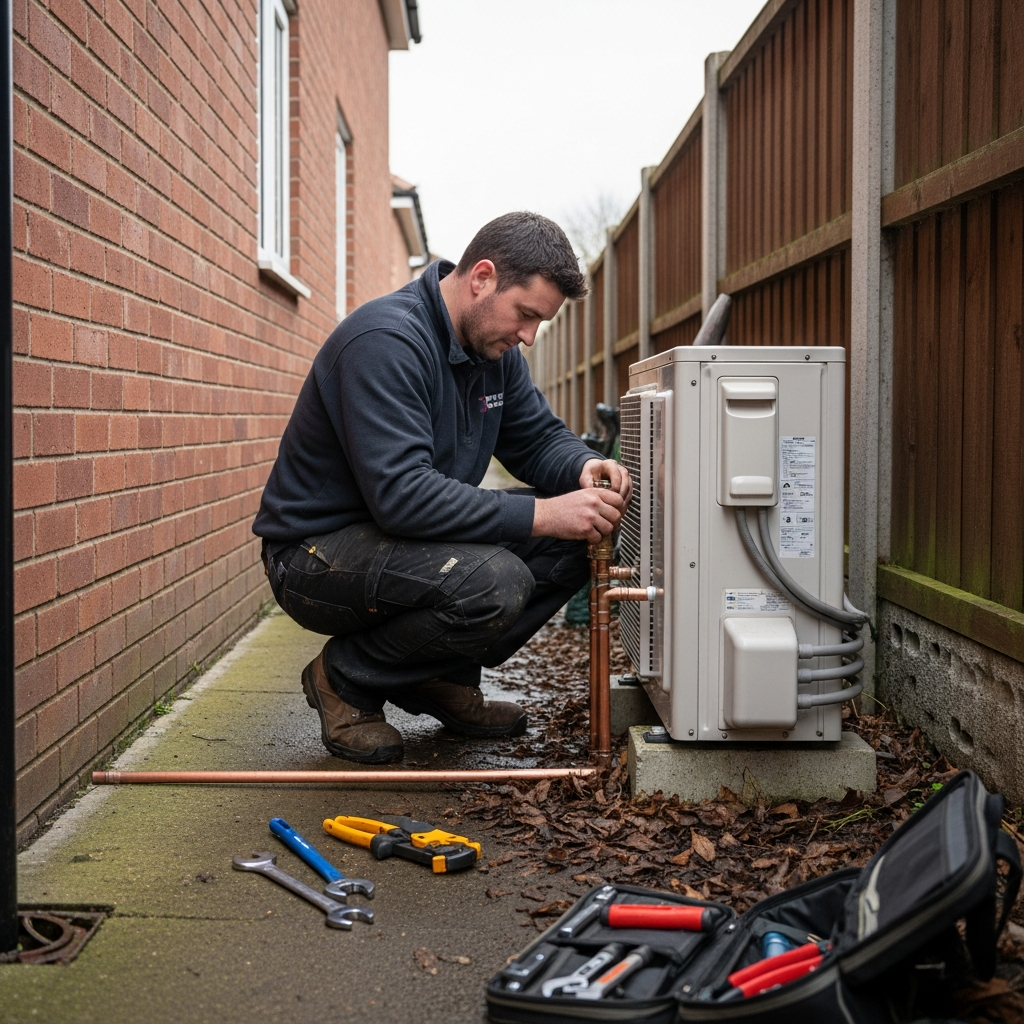
Installing a ground source heat pump is a bigger project than swapping a gas boiler or fitting an air source system. There are trenches to dig or boreholes to drill, pipework to lay underground, and an indoor unit to connect to your heating system.
If you are considering a ground source heat pump, knowing what to expect — from the initial survey through to commissioning — will help you plan properly and avoid surprises. For a comprehensive overview of the technology, see our complete guide to ground source heat pumps.
Get installation quotes from certified GSHP specialists
Get free quotesMCS-certified installers. No obligation. Compare prices and save.
Stage 1: Survey and System Design
Before any work begins, a qualified installer will carry out a thorough assessment of your property. This is arguably the most important stage — getting the design wrong means the system will underperform for its entire lifespan.
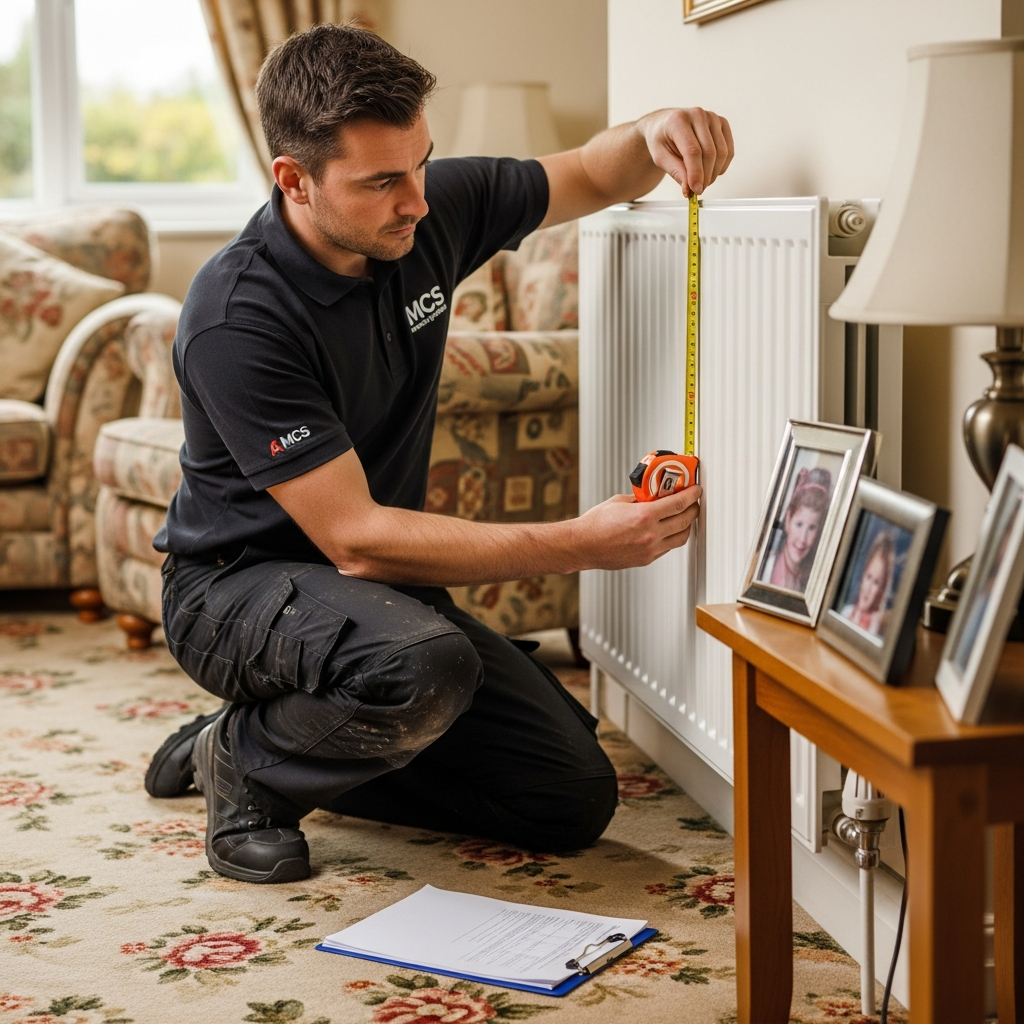
Heat Loss Survey
The installer calculates how much heat your home loses through walls, roof, windows, and floors. This determines the size of heat pump you need. The survey considers property size, insulation levels, window type, airtightness, hot water demand, and your preferred indoor temperatures.
Ground Assessment
The installer assesses your garden and ground conditions to determine the best type of ground loop — considering garden size, access for machinery, soil type, underground services, and the water table.
System Design
Based on the surveys, the installer designs the complete system — heat pump size, ground loop length and layout, pipework routes, cylinder size, and any radiator upgrades needed. You will receive a detailed proposal with costs before committing.
Stage 2: Groundworks — Horizontal Trenches
If you are having a horizontal ground loop system, a mini excavator digs trenches to a depth of 1.2-2 metres. The trenches are typically 60-80cm wide and spaced 1-2 metres apart. For a three-bedroom house, expect around 100-200 metres of trench.
High-density polyethylene (HDPE) pipes are laid in the trenches, either as straight runs or in "slinky" coils. The pipes are connected and pressure-tested before backfilling. Your garden will look rough for a few weeks, but grass typically grows back within 2-3 months.
Stage 2 (Alternative): Groundworks — Borehole Drilling
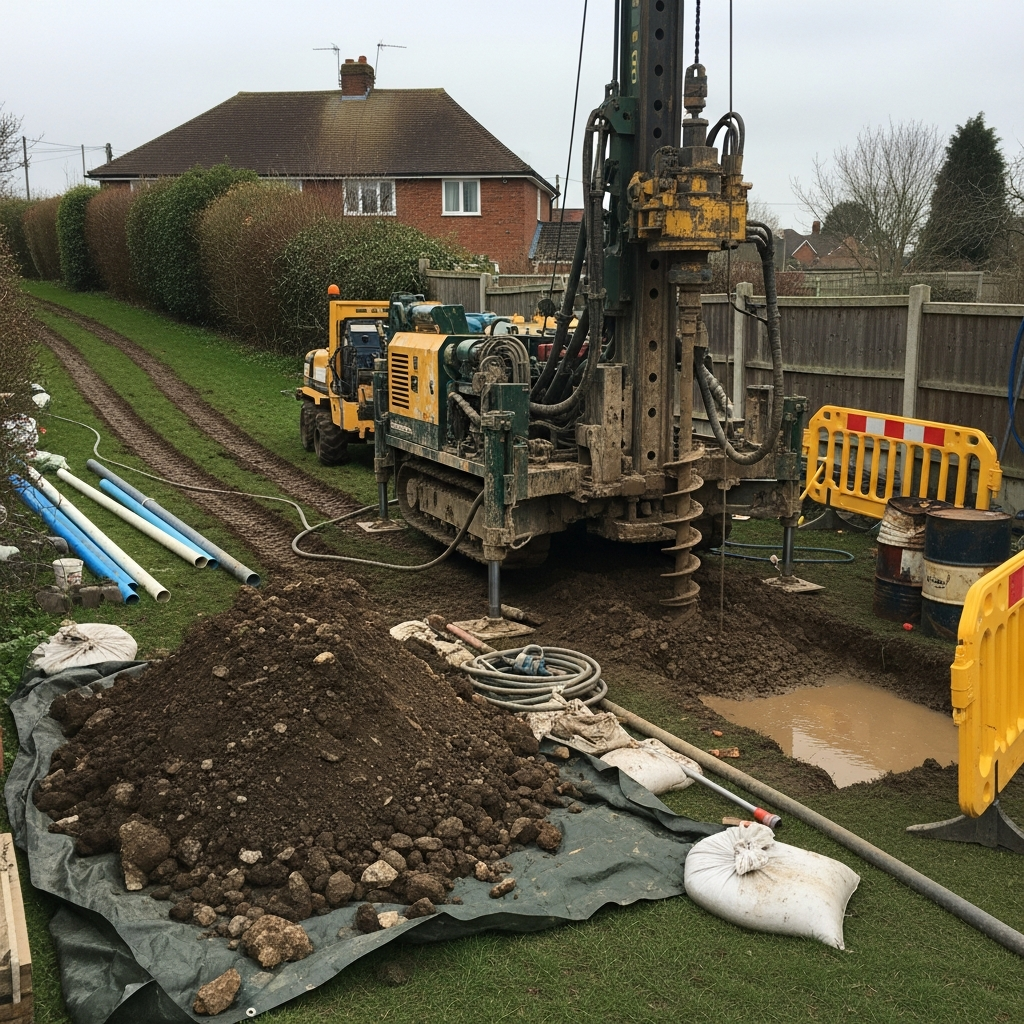
A borehole drilling rig drills vertically to 60-200 metres. Each borehole takes 1-2 days to drill. A U-shaped HDPE pipe is lowered into each borehole, which is then filled with thermally conductive grout.
Drilling is noisy work — expect noise levels similar to a construction site during working hours. The surface disruption is much less than horizontal trenching. Read our borehole heat pump guide for detailed costs and process information.
Stage 3: Indoor Installation
The ground source heat pump unit is installed indoors — typically in a utility room, garage, or plant room. It is roughly the size of a large fridge-freezer. A well-insulated hot water cylinder is fitted, and the installer connects the heat pump to your existing heating distribution system.
If your radiators need upgrading to work efficiently at lower flow temperatures, this is done at the same time. Many homes do not need radiator changes — see our radiator guide for details.
Indoor work typically takes 2-3 days.
Stage 4: Commissioning and Handover
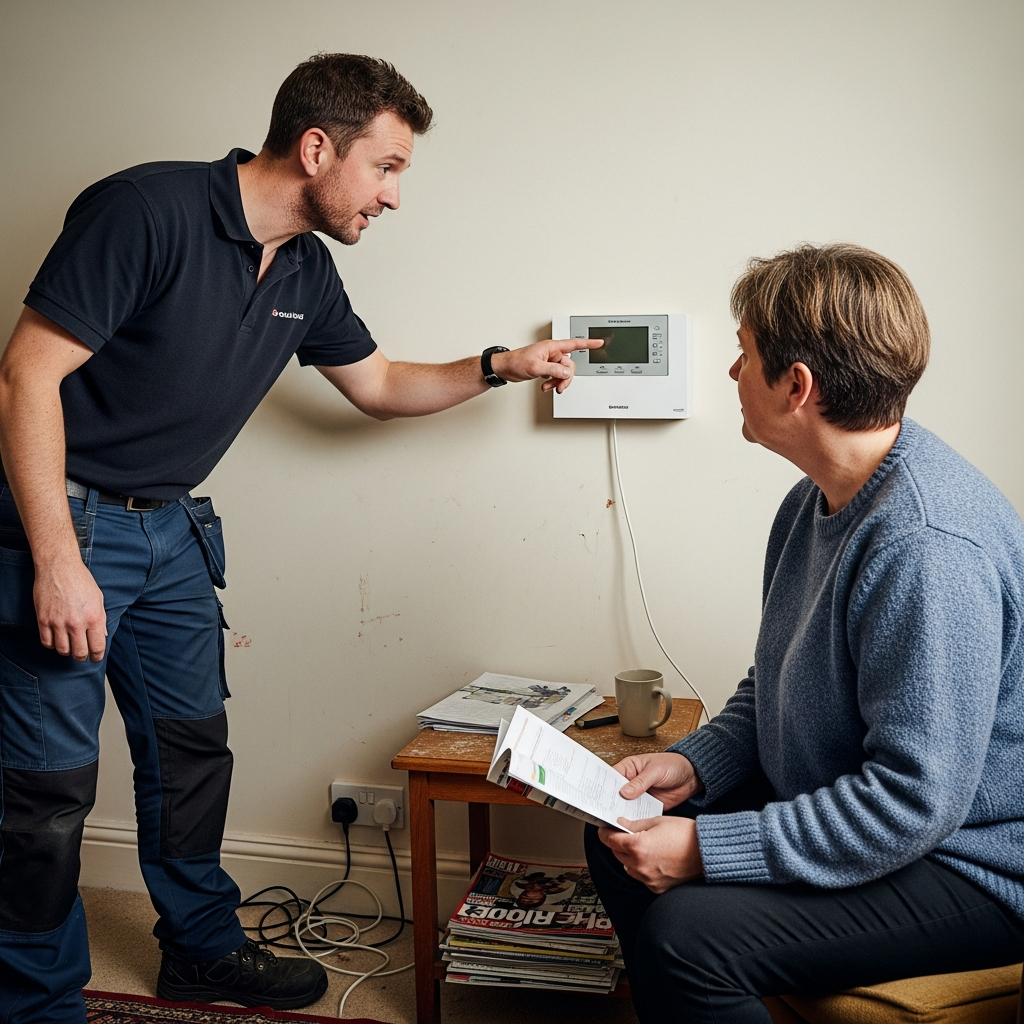
Once everything is connected, the installer commissions the system — filling and pressurising, leak testing, system balancing, control setup, and performance testing. The installer should walk you through how the system works and what to expect in the first few weeks.
Commissioning typically takes half a day to a full day.
Estimate your ground source heat pump installation cost
Use the free calculatorPersonalised estimate in 30 seconds. No signup needed.
Installation Timeline Summary
| Stage | Horizontal Loop | Borehole System |
|---|---|---|
| Survey and design | 1-2 weeks | 2-4 weeks |
| Groundworks | 2-4 days | 3-7 days |
| Indoor installation | 2-3 days | 2-3 days |
| Commissioning | 0.5-1 day | 0.5-1 day |
| Total on-site | 5-8 days | 6-11 days |
How to Prepare for Installation
- Clear your garden — remove furniture, pots, and any loose items from the work area
- Inform your neighbours — drilling and digging can be noisy, especially borehole work
- Plan for disruption — your existing heating may be off for 1-2 days during the changeover
- Clear the indoor installation area — the utility room or garage where the unit will go needs to be accessible
- Check access routes — ensure the installer can get equipment to your garden
Choosing an Installer
Your installer must be MCS-certified (Microgeneration Certification Scheme) for you to qualify for the Boiler Upgrade Scheme grant. Beyond this requirement, look for specific ground source experience, membership of the Ground Source Heat Pump Association, and willingness to show you previous installations.
Always get at least three quotes. Prices and approaches vary significantly. Get free quotes from MCS-certified installers through our service. For broader installation guidance, see our heat pump installation guide.
Frequently Asked Questions
Will the installation damage my garden permanently?
No. For horizontal systems, the trenches are backfilled and the surface restored. Your garden will look disturbed for a few weeks, but grass regrows within 2-3 months. For boreholes, the surface disturbance is minimal — just a small area around each borehole.
Can I install a ground source heat pump in winter?
Yes, though autumn or spring is preferable. Frozen ground makes trenching harder and more expensive. Borehole drilling can proceed in any weather.
Do I need planning permission?
Horizontal ground loops generally fall under permitted development. Borehole drilling may need approval in conservation zones or near protected aquifers. Your installer should advise.
How long before the system reaches full efficiency?
The heat pump works from day one, but the ground around the loop can take a few weeks to reach thermal equilibrium. You may notice slightly improving performance over the first heating season.
Can I keep my existing radiators?
Often, yes. Many existing radiators are oversized for the rooms they serve and work adequately at the lower temperatures a heat pump produces. Your installer will assess each radiator. Read more in our radiator compatibility guide.
Ready to start your ground source heat pump project?
Get free installer quotesMCS-certified specialists. Compare prices and timelines. No obligation.
Ground Source Installation in the Wider Energy Picture
Installing a ground source heat pump is one of the most impactful steps a homeowner can take towards decarbonising their property. Combined with solar panel installations to generate your own electricity, proper insulation, and the £7,500 BUS grant, a GSHP installation transforms your home's energy profile. The installation process follows established best practices developed over thousands of UK installations, and MCS certification ensures quality standards are maintained throughout.