Ground Source Heat Pump Cost UK: Full Breakdown
A ground source heat pump costs £15,000-£40,000 to install — but after the £7,500 government grant, a horizontal system can cost as little as £7,500 out of pocket. With annual running costs of just £500-£700 and a ground loop that lasts 50+ years, the lifetime economics are far better than the upfront figure suggests.

Ground source heat pumps are the most efficient way to heat a UK home — but they are also the most expensive to install. Understanding where that money goes, and how much you can claw back through grants and lower running costs, is essential before committing.
This guide breaks down every cost involved in a ground source heat pump installation, from the equipment and groundworks to ongoing running costs and maintenance. We also compare the numbers against air source heat pumps so you can see which makes better financial sense for your situation.
Get a personalised cost estimate in 30 seconds
Use the free calculatorNo email required. Instant results based on your property details.
Ground Source Heat Pump Cost Summary
Before we dig into the detail, here are the headline figures for 2026.
| System Type | Total Cost (before grant) | After BUS Grant (£7,500) |
|---|---|---|
| Horizontal loop system | £15,000 - £25,000 | £7,500 - £17,500 |
| Vertical borehole system | £25,000 - £40,000 | £17,500 - £32,500 |
Prices based on MCS installer quotes, March 2026. Ranges cover the majority of domestic installations.
These ranges cover the vast majority of domestic installations. Costs vary depending on your property size, ground conditions, location, and whether you need upgrades to your existing heating system.
Equipment Costs
The Heat Pump Unit
The heat pump itself — the indoor unit that does the actual work of concentrating and distributing heat — typically costs between £4,000 and £8,000. The price depends primarily on the output capacity you need:
- 6-8 kW (small/well-insulated home): £4,000 - £5,500
- 10-12 kW (average 3-bed semi): £5,000 - £6,500
- 14-16 kW (larger detached home): £6,000 - £8,000
Leading manufacturers in the UK market include Kensa (the only UK-based GSHP manufacturer), Nibe, and Vaillant. Kensa units tend to be at the more affordable end, while imported European brands can cost more.
Hot Water Cylinder
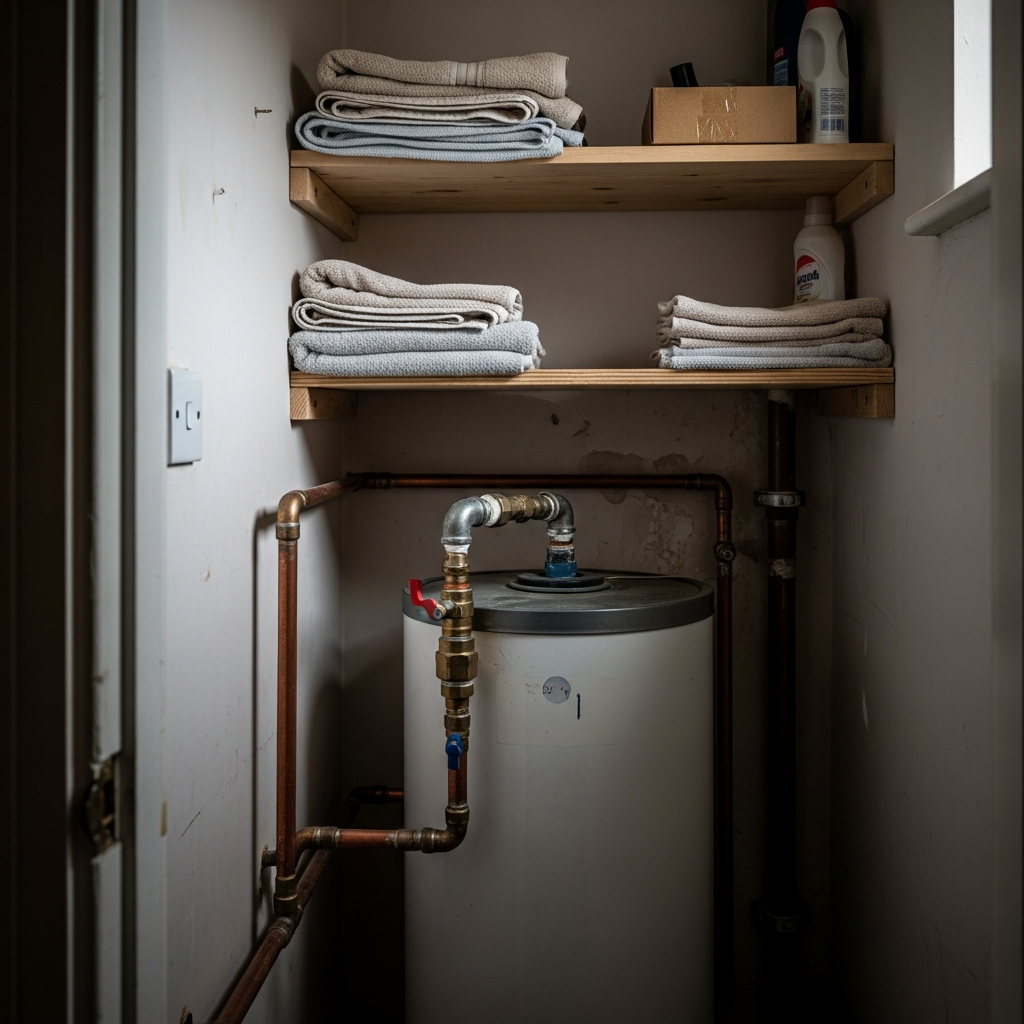
A ground source heat pump requires a well-insulated hot water cylinder — typically 200-300 litres for a family home. Budget £800 - £1,500 depending on the size and specification.
Controls and Ancillaries
Buffer tanks, expansion vessels, circulation pumps, thermostats, and wiring add another £500 - £1,000 to the bill.
Groundworks Costs
This is the big-ticket item that separates ground source from air source installations — and where costs can vary most dramatically.
Horizontal Trench Costs
Digging trenches and laying horizontal ground loops typically costs £5,000 - £10,000. The main variables are:
- Garden size and access — easy access for a mini digger keeps costs down
- Soil type — rocky ground is harder and slower to dig
- Loop length — determined by your home's heating demand and the soil's thermal properties
- Reinstatement — restoring the garden surface after backfilling
A typical three-bedroom house needs around 200-400 metres of pipework laid in trenches roughly 1.2-2 metres deep. The work usually takes 2-4 days with a mechanical digger.
Borehole Drilling Costs
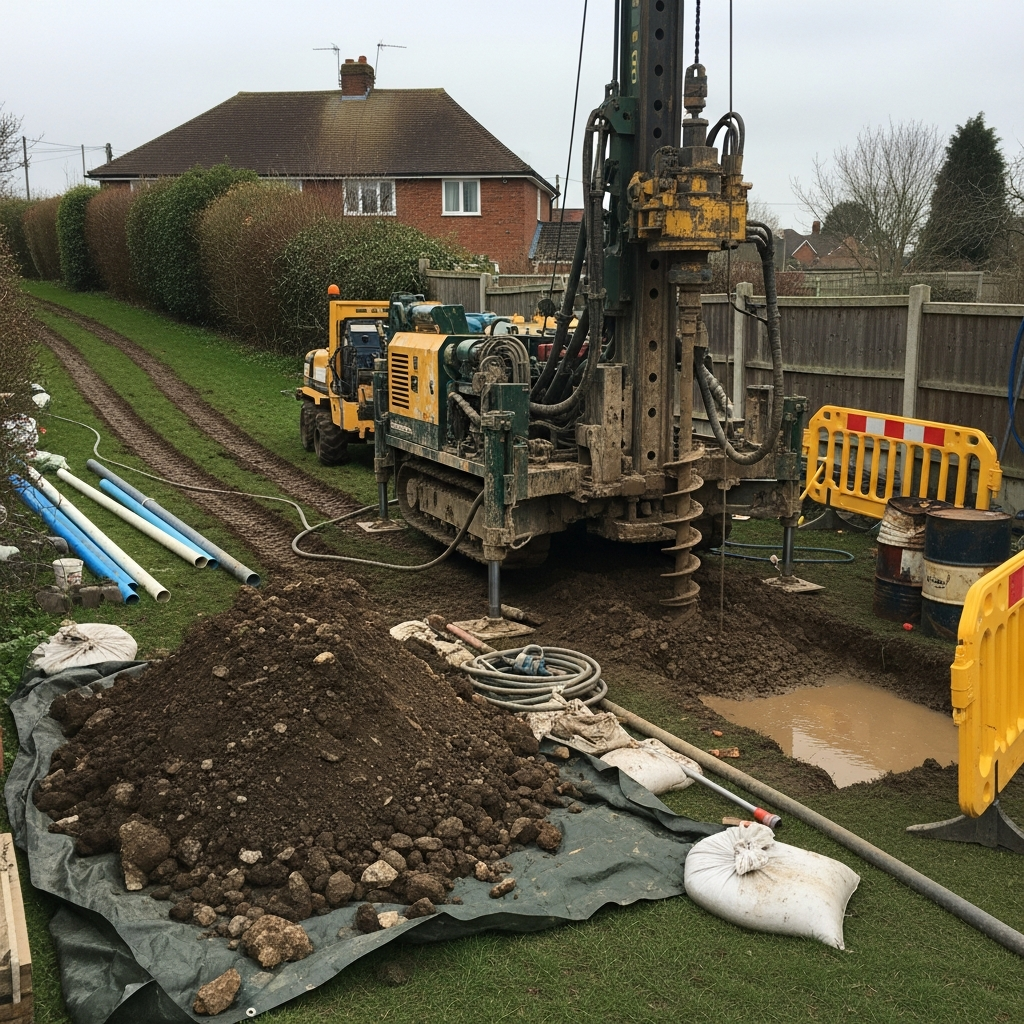
Vertical borehole drilling is the most expensive element, costing £10,000 - £20,000 for a domestic installation. The cost depends on:
- Depth required — typically 60-200 metres per borehole
- Number of boreholes — usually 1-3 for a domestic property
- Rock type — harder rock takes longer to drill
- Access — the drilling rig is large and needs clear access to your garden
Borehole drilling is charged by the metre, typically £40-£70 per metre. A single 100-metre borehole might cost £4,000-£7,000 for the drilling alone, before grouting, pipework, and connections are factored in.
For more detail, read our dedicated borehole heat pump guide.
Installation and Labour Costs
Beyond groundworks, the indoor installation — connecting the heat pump to your heating system, fitting the cylinder, running pipework, and commissioning — typically costs £3,000 - £5,000.
If you need additional work, costs increase:
- New radiators or upgrades: £2,000 - £4,000 (not always needed — see our guide on radiators for heat pumps)
- Underfloor heating: £3,000 - £6,000 (usually only worth adding during a renovation)
- Electrical supply upgrade: £500 - £1,500 (if your existing supply is not sufficient)
Compare quotes from MCS-certified ground source installers
Get free quotesNo obligation. Typical savings of 30-40% by comparing multiple installers.
Full Cost Examples
Example 1: 3-Bed Semi with Horizontal Loop
| Heat pump unit (10 kW) | £5,500 |
| Hot water cylinder (250L) | £1,000 |
| Horizontal ground loop | £7,000 |
| Installation and commissioning | £3,500 |
| Controls and ancillaries | £700 |
| Total before grant | £17,700 |
| BUS grant | -£7,500 |
| Out-of-pocket cost | £10,200 |
Example 2: 4-Bed Detached with Boreholes
| Heat pump unit (14 kW) | £7,000 |
| Hot water cylinder (300L) | £1,300 |
| Two boreholes (100m each) | £15,000 |
| Installation and commissioning | £4,500 |
| Controls and ancillaries | £800 |
| Radiator upgrades | £2,500 |
| Total before grant | £31,100 |
| BUS grant | -£7,500 |
| Out-of-pocket cost | £23,600 |
Ground Source vs Air Source Heat Pump Costs
The cost difference between ground and air source is significant at the point of installation, but narrows over time.
| Ground Source (Horizontal) | Air Source | |
|---|---|---|
| Install cost (after grant) | £7,500 - £17,500 | £3,000 - £8,000 |
| Annual running cost | £500 - £700 | £600 - £850 |
| Annual saving vs air source | £100 - £200 per year | |
| Maintenance cost per year | £100 - £200 | £100 - £200 |
| Lifespan | 20-25 years (unit), 50+ years (loop) | 15-20 years |
The annual running cost saving of £100-£200 with ground source means it takes decades to recoup the higher upfront cost through energy savings alone. However, the longer lifespan and eventual need to replace only the indoor unit (not the ground loop) tilts the long-term economics more favourably.
For a full comparison, see our complete heat pump cost guide.
Running Costs in Detail
Ground source heat pumps achieve a seasonal COP of 3.8-4.5, meaning for every £1 of electricity consumed, you get £3.80-£4.50 worth of heat. At current electricity prices of around 26.11p per kWh:
£540-£645/yr
Well-insulated 3-bed semi (10,000 kWh)
£650-£775/yr
Average 3-bed semi (12,000 kWh)
£980-£1,160/yr
Larger 4-bed detached (18,000 kWh)
These compare favourably to gas heating (typically £700-£1,200 for the same properties) and are consistently lower than air source heat pump running costs. If you also generate electricity with solar panels, your running costs could drop by a further £200-£400 per year.
See our detailed heat pump running costs guide for more scenarios, or compare ground vs air source running costs directly.
Grants and Financial Support
The Boiler Upgrade Scheme (BUS) provides a £7,500 grant towards ground source heat pump installations in England and Wales. Key points:
- Available for existing properties (not new builds)
- Must be installed by an MCS-certified installer
- The grant is applied automatically — your installer claims it and deducts it from your quote
- No means testing — available to all homeowners regardless of income
In Scotland, Home Energy Scotland offers interest-free loans of up to £7,500, which can be combined with cashback grants for eligible households.
Full details on our heat pump grants page.
Ways to Reduce Costs
- Choose horizontal loops if you have the space — saves £5,000-£15,000 compared to boreholes
- Get multiple quotes — prices vary significantly between installers. Get free quotes here
- Consider shared ground loops — Kensa offers shared loop schemes for multiple properties, reducing per-property costs
- Time it with other building work — if you are already digging foundations or landscaping, the marginal cost of adding a ground loop drops substantially
- Improve insulation first — a well-insulated home needs a smaller, cheaper heat pump
Is It Worth the Extra Cost?
Ground source heat pumps make the strongest financial case for:
- Properties currently on oil or LPG (high fuel costs make the saving larger)
- Larger homes with higher heating demands (the efficiency advantage has more impact)
- Homeowners who plan to stay put for 15+ years (more time to recoup the investment)
- Properties where noise is a concern (no outdoor fan unit)
- New builds or major renovations (groundworks are cheaper when the site is already open)
For smaller homes or tighter budgets, an air source heat pump often delivers better value. Use our heat pump calculator to model the costs for your specific property.
Frequently Asked Questions
How much does a ground source heat pump cost for a 3-bedroom house?
A typical 3-bedroom house can expect to pay £15,000-£20,000 for a horizontal loop system, or £25,000-£32,000 for a borehole system. After the £7,500 BUS grant, the out-of-pocket cost is roughly £7,500-£24,500 depending on the loop type.
Are ground source heat pumps cheaper to run than gas?
Generally yes. A well-installed GSHP costs around £500-£700 per year to run for an average home, compared to £700-£900 for gas. The saving is modest for gas properties but substantial for homes on oil or LPG.
Why are ground source heat pumps so expensive?
The groundworks — digging trenches or drilling boreholes — account for the bulk of the extra cost compared to air source systems. The heat pump unit itself is only slightly more expensive. These groundworks are a one-off investment, as the ground loop lasts 50+ years.
Can I finance a ground source heat pump?
Yes. Many installers offer finance options, and some specialist green finance providers offer loans specifically for renewable heating. In Scotland, interest-free government loans are available through Home Energy Scotland.
Do ground source heat pumps add value to my home?
Research suggests homes with higher EPC ratings command a price premium. A ground source heat pump significantly improves your energy rating and can add value — particularly as energy costs rise and buyers become more conscious of heating efficiency.
Ready to find out the real cost for your property?
Get your personalised estimateFree, instant, no obligation. Based on your property type, size, and current heating system.
Ground Source Heat Pump Costs in Context
The cost of a ground source heat pump is best understood as part of a broader home energy strategy. Combined with proper insulation, solar panel installations, and the Boiler Upgrade Scheme grant, the net cost of switching to ground source heating has never been lower. While upfront costs remain higher than air source alternatives, the 50-year ground loop lifespan and lowest running costs of any heating system make GSHPs a genuinely long-term investment. For homeowners on oil or LPG, the financial case is particularly compelling when factoring in volatile fossil fuel prices.