Horizontal vs Vertical Ground Source Heat Pump
Horizontal ground loops cost £5,000-£10,000 but need a large garden. Vertical boreholes cost £10,000-£20,000 but fit in a space the size of a car park. The efficiency difference is marginal — just £30-£80 per year — so your choice comes down to garden space, budget, and access for machinery.
If you have decided on a ground source heat pump, the next big decision is the type of ground loop. Both do the same job — extracting heat from the ground — but the cost, space requirements, and practicalities are very different. For a comprehensive overview of the technology, see our complete GSHP guide.
Get quotes for both horizontal and borehole systems
Get free quotesMCS-certified GSHP specialists. Compare options side by side.
Quick Comparison
| Factor | Horizontal (Trenches) | Vertical (Boreholes) |
|---|---|---|
| Typical groundworks cost | £5,000 - £10,000 | £10,000 - £20,000 |
| Total system cost | £15,000 - £25,000 | £25,000 - £40,000 |
| Garden space needed | 200 - 400m² | Minimal (car parking space) |
| Depth | 1.2 - 2 metres | 60 - 200 metres |
| Installation time | 2 - 4 days | 3 - 7 days |
| Efficiency (SCOP) | 3.6 - 4.2 | 3.8 - 4.5 |
| Garden disruption | Significant | Localised |
| Planning permission | Usually not needed | Sometimes needed |
| Lifespan | 50+ years | 50+ years |
How Horizontal Ground Loops Work
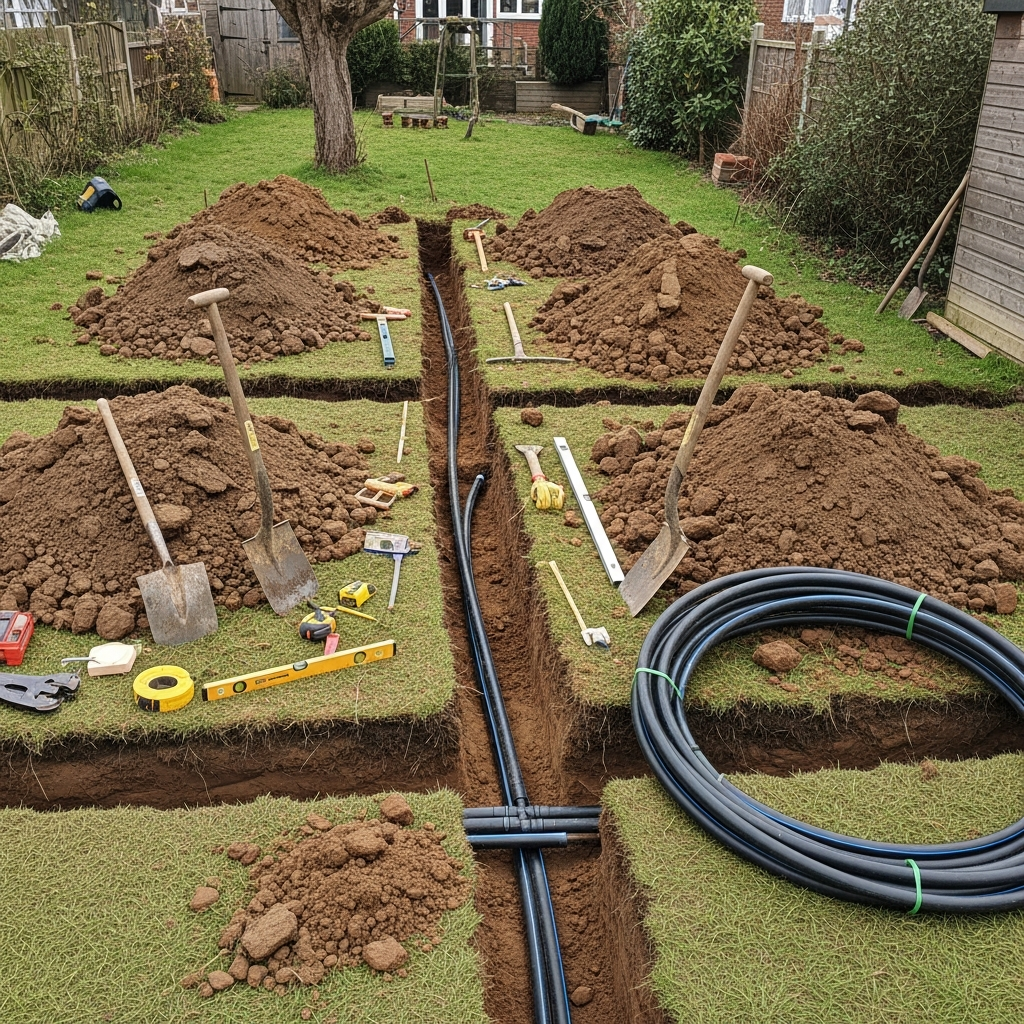
Horizontal ground loops are laid in trenches dug across your garden at 1.2-2 metres deep. Pipes are arranged as straight runs, slinky coils (the most common UK configuration), or spiral coils.
Space Requirements
- 80m² home: 160-240m² of garden
- 100m² home: 200-300m² of garden
- 150m² home: 300-450m² of garden
The space does not need to be flat or regular — loops can follow garden contours. The area must be accessible to a mini digger and free of buildings, driveways, or large trees.
Soil Considerations
- Waterlogged clay: Excellent — requires the least pipework
- Damp clay/loam: Very good — the most common UK soil type
- Dry sand/gravel: Adequate but requires more pipework
- Rocky ground: Difficult to trench — may be better suited to boreholes
How Vertical Boreholes Work
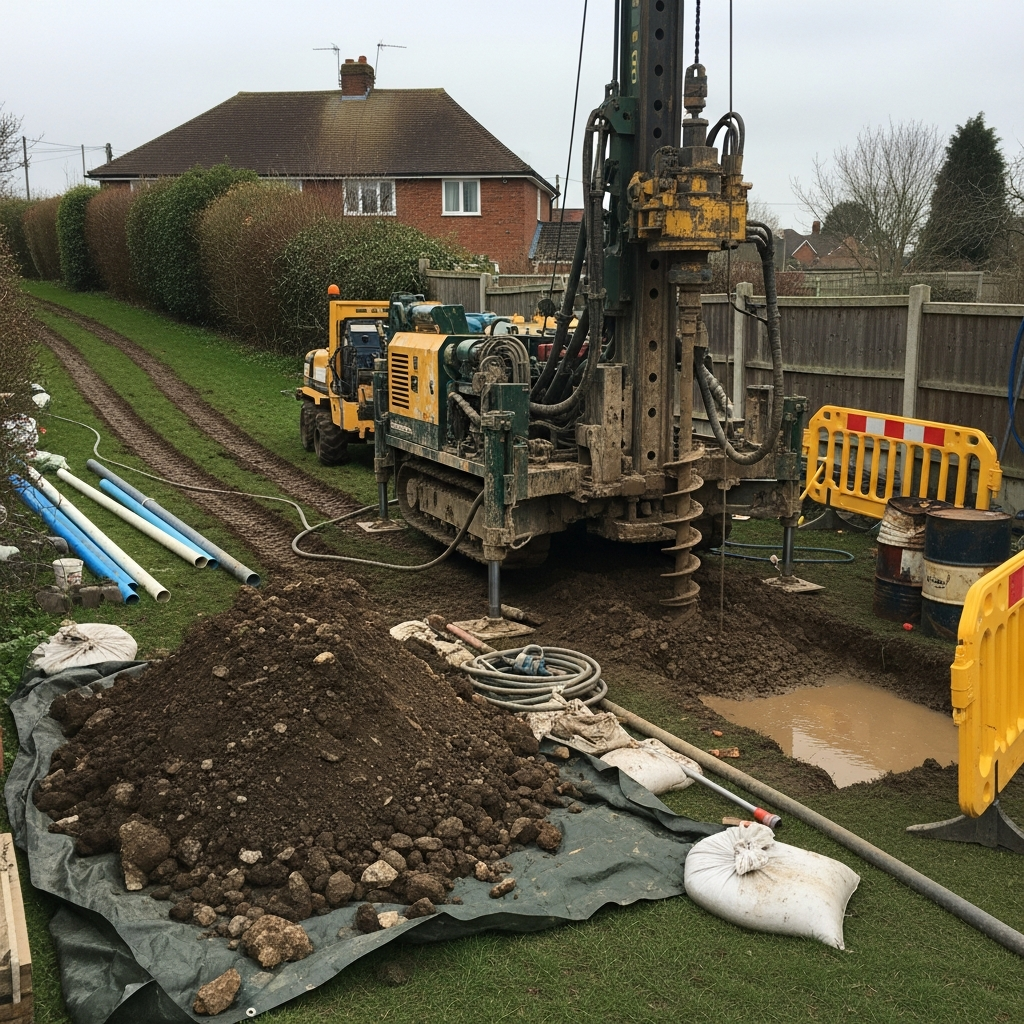
Vertical borehole systems use holes drilled 60-200 metres deep with U-shaped pipes inserted and sealed with thermally conductive grout. Boreholes must be spaced at least 6 metres apart.
A drilling rig needs clear access at least 3 metres wide and sufficient overhead clearance. Each borehole takes 1-2 days to drill. For full details and costs, read our borehole heat pump guide.
Cost Comparison in Detail
| Cost Element | Horizontal | Vertical |
|---|---|---|
| Excavation / drilling | £3,000 - £6,000 | £8,000 - £16,000 |
| Pipe and fittings | £1,000 - £2,000 | £1,000 - £2,000 |
| Grouting (boreholes only) | N/A | £1,000 - £2,000 |
| Garden reinstatement | £500 - £1,000 | £200 - £500 |
| Total groundworks | £5,000 - £10,000 | £10,000 - £20,000 |
Borehole drilling charged at £40-£70 per metre depending on rock type and location.
After the £7,500 BUS grant, the out-of-pocket difference remains the same — the grant amount is identical for both loop types. For the full cost picture, see our ground source heat pump cost guide.
Calculate costs for both loop types for your property
Use the free calculatorInstant comparison of horizontal vs borehole costs. No signup needed.
Efficiency Comparison
SCOP 3.6-4.2
Horizontal loops
SCOP 3.8-4.5
Vertical boreholes
£30-£80/yr
Running cost difference
The running cost difference is around £30-£80 per year — nowhere near enough to justify the £10,000+ extra cost of boreholes on efficiency grounds alone.
When to Choose Horizontal
- You have 200m²+ of accessible, diggable garden
- Budget is a priority — horizontal is £10,000-£15,000 cheaper
- Good access for a mini digger
- Suitable soil conditions (clay or loam)
- You are already landscaping or doing garden work
When to Choose Vertical Boreholes
- Limited garden space
- Rocky ground makes trenching impractical
- Minimal garden disruption preferred
- Large heating demand requiring maximum efficiency
- Established garden you want to preserve
Can You Combine Both?
In some cases, a hybrid approach is possible — one borehole supplemented by a shorter horizontal loop. This can be pragmatic when you have some garden space but not enough for a full horizontal system. Hybrid designs require careful engineering by an experienced installer.
What About Slinky Coils?
Slinky coils are a variant of horizontal loops where the pipe is coiled in overlapping spirals within the trench. They pack 30-50% more pipe into the same trench length, reducing the total trench distance needed. This means you can sometimes fit a horizontal system into a smaller garden.
Frequently Asked Questions
Which is more efficient — horizontal or vertical?
Vertical boreholes are marginally more efficient (SCOP 3.8-4.5 vs 3.6-4.2), but the difference translates to only £30-£80 per year.
How much garden do I need for a horizontal system?
Roughly two to three times the heated floor area — around the size of a tennis court for a 100m² house.
Can I put a patio or shed over a horizontal ground loop?
A small shed is fine. A large patio or concrete slab over the entire area could reduce performance over time.
Do boreholes need planning permission?
Horizontal loops generally do not. Borehole drilling may need permission in conservation areas or near protected groundwater.
Can I plant a garden over a horizontal ground loop?
Yes — grass, flower beds, and vegetables are all fine. Avoid large trees with deep roots directly over the loop.
Ready to choose your ground loop type?
Get quotes from GSHP specialistsInstallers will assess your garden and recommend the best loop option. Free, no obligation.
Ground Loops in the Renewable Heating Picture
The choice between horizontal and vertical ground loops is a practical one that affects cost and installation, but both deliver the same outstanding efficiency that makes ground source heat pumps the most efficient heating option available. Combined with solar panel installations and the £7,500 BUS grant, either loop type provides a long-term, low-carbon heating solution. For properties where ground source is not feasible, air source heat pumps offer an excellent alternative with minimal space requirements.