Air Source Heat Pump Problems: Common Issues and Fixes
Most heat pump "problems" are actually settings issues, not hardware faults. The Energy Saving Trust found that over 80% of heat pump complaints are resolved by adjusting the flow temperature, heating schedule, or weather compensation — without any parts being replaced. Here is a guide to every common issue and what to do about each one.
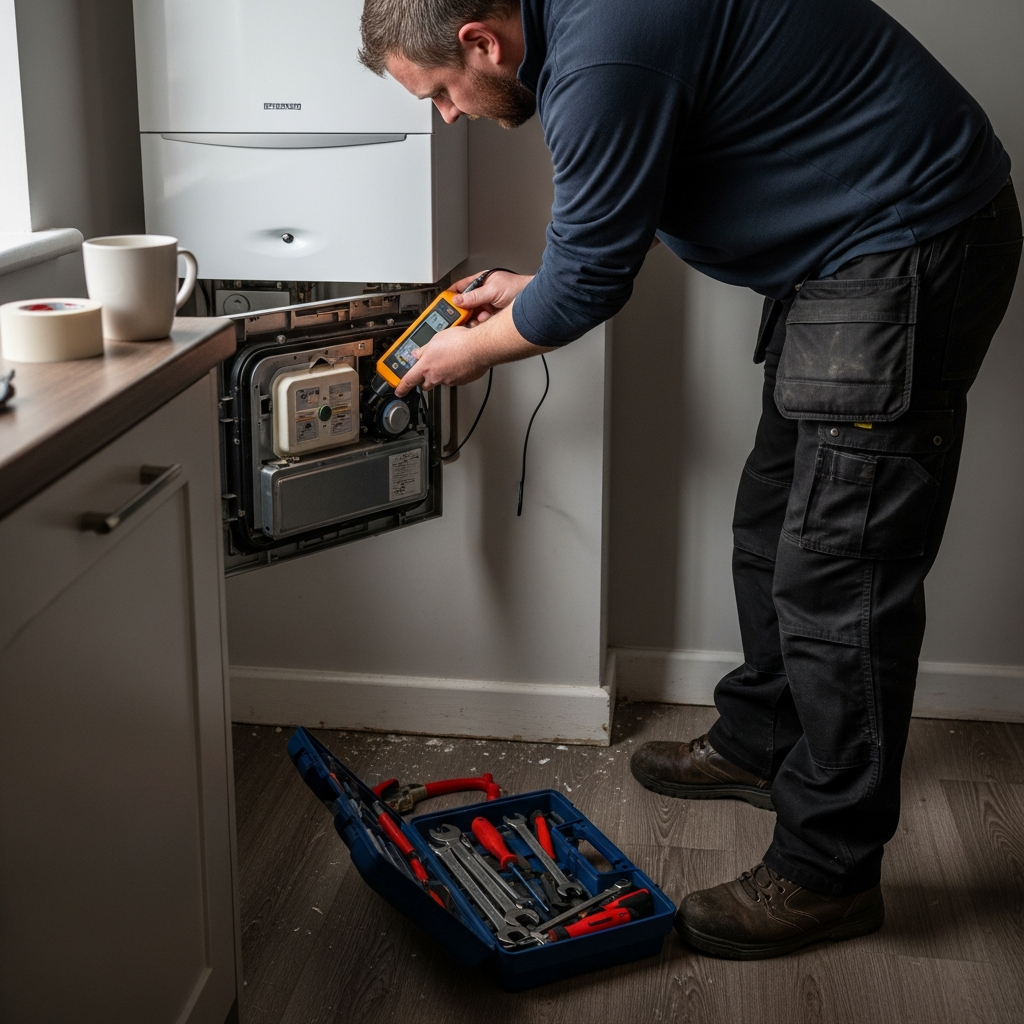
Air source heat pumps are reliable technology — far more so than most people expect. But like any heating system, they can develop issues. The challenge is knowing which problems are genuine faults, which are normal behaviour being misunderstood, and which are the result of poor installation or incorrect settings.
This guide covers the most common air source heat pump problems reported by UK homeowners, explains what is actually going on, and tells you when to call an engineer and when to adjust your expectations.
Thinking about getting a heat pump?
Calculate your running costs firstKnow what to expect before you install. Free and instant.
Problem 1: The House Is Not Warm Enough
This is the most common complaint, and it has several possible causes.
Cause: The Heat Pump Is Undersized
If the heat pump is too small for the building's heat loss, it simply cannot produce enough heat. This is a design and installation issue — a proper heat loss survey should have determined the correct size.
Fix: A heat loss survey needs to be carried out (or redone) and the system design reviewed. In some cases, the flow temperature can be increased to squeeze more output from the unit.
Cause: Flow Temperature Is Set Too Low
Heat pumps are most efficient at low flow temperatures, so installers sometimes set the flow temperature lower than the building needs. The result is radiators that feel lukewarm.
Fix: Increase the flow temperature gradually — try raising it by 2-3°C and see if comfort improves. A well-designed system should achieve comfort at flow temperatures between 35°C and 50°C.
Cause: Heating Schedule Is Wrong
Heat pumps work differently from gas boilers. They produce a lower level of heat over a longer period, rather than a blast of heat for an hour. If you are running your heat pump on a short schedule (like a gas boiler), the house may not reach a comfortable temperature.
Fix: Run the heat pump for longer periods at a lower setpoint. Many homeowners find the best approach is to let the heat pump run continuously during cold weather, with a small setback at night.
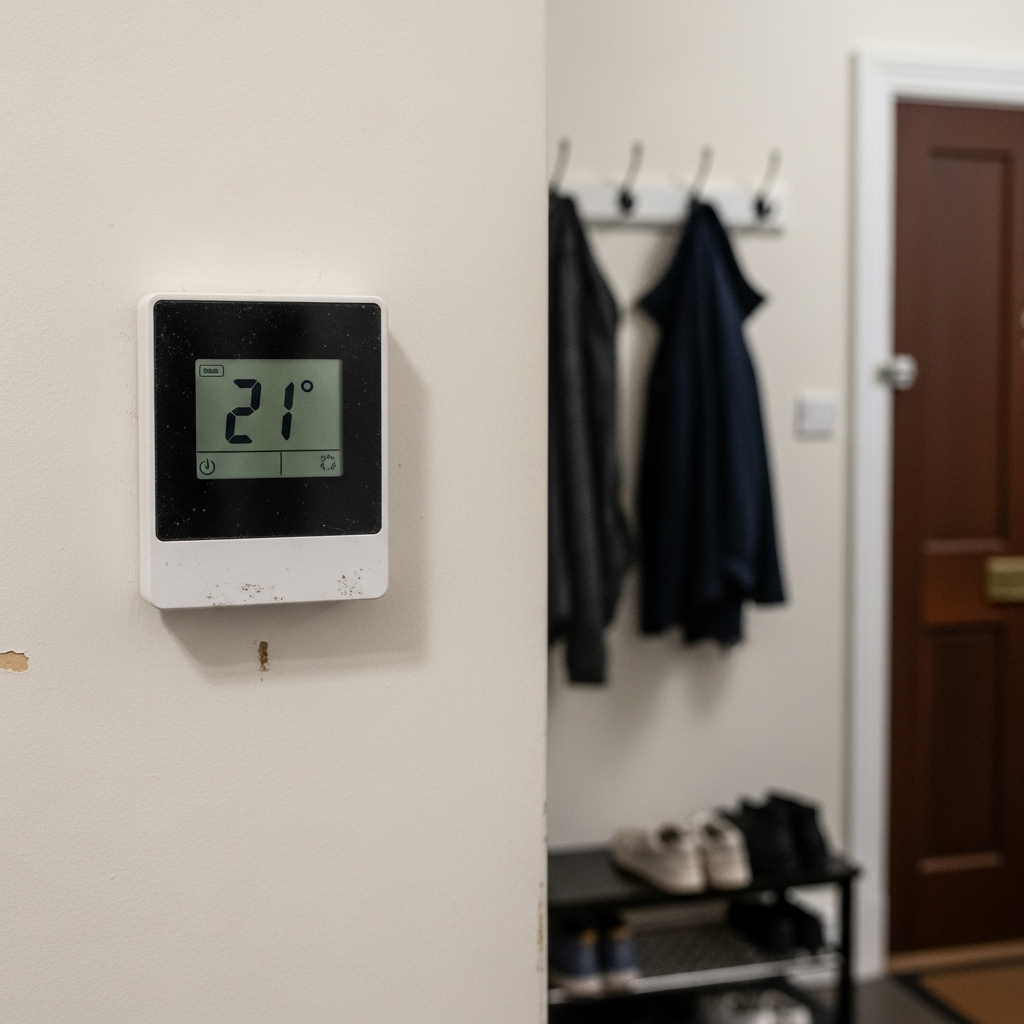
Problem 2: Electricity Bills Are Higher Than Expected
Some heat pump owners report electricity bills that seem too high — sometimes close to what they were spending on gas.
| Cause | Typical Impact | Fix |
|---|---|---|
| Flow temperature too high | 20-40% excess electricity | Reduce flow temp, enable weather compensation |
| Immersion heater running unnecessarily | £200-£500/yr extra | Check controller settings, disable if not needed |
| Legionella cycle too frequent | £50-£150/yr extra | Reduce to once or twice per week |
| Poor insulation | 30-60% excess heating demand | Improve loft, draught-proofing, walls |
| Wrong electricity tariff | 10-30% overspend | Switch to time-of-use tariff |
For detailed running cost information, see our heat pump running costs guide.
Not sure if your heat pump is running efficiently?
Check expected running costsCompare your actual bills against what they should be.
Problem 3: The Heat Pump Is Noisy
Noise is a common concern, though what constitutes "noisy" varies enormously between people.
Normal Operating Noise
All air source heat pumps produce some noise. The fan and compressor create a low hum, typically 40-55 dB at one metre — roughly comparable to a fridge or a quiet conversation. This is normal and unavoidable.
Abnormal Noise: When to Worry
- Grinding or rattling: Could indicate a failing fan bearing, loose panel, or debris caught in the fan
- Loud clicking or banging: May be a faulty reversing valve or a refrigerant issue
- High-pitched whistling: Could indicate a refrigerant leak or a restriction in the refrigerant circuit
- Vibration through the building: The unit may not be properly isolated — anti-vibration mounts should be fitted
Fix: For abnormal noises, call your installer or a qualified heat pump engineer. Do not ignore grinding or whistling sounds.
Problem 4: Ice Building Up on the Outdoor Unit
Seeing ice on your heat pump can be alarming, but in most cases it is completely normal.
Normal: Frost and Light Ice During Cold Weather
When the outdoor temperature drops below about 5°C, moisture in the air can freeze on the evaporator coil. The heat pump has a built-in defrost cycle that periodically reverses the refrigerant flow to melt the ice. Steam rising from the unit during defrost is normal.
Abnormal: Heavy Ice That Does Not Clear
If the unit becomes heavily encased in ice, possible causes include a faulty defrost sensor, restricted airflow, low refrigerant, or a faulty reversing valve. Call your installer if ice is building up and not clearing.
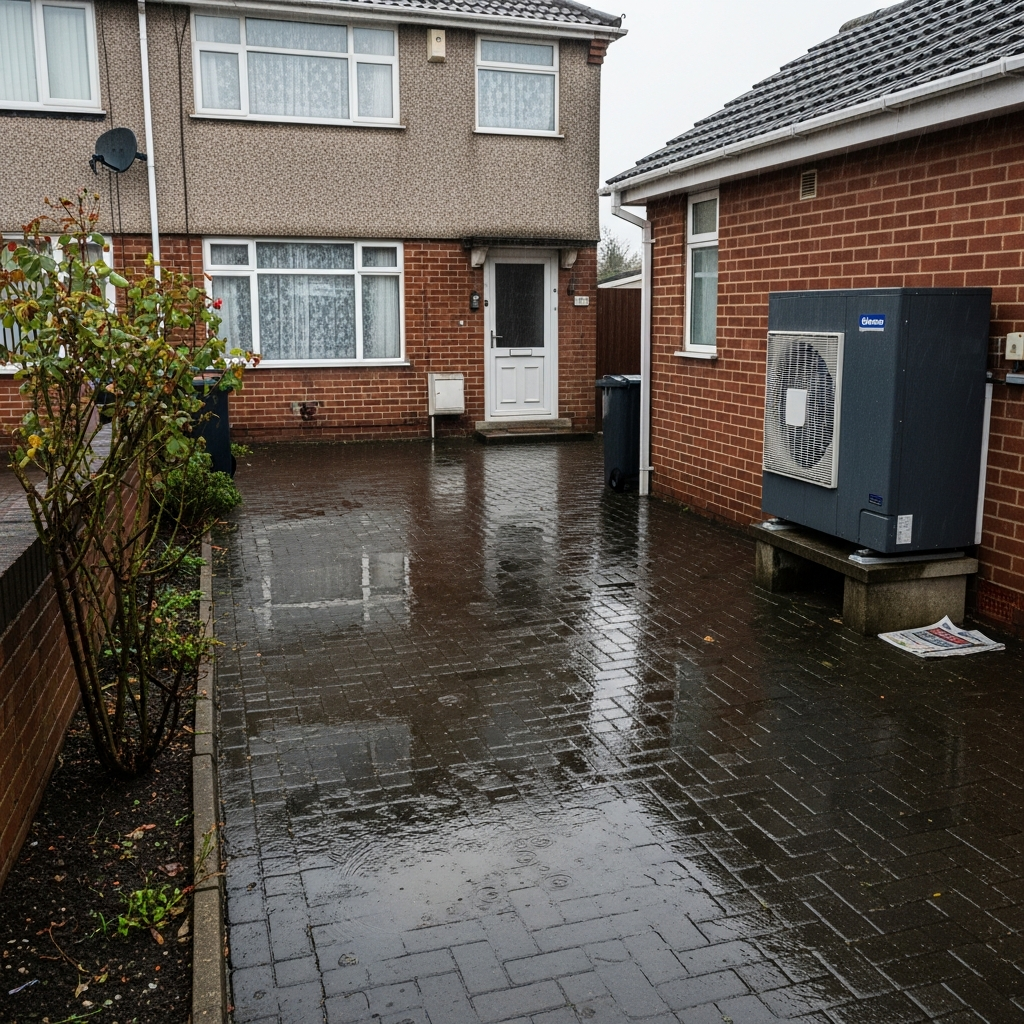
Problem 5: No Hot Water or Slow Hot Water Recovery
Heat pumps heat water more slowly than gas boilers. A gas combi boiler delivers hot water on demand. A heat pump heats a cylinder of water over 1-3 hours.
Normal: If you use a lot of hot water in quick succession, the cylinder may run out and take an hour or two to recover.
Fix: Consider a larger hot water cylinder (250L instead of 200L). Schedule reheating during off-peak electricity times if you are on a time-of-use tariff.
Problem 6: The Heat Pump Keeps Turning On and Off (Short Cycling)
Short cycling — where the heat pump starts, runs for a few minutes, stops, and restarts — is a sign that something is wrong.
- Oversized heat pump: The unit reaches target temperature too quickly and shuts off
- No buffer tank (or buffer tank too small): Rapid temperature swings cause cycling
- Incorrect controls: The temperature differential may be set too tight
Fix: This is usually an installation or design issue. A buffer tank may need to be added or controls adjusted.
Problem 7: Error Codes and Fault Lights
Modern heat pumps display error codes when something goes wrong. Note the error code and check your user manual — some codes are informational ("defrost in progress") and not actual faults. If the code indicates a genuine fault, contact your installer. Do not try to reset the system repeatedly without understanding the cause.
When Is It Normal Behaviour, Not a Problem?
- Radiators feeling lukewarm: Normal at low flow temperatures. The room should be warm even if the radiators feel cooler than you are used to.
- The heat pump running for hours: Normal. Heat pumps are designed to run for long periods at low output.
- Steam rising from the outdoor unit: Normal during a defrost cycle.
- The fan stopping periodically: Normal during defrost.
- Hot water being slightly cooler: Normal. Heat pumps store water at 48-52°C rather than 60-65°C.
How to Avoid Problems in the First Place
- Choose an experienced installer: Most problems stem from poor installation. Use an MCS-certified installer with a strong track record. Read our installation guide for what to look for.
- Insist on a proper heat loss survey: This ensures correct sizing — the foundation of a trouble-free system.
- Understand how to operate your system: Ask your installer to walk you through the controls and what normal operation looks like.
- Service annually: Preventive maintenance catches issues early.
- Do not fiddle with settings unnecessarily: The most common cause of problems in the first year is homeowners changing settings without understanding the consequences.
Get a trouble-free installation from day one
Get quotes from experienced installersMCS-certified installers with proven track records in your area.
Frequently Asked Questions
Are air source heat pumps unreliable?
No. Heat pumps are proven technology with decades of track record in Scandinavia and across Europe. The vast majority of UK installations work well. The problems that do occur are usually related to installation quality or incorrect settings, not the technology itself.
My heat pump is not heating my house properly — is it broken?
Not necessarily. Check the flow temperature settings, the heating schedule, and whether the weather compensation is configured correctly. Many "not heating properly" complaints are resolved by adjusting settings rather than repairing hardware. If adjustments do not help, call your installer for a system review.
Why is my heat pump using so much electricity?
The most common causes are the flow temperature being set too high, the backup immersion heater running unnecessarily, or the legionella cycle running too frequently. Check these settings first. If they are all correct and bills are still high, a system efficiency review by a qualified engineer is worthwhile.
Should I turn my heat pump off in summer?
You can turn off the space heating function in summer, but keep the hot water function running — you still need hot water year-round. Most modern heat pumps have a summer mode that does this automatically.
How often does a heat pump need servicing?
Annual servicing is recommended. This is less frequent and typically cheaper than a gas boiler service. Some manufacturers require annual servicing to maintain the warranty.
My installer has gone out of business — who do I call?
Contact the heat pump manufacturer directly — they can recommend qualified service engineers in your area. You can also search the MCS installer database for engineers certified to work on your brand of heat pump. Many heating engineers are now cross-training in heat pump servicing.
About Heat Pump Reliability and UK Heating
Air source heat pumps have been the primary heating technology in Scandinavian countries for over 30 years, with millions of installations demonstrating long-term reliability. In the UK, the MCS certification scheme ensures installation quality standards are met, while manufacturer warranties typically cover 5-10 years. The most common issues reported to the Heat Pump Association relate to settings and controls rather than hardware faults. Homeowners who pair their heat pump with solar panels can monitor overall energy performance through smart meters and inverter apps, making it easier to spot when something is not running as efficiently as expected.