Air Source Heat Pump Defrost Cycle Explained
Seen steam rising from your outdoor unit on a cold morning? That is not a fault — it is your heat pump working exactly as designed, and it costs you less than £40 a year.
This guide explains the defrost cycle in plain terms: why it happens, how long it takes, and what it really means for your energy bills and comfort.
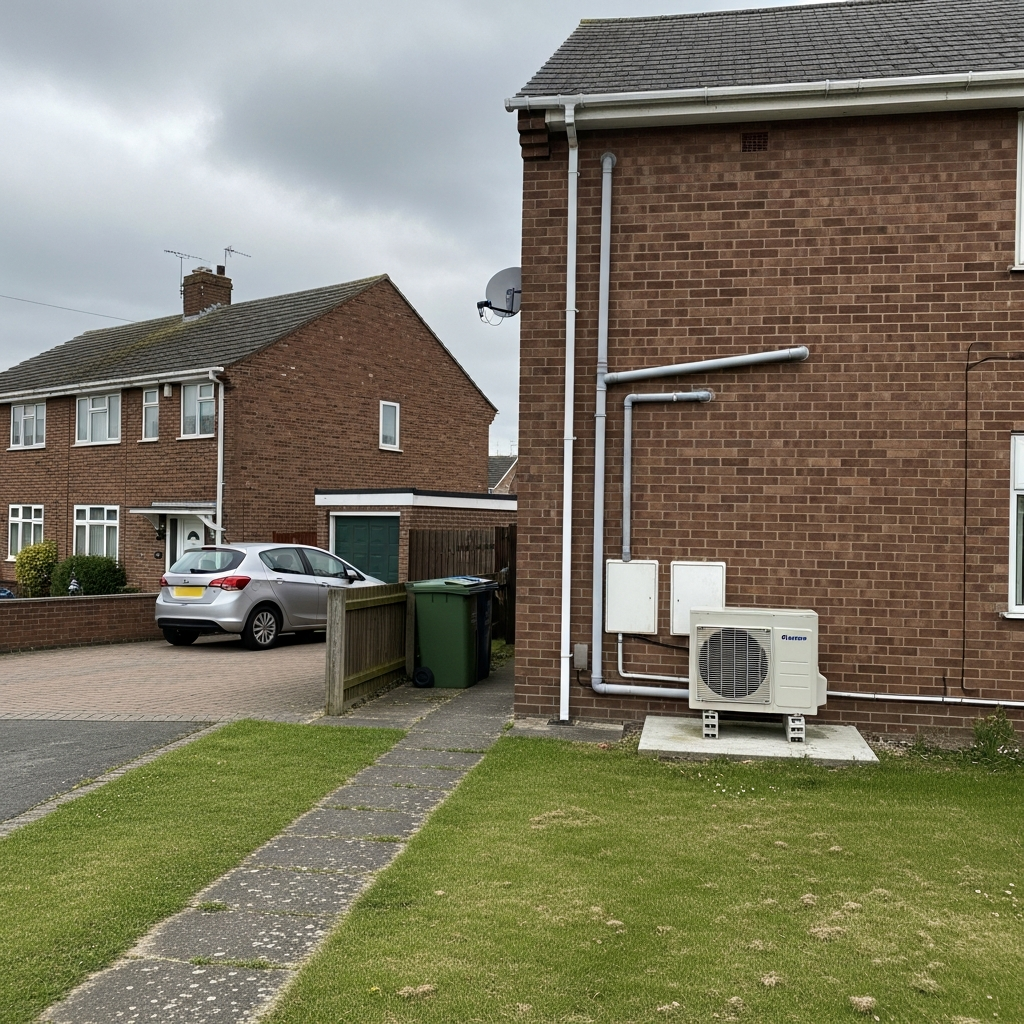
If you own an air source heat pump — or you are thinking about getting one — you have probably heard about the defrost cycle. You might have seen your outdoor unit steaming on a cold morning and wondered whether something was wrong. Or perhaps you have noticed a brief dip in heating output during winter and want to know why.
The defrost cycle is completely normal. Every air source heat pump does it. It is a built-in function that keeps the system running efficiently when temperatures drop. But understanding what actually happens during defrost, how long it takes, and what impact it has on your energy use puts you in a much better position to judge your heat pump's performance.
Find out how much a heat pump would save you
Enter your postcode and property type — get a personalised cost and savings estimate in 60 seconds.
Calculate my savings →In this guide:
Why Does Frost Form on a Heat Pump?
An air source heat pump works by extracting heat energy from the outside air. Even when the air feels cold to you, there is usable thermal energy in it — right down to -20°C and below. If you want to understand the full science behind this, our guide on how air source heat pumps work covers it in detail.
The outdoor unit contains a heat exchanger with a refrigerant flowing through it at a very low temperature — typically between -10°C and -25°C. As outside air passes over this heat exchanger, the refrigerant absorbs heat energy from the air.
Here is where frost comes in. When the heat exchanger surface is colder than 0°C and the air passing over it contains moisture, that moisture condenses and freezes on the fins of the heat exchanger. This is the same process that causes frost to form on car windscreens on cold mornings — it is basic physics.
The conditions most likely to cause frost buildup are:
- Temperatures between -3°C and 5°C — this is the sweet spot where there is enough moisture in the air for significant frost formation
- High humidity — damp, misty days produce more frost than dry cold days
- Light wind or still air — less airflow means moisture lingers around the heat exchanger
Counterintuitively, very cold days (below -5°C) often produce less frost because the air holds less moisture at lower temperatures. A damp 3°C day in November can cause more icing than a dry -8°C day in January.
What Happens During the Defrost Cycle?
When the heat pump's sensors detect that frost has built up to a level that is reducing airflow and efficiency, the defrost cycle kicks in automatically. You do not need to do anything — it is entirely managed by the heat pump's control system.
Here is what happens, step by step:
Step 1: The Reversing Valve Switches
The heat pump contains a reversing valve that can swap the direction of refrigerant flow. During normal heating, the outdoor unit is the evaporator (absorbing heat) and the indoor system is the condenser (releasing heat). During defrost, this reverses — temporarily turning the outdoor unit into the condenser.
Step 2: Hot Refrigerant Flows to the Outdoor Coil
Hot, high-pressure refrigerant is directed to the outdoor heat exchanger. This rapidly warms the frozen fins, melting the ice. You will often see steam rising from the outdoor unit during this phase — this is completely normal and not a sign of a fault.
Step 3: The Fan Stops
The outdoor fan usually stops during defrost. This prevents cold air from being drawn over the coil while it is trying to melt ice, making the process more efficient.
Step 4: Defrost Completes
Once the sensors detect that the coil temperature has risen above a threshold (typically around 5-10°C), the reversing valve switches back, the fan restarts, and normal heating operation resumes.
How Long Does It Take?
A typical defrost cycle lasts between 2 and 10 minutes. Most modern heat pumps complete it in under 5 minutes. The frequency depends on conditions — on a damp, cold day, you might see a defrost cycle every 30 to 90 minutes. On a dry cold day, it might only happen once or twice.
What Does Defrost Mean for Your Heating?
During the defrost cycle, the heat pump is temporarily not heating your home. In fact, it is briefly pulling a small amount of heat from your heating system to melt the ice on the outdoor unit.
In practice, this has a very small impact:
| Heating System | Typical Temp Drop | Noticeable? |
|---|---|---|
| Radiators | Less than 0.5°C | Barely noticeable |
| Underfloor heating | Negligible | Not perceptible |
| Hot water cylinder | None | No effect |
Underfloor heating has the most thermal mass, making defrost cycles essentially undetectable.
If you have a well-insulated home with a properly sized heat pump, you are unlikely to feel any difference during a defrost cycle. The system recovers quickly — usually within a few minutes of normal operation. Wondering if your home needs new radiators for a heat pump? Larger radiators add more thermal mass, further cushioning the defrost impact.
Energy Impact of the Defrost Cycle
This is the question most people really want answered: does the defrost cycle cost me money?
Yes, but less than you might think. Studies suggest that defrost cycles reduce a heat pump's seasonal efficiency by around 5-10% during the coldest months. Over a full heating season (October to April), the impact on total energy consumption is typically in the range of 3-5%.
When you see a heat pump rated at SCOP 3.0 or 3.5, that figure already accounts for real-world conditions including defrost. For a full breakdown of what heat pumps cost to run, see our heat pump running costs guide.

How Modern Heat Pumps Handle Defrost Better
Heat pump defrost technology has improved significantly over the past decade. If you have read older articles or forum posts complaining about excessive defrost cycles, they may not reflect what current models do.
Demand Defrost vs Timed Defrost
Older heat pumps often used timed defrost — they would run a defrost cycle every 30, 60, or 90 minutes regardless of whether frost had actually built up. This wasted energy on unnecessary cycles.
Modern heat pumps use demand defrost (also called intelligent defrost or adaptive defrost). Sensors monitor the outdoor coil temperature and airflow to detect actual frost buildup, only triggering defrost when it is genuinely needed. This is significantly more efficient.
Faster Defrost Recovery
Current models complete defrost cycles more quickly and recover normal heating output faster than older units. Some premium models use hot gas bypass technology to speed up the process further.
Buffer Tanks and Thermal Stores
Some installations include a buffer tank — a small insulated water tank that stores heated water. During defrost, the buffer tank continues to supply heat to the house, eliminating any perceptible drop in heating output. This is more common with underfloor heating systems. If you are considering how a heat pump fits your property, try our suitability checker.
Compare heat pump quotes from MCS-certified installers in your area
Get 3 free quotes →No obligation. No sales calls. We are not installers.
When Defrost Becomes a Problem
While regular defrost cycles are normal, there are situations where defrost can indicate a problem:
Excessive Defrosting
If your heat pump seems to be in defrost mode constantly — every 10-15 minutes — something may be wrong. Common causes include:
- Blocked airflow — leaves, debris, or snow blocking the outdoor unit restricts airflow and accelerates ice buildup
- Low refrigerant charge — a refrigerant leak causes the coil temperature to drop lower than normal, increasing frost formation
- Faulty sensors — if the defrost sensors are not reading correctly, the system may trigger defrost too frequently or not frequently enough
- Fan fault — if the outdoor fan is not running at full speed, airflow is reduced and frost builds faster
Ice That Does Not Clear
If you see a thick layer of ice on the outdoor unit that does not clear after a defrost cycle, call your installer. The defrost system may not be working correctly, or there may be a refrigerant issue.
What You Can Do
Keep the area around your outdoor unit clear. Ensure there is at least 300mm of clearance on all sides. Remove leaves, snow, or anything else that could restrict airflow. Beyond that, the system manages itself — you should not need to manually intervene.
For more on how heat pumps perform in cold weather, read our guide on air source heat pumps in winter.
Defrost and Heat Pump Sizing
One often-overlooked factor is that a correctly sized heat pump handles defrost much better than an oversized or undersized one.
An undersized heat pump runs at maximum capacity in cold weather, which means the coil temperature is lower and frost builds up faster. It has less spare capacity to recover from defrost cycles, so the impact on comfort is more noticeable.
An oversized heat pump may short-cycle (turn on and off frequently), which can interfere with defrost timing and reduce overall efficiency.
A correctly sized heat pump runs steadily, has capacity headroom to handle defrost recovery, and maintains comfortable temperatures throughout. This is why a proper heat loss survey before installation is essential — not a rough estimate based on floor area. Read our installation guide for more on getting the sizing right.
Use our heat pump calculator to get an initial idea of the right size for your home, and always insist on a room-by-room heat loss calculation from your installer.
Defrost Myths Worth Busting
“Heat pumps don’t work in cold weather because of defrost.” False. Heat pumps work down to -20°C and below. Defrost is a normal part of operation that is already accounted for in efficiency ratings. Millions of heat pumps operate successfully in Scandinavian countries far colder than the UK.
“You should pour warm water on a frozen heat pump.” Do not do this. The defrost system handles it automatically. Pouring water can damage electrical components and may refreeze, making things worse.
“Steam from the outdoor unit means something is broken.” No. Steam during defrost is completely normal — it is just melted ice evaporating. If you see steam continuously outside of defrost cycles, that would warrant investigation.
“Defrost cycles use more energy than they save.” Incorrect. Without defrost, ice would completely block the heat exchanger and the heat pump would stop working entirely. The energy cost of defrost is a fraction of what it saves by keeping the system running.
Wondering whether a heat pump still makes financial sense overall? Our are heat pumps worth it guide covers the complete picture. If you are weighing the switch from gas, our heat pump vs gas boiler comparison breaks down the real numbers.

Ready to see if a heat pump suits your home?
Get personalised quotes from MCS-certified installers — free, no obligation, no sales calls from us.
Get my free quotes →We are not installers. We connect you with vetted professionals.
Frequently Asked Questions
Is it normal for my heat pump to steam in winter?
Yes, completely normal. During a defrost cycle, the outdoor unit melts accumulated frost. The resulting water evaporates as steam. This typically happens several times a day in cold, damp weather and lasts just a few minutes each time.
How often does the defrost cycle run?
It depends on weather conditions. On a cold, humid day (0-5°C with high humidity), you might see a defrost cycle every 30 to 90 minutes. On a dry cold day or during milder weather, it may only happen once or twice a day, or not at all.
Does defrost affect my electricity bill?
The defrost cycle does use some additional energy, but it accounts for roughly 3-5% of your total heating season electricity consumption. This is already factored into published efficiency ratings, so it is not an extra hidden cost on top of what you would expect.
Should I clear ice off my heat pump manually?
No. The heat pump's defrost system handles ice removal automatically. Manually clearing ice could damage the delicate aluminium fins on the heat exchanger. The only thing you should do is keep the area around the unit clear of leaves, debris, and snow to ensure good airflow.
My heat pump is defrosting every 10 minutes — is that normal?
No, that frequency suggests a potential issue. Check that nothing is blocking airflow around the outdoor unit. If the area is clear and the problem persists, contact your installer — it could indicate a refrigerant leak, sensor fault, or fan issue.
Do ground source heat pumps have defrost cycles?
No. Ground source heat pumps extract heat from underground, where temperatures remain above freezing year-round (typically 8-12°C). There is no frost to deal with, which is one reason GSHPs tend to have slightly higher efficiency ratings than ASHPs. You can also combine solar panels with either type to further reduce electricity costs.
About Air Source Heat Pump Defrost and Winter Performance
Air source heat pumps extract renewable heat from outside air to warm UK homes, even during the coldest winter months. The defrost cycle is a standard feature that maintains efficiency in cold, damp conditions. The Boiler Upgrade Scheme (BUS) provides £7,500 towards heat pump installations, and combining a heat pump with solar panels can further reduce running costs. This guide is part of our resource hub covering heat pump costs, running costs, and installation for UK homeowners.