Air Source Heat Pump Electricity Consumption: How Much Do They Use?
A typical 3-bedroom semi uses around 4,000 kWh of electricity per year to run its heat pump — costing roughly £980 at 2026 Ofgem cap rates. That replaces 13,300 kWh of gas (approximately £930). The key to keeping your heat pump cheaper than gas? Maximising your system's COP through low flow temperatures and weather compensation.
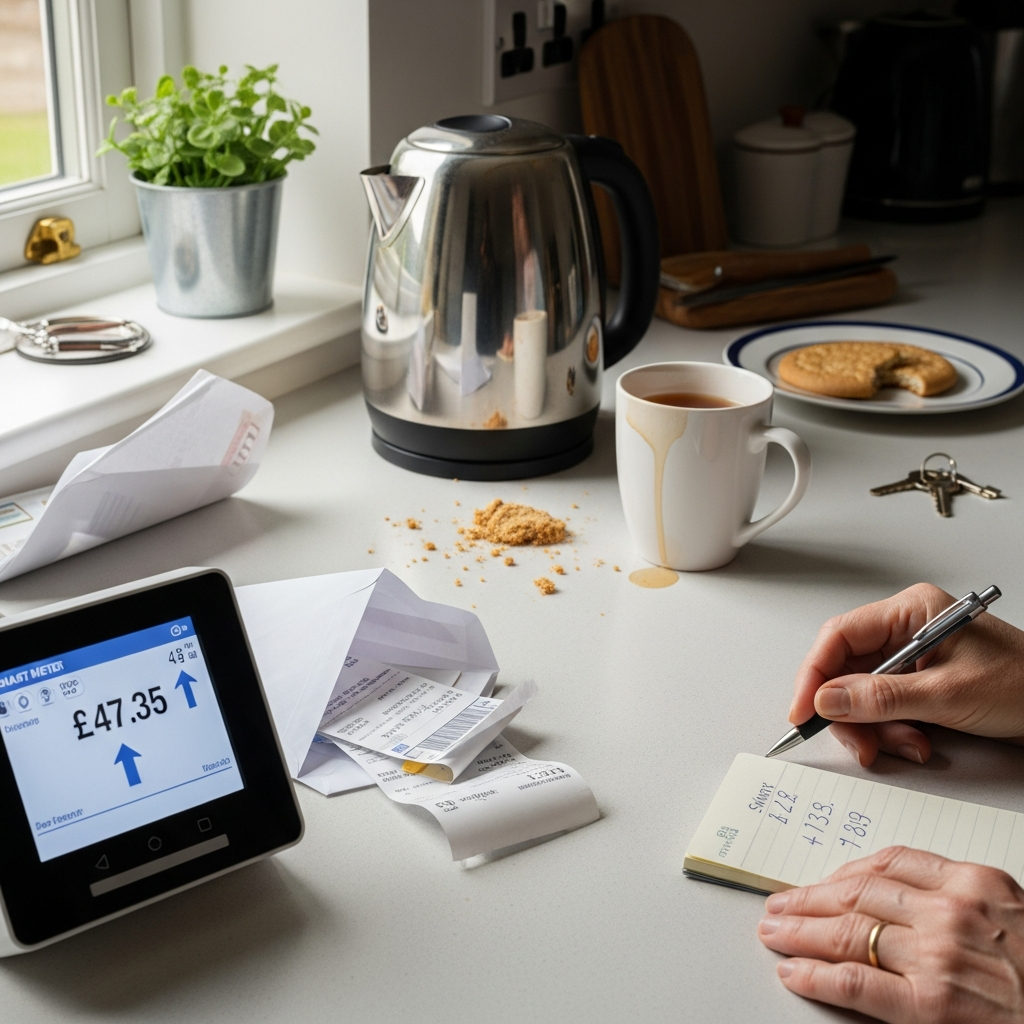
One of the most practical questions anyone considering a heat pump asks is: how much electricity will it actually use? You are replacing gas with electricity, and electricity costs roughly four times more per kWh. So the maths needs to work.
The good news is that air source heat pumps do not use electricity in a one-to-one ratio with the heat they produce. Thanks to their efficiency (COP), they typically produce 2.5 to 4 units of heat for every 1 unit of electricity consumed.
See your exact expected running costs
Use the free calculatorBased on your property type and size. Instant results.
The Key Formula
Electricity consumed = Heat demand ÷ COP
So if your house needs 12,000 kWh of heat per year and your heat pump achieves a seasonal COP of 3.0:
12,000 ÷ 3.0 = 4,000 kWh per year = approximately £1,044/year at 26.11p/kWh.
Electricity Consumption by Property Type
| Property Type | Heat Demand (kWh/yr) | HP Electricity (kWh/yr) | Annual Cost | Winter Daily (kWh) |
|---|---|---|---|---|
| 1-2 bed flat/terrace | 6,000-8,000 | 2,000-2,800 | £490-£690 | 12-16 |
| 3-bed mid-terrace/small semi | 10,000-14,000 | 3,300-4,700 | £810-£1,150 | 18-26 |
| 3-4 bed semi/end-terrace | 14,000-18,000 | 4,700-6,000 | £1,150-£1,470 | 26-34 |
| 4-5 bed detached | 18,000-25,000 | 6,000-8,300 | £1,470-£2,030 | 34-46 |
| Older/poorly insulated | 20,000-30,000 | 7,000-10,000 | £1,715-£2,450 | 40-56 |
Based on SPF of 2.8-3.2 and 2026 Ofgem cap rate of 26.11p/kWh. Use our calculator for a personalised estimate.

Monthly Breakdown
For a typical 3-bed semi using 4,000 kWh/year for the heat pump:
Concerned about electricity costs?
See full running cost analysisCompare heat pump costs vs gas, oil, and electric heating.
How COP Affects Electricity Consumption
For a house needing 12,000 kWh of heat per year:
The difference between poor and excellent SPF is over £400 per year — every year, for the life of the system. This is why correct system design, low flow temperatures, and weather compensation matter so much.
What Affects Your Electricity Consumption
- Building insulation: Better insulation = lower heat demand = less electricity
- Flow temperature: Reducing from 55°C to 40°C can improve efficiency by 30-40%
- Weather compensation: Automatically adjusts flow temp based on outdoor conditions
- Hot water demand: Accounts for 15-25% of total electricity consumption
- Supplementary heating: If the immersion heater runs frequently, it uses electricity at COP 1.0
- Electricity tariff: Time-of-use tariffs can reduce costs by running during cheap rate periods
For detailed cost analysis, see our running costs guide.
Comparing to Gas Boiler Energy Consumption
A 3-bed semi needing 12,000 kWh of heat per year:
| System | Energy Used | Annual Cost |
|---|---|---|
| Gas boiler (90% efficient) | 13,300 kWh gas | ~£930 |
| Heat pump (SPF 3.0) | 4,000 kWh electricity | ~£980 |
| Heat pump (SPF 3.5) | 3,430 kWh electricity | ~£840 |
How to Reduce Your Heat Pump Electricity Consumption
- Lower the flow temperature: The most impactful single change
- Enable weather compensation: Ensure the curve is set correctly
- Improve insulation: Even modest improvements reduce heat demand
- Reduce hot water temperature: Store at 48-50°C with a weekly legionella cycle
- Use a time-of-use tariff: Shift consumption to cheap rate periods
- Add solar panels: A 4kW array can offset 1,500-2,500 kWh per year — see our partner site Home Solar Guide for details on solar panel costs
- Check the backup heater: Ensure it is not running unnecessarily
Get accurate running cost estimates for your home
Get free quotes from local installersInstallers will calculate your specific energy requirements.
Frequently Asked Questions
How much electricity does a heat pump use per day?
In a typical 3-bed semi, expect 20-30 kWh per day in the coldest winter months and 3-5 kWh per day in summer (hot water only). The annual average is roughly 11 kWh per day.
Will my electricity bill double with a heat pump?
Your electricity bill will increase because the heat pump uses electricity, but your gas bill disappears entirely. The total energy cost is typically similar to or lower than gas for a well-performing system.
Can solar panels cover my heat pump electricity?
Partially. A 4kW solar system generates around 3,500-4,000 kWh per year, but most is in spring and summer when heating demand is lowest. Realistically, solar offsets 30-50% of annual heat pump electricity. Adding a battery increases this further.
Is a heat pump cheaper to run than a gas boiler?
At current prices, a well-performing heat pump (SPF 3.0 or above) is broadly comparable to gas — slightly cheaper in well-insulated homes. As the electricity-to-gas price ratio improves, heat pumps will become increasingly cheaper. Visit our running costs guide for detailed figures.
What happens during a power cut?
The heat pump stops, just as a modern gas boiler would. When power returns, the heat pump restarts automatically.
Does an air source heat pump use more electricity in very cold weather?
Yes. On the coldest days (below -5°C), consumption can be 30-50% higher than on a mild winter day. However, these days are relatively rare in most of the UK.
About Heat Pump Electricity Use and UK Energy
Air source heat pumps use the refrigeration cycle to multiply electrical energy into heat, typically achieving a Coefficient of Performance (COP) of 2.5-4.0 depending on conditions. The UK's Ofgem energy price cap sets the electricity rate that determines running costs, currently 26.11p/kWh. The government's commitment to rebalancing energy levies from electricity to gas is expected to improve the economics of heat pumps further. Homeowners can reduce their electricity dependency by pairing a heat pump with solar panels and battery storage, creating a more self-sufficient home energy system.