Air Source Heat Pump with Existing Radiators: Will They Work?
The myth that you must replace every radiator costs homeowners thousands of pounds in perceived expense and puts many off switching. In reality, most homes only need two to four radiators upgraded — and some need none at all. If your home was fitted with oversized radiators in the 1970s-90s, what was a flaw with your gas boiler becomes an advantage with a heat pump.
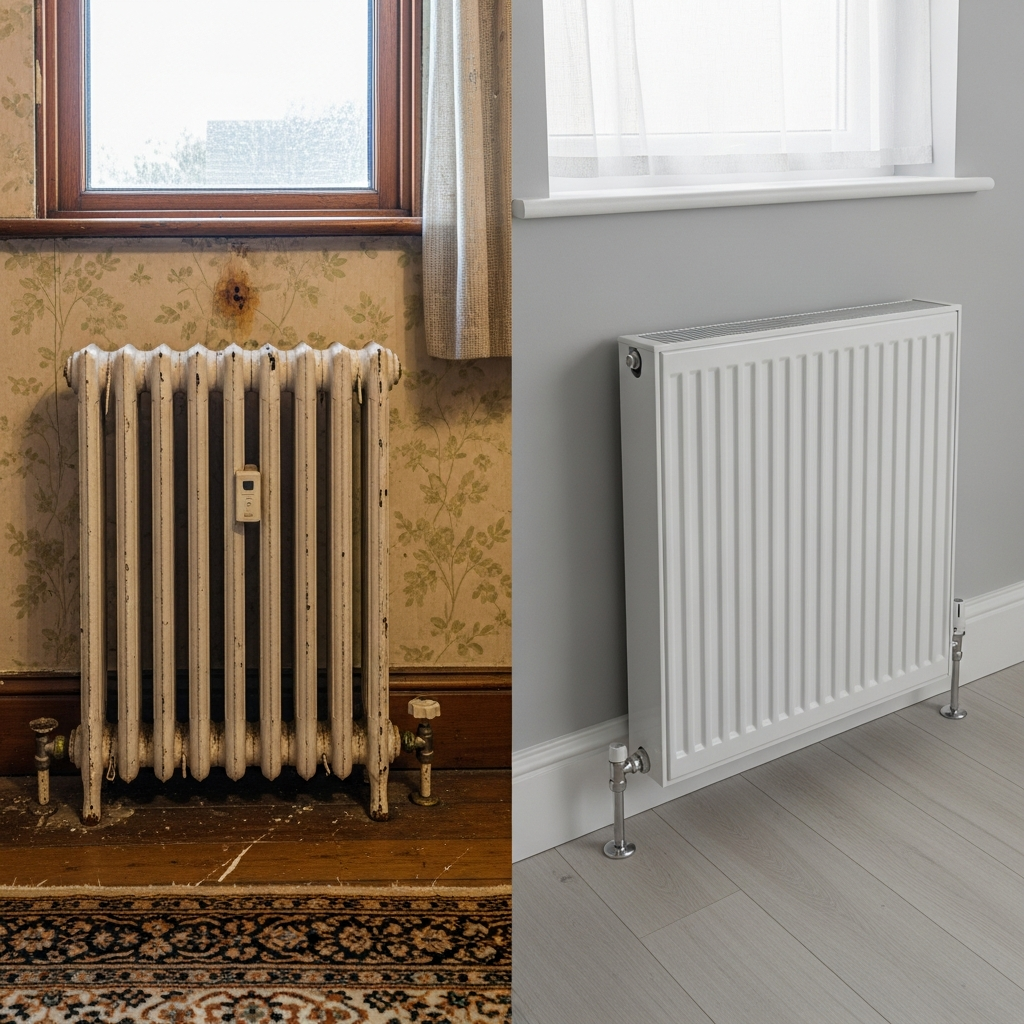
One of the biggest myths about switching to a heat pump is that you need to rip out every radiator in the house. It is a myth that adds thousands to the perceived cost and puts many homeowners off making the switch.
The reality is more nuanced — and often more encouraging. Many existing radiators can work perfectly well with an air source heat pump. Some may need replacing. And in certain cases, your existing radiators might actually be an advantage.
Is your home suitable for a heat pump?
Check suitability in 60 secondsIncludes radiator and insulation assessment.
Why Radiator Size Matters with a Heat Pump
A gas boiler typically runs at 65-75°C. An air source heat pump, for maximum efficiency, should run at 35-50°C. At these lower temperatures, each radiator emits roughly 30-50% less heat.
| Flow Temperature | Radiator Output (% of rated) | 1,500W Radiator Actual Output |
|---|---|---|
| 75°C (gas boiler) | 100% | 1,500W |
| 55°C (high-temp HP) | ~63% | ~945W |
| 45°C (standard HP) | ~44% | ~660W |
| 40°C (optimal HP) | ~35% | ~525W |
Output percentages based on Delta T correction factors from manufacturer data.
When Existing Radiators Work
- Already oversized: Plumbers historically oversized radiators. Homes fitted in the 1960s-90s commonly have oversized units.
- Home has been insulated since: Cavity wall insulation, loft insulation, and new windows reduce heat demand, making existing radiators relatively larger for the current need.
- Large Type 22 double-panel convectors: These have significantly higher output than Type 11 single-panel radiators of the same dimensions.
- Multiple radiators in large rooms: Two radiators together may provide enough heat even if each alone would be undersized.
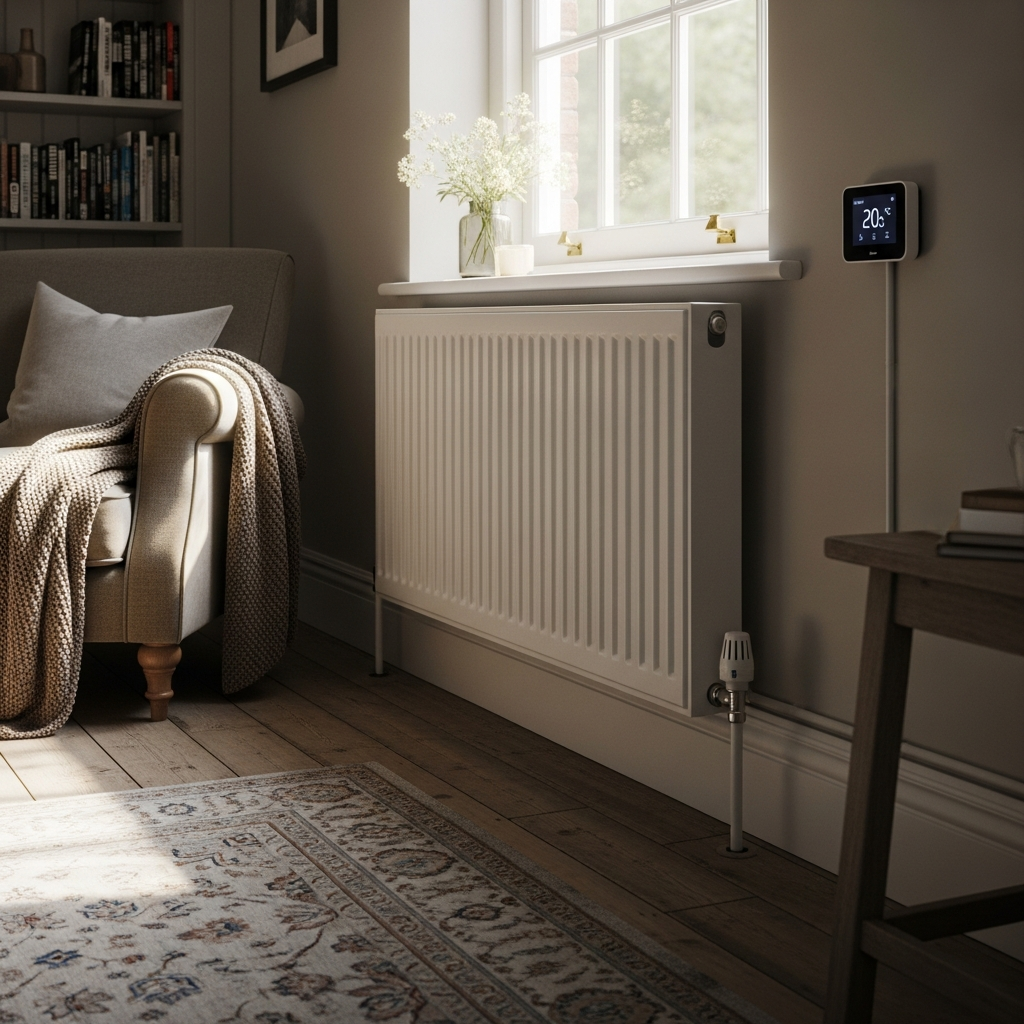
When Existing Radiators Do Not Work
- Small single-panel radiators in poorly insulated rooms: The worst-case combination
- Towel rails in bathrooms: Usually only 200-400W output at Delta T 50 — far too little at heat pump temperatures
- Column and decorative radiators: Lower output per unit of wall space, designed for high flow temperatures
- Very old or corroded radiators: Internal sludge reduces output regardless of size. A power flush may help; otherwise replacement is needed.
How to Check Your Existing Radiators
- Get a room-by-room heat loss calculation — your installer should do this as standard
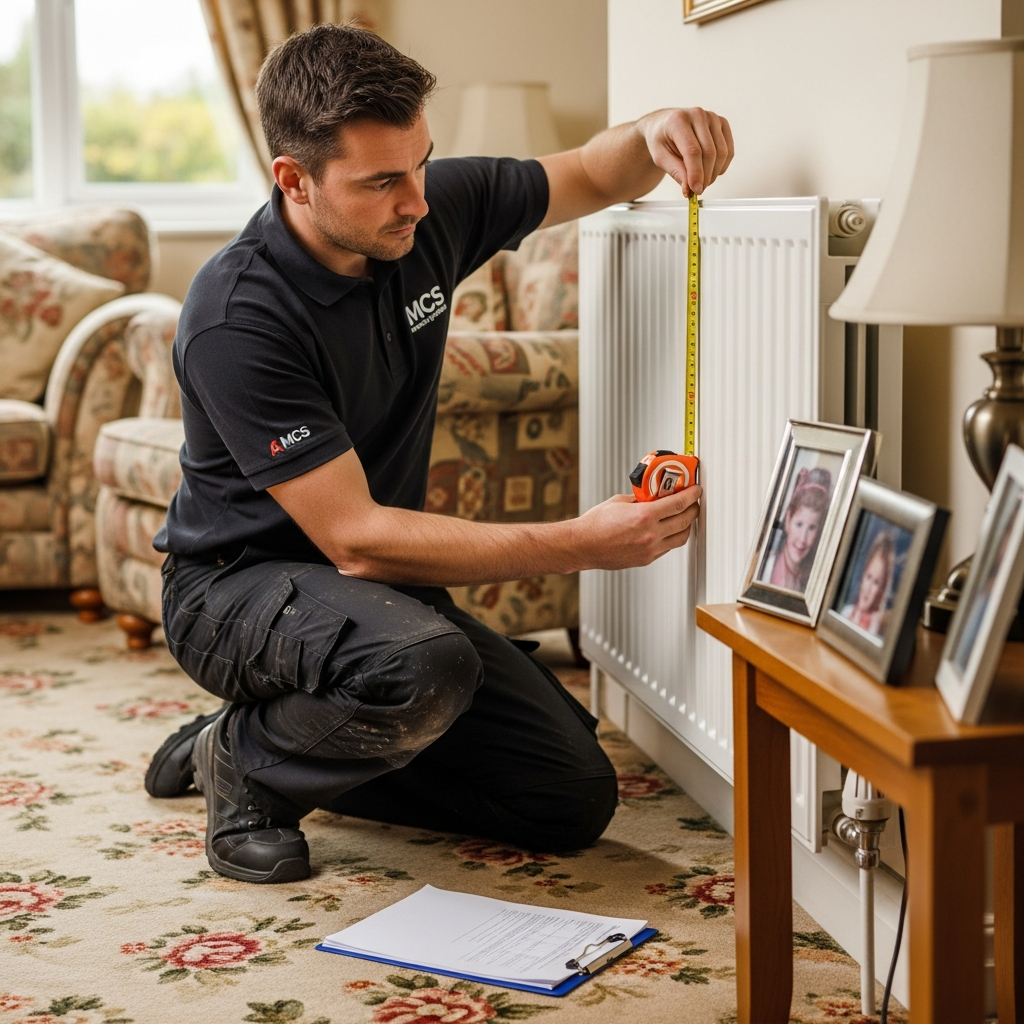
- Identify radiator sizes and types — measure height, width, depth; determine single or double panel
- Compare output at heat pump flow temperature — use Delta T correction factors
- Prioritise replacements — most homes only need 2-4 radiators upgraded
For the complete picture, see our detailed page on whether you need new radiators for a heat pump.
Get an installer to assess your radiators
Get free quotesIncludes room-by-room heat loss calculation and radiator assessment.
Oversized Radiators: Your Secret Advantage
With a gas boiler, oversized radiators waste energy — the room heats too quickly and the boiler cycles inefficiently. With a heat pump at low flow temperatures, those same oversized radiators become an advantage. They provide enough surface area to heat the room at 35-40°C, allowing the heat pump to run at maximum efficiency.
If you are renovating before installing a heat pump, deliberately oversizing radiators by 50-100% is a smart move.
What About Cast-Iron Radiators?
Cast-iron column radiators are common in Victorian and Edwardian homes. They are often very large — which is good for heat pump compatibility. Their high thermal mass provides stable, even heat when the heat pump runs continuously. A power flush is advisable before connecting to a new system, and modern TRVs should be fitted.
The Role of Flow Temperature
Flow temperature bridges radiator size and heat pump efficiency:
- 35-40°C: Highest HP efficiency, requires large radiators or underfloor heating
- 40-50°C: Good efficiency, works with many existing radiators
- 50-55°C: Lower efficiency, but works with most existing radiators including smaller ones
Weather compensation adjusts this automatically — lower flow temp on mild days, higher on cold days.
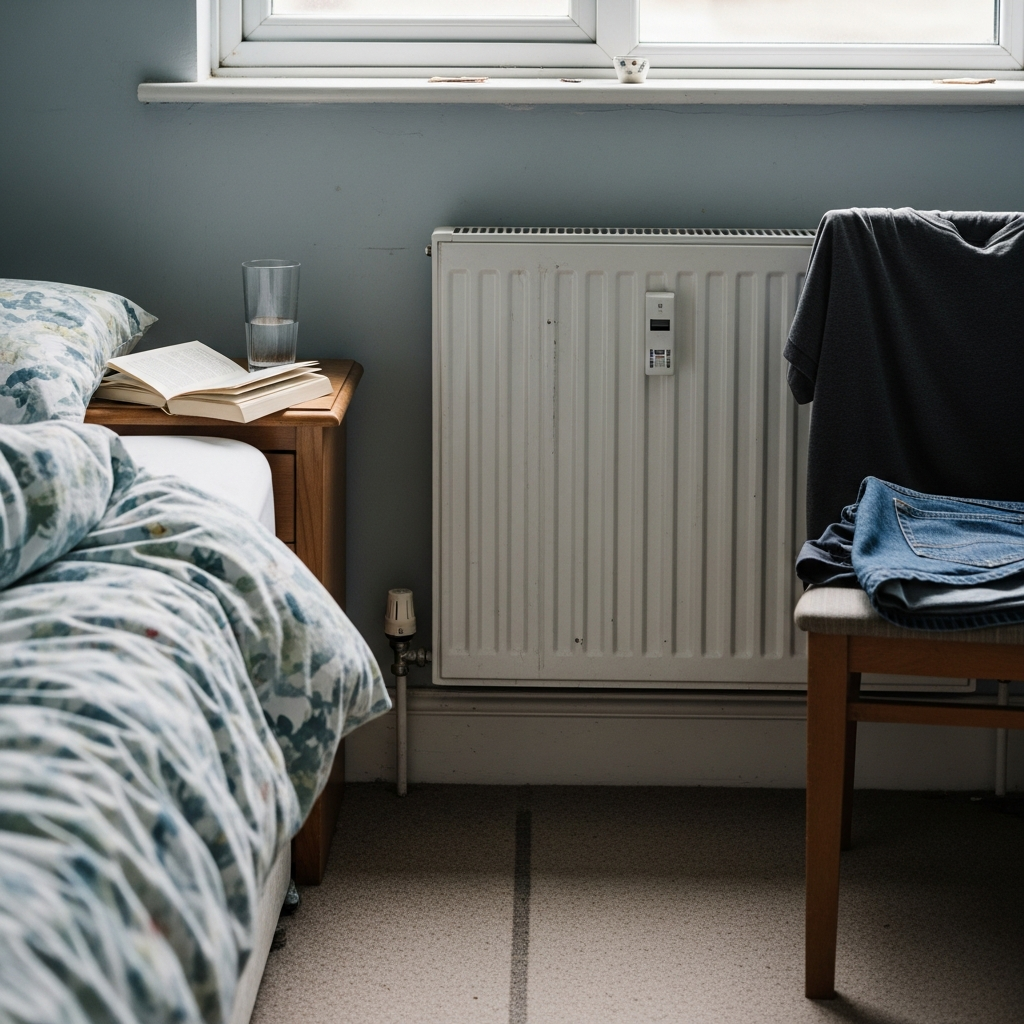
Practical Tips for Making Existing Radiators Work
- Power flush the system: Removes sludge and can restore up to 20% of lost heat output
- Fit TRVs on every radiator: Individual room control improves efficiency
- Bleed radiators regularly: Trapped air creates cold spots
- Ensure good water quality: Treat with corrosion inhibitor and consider a magnetic filter
- Add a second radiator: If a room's radiator is undersized but wall space exists, adding one can be cheaper than replacing
Cost of Radiator Upgrades
| Item | Cost |
|---|---|
| Standard Type 22 double-panel convector | £80-£250 + £100-£200 fitting |
| Larger or designer radiator | £150-£500+ + fitting |
| Power flush (whole system) | £300-£600 |
| TRVs (if not already fitted) | £15-£30 each + fitting |
| Typical 3-4 radiator upgrade total | £600-£1,500 |
For a complete cost picture, see our heat pump cost guide. Homeowners looking to maximise savings often pair radiator upgrades with solar panels to offset the electricity the heat pump uses.
Get a professional radiator assessment with your heat pump quote
Get free quotes from local installersIncludes heat loss survey and radiator-by-radiator assessment.
Frequently Asked Questions
Do I need to replace all my radiators for a heat pump?
Almost certainly not. A room-by-room heat loss calculation and radiator assessment will identify exactly which radiators (if any) need upgrading. Most homeowners find that the majority of their existing radiators are adequate, with only two to four needing replacement. See our full guide on radiators and heat pumps.
Will my radiators feel cold with a heat pump?
They will feel cooler to the touch — warm rather than hot. At 45°C flow temperature, a radiator surface will be around 35-40°C. The room should still be warm; the radiator just does not feel as hot when you touch it.
Can I keep my old cast-iron radiators?
Often, yes. Cast-iron radiators are typically large and have good thermal mass. Have them assessed for output at heat pump flow temperatures and check their condition.
What if I want the most efficient system possible?
For maximum efficiency, you want the lowest possible flow temperature, which means the largest possible radiators (or underfloor heating). Oversizing radiators by 50-100% allows the heat pump to run at 35-40°C.
Should I replace radiators before or during the heat pump installation?
Ideally during — your heat pump installer can supply and fit appropriately sized radiators as part of the overall installation.
Can a high-temperature heat pump avoid the need for new radiators?
Yes. High-temperature heat pumps can run at 60-80°C, making almost all existing radiators adequate. The trade-off is lower efficiency — COP of roughly 2.0-2.5 instead of 3.0-3.5.
About Radiators, Heat Pumps, and Home Heating Efficiency
Radiator output varies with flow temperature according to the Delta T correction factors defined in EN 442. At the lower flow temperatures that air source heat pumps prefer (35-50°C), radiator output is significantly reduced compared to the rated output at Delta T 50 (75°C flow). This is why radiator sizing assessment is a critical part of heat pump system design. The MCS installation standard requires installers to carry out room-by-room heat loss calculations and emitter assessments before installation. Homeowners combining a heat pump with solar panels can offset the electricity cost of running at slightly higher flow temperatures where radiator upgrades are impractical.