Will a Heat Pump Work with My Current Insulation?
One of the most common questions homeowners ask before switching to a heat pump is whether their home's existing insulation is good enough. The honest answer is: it depends. A heat pump will technically work in any home regardless of insulation level — but the insulation determines the size of heat pump you need, how much it costs to run, and how comfortable you will be.
This guide gives you a practical checklist to assess your own home's insulation, explains what levels are needed for efficient heat pump operation, and helps you decide whether to upgrade insulation before installing.
The Insulation Checklist: Assess Your Home
Work through each area of your home and compare what you have against what is recommended. This will give you a clear picture of where you stand and what improvements, if any, would make the biggest difference.
1. Loft Insulation
What to check: Go into your loft (if accessible) and measure the depth of insulation. You can use a ruler or tape measure — just push it gently into the insulation until it touches the ceiling below.
| What You Have | Assessment | Action |
|---|---|---|
| 270mm or more | Excellent — meets current standards | No action needed |
| 150mm to 270mm | Adequate but could be improved | Top up to 270mm — cheap and easy |
| 100mm or less | Poor — significant heat loss | Top up immediately — high priority |
| None visible | Very poor — major heat loss | Install 270mm — essential before heat pump |
Topping up loft insulation costs £300 to £600 for a typical three-bedroom house and is one of the most cost-effective energy improvements you can make. If your loft has less than 270mm, this should be your absolute first priority.
2. Wall Insulation
What to check: First, determine what type of walls you have:
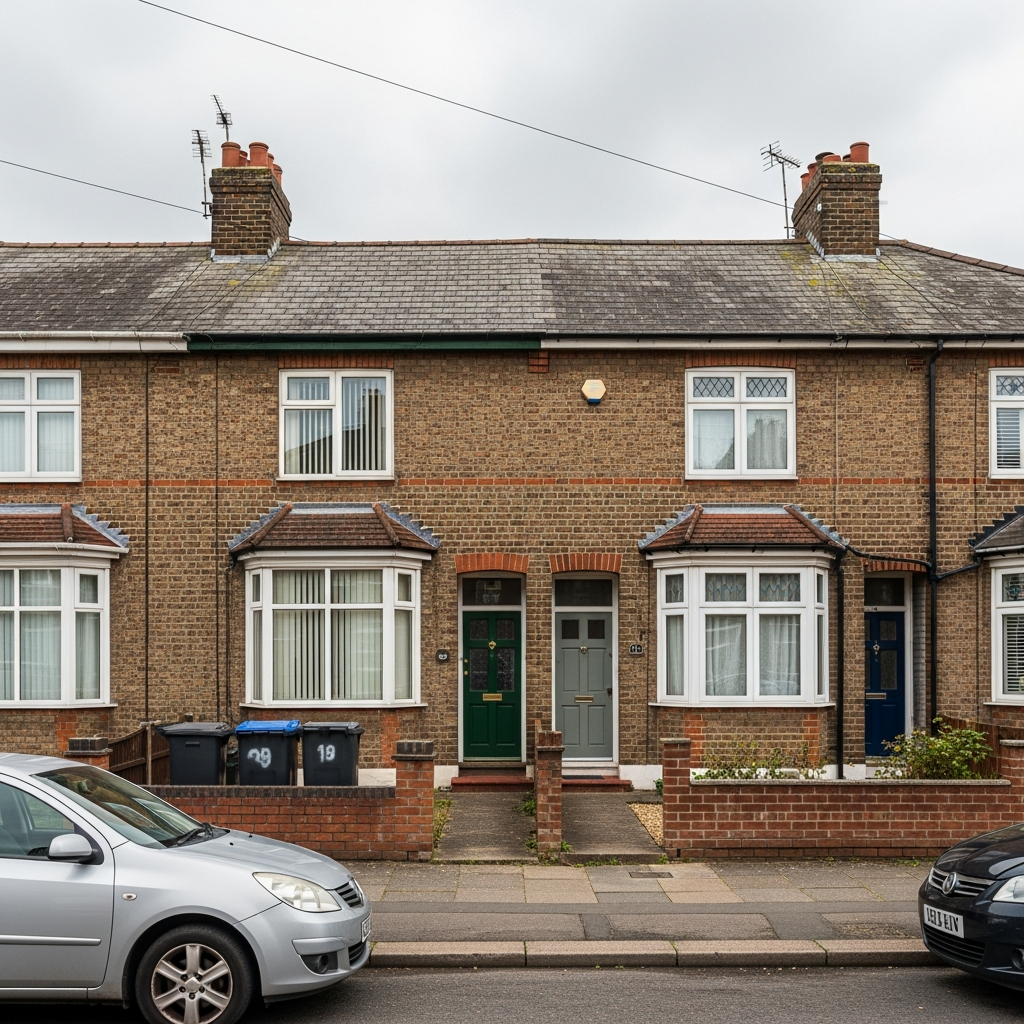
- Cavity walls (post-1930s): Two layers of brick with a gap between. Look at the brickwork pattern — if all the bricks are the same length (stretcher bond), you almost certainly have cavity walls.
- Solid walls (pre-1930s): A single thickness of brick or stone. If you can see alternating long and short bricks (Flemish bond or English bond), the walls are likely solid.
| Wall Type | Insulation Status | Assessment | Action |
|---|---|---|---|
| Cavity — filled | Insulated | Good | No action needed |
| Cavity — unfilled | Not insulated | Poor — 35% heat loss through walls | Fill cavities — £500 to £1,500 |
| Solid brick | No insulation | Poor — up to 45% heat loss | Consider EWI or IWI if budget allows |
| Solid stone | No insulation | Poor — high heat loss | See our stone house guide |
If you are unsure whether your cavities are filled, an insulation company can check by drilling a small test hole — many offer this as a free survey. You can also check your EPC (Energy Performance Certificate), which should state whether cavity wall insulation is present.
3. Windows
| What You Have | Assessment | Action |
|---|---|---|
| Triple glazing | Excellent | No action needed |
| Double glazing (post-2002) | Good | No action needed |
| Double glazing (pre-2002) | Adequate — older units are less effective | Replace if budget allows, or check seals |
| Single glazing | Poor — high heat loss | Upgrade to double glazing or add secondary glazing |
Double glazing is considered the minimum for comfortable heat pump operation. Single-glazed windows lose roughly twice as much heat as double-glazed windows and also create cold spots and draughts that make rooms feel colder than the air temperature suggests.
If full window replacement is too expensive, secondary glazing (an additional glazed panel fitted inside the existing window frame) is a cost-effective alternative at £100 to £300 per window.
4. Floor Insulation
| Floor Type | Typical Insulation Status | Action |
|---|---|---|
| Suspended timber (pre-1960s) | Usually uninsulated | Insulate from below if accessible — £500 to £1,500 |
| Solid concrete (post-1950s) | Usually uninsulated but lower heat loss | Expensive to retrofit — lower priority |
| Modern insulated | Already insulated | No action needed |
Floor insulation is important but typically a lower priority than loft and wall insulation. If you have a suspended timber floor with accessible underfloor space, insulating it is relatively straightforward and can reduce heat loss through the floor by 70 per cent or more.
5. Draught-Proofing
This is less about measurement and more about feel. Walk around your home on a cold, windy day and check for draughts around:
- External doors (top, bottom, sides, letterbox, keyhole)
- Windows (opening casements, sash windows)
- Loft hatch
- Floorboard gaps
- Around pipework penetrations
- Unused chimneys
Good airtightness is important for heat pump performance. Sealing draughts is one of the cheapest and most effective improvements you can make, typically costing £200 to £500 for a whole house.
What Insulation Level Do You Actually Need for a Heat Pump?
There is no legal minimum insulation requirement for installing a heat pump. An MCS installer will carry out a heat loss calculation and size the heat pump to match your home's actual heat loss, whatever that may be.
However, there are practical thresholds that affect performance and cost:
Minimum Recommended for Low-Temperature Operation
For a heat pump to run at low flow temperatures (35 to 45 degrees) using standard radiators, your home should ideally have:
- Loft insulation of at least 200mm (270mm preferred)
- Cavity walls filled (or solid walls with some form of insulation)
- Double glazing throughout
- Reasonable draught-proofing
With these levels, most homes can operate a heat pump at 40 to 45 degrees with existing radiators, achieving a COP of 3.0 to 3.5.
What If Your Insulation Falls Short?
If your insulation is below these levels, you have three options:
- Improve insulation first — the fabric first approach. This is the most cost-effective long-term strategy.
- Install a larger heat pump at a higher flow temperature — this works but costs more upfront and to run. The heat pump will operate at a lower COP.
- Upgrade radiators to larger sizes — bigger radiators deliver more heat at lower flow temperatures, compensating for higher heat loss without needing to raise the flow temperature.
Most installers will recommend a combination of these approaches based on your specific property and budget.
Using Your EPC to Assess Insulation
Your Energy Performance Certificate (EPC) provides useful information about your home's insulation. You can find your EPC online at the government's EPC register. Key things to look for:
- Wall insulation: States whether cavity wall insulation is present or whether walls are solid
- Roof insulation: Gives an approximate depth and rating
- Window glazing: States single, double, or triple
- Recommendations: Lists specific insulation improvements with estimated costs and savings
Be aware that EPCs are based on a brief assessment and can sometimes contain errors. If your EPC is more than a few years old, the information may not reflect improvements you have made since. An MCS installer will carry out their own assessment as part of the heat pump survey.
The Cost of Upgrading vs The Cost of Not Upgrading
Here is a practical comparison for a three-bedroom semi-detached house with cavity walls:
Scenario A: Install Heat Pump Without Insulation Improvements
- 100mm loft insulation, unfilled cavities, single-glazed windows at rear
- Heat loss: 14kW
- Heat pump needed: 14kW unit — approximately £13,000 installed
- Flow temperature needed: 55 degrees (to compensate for poor insulation)
- Estimated COP: 2.5
- Annual electricity for heating: approximately 5,600 kWh — £1,344 per year
Scenario B: Insulate First, Then Install Heat Pump
- 270mm loft insulation (£400 top-up), cavities filled (£800), secondary glazing (£1,200)
- Heat loss: 8.5kW
- Heat pump needed: 9kW unit — approximately £9,500 installed
- Flow temperature: 40 degrees
- Estimated COP: 3.5
- Annual electricity for heating: approximately 2,430 kWh — £583 per year
Insulation cost: £2,400
Heat pump saving: £3,500
Annual running cost saving: £761
In this scenario, insulating first actually saves you money on day one (the insulation costs less than the heat pump price reduction), and then saves you an additional £761 every single year. Over the 20-year life of the heat pump, that is over £15,000 in total savings.
What Your MCS Installer Will Check
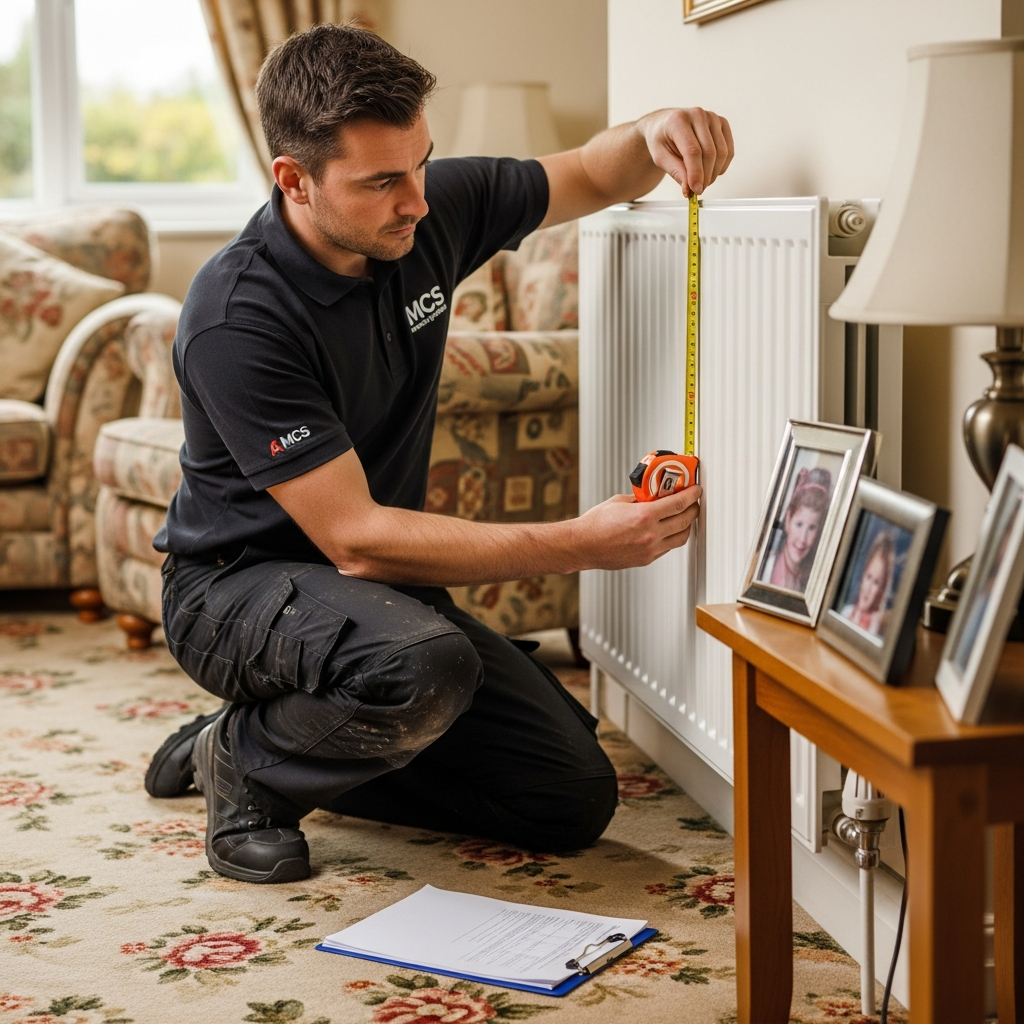
When an MCS-certified installer surveys your home for a heat pump, they will assess:
- Loft insulation depth and condition
- Wall construction type and insulation status
- Window glazing type and condition
- Floor construction and insulation
- Draught levels and ventilation
- Current radiator sizes and output capacity
- Hot water cylinder requirements
Based on this assessment, they will carry out a room-by-room heat loss calculation and recommend a heat pump size. A good installer will also advise on cost-effective insulation improvements that would allow a smaller heat pump to be specified.
If an installer does not discuss your insulation or suggest improvements where they are clearly needed, consider getting a second opinion from another MCS installer.
Quick Self-Assessment Summary
Score your home against these five criteria. If you score 4 or 5, your home is likely ready for a heat pump without major insulation work. If you score 3 or below, insulation improvements will significantly improve heat pump performance and reduce costs.
- Loft insulation 270mm+ — Yes (1 point) / No (0 points)
- Cavity walls filled (or solid walls insulated) — Yes (1 point) / No (0 points)
- Double glazing throughout — Yes (1 point) / No (0 points)
- No significant draughts — Yes (1 point) / No (0 points)
- Floors insulated (if suspended timber) — Yes or N/A (1 point) / No (0 points)
Frequently Asked Questions
Do I need to insulate my home before getting a heat pump?
It is not a legal requirement, but it is strongly recommended for most homes. Insulating first reduces the size and cost of the heat pump needed and lowers running costs. The exception is homes that already have good insulation (loft 270mm+, filled cavities, double glazing).
Will a heat pump work in a poorly insulated home?
Yes, but it will need to be larger, run at higher flow temperatures, and cost more to operate. A heat pump sized correctly for the actual heat loss will keep the home warm, but the running costs may not be as competitive compared to a gas boiler as they would be in a well-insulated home.
How can I check if my cavity walls are filled?
An insulation company can drill a small test hole in an external wall to check. Alternatively, check your EPC, ask the previous owner, or look for evidence of drill holes and plugs in the external brickwork (a sign that insulation has been injected).
What is the minimum insulation for a heat pump?
There is no legal minimum. However, for efficient operation at low flow temperatures, aim for at least 200mm of loft insulation, filled cavity walls, and double glazing. These levels allow most heat pumps to operate with a COP of 3.0 or above.
Is 100mm of loft insulation enough for a heat pump?
It will work, but it is well below the recommended 270mm. Topping up from 100mm to 270mm costs approximately £300 to £500 and is one of the most cost-effective energy improvements available. The heat saved pays for the insulation within one to two heating seasons.
Should I get an EPC before installing a heat pump?
An EPC is not required for heat pump installation, but it provides useful baseline information about your home's insulation and energy efficiency. If you are applying for the Boiler Upgrade Scheme grant, you will need a valid EPC for the property.