Heat Pump vs Oil Boiler: Which Is Better?
Oil-heated homes stand to save more by switching to a heat pump than any other fuel type. With the £7,500 BUS grant, many oil-to-heat-pump conversions now cost less than replacing the oil boiler itself — and running costs drop by £300 to £500 per year with a heat pump tariff, before you even factor in oil price volatility.
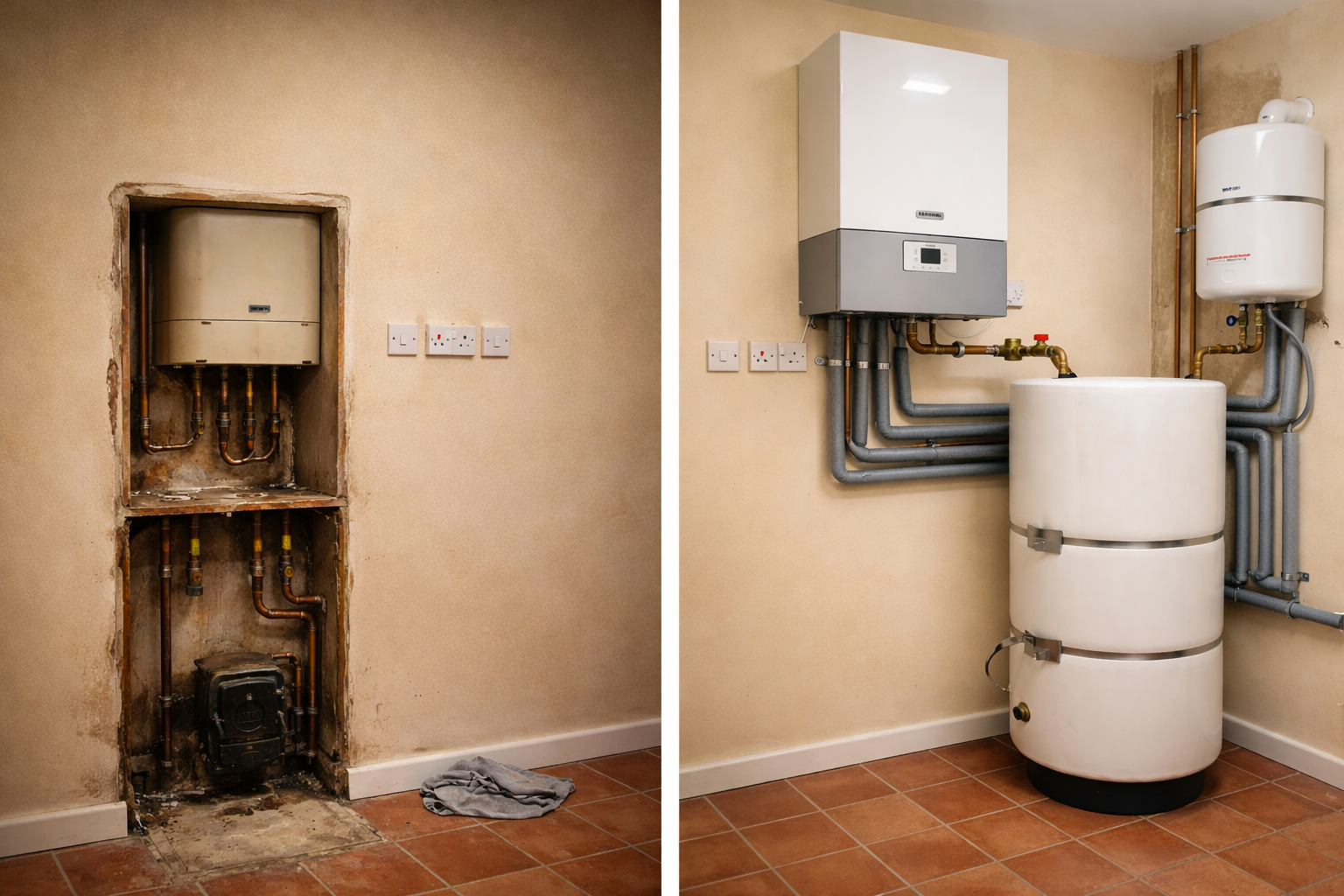
If you heat your home with oil, the case for switching to a heat pump is stronger than for any other fuel type. Oil is expensive, volatile in price, inconvenient to manage, and produces significantly more carbon emissions than any alternative. A heat pump addresses every one of these problems.
This guide compares heat pumps and oil boilers across every dimension that matters to UK homeowners — from upfront cost and running expenses to reliability, comfort, and long-term value. If you are comparing all fuel types, our heat pump vs gas boiler pillar guide covers the broader picture.
Find out what you would save by switching from oil
Use the free calculatorNo email required. Instant results based on your property details.
Installation Cost Comparison
Oil Boiler Replacement
Replacing an oil boiler like-for-like typically costs:
- Standard oil boiler replacement: £3,000 to £4,500 installed
- Oil boiler with new flue liner: £4,000 to £5,500
- Oil boiler plus oil tank replacement: £5,500 to £8,000
Oil tanks have a lifespan of 15 to 20 years and cost £1,500 to £3,000 to replace, including the concrete base and bunding. This is often overlooked when comparing costs — if your tank is ageing, it is an additional expense you would face regardless.
Heat Pump Installation
For a typical oil-heated property (often larger, rural, and detached), heat pump installation costs:
- Before grant: £11,000 to £15,000
- After BUS grant (£7,500): £3,500 to £7,500
Many oil-heated properties already have system boilers with radiators and hot water cylinders, which can reduce conversion costs — you may not need a new cylinder, and existing radiators are often already suitably sized for lower flow temperatures.
| Cost Factor | Oil Boiler | Heat Pump (After Grant) |
|---|---|---|
| System replacement | £3,000 - £4,500 | £3,500 - £7,500 |
| Tank replacement (if due) | £1,500 - £3,000 | Not needed |
| Realistic total | £4,500 - £7,500 | £3,500 - £7,500 |
| System lifespan | 15 - 20 years | 20 - 25 years |
Costs based on 2026 UK averages for rural detached properties
Verdict on installation cost: After the BUS grant, a heat pump installation typically costs similar to or slightly more than an oil boiler replacement. When you factor in future oil tank replacement costs (which you avoid entirely with a heat pump), the comparison often favours the heat pump.
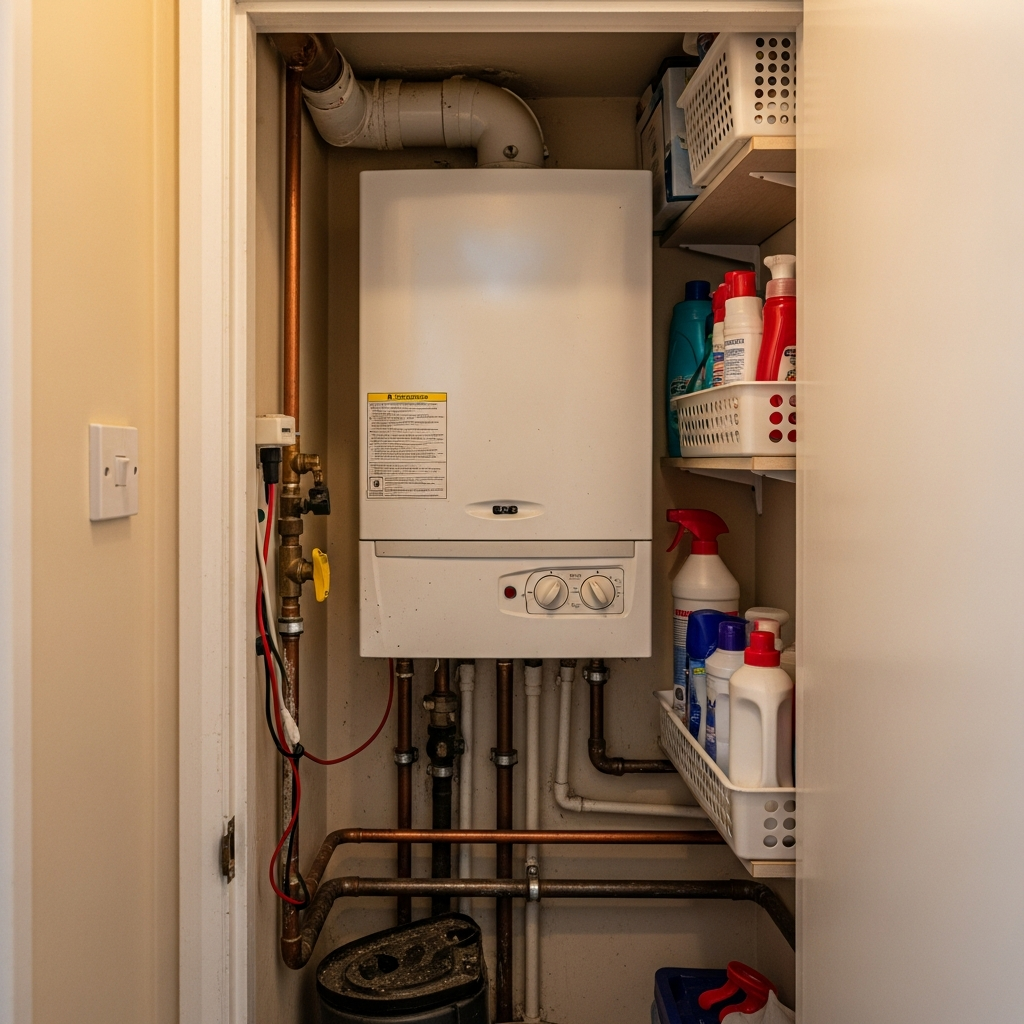
Running Costs
This is where oil loses badly. Heating oil prices are volatile, but even at relatively low points, oil is significantly more expensive per unit of heat than electricity via a heat pump.
Running Cost Comparison
For a four-bedroom detached house with 18,000 kWh annual heat demand:
Oil Boiler (85% efficiency)
Oil required: 21,176 kWh
2,046 litres at 65p/litre
£1,330/year
Heat Pump (Standard Rate)
Electricity: 6,000 kWh
At 24.50p/kWh
£1,470/year
Heat Pump (HP Tariff)
Electricity: 6,000 kWh
At 15p/kWh off-peak
£900/year
At standard electricity rates, running costs are comparable. But with a heat pump electricity tariff (increasingly available from energy suppliers) or a time-of-use tariff, the heat pump saves £300 to £500 per year. And when oil prices spike — as they did in 2022 when oil reached over £1 per litre — the heat pump savings become enormous.
If you are also considering generating your own electricity, combining solar panels with a heat pump can reduce running costs further by powering the heat pump with free solar electricity during daylight hours.
Verdict on running costs: At stable oil prices, costs are roughly equal at standard electricity rates. With a heat pump tariff, the heat pump wins clearly. During oil price spikes, the heat pump saves hundreds per year. Over 15-20 years, the heat pump is almost certainly cheaper because you are insulated from oil price volatility. See our running costs guide for more detail.
Get free heat pump quotes for your oil-heated property
Compare installer quotesMCS-certified installers only. They handle the BUS grant application for you.
Price Volatility and Security
This is an underappreciated advantage of heat pumps for oil users. Oil prices are set by global commodity markets and are affected by geopolitical events, OPEC decisions, refinery capacity, and seasonal demand. UK homeowners have no control over or protection from price swings.

In 2021, heating oil cost around 40p per litre. By 2022, it exceeded £1 per litre — a 150% increase in under a year. Electricity prices also rose, but by a much smaller percentage, and the Ofgem price cap provides a degree of consumer protection that oil users do not have.
With a heat pump, your heating cost is tied to the electricity grid — regulated, increasingly renewable, and trending towards lower prices as more wind and solar capacity comes online.
Illustrative UK heating oil prices showing volatility risk
Reliability and Maintenance
Oil Boiler
- Annual service required: £100 to £150 (OFTEC registered engineer)
- Oil tank inspection recommended annually
- Common issues: nozzle blockages, pump failures, sludge build-up in tank
- Risk of running out of oil in cold weather (you must monitor levels and order deliveries)
- Oil leaks from tanks can cause serious environmental contamination and are expensive to remediate
- Typical lifespan: 15 to 20 years
Heat Pump
- Service every 1-2 years: £100 to £200
- No fuel storage, no delivery management, no tank maintenance
- Fewer mechanical components and no combustion
- No risk of fuel leaks or environmental contamination
- Typical lifespan: 20 to 25 years
Verdict on reliability: Heat pumps are simpler, require less maintenance, and eliminate the entire burden of oil storage and delivery. No more checking the tank gauge, no more ordering oil before winter, no more emergency deliveries when you misjudge consumption. Read more in our reliability comparison.
Comfort and Hot Water

Oil boilers deliver hot water and heating quickly, with high flow temperatures. Heat pumps work at lower temperatures and more continuously. Both systems can deliver excellent comfort, but the approach is different.
For hot water, oil-heated properties typically already have a hot water cylinder, which is required for a heat pump. This makes the transition smoother than for gas combi boiler homes, which need a cylinder added.
Many oil-heated homes have older, oversized radiators — which is actually ideal for heat pumps, as larger radiators work well at lower flow temperatures. Your installer will assess whether any changes are needed during the survey.
Environmental Impact
Oil is the most carbon-intensive common heating fuel in the UK. Burning heating oil produces approximately 298g CO2 per kWh of heat (accounting for boiler efficiency). A heat pump at COP 3.0 using grid electricity produces approximately 50g CO2 per kWh of heat.
That is an 83% reduction in carbon emissions. For a property using 18,000 kWh of heat per year, switching from oil to a heat pump saves approximately 4,500 kg of CO2 annually — equivalent to taking a car off the road. Our environmental impact guide explores this in greater detail.
Oil tanks also carry environmental risks. Leaks contaminate soil and groundwater, and remediation can cost £10,000 to £50,000 or more. Removing your oil tank eliminates this risk entirely.
Pairing a heat pump with solar panels further reduces your carbon footprint by generating clean electricity to power the system.
The Practical Switch: What Is Involved?
Switching from oil to a heat pump involves:
- Getting quotes from MCS-certified installers
- Applying for the BUS grant (your installer handles this)
- Installation of the heat pump outdoor unit, connection to your existing heating system, and commissioning
- Decommissioning and removal of the oil boiler
- Draining and removal of the oil tank (can be done at installation or later)
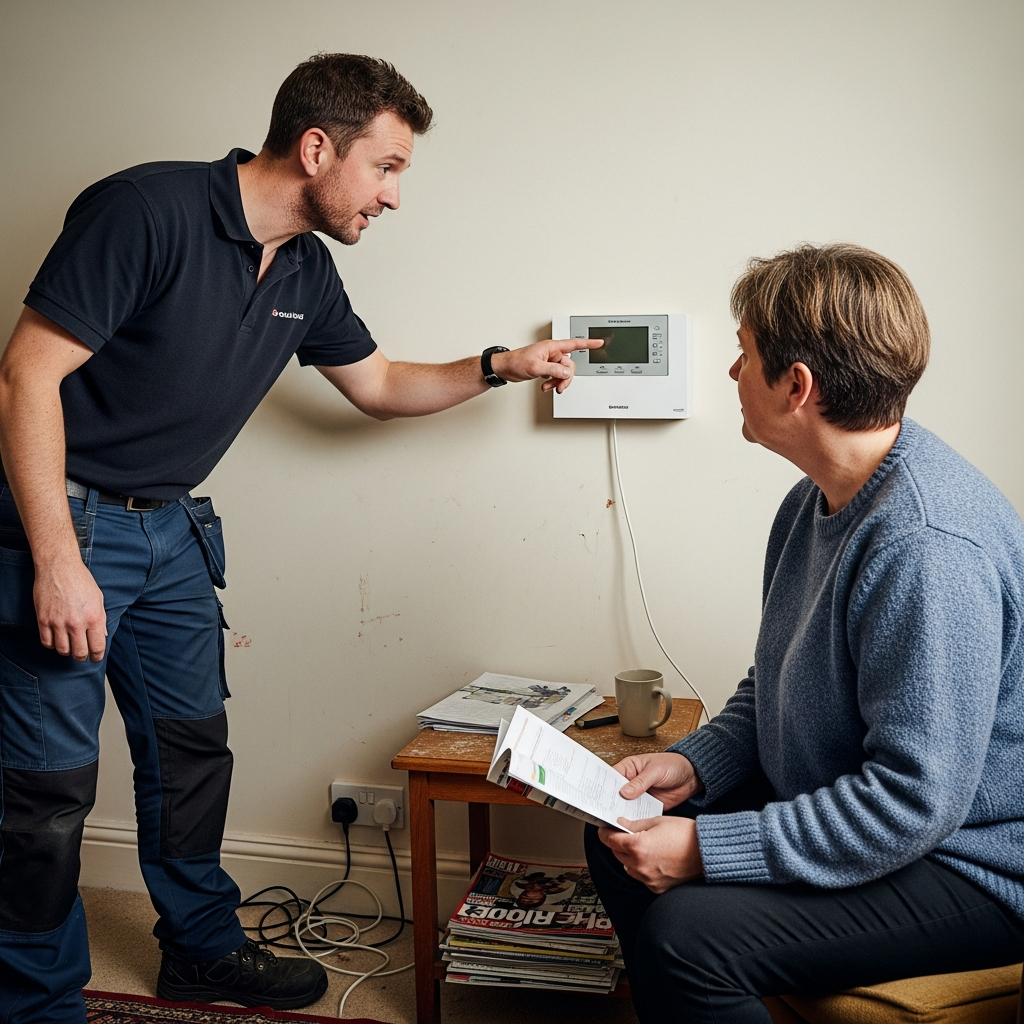
Most oil-to-heat-pump conversions take three to five days. Many installers include oil boiler removal in their quote. Tank removal may be separate and costs £300 to £800 depending on size and access.
The space freed up by removing the oil tank is a bonus — many homeowners reclaim a significant area of their garden or yard.
Our Verdict
For oil-heated homes, the case for switching to a heat pump is overwhelming. The financial case is strong (especially with the BUS grant and a heat pump tariff), the environmental case is compelling, and the practical benefits — no more oil deliveries, tank maintenance, or price anxiety — make everyday life simpler.
If your oil boiler is approaching the end of its life, replacing it with another oil boiler means committing to another 15-20 years of fossil fuel heating at volatile and likely increasing prices. A heat pump locks in lower, more predictable costs and future-proofs your home.
Use the suitability checker to confirm your property is suitable, then request quotes to see what the switch would cost after the grant.
Ready to ditch the oil tank? Get your personalised quote
Get free heat pump quotesMCS-certified installers. £7,500 grant applied automatically. No obligation.
Frequently Asked Questions
Is a heat pump cheaper to run than oil?
At standard electricity rates, running costs are comparable. With a heat pump tariff or time-of-use tariff (increasingly available), the heat pump is clearly cheaper. During oil price spikes, the savings can be substantial. Over the long term, the heat pump is almost certainly the cheaper option.
Can a heat pump heat a large, rural property?
Yes. Heat pumps are available in sizes up to 16 kW and beyond for domestic use, sufficient for most UK homes. For very large properties, multiple units can be installed. Many rural properties are already well-suited to heat pumps due to having system boilers, large radiators, and sufficient outdoor space.
What happens to my oil tank?
You can have it decommissioned and removed. This involves draining any remaining oil, disconnecting supply lines, and physically removing the tank. Your heat pump installer or a specialist tank removal company can handle this. Costs are typically £300 to £800.
Do I need planning permission to replace my oil boiler with a heat pump?
In most cases, no. Air source heat pumps are permitted development in England, Wales, and Scotland, meaning no planning permission is needed provided certain conditions are met (distance from boundaries, noise limits, etc.). Your installer will confirm this during the survey.
Will a heat pump work in a poorly insulated rural property?
Heat pumps work best in well-insulated properties, but they can still work effectively in less insulated homes — you just need a larger unit and may have higher running costs. Many installers recommend addressing basic insulation (loft, cavity walls) before or alongside installation. Check your suitability.
How does the noise compare?
An oil boiler can be quite noisy — the burner produces a distinctive roar that many oil users are familiar with. A modern heat pump is significantly quieter, typically producing a low hum similar to a fridge. Most homeowners find the heat pump is less intrusive than their old oil boiler.
About this guide: This article is part of our comparison and decision-making hub, helping UK homeowners choose the right heating system. Heat pumps are a core renewable technology supported by the Boiler Upgrade Scheme, offering significant efficiency gains over fossil fuel boilers. For homes considering a full renewable energy approach, solar panels can complement a heat pump by generating free electricity to further reduce running costs. Use our calculator to see personalised savings.