Heat Pump vs New Boiler: Which Should You Choose?
Your boiler has broken down, or it is nearing the end of its life. You need to decide: replace it with another gas boiler, or make the switch to a heat pump? It is one of the biggest home heating decisions UK homeowners face, and the answer is not always straightforward.
This guide compares heat pumps and gas boilers across every factor that matters — upfront cost, running cost, lifespan, comfort, environmental impact, and future-proofing — so you can make an informed decision for your home.
The Full Comparison at a Glance
| Factor | New Gas Boiler | Air Source Heat Pump |
|---|---|---|
| Upfront cost | £2,500 – £4,000 | £10,000 – £15,000 (£2,500 – £7,500 after BUS grant) |
| Annual running cost (3-bed semi) | £850 – £1,100 | £700 – £1,000 |
| Lifespan | 12 – 15 years | 20 – 25 years |
| Efficiency | 90 – 94% | 300 – 400% (COP 3.0 – 4.0) |
| Carbon emissions | ~2.7 tonnes CO₂/year | ~0.9 tonnes CO₂/year (and falling as the grid decarbonises) |
| Government grants | None | £7,500 BUS grant |
| Maintenance | Annual service, £80 – £120 | Annual service, £100 – £200 |
| Hot water | Instant (combi) or cylinder | Cylinder required (no combi option) |
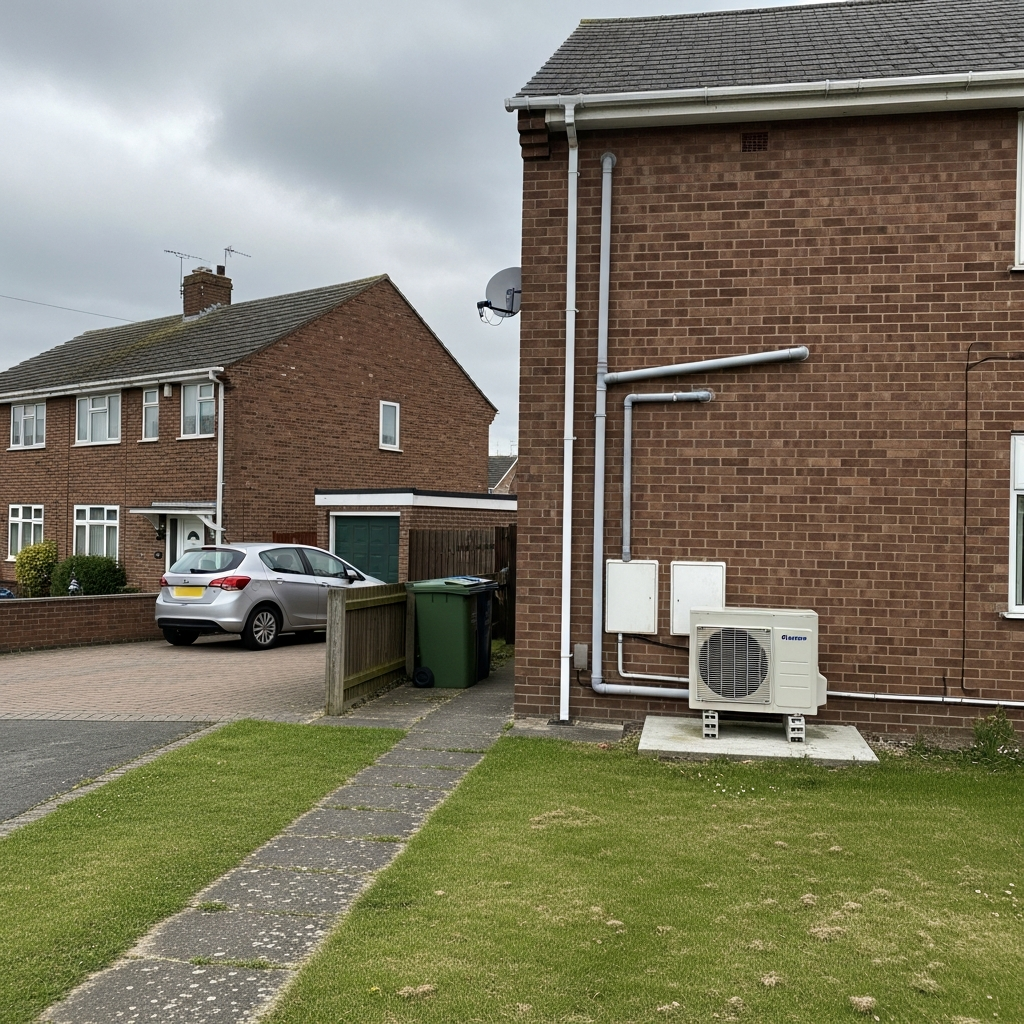
| Space needed | Wall-mounted, compact | Outdoor unit + indoor cylinder |
| Disruption during install | 1 day | 2 – 5 days |
| Future-proofing | Gas boiler ban expected from 2035 | Aligned with government decarbonisation policy |
Upfront Cost Comparison
On sticker price alone, a gas boiler wins easily. A new combi boiler installed typically costs £2,500 to £4,000. An air source heat pump installation costs £10,000 to £15,000.
However, the BUS grant changes the equation significantly. With £7,500 off the price, many heat pump installations come in at £2,500 to £7,500 out of pocket — bringing the gap much closer to a new boiler.
For a detailed breakdown of what drives heat pump costs, including radiator upgrades and hot water cylinders, see our full cost guide.
Running Cost Comparison
This is where heat pumps start to close the gap. Despite electricity costing roughly 3.5 times more per kWh than gas, a heat pump generates 3-4 units of heat for every unit of electricity. This means:
- Gas boiler: Burns 15,000 kWh of gas at ~7p/kWh = ~£1,050/year
- Heat pump (COP 3.5): Uses 4,300 kWh of electricity at ~24p/kWh = ~£1,030/year
- Heat pump (COP 4.0): Uses 3,750 kWh of electricity at ~24p/kWh = ~£900/year
With a time-of-use tariff, heat pump owners can shift much of their heating to off-peak periods, reducing costs further. Our running cost guide has full calculations for different property types.
The Electricity-to-Gas Price Ratio
The key variable is the ratio between electricity and gas prices. Currently at roughly 3.5:1, heat pumps roughly break even on running costs. The government has committed to rebalancing energy prices by moving green levies from electricity to gas, which would tilt the balance firmly in favour of heat pumps.
Lifetime Cost: The 20-Year View
This is where the comparison gets interesting. Over 20 years:
| Cost element | Gas Boiler (x2 over 20 years) | Heat Pump (one installation) |
|---|---|---|
| Installation | £3,000 + £3,500 (replacement after 12-15 years) | £12,000 - £7,500 grant = £4,500 |
| Running costs (20 years) | £20,000 | £18,000 |
| Maintenance (20 years) | £2,000 | £3,000 |
| Total | £28,500 | £25,500 |
Over 20 years, a heat pump is likely to be cheaper overall, especially if electricity prices fall relative to gas as expected.
Comfort and Heating Experience
Gas boilers and heat pumps heat your home differently:
- Gas boiler: Fires up, heats radiators quickly to a high temperature, then shuts off. Rooms heat up fast but can feel uneven — hot near radiators, cooler further away. Temperature fluctuates as the boiler cycles on and off
- Heat pump: Runs at lower temperatures for longer periods, providing steady, even heat throughout the day. Rooms warm up more slowly but maintain a consistent temperature. Many owners describe the heat as more comfortable once they adapt
If you value rapid heat-up — say, coming home to a cold house and wanting it warm in 20 minutes — a boiler has the edge. If you prefer consistent warmth without temperature swings, a heat pump delivers that better.
Hot Water Differences
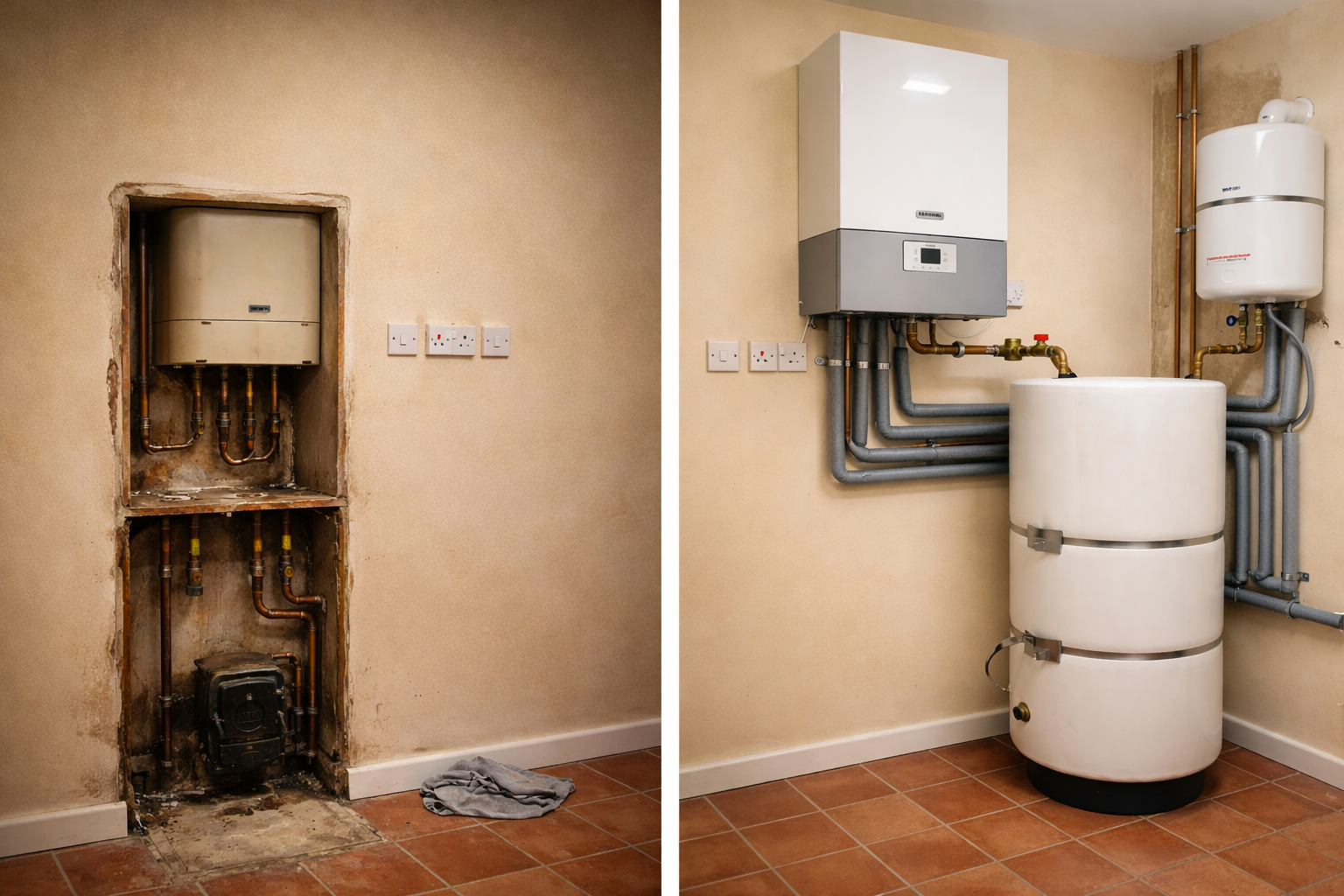
A combi boiler provides instant hot water with no storage cylinder. A heat pump requires a hot water cylinder (typically 150-250 litres), which takes up space and needs time to reheat.
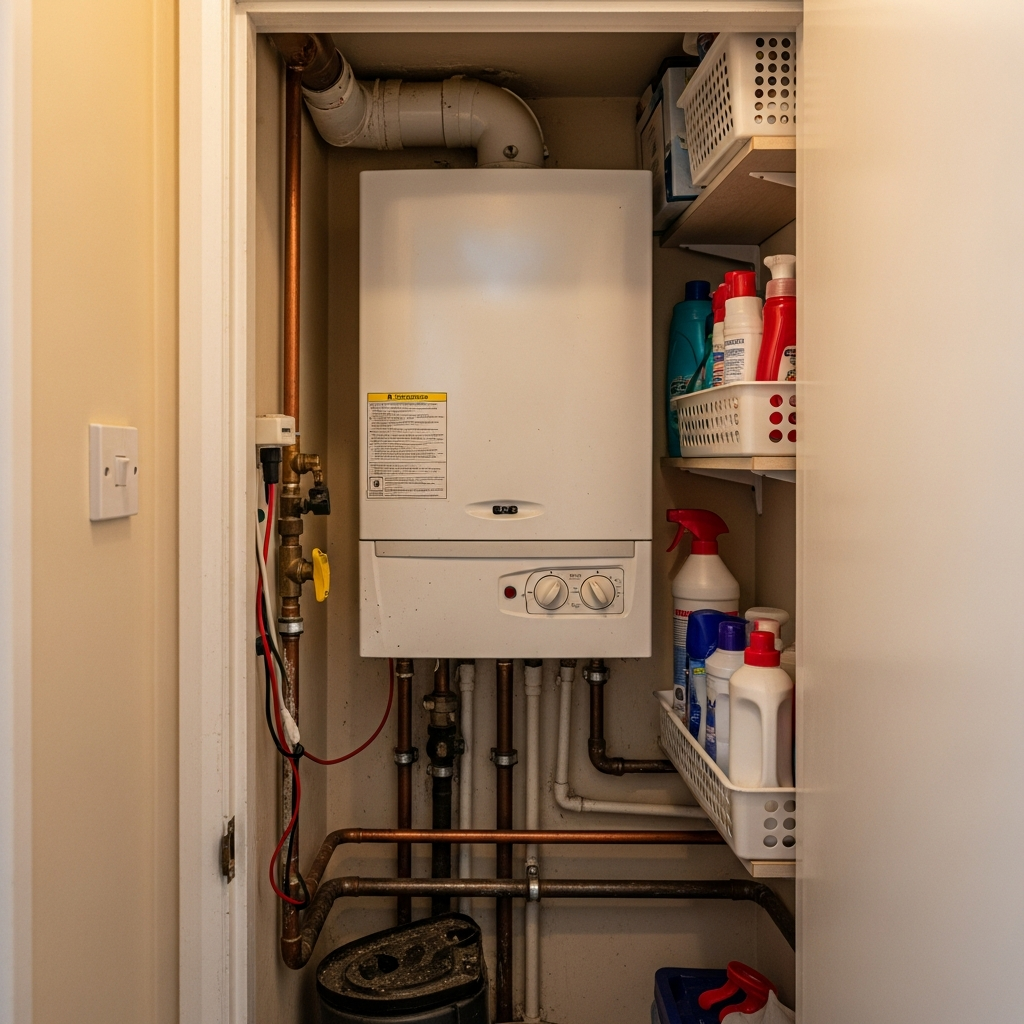
If you currently have a combi boiler, switching to a heat pump means finding space for a cylinder. This can be a deciding factor in smaller properties where space is at a premium.
The hot water from a heat pump is typically stored at 48-52°C, with periodic legionella cycles to 60°C. It is perfectly adequate for showers, baths, and domestic use.
Environmental Impact
If reducing your carbon footprint matters to you, the heat pump wins decisively:
- A gas boiler produces roughly 2.7 tonnes of CO₂ per year for a typical 3-bed home
- A heat pump produces roughly 0.9 tonnes (from the electricity used), and this figure falls every year as the UK grid becomes greener
- By 2035, when the grid is expected to be largely decarbonised, a heat pump will produce near-zero carbon emissions
Future-Proofing Your Home
The UK Government has announced that new gas boiler installations will be phased out from 2035 (though the exact policy is still evolving). This means:
- A gas boiler installed today will likely be the last one you can install in your home
- The resale value of your property may be affected if it relies on a heating system that is being phased out
- Heat pump installations benefit from grants now — these may not be available indefinitely
When a Gas Boiler Makes More Sense
There are situations where replacing your boiler with another gas boiler is the more practical choice:
- Very tight budget: If you cannot afford the upfront cost even after the grant, a boiler is cheaper now
- Poor insulation with no budget to improve it: A heat pump in a draughty house will underperform
- No outdoor space: Flats or properties with no suitable location for an outdoor unit (though ground source may be an option)
- Emergency replacement: If your boiler has failed in January and you need heat now, a boiler can be installed in a day versus a week for a heat pump
- You are selling soon: If you plan to move within 2-3 years, the payback period may not work in your favour
When a Heat Pump Makes More Sense
- Well-insulated home: Good insulation means the heat pump runs efficiently from day one
- You plan to stay long-term: The longer you stay, the more you benefit from lower running costs and no replacement needed
- You can access the BUS grant: £7,500 off the price makes the economics compelling
- Oil or LPG heating: If you are on oil or LPG (not mains gas), a heat pump almost always saves money
- Environmental priority: If reducing your carbon footprint is important to you
- New build or major renovation: When you are already doing significant work, adding a heat pump is much less disruptive
Use our detailed heat pump vs gas boiler comparison for a full analysis, or check your home's suitability with our free tool.
The Verdict
For most UK homeowners with a reasonably well-insulated home, a heat pump is the better long-term investment. The BUS grant makes the upfront cost competitive, the running costs are comparable (and likely to improve), and you are future-proofing your home against the transition away from fossil fuels.
But a heat pump is not the right choice for everyone right now. If your home has poor insulation, limited outdoor space, or you need an emergency replacement, a new boiler may be the more practical option today. The key is making an informed decision based on your specific circumstances rather than following blanket advice.
Get personalised quotes from MCS-certified installers using our free quote service, or estimate your costs with our calculator.
Frequently Asked Questions
Is a heat pump cheaper to run than a gas boiler?
At current energy prices, a well-installed heat pump in a well-insulated home costs roughly the same as gas to run, sometimes slightly less. With a time-of-use electricity tariff, savings can be more significant. The government's plan to rebalance energy levies should make heat pumps clearly cheaper to run in the coming years.
Will gas boilers be banned?
The government has indicated that new gas boiler installations will be phased out from 2035, though the exact mechanism is still being developed. Existing gas boilers will not be removed — you will be able to use and repair your current boiler for as long as it lasts.
Can I switch from a combi boiler to a heat pump?
Yes, but you will need to install a hot water cylinder, which requires space. In a typical UK home, the cylinder goes in an airing cupboard or utility room. If space is very limited, consider whether this is feasible before committing.
What if I have an oil boiler rather than gas?
If you are on oil or LPG, a heat pump is almost always the better choice. Oil and LPG costs are higher and more volatile than gas, making the running cost savings from a heat pump more significant. You also qualify for the BUS grant.
Should I wait for heat pump prices to drop?
Prices are falling, but the BUS grant is available now and may not last indefinitely. Waiting means paying more for gas in the meantime and potentially missing out on the current grant. For most homeowners, the optimal time to switch is when your current boiler needs replacing.