Heat Pump vs Combi Boiler: Key Differences
Combi boilers heat over half of UK homes, but they only last 12-15 years. When yours needs replacing, a heat pump offers a 20-25 year lifespan, comparable running costs today, and future-proofing against the gas boiler phase-out. The biggest practical difference? You will need a hot water cylinder — and most homes can find space for one.
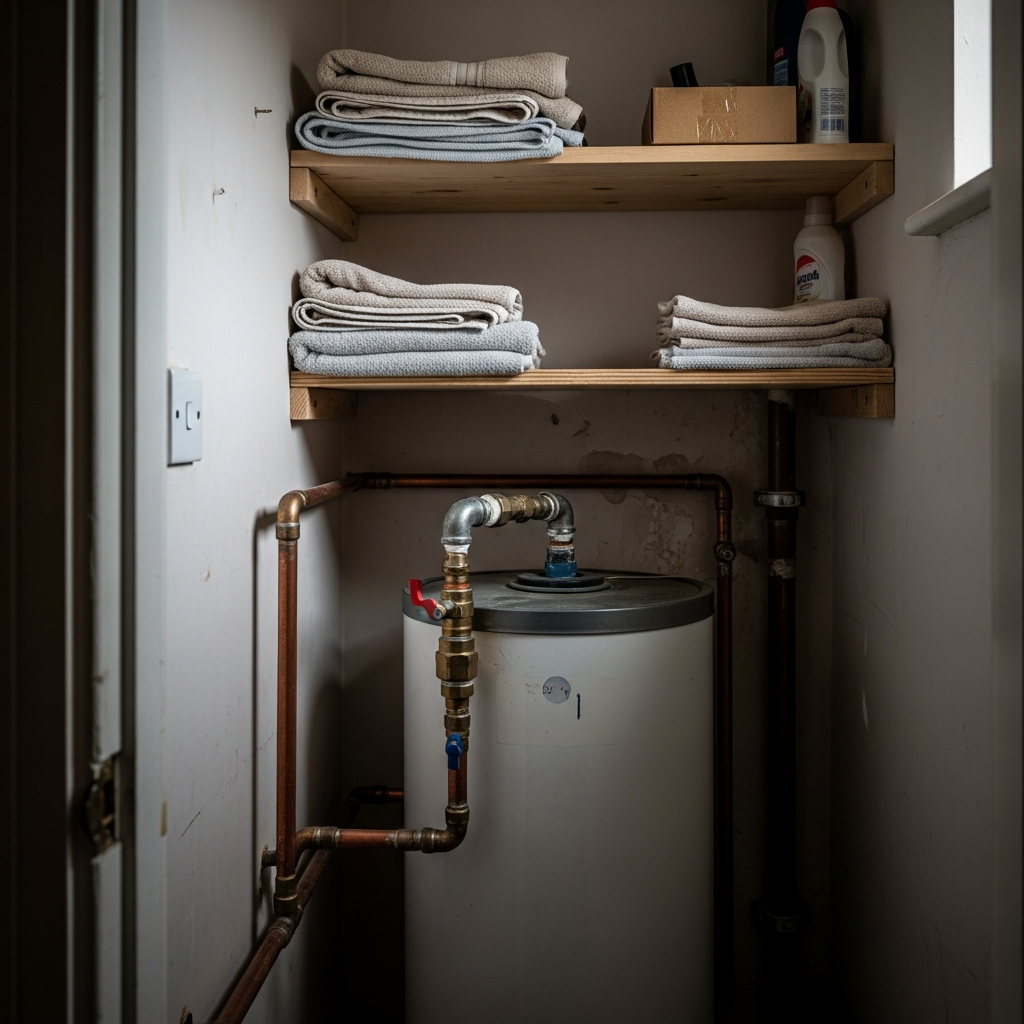
The combi boiler is the most popular heating system in the UK, installed in over half of British homes. It provides both central heating and instant hot water in a single compact unit, with no need for a hot water cylinder or cold water tank. It is simple, space-efficient, and well-understood by homeowners and plumbers alike.
A heat pump is a fundamentally different type of system. It does not burn fuel. It requires a hot water cylinder. It operates at lower temperatures. And it approaches heating in a completely different way. This guide explains every key difference so you can make an informed decision. For a broader overview of all heating comparisons, see our heat pump vs gas boiler pillar guide.
See what switching from your combi boiler would cost
Use the free calculatorNo email required. Instant results tailored to your property.
How Each System Works
Combi Boiler
A combi (combination) boiler heats water on demand. When you turn on a hot tap, the boiler fires up and heats water directly from the mains as it flows through a heat exchanger. For central heating, it heats water to 60-80°C and circulates it through your radiators.
Heat Pump
A heat pump extracts heat from the outside air (or ground) and transfers it into your home. It operates like a refrigerator in reverse — compressing and expanding refrigerant to move heat from a cold source to a warm destination. For a deeper explanation, see our guide on how air source heat pumps work.
| Feature | Combi Boiler | Heat Pump |
|---|---|---|
| Hot water method | Instant, on demand | Stored in cylinder |
| Fuel | Mains gas | Electricity |
| Flow temperature | 60-80°C | 35-50°C |
| Heating approach | Cycles on and off | Runs continuously at low intensity |
| Indoor footprint | Wall-mounted unit only | Outdoor unit + indoor cylinder |
| Efficiency | 88-92% | 250-350% (COP 2.5-3.5) |
The Hot Water Cylinder Question
This is the single biggest practical difference between the two systems and the one that concerns most homeowners considering the switch.
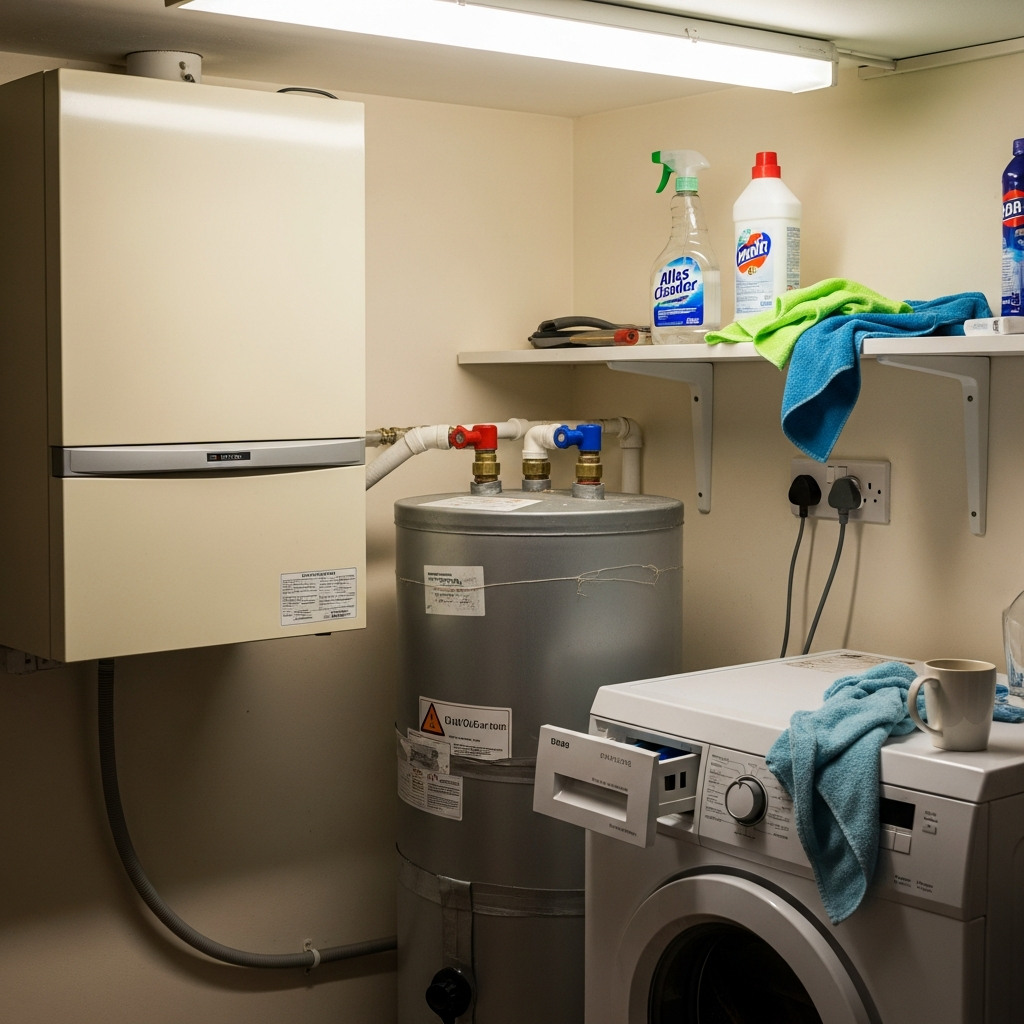
A combi boiler can heat water to 55°C in seconds. A heat pump heats water more slowly — it takes time to raise the temperature of the water in the cylinder to the required level (typically 50-55°C). Storing hot water in a cylinder means you always have a ready supply available when you need it.
A typical hot water cylinder is 500mm to 600mm in diameter and 1,200mm to 1,800mm tall. Common locations include airing cupboards, utility rooms, under-stair cupboards, and bedroom cupboards. Modern slimline cylinders are more compact than their predecessors.
Installation Cost Comparison
Combi Boiler
Like-for-like replacement
£2,500 - £4,500
Heat Pump (Before Grant)
Including cylinder + modifications
£10,000 - £14,000
Replacing a combi boiler with a heat pump tends to cost more than replacing a system boiler, because you need to add a hot water cylinder and potentially reroute pipework. This adds £1,000 to £2,000 to the installation. For full pricing detail, see our heat pump cost guide.
Running Costs
For a typical three-bedroom semi with 12,000 kWh annual heat demand:
- Gas combi boiler (92% efficiency): Approximately £989 per year
- Heat pump (COP 3.0): Approximately £980 per year (standard rate)
Running costs are effectively equal at current energy prices. With a heat pump electricity tariff, the heat pump becomes cheaper by £200 to £400 per year. Pairing with solar panels can reduce costs further by generating free daytime electricity. See our running costs guide for detailed calculations.
Heating Performance
Combi Boiler Strengths
- Fast warm-up: Heats radiators to high temperatures quickly
- Responsive: Great for homes where people come and go at irregular times
- Simple controls: Most homeowners are familiar with boiler thermostats
Heat Pump Strengths
- Consistent warmth: Runs continuously at low intensity, maintaining a steady temperature
- Even heat distribution: Less temperature variation between rooms
- Summer cooling: Some models can reverse to provide cooling
- Quieter operation: No boiler ignition noise
Check if your property suits a heat pump
Free suitability checkerTakes 60 seconds. Covers space, insulation, and existing system.
Hot Water Delivery
Combi boiler: Unlimited hot water on demand, but flow rate is limited. A typical 28 kW combi delivers 10-12 litres per minute. Running two showers simultaneously reduces flow rate and temperature.
Heat pump: Hot water is stored in the cylinder and delivered at mains pressure (with an unvented cylinder). A 200-litre cylinder provides enough hot water for two to three consecutive showers. The flow rate is not limited by the heat pump's output — it is limited by your mains water pressure, which is typically higher than a combi boiler can deliver.
For households with multiple bathrooms, the heat pump with a cylinder often delivers better hot water performance than a combi boiler.
Space Requirements
Combi boiler: Extremely compact. A wall-mounted unit takes up minimal space — typically 700mm x 400mm x 300mm. No cylinder, no tank.
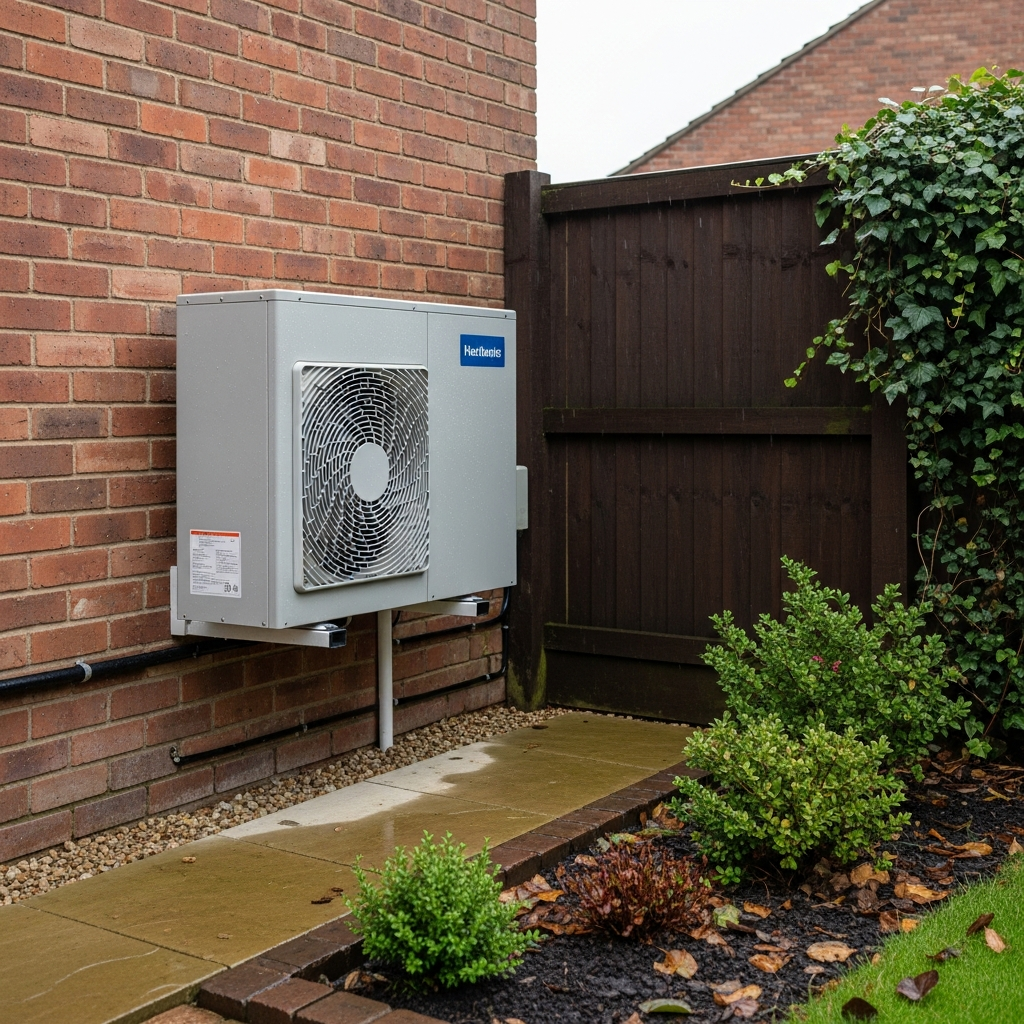
Heat pump: Requires an outdoor unit (approximately 1,000mm x 400mm x 750mm), plus an indoor hot water cylinder (approximately 500-600mm diameter x 1,200-1,800mm tall), plus wall-mounted controls.
Radiators
A combi boiler runs at high flow temperatures (60-80°C), which means standard radiators work efficiently. A heat pump runs at lower flow temperatures (35-50°C), which means radiators need to be correctly sized to deliver the same heat output.
In many homes, existing radiators are already oversized for the room and will work perfectly well at lower flow temperatures. In some cases, a few radiators may need upgrading. For a detailed guide, see do I need new radiators for a heat pump?
Lifespan and Reliability
Over a 25-year period, you would likely need two combi boilers (£5,000-£7,600 total) versus one heat pump (£2,500-£6,500 after grant). The total cost of ownership over this period increasingly favours the heat pump. Read more in our lifespan comparison.
Our Verdict
If you currently have a combi boiler and it is working well, there is no urgent need to switch — the running cost savings at current energy prices are minimal. However, when your combi boiler reaches end of life (typically 12-15 years), a heat pump is worth serious consideration.
The main barrier for combi boiler homes is finding space for the hot water cylinder. If you can accommodate one — and most homes can — the heat pump offers a longer-lasting, lower-maintenance, lower-carbon system with running costs that are equal today and expected to improve.
For homes with multiple bathrooms, the heat pump with a cylinder actually provides better hot water performance than a combi boiler — higher pressure and the ability to run multiple taps simultaneously.
Use our suitability checker to assess your property, or get quotes from MCS-certified installers to see what the switch would involve for your specific home.
Compare your combi boiler costs with a heat pump
Use the free calculatorSee running costs side by side. No email required.
Frequently Asked Questions
Can a heat pump replace a combi boiler directly?
Not directly — a heat pump requires a hot water cylinder, which a combi boiler does not use. Your installer will need to find a suitable location for the cylinder and route pipework to connect it. This adds some cost and complexity but is standard practice.
Will I lose cupboard space for the hot water cylinder?
You will need to allocate space for a cylinder, typically in an airing cupboard, utility room, under stairs, or a built-in wardrobe. Modern slimline cylinders are more compact than old-style tanks and include useful drying space on top for towels and clothes.
Is the hot water from a heat pump as hot as from a combi boiler?
Yes. Hot water in the cylinder is stored at 50-55°C — the same temperature as a combi boiler delivers. The difference is that it is stored rather than heated on demand, but the temperature at the tap is identical.
Can I run multiple showers with a heat pump?
Yes — and often better than with a combi boiler. An unvented hot water cylinder delivers water at mains pressure, so flow rate is not limited by the heat pump. You can run multiple showers simultaneously, provided the cylinder has sufficient stored hot water.
How long does the switch from combi boiler to heat pump take?
A typical conversion takes three to five days, including installing the outdoor unit, hot water cylinder, connecting pipework, and commissioning. This is longer than a combi boiler swap (usually one day) but the work is straightforward for experienced installers.
Should I wait until my combi boiler fails before switching?
There is no financial penalty for switching before your boiler fails, but the case is strongest when your boiler needs replacing anyway. If your combi boiler is over 10 years old, it is worth getting heat pump quotes now so you are prepared when the time comes. The BUS grant is available until 2028 — waiting too long risks missing out.
About this guide: This article is part of our comparison and decision hub. If your combi boiler needs replacing, a heat pump combined with solar panels can deliver both heating and hot water using renewable energy. The Boiler Upgrade Scheme provides £7,500 towards installation. Our suitability checker confirms whether your home is ready.