Heat Pump Hot Water Cylinder Installation
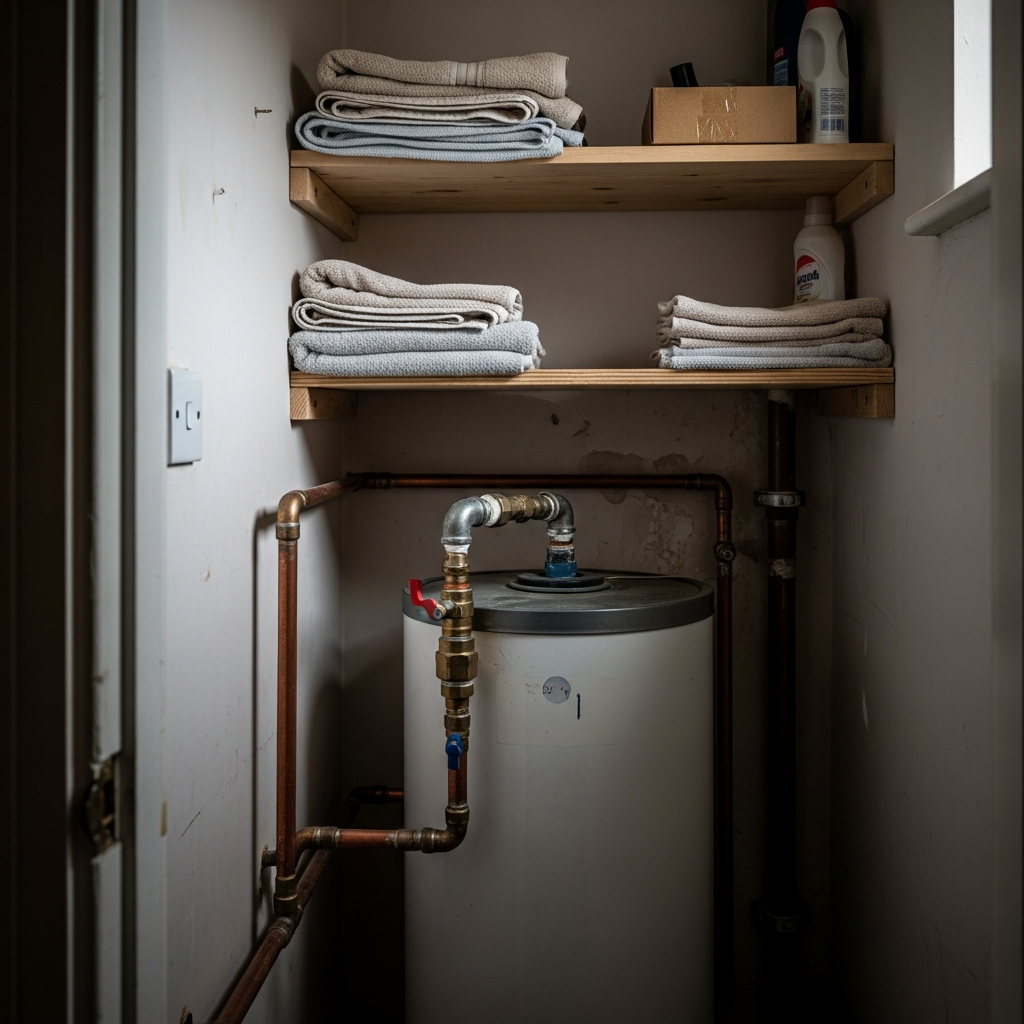
If you are switching from a combi boiler to a heat pump, you will need a hot water cylinder — and finding the right one matters more than you might think. Heat pumps heat water more slowly than boilers, so they need a well-insulated cylinder with a large internal coil to work efficiently. Get the cylinder wrong and you will either run out of hot water or waste energy reheating it.
This guide covers everything about the hot water cylinder side of a heat pump installation: sizing, types, placement, costs, and what to expect on installation day.
Get a complete installation quote including cylinder
Get free quotes from MCS-certified installersQuotes include the cylinder, pipework, and all components — fully itemised.
Why Heat Pumps Need a Cylinder
A combi boiler heats water instantly on demand — turn the tap and hot water arrives in seconds. A heat pump cannot do this. It heats water more gradually, using lower temperatures (typically 45-55°C compared to a boiler's 60-80°C). To provide hot water when you need it, the heat pump heats a cylinder of stored water during off-peak times, ready for use throughout the day.
The cylinder is not optional — it is a fundamental part of the system. Without it, you would need to wait a long time for hot water every time you turned on a tap. For more on how this fits into the overall installation process, see our complete guide.
Cylinder Sizing Guide
| Household size | Bathrooms | Recommended cylinder | Approximate dimensions |
|---|---|---|---|
| 1-2 people | 1 | 150 litres | 55cm wide x 130cm tall |
| 3-4 people | 1-2 | 200-210 litres | 55cm wide x 160cm tall |
| 4-5 people | 2-3 | 250 litres | 60cm wide x 170cm tall |
| 5+ people | 3+ | 300 litres | 60cm wide x 190cm tall |
Your installer will size the cylinder based on the number of people in your household, the number of bathrooms, and your hot water usage patterns. Oversizing wastes energy (heating more water than you use). Undersizing means you run out of hot water at peak times.
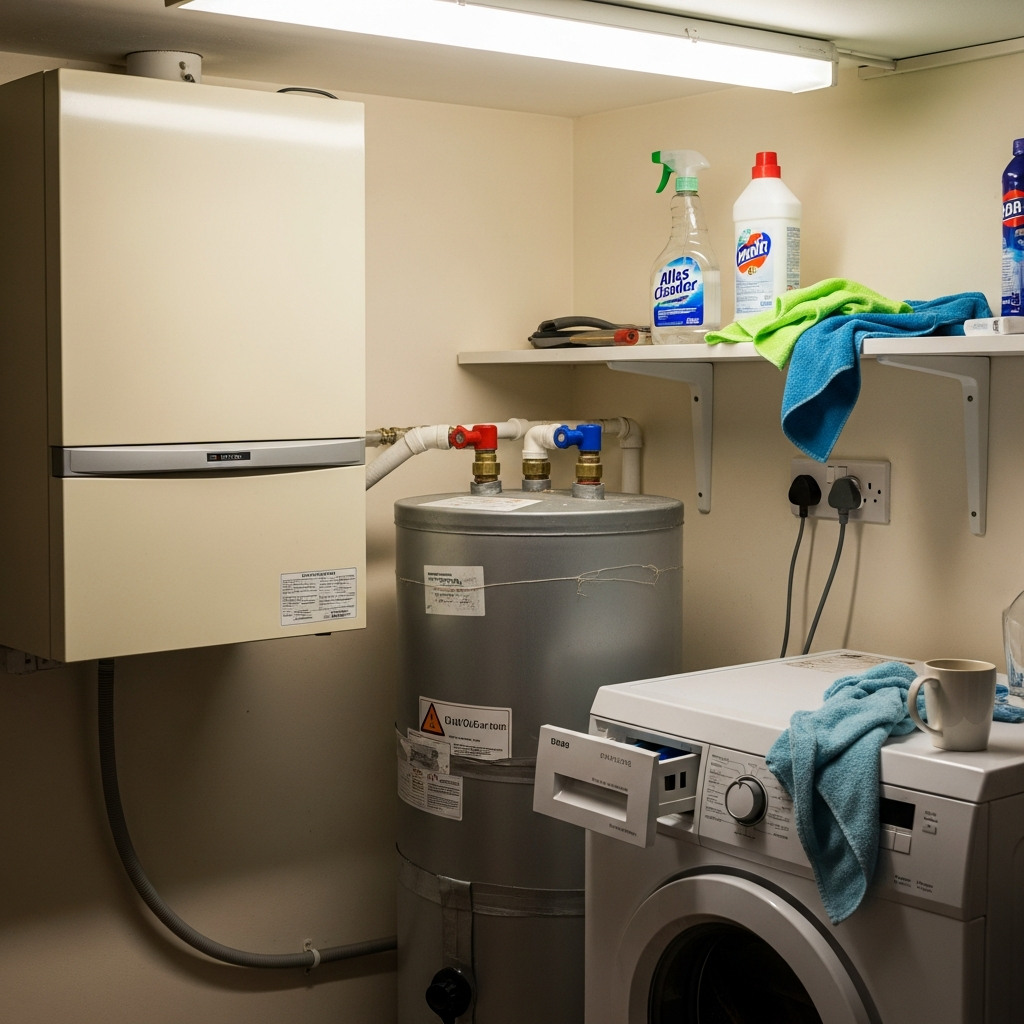
Types of Cylinder
Unvented cylinders (most common for heat pumps)
Fed directly from the mains water supply, providing strong, consistent water pressure at every tap. These are the standard choice for heat pump installations. They require a qualified installer (G3 certificate) and a pressure relief valve with a tundish and discharge pipe.
Vented cylinders
Fed from a cold water tank in the loft, using gravity pressure. Less common with modern heat pump installations but still used in some older properties where converting to unvented is impractical.
Heat pump-specific cylinders
These have oversized internal coils (sometimes two coils) designed to work efficiently at lower flow temperatures. A standard boiler cylinder's coil is often too small for a heat pump to transfer heat effectively. Always insist on a heat pump-compatible cylinder — not a repurposed boiler cylinder.
Where to Put the Cylinder
Common locations include:
- Airing cupboard: The most traditional location, ideal if the existing cupboard is large enough
- Utility room: Excellent choice with good access for installation and maintenance
- Garage: Works well if it is connected to the house and pipework can be insulated properly
- Under stairs: Possible for smaller cylinders (150-200 litres) if there is sufficient height
- Bedroom: Last resort, but sometimes necessary in smaller homes. The cylinder is well-insulated and produces very little noise
If you currently have a combi boiler and no cylinder, finding space is often the biggest challenge. Your installer will discuss options during the survey visit.
The Installation Process
Cylinder installation is part of the overall heat pump installation and typically happens on day two of a standard installation:
- The old cylinder (if present) is drained and removed
- The new cylinder is manoeuvred into position — this can be tricky in tight spaces as they are heavy (40-60kg empty)
- Hot and cold water connections are made
- The coil is connected to the heat pump circuit
- An immersion heater backup is fitted (for emergency use and legionella cycles)
- Pressure relief valve, tundish, and discharge pipework are installed (unvented only)
- The system is filled, pressurised, and tested
Want to see what a full installation costs including the cylinder?
Calculate your costsThe calculator includes cylinder, heat pump, and all installation costs.
Cylinder Costs
These costs are typically included in your overall heat pump installation quote. The cylinder cost forms part of the total that the £7,500 BUS grant is applied against.
If you are combining your heat pump with solar panels, a solar-compatible cylinder with a second coil can heat water using both the heat pump and solar thermal energy — maximising your renewable energy use.
Frequently Asked Questions
What size hot water cylinder do I need for a heat pump?
For a 1-2 person household, 150 litres is usually sufficient. For 3-4 people, 200-210 litres is typical. For larger families of 5+, 250-300 litres may be needed. Your installer will size the cylinder based on your household's hot water demand.
Can I keep my existing hot water cylinder with a heat pump?
Possibly, but only if it has a large enough internal coil to work efficiently at the lower temperatures a heat pump produces. Most existing cylinders need replacing with a heat pump-specific model. See our guide on whether you need a new cylinder.
Where does the hot water cylinder go?
The most common locations are an airing cupboard, utility room, garage, or under-stairs cupboard. The cylinder needs a floor area of approximately 60cm x 60cm and height clearance of 160-190cm depending on size.
How much does a heat pump hot water cylinder cost?
A heat pump-compatible unvented cylinder typically costs £800-£1,500 for the unit itself, plus £300-£600 for installation. This is normally included in your heat pump installation quote.
Get a complete quote including your hot water cylinder
Request free quotesMCS-certified installers will size and specify the right cylinder for your home.
About Hot Water Cylinders for Heat Pumps
Hot water cylinders are an essential component of heat pump heating systems in the UK. Unlike combi boilers that heat water on demand, heat pumps require stored hot water to deliver consistent supply at the lower operating temperatures they use. Heat pump-specific cylinders feature oversized coils for efficient heat transfer and high levels of insulation to minimise standby losses. The cylinder cost is covered by the £7,500 BUS grant as part of the overall installation, and homeowners who also install solar thermal panels can use dual-coil cylinders to harness both energy sources.