Home Heat Pump Guide

Heat Pump Buffer Tank: Do You Need One?
A buffer tank is one of those components that many homeowners have never heard of until their heat pump installer mentions it. Some installers always include one; others rarely do. The confusion is understandable — whether you need a buffer tank depends on your specific system design, and there are legitimate arguments on both sides.

This guide explains what a buffer tank does, when you genuinely need one, when you can avoid it, how much it costs, and what the alternatives are.

What Is a Buffer Tank?

A buffer tank is a simple insulated vessel — essentially a small water tank — that sits within the heating circuit between the heat pump and the radiators or underfloor heating. It stores a volume of heated water (typically 30-100 litres) that acts as a thermal reserve.

Its primary purpose is to prevent the heat pump from short cycling — repeatedly switching on and off in rapid succession. Short cycling is the biggest enemy of heat pump efficiency and longevity, and a buffer tank is one of the most reliable ways to prevent it.

How It Works

Without a buffer tank, the heat pump sends heated water directly to the heating circuit. If the demand is low — for example, only one room is calling for heat — the small volume of water in the circuit heats up quickly, the thermostat is satisfied, and the heat pump switches off. Minutes later, the water cools, the thermostat calls again, and the heat pump restarts. This cycle can repeat dozens of times per hour.

With a buffer tank, the heat pump heats the water in the tank as well as the heating circuit. The additional volume of water means it takes longer for the temperature to drop after the heat pump switches off, and longer for it to rise again when the pump restarts. This smooths out the on/off cycles and allows the heat pump to run for longer, steadier periods.

When You Need a Buffer Tank

A buffer tank is most beneficial — and sometimes essential — in these situations:

Multi-Zone Systems

If your heating system is divided into multiple zones with motorised valves, there will be times when only one small zone is calling for heat while the others are satisfied. This dramatically reduces the volume of water flowing through the system, leading to short cycling. A buffer tank provides the additional volume needed to keep the heat pump running smoothly.

Systems with Smart TRVs

When smart thermostatic radiator valves close off individual radiators as rooms reach temperature, the flow rate through the system drops. If enough TRVs close simultaneously, the heat pump can lose its minimum required flow rate. A buffer tank acts as a bypass, ensuring the heat pump always has somewhere to send its heat.

Heat Pumps Without Modulation

Older or simpler heat pumps that cannot modulate their output (i.e., they run at full capacity or not at all) are particularly prone to short cycling. A buffer tank absorbs the excess capacity when demand is low. Modern inverter-driven heat pumps can modulate down to 30-50% of their maximum output, making a buffer tank less critical — but not always unnecessary.

Defrost Cycles

When an air source heat pump enters a defrost cycle in cold weather, it temporarily reverses its operation to melt ice off the outdoor unit. During this period, it draws heat from the heating circuit instead of adding it. A buffer tank provides a thermal reserve so that rooms do not cool noticeably during the 5-10 minute defrost cycle.

Oversized Heat Pumps

If the heat pump is slightly oversized for the property's heat demand (which sometimes happens due to equipment sizing steps), a buffer tank helps absorb the excess output. This is particularly relevant in spring and autumn when heating demand is low but the heat pump's minimum output may still exceed what the house needs.

When You Might Not Need a Buffer Tank

A buffer tank is not always necessary. You may be able to avoid one if:

  • You have a large heating circuit: If your home has many radiators or extensive underfloor heating, the total volume of water in the system may already be large enough to prevent short cycling without a buffer tank.
  • You have a modern inverter heat pump: Variable-speed heat pumps can modulate their output down to match low demand, reducing the risk of short cycling.
  • You have a single-zone system: If all your radiators are on one circuit with no zone valves, the full system volume is always available, reducing the need for additional buffer volume.
  • Your heat pump has a built-in buffer: Some heat pump models include an internal buffer vessel, eliminating the need for an external one.
  • You have a large hot water cylinder: In some system designs, the hot water cylinder can serve as a partial thermal store, reducing the need for a separate buffer tank for space heating.

Buffer Tank vs Low-Loss Header

A low-loss header (also called a hydraulic separator) is sometimes used as an alternative to a buffer tank. It is a much smaller device that separates the heat pump circuit from the heating circuit, allowing them to run at different flow rates.

Key Differences

  • Volume: A buffer tank stores 30-100+ litres of water; a low-loss header stores only 5-15 litres
  • Thermal storage: A buffer tank provides meaningful thermal storage; a low-loss header provides almost none
  • Short cycling protection: A buffer tank significantly reduces short cycling; a low-loss header offers limited protection
  • Space: A low-loss header takes up very little space; a buffer tank needs more room
  • Cost: A low-loss header is cheaper — typically £100-£250 vs £300-£700 for a buffer tank

A low-loss header is sufficient when the main concern is flow rate mismatch between the heat pump and the heating circuit. A buffer tank is needed when short cycling prevention and defrost protection are priorities.

Buffer Tank Sizes

The appropriate buffer tank size depends on the heat pump capacity and the system design:

  • Small systems (5-8kW heat pump): 30-50 litres
  • Medium systems (8-12kW heat pump): 50-80 litres
  • Large systems (12-16kW heat pump): 80-100 litres

A common rule of thumb is 10-15 litres per kW of heat pump capacity, though this varies depending on the manufacturer's recommendations and the specific system design.

Physical Size

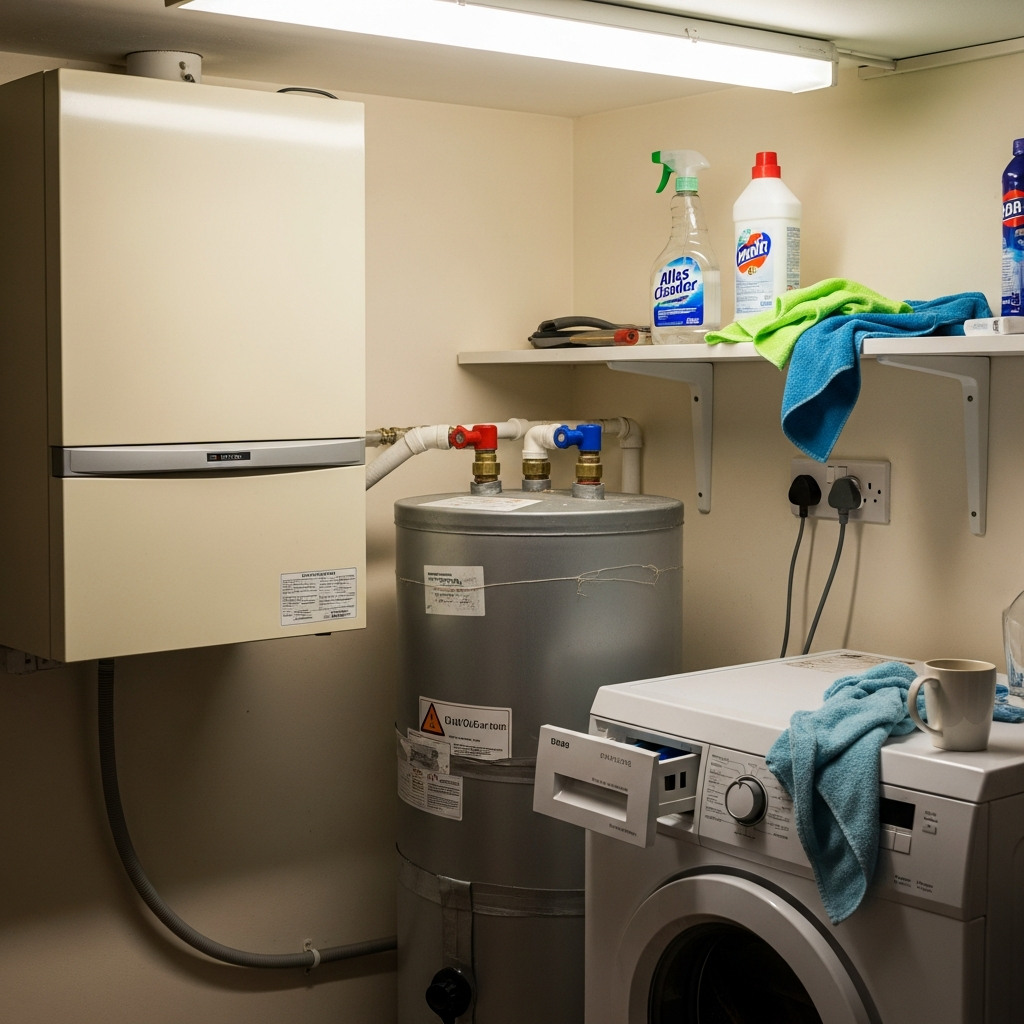
A 50-litre buffer tank is typically about 400mm in diameter and 600mm tall — roughly the size of a large microwave oven. An 80-litre tank might be 450mm by 750mm. They are significantly smaller than a hot water cylinder and can usually be wall-mounted or floor-standing in a utility room, garage, or airing cupboard.

How Much Does a Buffer Tank Cost?

  • Buffer tank (30-50L): £200-£400
  • Buffer tank (50-80L): £300-£550
  • Buffer tank (80-100L): £450-£700
  • Installation labour: £200-£400

Total installed cost is typically £400-£1,000 depending on size and complexity. This is usually included in the overall heat pump installation quote and covered by the BUS grant.

When considering the cost, weigh it against the potential savings from avoiding short cycling. A heat pump that short cycles excessively uses 10-20% more electricity and puts additional strain on the compressor, which could shorten its lifespan and lead to expensive repairs.

Installation Considerations

Location

The buffer tank is installed indoors, as close to the heat pump's internal components as practical. Common locations include:

  • Utility room (most common)
  • Airing cupboard
  • Garage (must be frost-protected)
  • Under the stairs

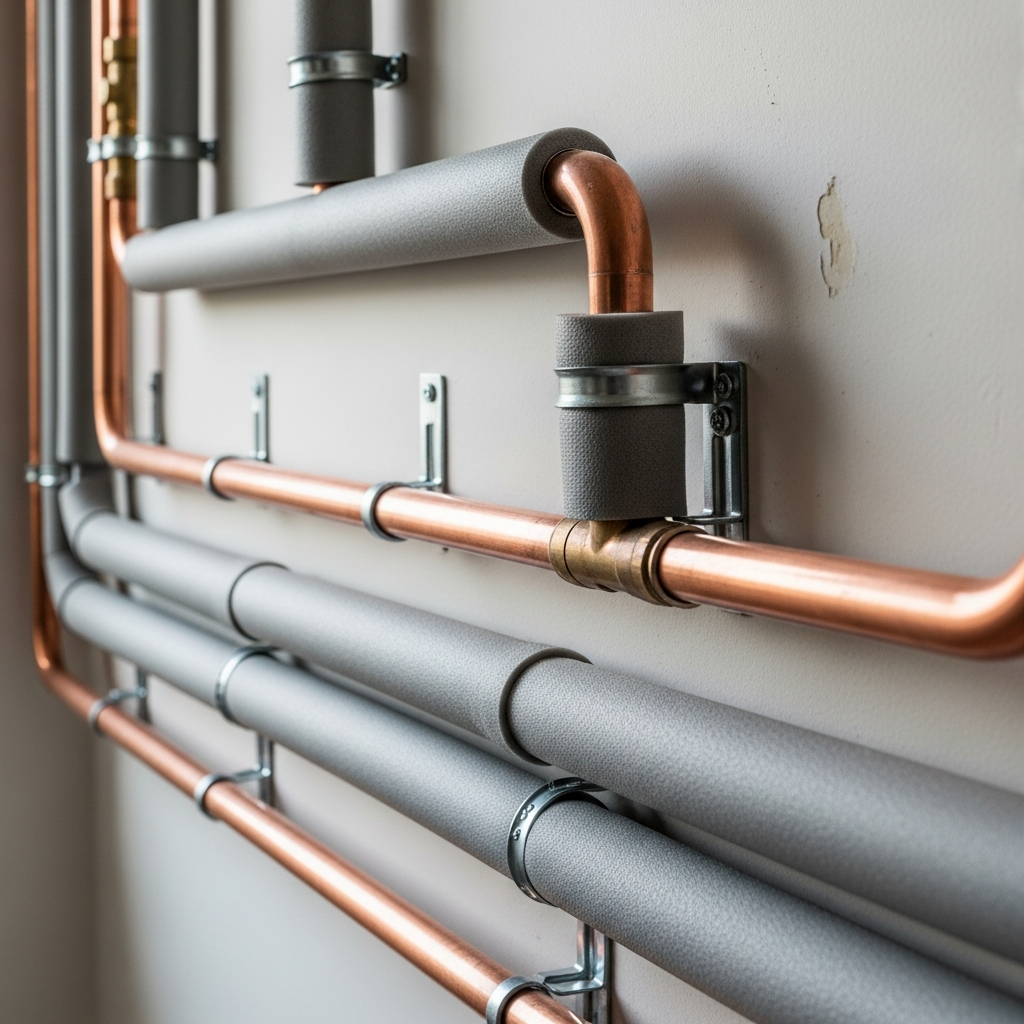
Pipework

The buffer tank needs to be plumbed into the heating circuit correctly. There are two main configurations:

  • Two-pipe (series): All water flows through the buffer tank. Simpler but adds resistance to the circuit.
  • Four-pipe (parallel): The heat pump circuit and the heating circuit connect separately to the buffer tank. More flexible and often preferred for larger systems.

Your installer will choose the appropriate configuration based on your system design during commissioning.

Insulation

Buffer tanks should be well insulated to minimise heat loss. Most come with factory-fitted insulation, but check that it is adequate — at least 50mm of insulation or equivalent.

Do Major Heat Pump Brands Recommend Buffer Tanks?

Manufacturer recommendations vary:

  • Vaillant: Generally recommends a buffer tank or hydraulic separator for systems with multiple zones
  • Daikin: Some models have a built-in buffer volume; external buffer recommended for multi-zone systems
  • Mitsubishi: Often recommends a low-loss header as minimum, with a buffer tank for systems with smart TRVs or zoning
  • Samsung: Recommends a buffer tank for systems where minimum flow rate may not be maintained
  • Grant: Includes guidance on when a buffer tank is needed based on system design

Your MCS-certified installer should follow the manufacturer's installation guidelines, which will specify when a buffer tank is required for your particular heat pump model and system configuration.

Frequently Asked Questions

What is the difference between a buffer tank and a hot water cylinder?

A hot water cylinder stores water for taps, showers, and baths. A buffer tank stores water for the space heating circuit (radiators and underfloor heating). They serve different purposes and are plumbed into different parts of the system. Some homes need both.

Does a buffer tank waste energy?

A well-insulated buffer tank loses very little heat — typically less than 0.5kWh per day. The energy saved by preventing short cycling far outweighs these small standing losses. A buffer tank actually improves overall system efficiency in most installations where it is needed.

Can I add a buffer tank to an existing heat pump system?

Yes. If your heat pump is short cycling, adding a buffer tank retrospectively is a common and effective solution. An installer can typically add one in half a day. The cost is £400-£1,000 including labour.

How do I know if my heat pump is short cycling?

Check the heat pump's run times on its controller or monitoring app. If the compressor is starting and stopping more than 4-6 times per hour during mild weather, it is likely short cycling. You may also hear frequent startup and shutdown sounds from the outdoor unit.

Is a buffer tank included in the BUS grant?

Yes. The BUS grant covers the complete heating system, including buffer tanks, pipework, controls, and all ancillary components needed for a proper installation.

Where does the buffer tank go?

Typically in a utility room, airing cupboard, or garage. A 50-litre buffer tank is roughly the size of a large microwave, so it does not take up much space. It can be wall-mounted or floor-standing.

Not sure whether your system needs a buffer tank? Get free quotes from MCS-certified installers who will design the right system for your home. Read our cost guide for realistic installation prices, or check the suitability checker to see if a heat pump suits your property.