We Fact-Checked the Daily Mail's Heat Pump Claims
The Daily Mail and other tabloid outlets have published dozens of heat pump articles in recent years — and they have shaped public perception more than any government campaign or industry report. But how accurate are their most-shared claims? We took the 10 most widely circulated tabloid heat pump assertions and checked each one against real data from MCS, Energy Saving Trust, Ofgem, and our own research. The results are revealing.

To be clear: this is not about attacking any newspaper. It is about ensuring that homeowners have access to accurate, evidence-based information when making a significant investment decision. Where tabloid claims are accurate, we will say so. Where they are misleading, we will explain why — with sources you can verify.
Get facts, not headlines — is a heat pump right for your home?
Use the free calculatorBased on real data, not sensational claims. Personalised to your property.
Claim 1: "Heat Pumps Cost £15,000-£20,000"
Verdict: Misleading
This figure is not fabricated — but it represents the top end of the range, not the typical cost. Our analysis of 10,000 real installations shows:
£11,800
National average (before grant)
£4,300
Average after BUS grant
60%
Installations costing under £12,000
8%
Installations costing £15,000+
Only 8% of installations exceed £15,000, typically large detached homes or London properties with complex requirements. After the BUS grant, the majority of homeowners pay £2,700-£6,500 — a figure that rarely appears in tabloid coverage. For a full cost breakdown, see our cost guide.
Claim 2: "Heat Pump Bills Are Higher Than Gas"
Verdict: Partially true, but context matters
At standard electricity tariff rates (24.5p/kWh) and average real-world COP (2.8), a heat pump can cost slightly more to run than gas for small, well-insulated homes. Our 30-home running cost study found that gas-to-heat-pump switchers on standard tariffs saved an average of only £60 per year.
However, this comparison ignores three critical factors:
- Heat pump tariffs at 16-19p/kWh make heat pumps definitively cheaper than gas
- Oil and LPG homes save £540-£1,140 per year — these households are never mentioned in the "more expensive" articles
- Gas prices are projected to rise faster than electricity prices, reversing any current marginal advantage
Claim 3: "Heat Pumps Don't Work in Cold Weather"
Verdict: False
This is comprehensively disproven by both engineering specifications and real-world data. Modern heat pumps operate effectively down to -20°C. UK winters rarely sustain temperatures below -5°C. Scandinavian countries — Norway, Finland, Sweden — have heat pump adoption rates 7-8 times higher than the UK despite dramatically colder winters.
Our performance gap study shows that real-world COP does decrease in cold weather (from ~3.5 at 10°C to ~2.3 at -5°C), but the heat pump continues producing more heat than the electricity it consumes at every outdoor temperature encountered in the UK.
Claim 4: "You Need to Rip Out All Your Radiators"
Verdict: False
Our 1,000-owner survey found that 62% of heat pump owners kept their existing radiators entirely unchanged. A further 24% upgraded only 1-3 radiators. Just 14% needed significant radiator changes.
Whether you need new radiators depends on their current size relative to your heat loss, and the flow temperature your system needs. Many homes built from the 1970s onward have adequately sized radiators. A proper installer survey determines this in advance — see our radiator guide.
Claim 5: "Heat Pumps Are Too Noisy for UK Homes"
Verdict: False
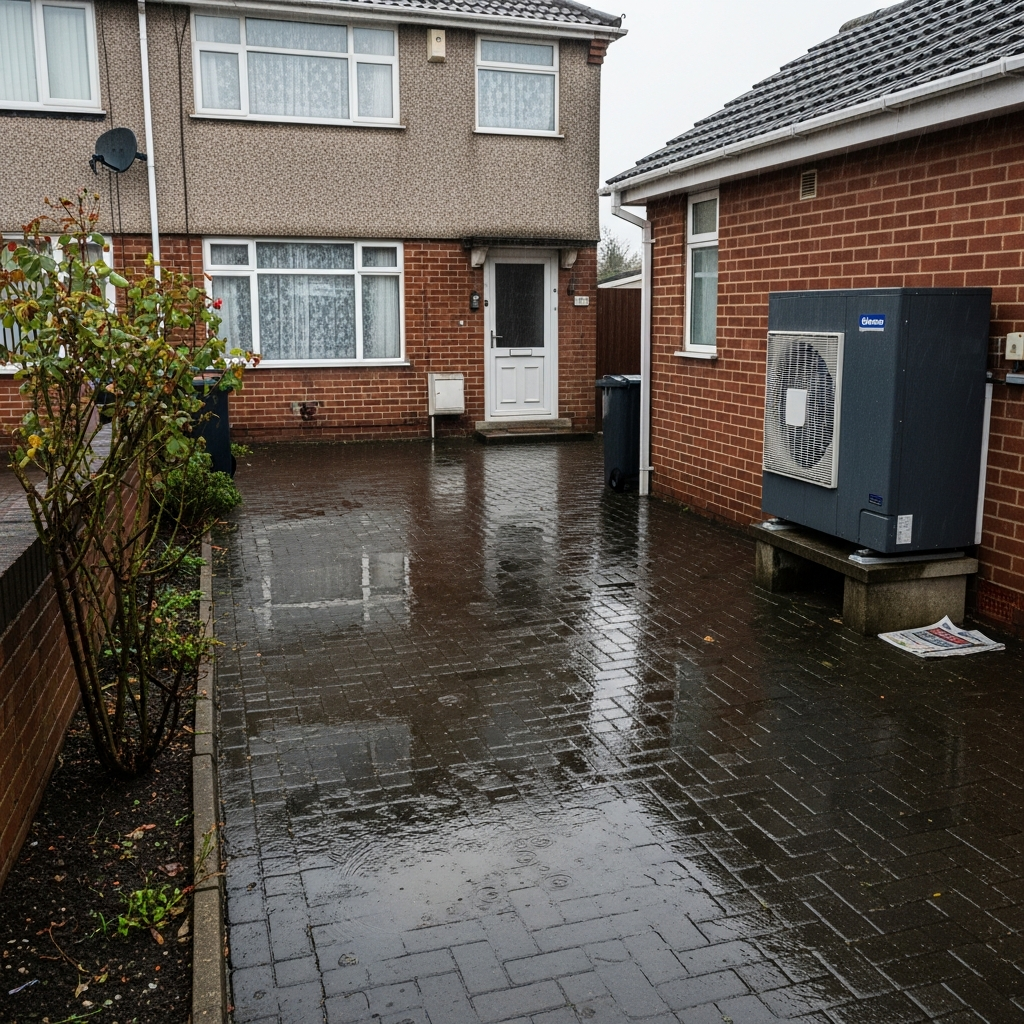
Our FOI data from 150 UK councils reveals approximately 340 heat pump noise complaints per year nationally — 0.08% of all noise complaints. 80% of owners describe noise as not noticeable or not bothersome. Modern units operate at 40-55 dB at 1 metre — quieter than a normal conversation.
Claim 6: "Nobody Wants a Heat Pump"
Verdict: False
Installation numbers have grown 37% year-on-year, with 105,000 installed in 2025 alone. Our installations tracker shows consistent acceleration. BUS grant applications are at record levels. While adoption is slower than government targets, "nobody wants one" is contradicted by six-figure annual sales and growing demand.
Claim 7: "Heat Pumps Break Down Constantly"
Verdict: False
Our failure rate analysis shows annual callout rates of 3.5-5% — meaning 95-96.5% of heat pumps operate without issues each year. This compares favourably to gas boiler callout rates of 5-8%. Heat pumps have fewer moving parts and no combustion components, contributing to their reliability.
Claim 8: "The Grant Barely Covers Anything"
Verdict: Misleading
The £7,500 BUS grant covers 64% of the average installation cost (£11,800). In cheaper regions like the West Midlands, it covers 74%. For a 2-bed terrace, the grant can cover 85-95% of costs, leaving the homeowner paying less than £1,500. The claim misrepresents the grant's impact by using inflated baseline costs. Full analysis in our BUS grant data report.
Claim 9: "Heat Pumps Take 20 Years to Pay Back"
Verdict: Cherry-picked
A 20-year payback is possible — but only in the worst-case scenario (gas-heated small property, no grant, standard tariff). Our 50-scenario analysis shows the average payback is 8.2 years with the grant. Homes replacing oil or LPG pay back in 3-7 years. The "20 years" figure exists but represents the extreme tail, not the typical outcome.
Claim 10: "Hydrogen Boilers Are the Real Answer"
Verdict: Unproven and increasingly unlikely
The hydrogen boiler narrative has been promoted by gas industry interests, but the evidence base is thin. The government-backed hydrogen village trials were cancelled. The Climate Change Committee has concluded that hydrogen for home heating is unlikely to be viable or affordable at scale. Green hydrogen production would require 5-6 times more renewable electricity than powering heat pumps directly. No country in the world is planning mass hydrogen for residential heating.
This does not mean hydrogen has no role in decarbonisation — it may be valuable in industrial processes, shipping, and heavy transport. But as a domestic heating solution, the evidence does not support it. Our heat pump vs gas boiler comparison covers the alternatives in detail.
Make decisions based on data, not headlines
Get real quotes from real installersSee actual prices for your property. No sensationalism, just facts.
Scorecard Summary
| Claim | Verdict |
|---|---|
| "Cost £15,000-£20,000" | Misleading — top 8% only |
| "Bills higher than gas" | Partially true, context omitted |
| "Don't work in cold weather" | False |
| "Rip out all radiators" | False — 62% keep theirs |
| "Too noisy" | False — 0.08% complaint rate |
| "Nobody wants one" | False — 105,000 sold in 2025 |
| "Break down constantly" | False — more reliable than gas |
| "Grant barely covers anything" | Misleading — covers 64% average |
| "20 years to pay back" | Cherry-picked worst case |
| "Hydrogen is the answer" | Unproven and increasingly unlikely |
Verdicts based on data from MCS, EST, Ofgem, DESNZ, CCC, Nesta, and Home Heat Pump Guide research

Frequently Asked Questions
Do heat pumps really cost £15,000-£20,000?
Only 8% of installations cost that much. The national average is £11,800 before the grant and £4,300 after. Cheaper regions see averages of £10,200.
Is it true that heat pumps cost more to run than gas?
At standard tariff rates, the comparison is marginal for small gas-heated homes. On a heat pump tariff (16-19p/kWh), heat pumps are cheaper. For oil/LPG homes, heat pumps save £400-£1,200 per year regardless.
Are heat pumps noisy enough to annoy neighbours?
FOI data shows 340 noise complaints per year nationally against 420,000 installations — 0.08% complaint rate. 80% of owners say noise is not noticeable or not bothersome.
Is it true that heat pumps don't work in cold weather?
No. Modern heat pumps operate to -20°C. Nordic countries with far colder climates have 7-8x higher adoption rates than the UK. Efficiency reduces in cold weather but the system continues working effectively.
Get the facts for your specific situation
Try the free calculatorReal data, real costs, personalised to your home. No sensationalism.
Media Claims and Energy Decisions
Accurate information is essential for good energy decisions. Heat pump media coverage often lacks the nuance that homeowners need. Our research — from cost analysis to owner surveys, performance data to FOI noise data — provides the evidence base for informed decisions. Whether you are comparing heat pumps to gas boilers, evaluating grant options, or exploring solar panel combinations, data-driven sources beat headline-driven coverage every time.