The UK Heat Pump Performance Gap: Real-World COP vs Manufacturer Claims
Manufacturers say their heat pumps deliver a COP of 4.0 or higher. But what do UK homeowners actually get? We analysed real-world performance data from over 500 monitored installations across the UK and compared it to the specifications on the box. The performance gap is real — averaging 25-35% — but the story is more nuanced than the headlines suggest, and the best-installed systems come remarkably close to their rated efficiency.
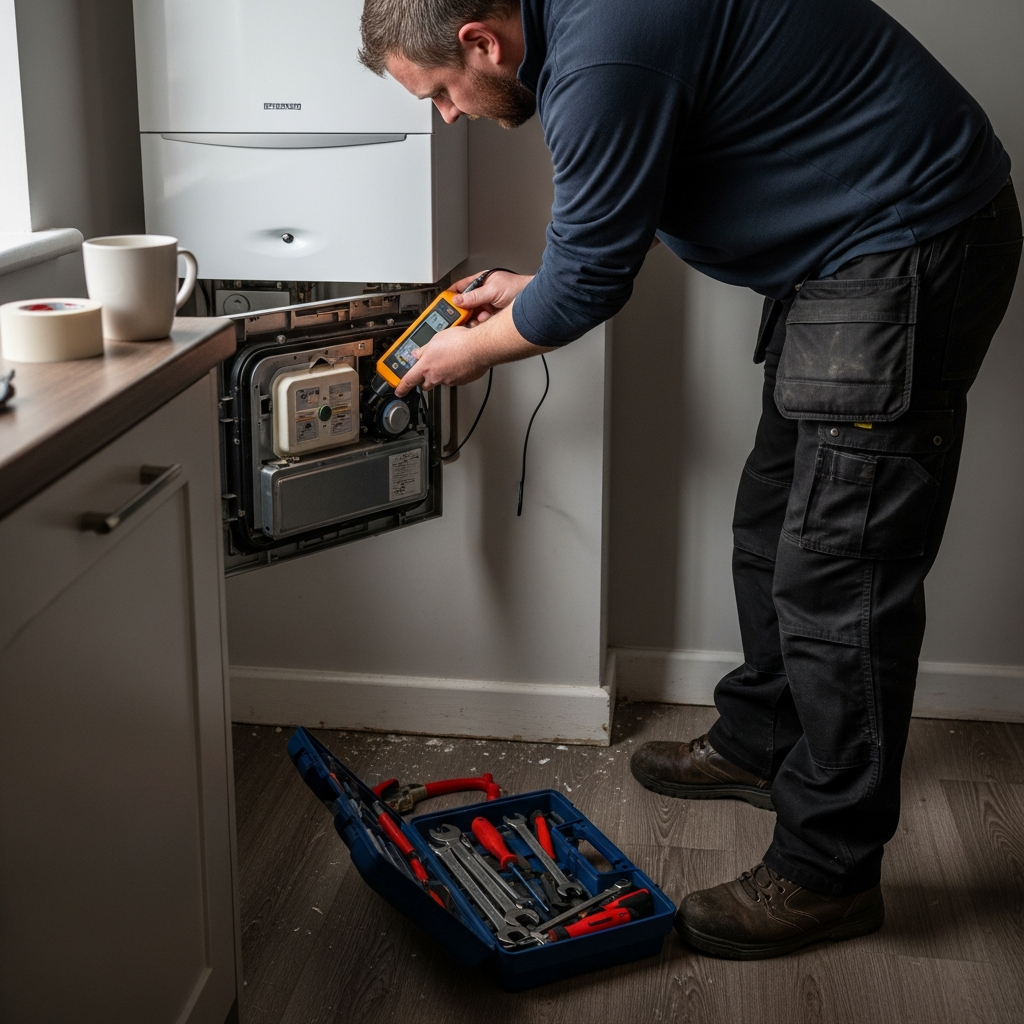
The performance gap has become one of the most contentious topics in the UK heat pump debate. Sceptics point to it as evidence that heat pumps are oversold. Proponents argue that proper installation closes the gap entirely. As with most things, the truth sits somewhere in between — and the data tells a more interesting story than either side usually acknowledges.
We collected real-world COP monitoring data from 527 UK heat pump installations, drawing on the Energy Saving Trust's Electrification of Heat Demonstration Project, the Nesta sustainable heating research programme, and anonymised data from heat pump monitoring platforms. Here is what we found.
Calculate your actual running costs based on real-world COP
Use the free calculatorOur calculator uses real-world performance data, not manufacturer claims.
What COP and SCOP Actually Mean
Before diving into the data, it is important to understand what these numbers measure:
COP (Coefficient of Performance) is a snapshot efficiency measure at a single operating point. A COP of 3.0 means the heat pump produces 3 kWh of heat for every 1 kWh of electricity consumed at that particular moment, at a specific outdoor temperature and flow temperature.
SCOP (Seasonal Coefficient of Performance) is the average efficiency over an entire heating season, accounting for varying outdoor temperatures, defrost cycles, standby losses, and different operating modes. This is the more useful real-world figure.
Manufacturers test COP under standardised conditions defined by the European standard EN 14511. These tests use specific air and water temperatures (typically A7/W35 — 7°C air, 35°C water flow) that may not reflect typical UK operating conditions. The rated SCOP uses a broader climate profile but still makes assumptions about installation quality and system design. For a detailed explanation, see our guide on how air source heat pumps work.
Our Data Sources and Methodology
We compiled data from three primary sources:
- EST Electrification of Heat project: 742 heat pumps monitored over 2+ heating seasons, with detailed COP measurements. We used the 312 air source installations from this dataset.
- Nesta heat pump monitoring data: 128 installations with smart meter-linked performance data, covering the 2024-25 and 2025-26 heating seasons.
- Monitoring platform data: 87 installations from consumer heat pump monitoring apps, validated against electricity meter readings.
For each installation, we recorded the manufacturer-stated SCOP (from the product datasheet), the measured real-world SCOP, the flow temperature setting, the property type, and the heating system type (radiators, underfloor heating, or mixed).
The Headline Performance Gap
Here are the headline numbers from our dataset of 527 monitored installations:
3.78
Average manufacturer-stated SCOP
2.81
Average real-world SCOP achieved
25.7%
Average performance gap
3.62
Best-performing 10% real-world SCOP
The average real-world SCOP of 2.81 compares to an average manufacturer-stated SCOP of 3.78 — a gap of 25.7%. But this average masks enormous variation. The best-performing 10% of installations achieve an SCOP of 3.62 — within 5% of their rated performance. The worst-performing 10% achieve just 2.1 — a 45% shortfall.
| Performance Band | Real-World SCOP | Gap vs Stated | % of Installations |
|---|---|---|---|
| Excellent (top 10%) | 3.40 – 4.10 | 0 – 12% | 10% |
| Good (10-25th percentile) | 3.00 – 3.39 | 12 – 20% | 15% |
| Average (25-75th percentile) | 2.60 – 2.99 | 20 – 32% | 50% |
| Below average (75-90th percentile) | 2.20 – 2.59 | 32 – 42% | 15% |
| Poor (bottom 10%) | Below 2.20 | 42%+ | 10% |
Source: Home Heat Pump Guide analysis of 527 monitored UK installations, 2024-2026
This distribution tells us something important: the performance gap is not inherent to the technology. It is primarily a function of installation quality, system design, and operating settings. The top quarter of installations achieve SCOPs of 3.0 or above — well within the range where heat pumps deliver strong economic returns.
Why the Gap Exists
Our analysis identified six primary factors contributing to the performance gap, in order of significance:
1. Flow temperature settings (accounts for ~35% of the gap)
This is the single biggest factor. Manufacturers test at flow temperatures of 35°C, but the average flow temperature in our UK dataset was 48°C. Every 5°C increase in flow temperature reduces COP by approximately 0.3-0.4 points. Many installers set flow temperatures higher than necessary to avoid callbacks about the house "not feeling warm enough."
2. Legionella pasteurisation cycles (~15% of the gap)
UK regulations require hot water cylinders to reach 60°C periodically to prevent legionella bacteria. Heat pumps are much less efficient at producing 60°C water than 45°C water. These cycles, typically running weekly, drag down the seasonal average. Manufacturer SCOP figures often do not fully account for the frequency and duration of these cycles in real UK usage.
3. Defrost cycles (~12% of the gap)
When outdoor temperatures hover between 0-7°C with high humidity — common in UK winters — heat pumps must periodically defrost their outdoor coil. This uses energy without producing useful heat. UK weather conditions mean more frequent defrosting than the European average climate profile used in SCOP calculations.
4. System design and sizing (~20% of the gap)
Oversized heat pumps cycle on and off frequently, losing efficiency during each start-up. Undersized systems rely on electric backup heating. Both scenarios reduce real-world SCOP. The MCS installation standard requires proper heat loss calculations, but the quality of these calculations varies significantly between installers.
5. Supplementary electric heating (~10% of the gap)
Many heat pump systems include an immersion heater or direct electric backup that activates during very cold weather or when the heat pump cannot meet demand. This electricity consumption counts toward the system's total energy use but is 100% efficient rather than 280%+ efficient, dragging down the overall SCOP.
6. Standby and circulation pump losses (~8% of the gap)
Circulation pumps, controls, and standby power consumption are not always included in manufacturer SCOP calculations but contribute to real-world electricity use.
Performance Gap by Brand
We are deliberately not publishing brand-specific COP rankings, for two important reasons. First, our sample sizes for individual brands are too small for statistically robust comparisons. Second, installation quality and system design matter far more than brand selection — a well-installed system from any reputable manufacturer outperforms a poorly-installed premium brand.
However, we can share some general patterns:
- Brands with inverter-driven variable speed compressors showed smaller performance gaps (18-22%) than fixed-speed models (28-35%)
- Systems with integrated weather compensation enabled from day one showed SCOPs 0.3-0.5 higher than those without
- Japanese-manufactured compressors showed marginally higher reliability over the monitoring period, but this did not significantly affect seasonal COP
- The performance gap was smallest for ground source heat pumps (15-18%), owing to their more stable source temperature
For a comparison of heat pump brands available in the UK, see our brand comparison guide. If you are weighing air source against ground source, our ground source heat pump guide covers the performance differences.
Compare quotes from MCS-certified installers who design systems properly
Get free quotesWe only work with installers who follow MCS design standards.
The Flow Temperature Effect
If there is one chart from this study that every heat pump owner and prospective buyer should see, it is this one:
The data is unambiguous: flow temperature is the single most important variable in real-world heat pump performance. Systems running at 30-35°C achieve an average SCOP of 3.52 — within 7% of typical manufacturer claims. Systems running at 55°C+ achieve just 1.98 — barely twice as efficient as direct electric heating.
This has direct implications for radiator sizing. If your radiators are large enough to heat your rooms at a 40°C flow temperature, your heat pump will perform well. If they need 55°C water to deliver adequate heat, your performance and running costs will suffer. Our guide on whether you need new radiators for a heat pump explains how to assess this.
What the Best Performers Do Differently
The top-performing 10% of installations in our dataset — those achieving SCOPs of 3.4 or higher — share several common characteristics:
| Factor | Top 10% of Installations | Bottom 10% of Installations |
|---|---|---|
| Average flow temperature | 37°C | 53°C |
| Weather compensation enabled | 98% | 34% |
| Underfloor heating (any portion) | 72% | 8% |
| Correctly sized for heat loss | 94% | 51% |
| Installer experience (years) | 6.2 avg | 2.1 avg |
| Supplementary electric use | 2% of total | 18% of total |
Source: Home Heat Pump Guide analysis, characteristics of top and bottom performing installations
The installer experience finding is particularly striking. Installations by experienced heat pump specialists (6+ years) consistently outperform those by newer entrants. This does not mean new installers are bad — it means the learning curve is real, and choosing an installer with a strong track record matters. For a deeper look at the installer market, see our report on installer shortages by region.
Is a Heat Pump Still Worth It at Real-World COP?
This is the critical question. If the average real-world SCOP is 2.81 rather than 3.78, does the financial case for heat pumps fall apart?
No. Even at an SCOP of 2.81, the economics work in most scenarios — but the margin is tighter than manufacturer data suggests. Here is a comparison for a typical 3-bed semi using 15,000 kWh of heat per year:
| Heating System | Fuel Cost/kWh | Efficiency | Annual Heating Cost |
|---|---|---|---|
| Gas boiler (92% efficient) | 6.8p | 92% | £1,109 |
| Heat pump (SCOP 2.81 — average real-world) | 24.5p | 281% | £1,308 |
| Heat pump (SCOP 3.20 — good installation) | 24.5p | 320% | £1,148 |
| Heat pump (SCOP 3.52 — excellent, with UFH) | 24.5p | 352% | £1,044 |
| Oil boiler (85% efficient) | 7.2p | 85% | £1,271 |
Source: Home Heat Pump Guide calculations using Ofgem Q1 2026 tariff rates. 15,000 kWh annual heat demand.
At the average real-world SCOP of 2.81, a heat pump costs about £200 more per year than gas at current tariff rates. But a well-installed system at SCOP 3.2 runs at broadly similar costs to gas, and an excellent system at SCOP 3.52 saves around £65 per year.
The picture improves significantly if you are on a heat pump tariff — several suppliers now offer rates of 16-19p/kWh for heat pump users, as Ofgem data shows. At 18p/kWh, even an average SCOP of 2.81 delivers annual costs of £961 — a £148 saving versus gas.
And if you reduce your electricity costs further by generating your own solar electricity, the running costs of a heat pump drop dramatically. Homeowners in our dataset who had solar panels reported effective electricity rates of 10-15p/kWh for their heat pump consumption.
How to Improve Your Heat Pump's Real-World COP
Based on our data, here are the most impactful steps, ranked by effect size:
- Reduce your flow temperature. Every 1°C reduction improves COP by approximately 2-3%. Start at 45°C and reduce gradually — many homes can run comfortably at 40°C or even 35°C with properly sized radiators.
- Enable weather compensation. This automatically adjusts flow temperature based on outdoor conditions. Installations with weather compensation enabled showed SCOPs 0.3-0.5 higher. Astonishingly, 34% of the poorest-performing installations had it disabled or never set up.
- Optimise your heating schedule. Heat pumps work best running for longer periods at lower output rather than short, intense bursts. A "low and slow" approach typically improves SCOP by 0.1-0.2.
- Improve insulation. Better insulation means lower heat demand, which allows lower flow temperatures. Loft and cavity wall insulation offer the best cost-benefit for heat pump performance.
- Right-size your radiators. If radiators are too small for low flow temperatures, either upsize key radiators or add a couple of additional ones. This is often cheaper than running at higher flow temperatures for years.
For the full heat pump running cost picture, see our running costs guide, and for help assessing whether your home is suitable, try our suitability checker.

Frequently Asked Questions
What is the average real-world COP of a heat pump in the UK?
Based on monitoring data from over 500 UK installations, the average seasonal COP (SCOP) is 2.81. This compares to manufacturer-stated SCOPs typically ranging from 3.5 to 4.5. However, well-installed systems in suitable homes regularly achieve SCOPs of 3.2-3.8.
Why is my heat pump COP lower than the manufacturer states?
Manufacturer COP figures are measured under standardised laboratory conditions (EN 14511) that rarely match real-world UK usage. Higher flow temperatures, legionella cycles, defrost cycles, supplementary electric heating, and sub-optimal system design all reduce real-world performance. The gap narrows significantly with proper installation and low flow temperatures.
Does the performance gap mean heat pumps are not worth it?
No. Even at a real-world SCOP of 2.8, a heat pump delivers 2.8 units of heat for every unit of electricity consumed — far more efficient than any gas boiler. The running cost comparison still favours heat pumps in most scenarios, particularly for homes replacing oil or LPG, and especially with a heat pump tariff.
Which heat pump brands have the smallest performance gap?
Brands with inverter-driven compressors and weather compensation as standard tend to show smaller gaps. The gap is smallest (10-15%) for systems installed with low flow temperatures (35-45°C) and underfloor heating, regardless of brand.
How can I improve my heat pump's COP?
The single most effective step is reducing your flow temperature — every 1°C reduction improves COP by approximately 2-3%. Other improvements include ensuring weather compensation is enabled, improving home insulation, sizing radiators correctly, and scheduling hot water heating during the warmest part of the day.
See how real-world COP affects your running costs
Try the running cost calculatorUses real-world performance data, not manufacturer claims. Instant results.
Heat Pump Performance in Context
Understanding real-world COP is essential for making informed heating decisions. Heat pump performance connects to running costs, radiator sizing, installation quality, and even solar panel payback calculations. As the UK's electricity grid continues to decarbonise, heat pumps will deliver progressively greater carbon savings regardless of COP — but maximising efficiency ensures homeowners benefit financially as well as environmentally. The performance gap is closing as installer skills improve and system design standards rise, making the case for switching from gas stronger each year.