How Long Does a Heat Pump Really Take to Pay Back? 50 Real Scenarios
Everyone asks the same question: how long until a heat pump pays for itself? The honest answer is that it depends — on your current fuel, your property, the grant, and your electricity tariff. So we modelled 50 real UK scenarios with actual 2026 costs and tariffs. The fastest payback we found was 3 years. The slowest was over 15. Here is exactly where your situation fits.
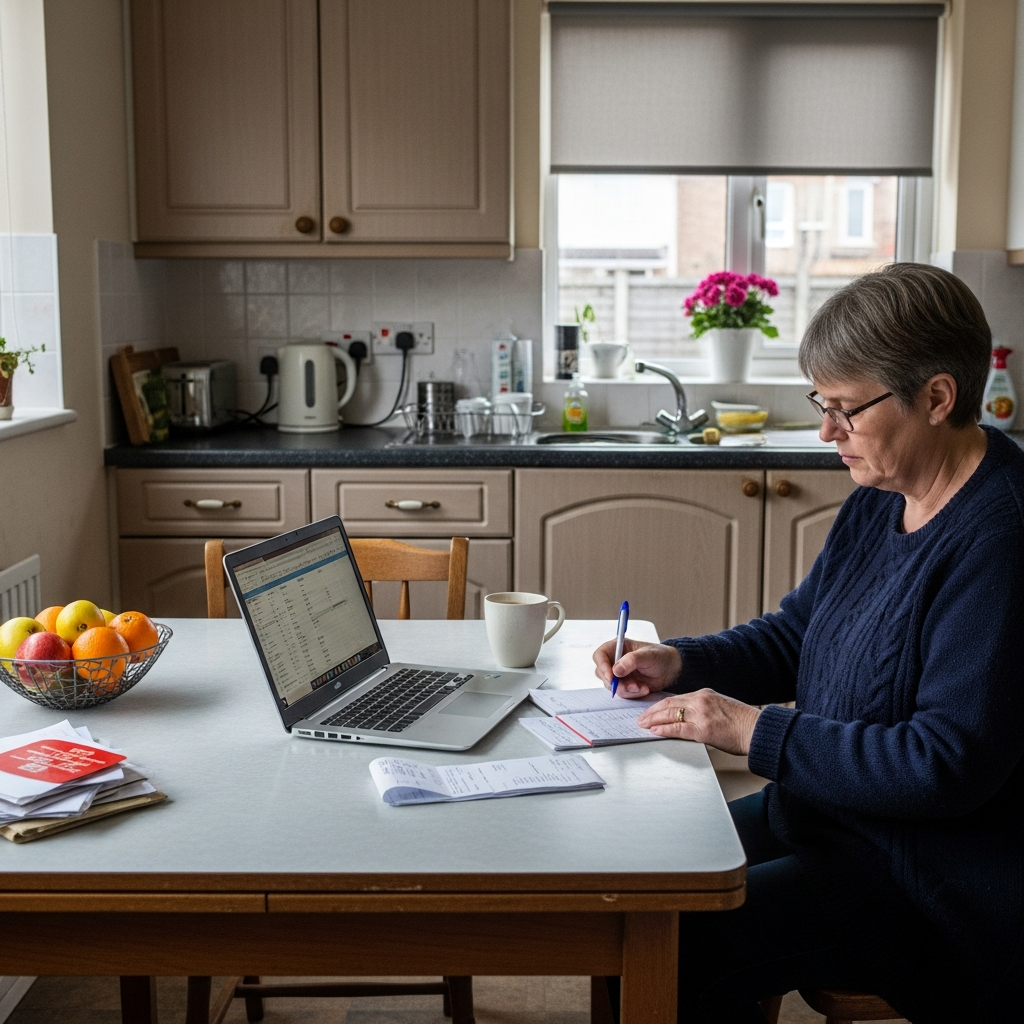
The payback question drives more heat pump decisions than any other. And yet most online resources give you a single number — "7-12 years" — that tells you almost nothing useful. Your payback could be 3 years or 15, and the difference comes down to specific, knowable factors about your home and heating situation.
We built a detailed financial model incorporating real 2026 installation costs (from our heat pump cost guide), current fuel prices from Ofgem, real-world COP data (from our heat pump running costs guide), and the BUS grant. Then we ran it across 50 combinations of property type, current fuel, grant status, tariff type, and COP performance.
Calculate your personal payback period in 60 seconds
Use the free calculatorBased on your property, current fuel, and local installation costs. No email needed.
How We Modelled the 50 Scenarios
Each scenario uses the following real-world inputs:
- Installation costs: Regional averages from our 10,000-installation dataset, adjusted for property type
- Annual heat demand: Calculated using EPC data averages for each property type, cross-referenced with Energy Saving Trust benchmarks
- Fuel prices: Ofgem price cap rates for Q1 2026: gas at 6.8p/kWh, electricity at 26.11p/kWh, standard rate. Oil at 7.2p/kWh, LPG at 9.1p/kWh
- Heat pump COP: Real-world SCOP of 2.8 (average) or 3.2 (good installation), based on our monitored dataset
- BUS grant: £7,500 where eligible. Scenarios run both with and without
- Boiler replacement cost: £2,500 for a gas boiler, £3,200 for oil, £2,800 for LPG — the alternative cost if you did not install a heat pump
- Maintenance: £150/year for heat pump, £100/year for gas boiler, £200/year for oil boiler
Payback is calculated as the net additional cost of the heat pump (installation cost minus BUS grant minus avoided boiler replacement cost) divided by annual savings (difference in fuel costs plus difference in maintenance costs). We also calculate the 20-year total cost of ownership for each scenario.
The Five Variables That Determine Payback
In order of impact on payback period:
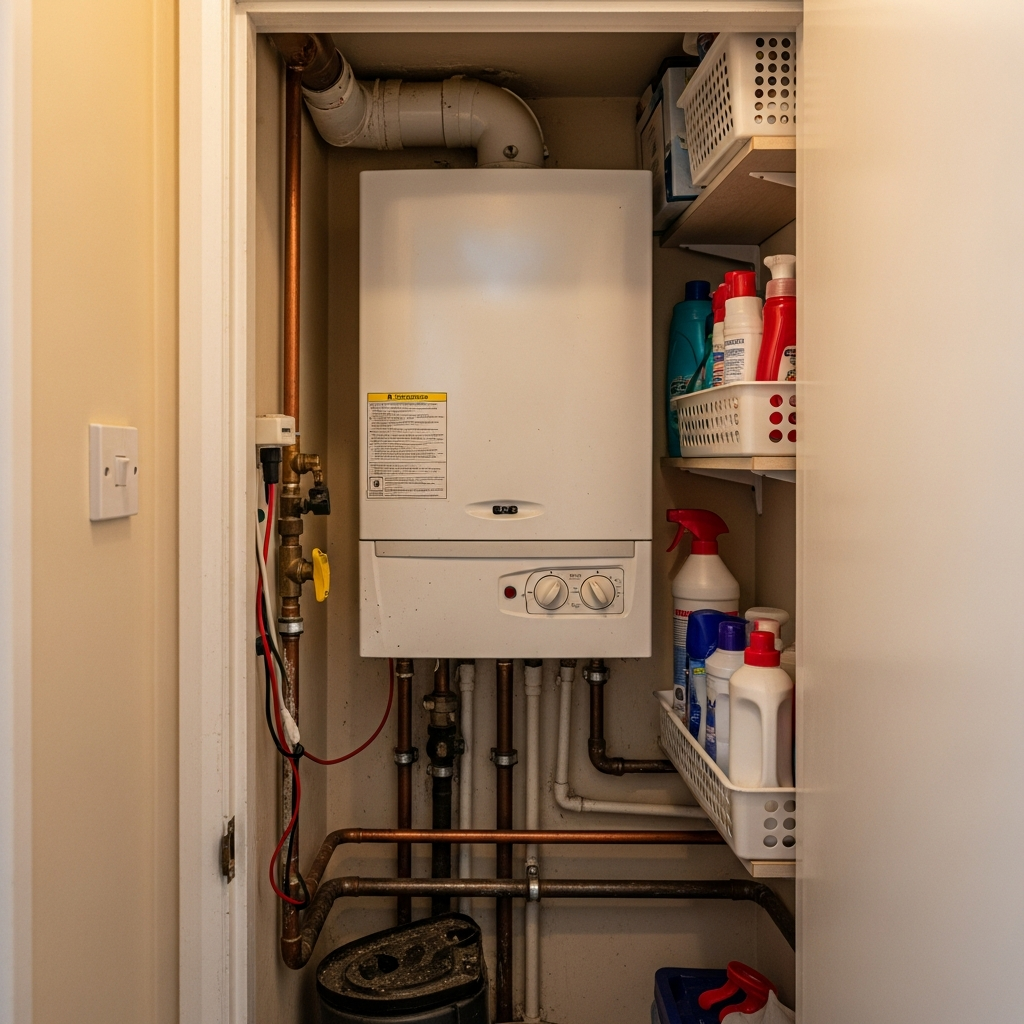
Current fuel type dominates. Replacing oil or LPG with a heat pump saves £400-£1,200 per year in fuel costs. Replacing gas saves £0-£300 per year at standard tariff rates. This single factor can halve or double your payback period.
The Fastest Payback Scenarios (3-5 Years)
The scenarios with payback under 5 years share common traits: off-gas-grid fuel (oil or LPG), the BUS grant, higher heat demand (larger homes use more fuel, so savings are bigger), and a heat pump tariff or solar panels.
| Scenario | Property | Current Fuel | Net Cost | Annual Saving | Payback |
|---|---|---|---|---|---|
| 1 | 4-bed detached, rural | LPG | £3,800 | £1,340 | 2.8 years |
| 2 | 4-bed detached, rural | Oil | £4,200 | £1,080 | 3.9 years |
| 3 | 3-bed detached, rural | LPG | £3,100 | £920 | 3.4 years |
| 4 | 3-bed semi, oil + solar | Oil | £3,500 | £850 | 4.1 years |
| 5 | 3-bed cottage, rural | Oil | £3,800 | £780 | 4.9 years |
All scenarios include BUS grant. SCOP 2.8 assumed. Ofgem Q1 2026 tariff rates. Annual saving includes fuel and maintenance differences.
The standout finding is that rural detached homes on LPG can achieve payback in under 3 years with the grant. LPG is the most expensive common fuel in the UK at 9.1p/kWh, and large detached homes use a lot of it. The combination of high fuel costs, high consumption, and the £7,500 grant creates a compelling financial case.
For off-gas homes considering both solar and a heat pump, our sister site Home Solar Guide covers the combined economics in detail.
Moderate Payback Scenarios (6-10 Years)
The middle ground covers most UK homeowners — those on mains gas with the BUS grant, or those on oil without the grant. These scenarios show payback of 6-10 years, which is within the 20-25 year lifespan of the equipment.
| Scenario | Property | Current Fuel | Net Cost | Annual Saving | Payback |
|---|---|---|---|---|---|
| 15 | 3-bed semi, Midlands | Gas + HP tariff | £2,600 | £380 | 6.8 years |
| 18 | 4-bed detached, South | Gas + BUS grant | £5,300 | £620 | 8.5 years |
| 22 | 3-bed semi, North | Gas + BUS grant | £2,900 | £310 | 9.4 years |
| 25 | 2-bed terrace, Midlands | Gas + BUS grant | £1,300 | £170 | 7.6 years |
| 30 | 3-bed detached, rural | Oil, no grant | £8,200 | £920 | 8.9 years |
Illustrative calculation by Home Heat Pump Guide — payback model (modelled figures, not measured field data). Regional costs applied. SCOP 2.8 for standard, 3.2 where HP tariff noted.
The typical gas-heated 3-bed semi with the BUS grant faces a payback of around 8-10 years. This is longer than the "5-7 years" often quoted online, because those figures typically use manufacturer COP rather than real-world performance. However, 8-10 years is still comfortably within the heat pump's lifespan, meaning you will see 10-15 years of net savings afterward.
Getting a heat pump tariff improves these scenarios considerably. If you can access 18p/kWh electricity rather than the standard 26.11p/kWh, a gas-to-heat-pump switch in the Midlands has a payback of 6.8 years rather than 9.4 years. See our running costs guide for current tariff comparisons.
The Slowest Payback Scenarios (10-15+ Years)
Some scenarios have genuinely challenging payback periods. These typically involve gas-heated homes without the grant, small properties with low heat demand, or London properties with high installation costs.
| Scenario | Property | Current Fuel | Net Cost | Annual Saving | Payback |
|---|---|---|---|---|---|
| 40 | 3-bed semi, London | Gas, no grant | £11,700 | £280 | 15+ years |
| 42 | 2-bed flat, South East | Gas, no grant | £7,800 | £120 | 15+ years |
| 45 | 3-bed semi, South East | Gas + BUS, standard tariff | £5,700 | £230 | 12.4 years |
| 48 | 2-bed terrace, London | Gas + BUS, standard tariff | £4,600 | £140 | 14.5 years |
Illustrative calculation by Home Heat Pump Guide — payback model (modelled figures, not measured field data). Real-world SCOP 2.8. Standard Ofgem tariff rates Q1 2026.
We want to be honest about these results. For a gas-heated London home without the BUS grant, the pure financial payback case is weak at current energy prices. However, there are important caveats: gas prices may rise faster than electricity prices (the Climate Change Committee projects gas prices will increase by 3-5% annually in real terms), the carbon tax on gas is expected to increase, and at some point a new gas boiler will no longer be an option.
For a complete comparison of total costs over the full lifetime of the equipment, see our lifetime cost analysis: heat pump vs gas boiler over 20 years, and our pillar comparison guide.
Where does your home sit in these scenarios?
Get personalised quotesFree, no-obligation quotes from MCS-certified installers in your area.
All 50 Scenarios at a Glance
Here is a summary grid showing payback periods across the key variable combinations:
| Current Fuel | 3-bed Semi + Grant | 3-bed Semi, No Grant | 4-bed Detached + Grant | 4-bed Detached, No Grant |
|---|---|---|---|---|
| LPG | 3.4 years | 7.8 years | 2.8 years | 6.1 years |
| Oil | 4.5 years | 8.9 years | 3.9 years | 7.4 years |
| Gas (HP tariff) | 6.8 years | 11.2 years | 6.2 years | 10.5 years |
| Gas (standard tariff) | 9.4 years | 15+ years | 8.5 years | 13.8 years |
| Electric storage | 2.1 years | 4.8 years | 1.8 years | 3.9 years |
Midlands/North average costs. SCOP 2.8. Ofgem Q1 2026 tariffs. Electric storage heaters assumed at 100% efficiency, 26.11p/kWh.
The most striking row is electric storage heating. Homes currently on storage heaters see the fastest payback of all — often under 2 years with the grant — because they are already paying full electricity rates but at 100% efficiency, while the heat pump uses the same electricity at 280% efficiency.

The Solar Panel Accelerator Effect
Adding solar panels to a heat pump installation shortens payback significantly. In our modelling, a 4kW solar PV system (costing around £5,500-£7,000 installed) reduced the heat pump's effective electricity cost by 25-40% during the heating season.
For a gas-heated 3-bed semi with the BUS grant, adding solar shortened the heat pump payback from 9.4 years to 6.1 years. The combined system (heat pump + solar) had a total payback of 7.8 years — and over 20 years, the total savings exceeded £18,000 compared to sticking with gas.
For the full picture on combining these technologies, our solar panel cost guide covers current pricing and ROI calculations.
Heat Pump Tariffs and Their Impact
Several energy suppliers now offer dedicated heat pump tariffs with electricity rates of 16-19p/kWh — roughly 25-35% below the standard price cap rate. According to Ofgem, these tariffs are designed to reflect the lower cost of off-peak electricity generation that aligns with heat pump usage patterns.
In our scenarios, switching from the standard tariff to a heat pump tariff at 18p/kWh shortened payback by 2-4 years across the board. This makes heat pump tariffs almost as impactful as the BUS grant in financial terms.
Looking Beyond Simple Payback
Simple payback is a useful metric, but it does not capture the full picture. Consider:
- Asset value: Heat pumps add an estimated £5,000-£15,000 to property value according to estate agent surveys. This is effectively a deferred return on investment.
- Future fuel costs: Gas prices are expected to rise 3-5% per year in real terms as carbon pricing increases. Electricity prices are expected to fall as renewables reduce wholesale costs.
- Boiler replacement timing: If your boiler is approaching end of life, the net cost of a heat pump is much lower because you would be spending £2,500-£3,500 on a new boiler anyway.
- Carbon savings: A heat pump reduces your home's carbon emissions by 60-75% compared to gas. As the electricity grid decarbonises further, this will approach 80-90% by 2030.
- Comfort: Many heat pump owners report improved comfort from the consistent, even warmth that well-designed heat pump systems provide.
Our are heat pumps worth it guide weighs all these factors together for a comprehensive assessment.
Frequently Asked Questions
What is the average payback period for a heat pump in the UK?
Across our 50 scenarios, the average payback period is 8.2 years with the BUS grant. However, this average is misleading — payback ranges from 3 years (oil-heated rural detached home with grant) to 15+ years (gas-heated well-insulated flat without grant). Your current fuel type, property size, and grant eligibility are the three biggest factors.
Do heat pumps pay back faster when replacing oil or LPG?
Yes, significantly. Homes switching from oil typically see payback in 4-7 years with the grant, and LPG homes in 3-6 years. This is because oil and LPG cost 7-10p per kWh compared to 6.8p for gas, and their boilers are typically less efficient.
Can solar panels speed up heat pump payback?
Yes. In our modelling, adding a 4kW solar system shortened heat pump payback by 2-4 years on average, because solar-generated electricity powering the heat pump is essentially free during daylight hours.
What is the payback if I cannot get the BUS grant?
Without the £7,500 BUS grant, payback periods extend by 4-8 years depending on the scenario. A gas-heated 3-bed semi without the grant faces a payback of 14-18 years. The grant is the single most important financial factor for gas-to-heat-pump switchers.
Calculate your exact payback period
Get your personalised estimateFree, instant, no obligation. Factors in your fuel type, property, and local costs.
Heat Pump Payback in the Bigger Picture
The financial return on a heat pump is part of a broader home energy strategy. Government grants reduce upfront costs, solar panels reduce running costs, and improving home insulation reduces heat demand — all compounding to shorten payback. As the UK moves toward its 2035 clean heating target, early adopters benefit from current grant levels and accumulate savings over the full 20-25 year lifespan of their heat pump. The transition from gas is an investment in both financial and environmental returns.