BUS Grant Data: Who Is Getting Grants and Where?
The Boiler Upgrade Scheme has now distributed over £1.1 billion in heat pump grants. But who is actually getting this money? We dug into the full DESNZ statistics to map every grant by region, property type, and technology. The picture reveals both the scheme's successes and some uncomfortable gaps — particularly around income, property type, and geography.

The BUS grant is the UK's primary financial incentive for heat pump adoption. At £7,500 for air source and £7,500 for ground source installations, it covers a significant portion of the cost — particularly in cheaper regions where it can represent 60-75% of the total. Understanding who is accessing this funding, and who is not, matters for both homeowners and policymakers.
Our analysis uses official DESNZ quarterly statistics, supplemented by Ofgem scheme administration data and our own regional analysis from the heat pump cost guide.
Check your eligibility for the £7,500 BUS grant
Use the eligibility checkerQuick check based on your property type and location. No email required.
BUS Grant Overview and Totals
~155,000
Total grants awarded (Apr 2022 – Feb 2026)
£1.13bn
Total funding disbursed
94%
Application approval rate
72,400
Applications in 2025 alone
The scheme has accelerated significantly since its launch. Year-one (2022-23) saw approximately 25,000 applications. Year-two (2023-24) rose to 42,000. Year-three (2024-25) reached 72,400. This trajectory reflects growing consumer awareness, falling installation costs, and the increase of the grant from £5,000 to £7,500 in October 2023.
Regional Distribution of Grants
| Region | Total Grants (All Years) | % of Total | Grants per 100,000 Households | 2025 Growth vs 2024 |
|---|---|---|---|---|
| South West | 22,800 | 14.7% | 904 | +45% |
| South East | 21,400 | 13.8% | 586 | +38% |
| East of England | 19,200 | 12.4% | 750 | +40% |
| North West | 15,800 | 10.2% | 493 | +35% |
| West Midlands | 14,200 | 9.2% | 567 | +42% |
| Yorkshire & Humber | 13,100 | 8.5% | 554 | +36% |
| East Midlands | 12,400 | 8.0% | 613 | +34% |
| Scotland | 11,600 | 7.5% | 461 | +44% |
| London | 9,800 | 6.3% | 272 | +28% |
| Wales | 8,200 | 5.3% | 599 | +38% |
| North East | 6,400 | 4.1% | 555 | +30% |
Source: DESNZ BUS statistics, Ofgem scheme data. Per-capita rate based on ONS household estimates.
The South West dominates on a per-capita basis, with 904 grants per 100,000 households — more than three times London's rate. This makes sense: the South West has the UK's highest proportion of off-gas-grid homes, where the financial case for heat pumps is strongest. London's low rate reflects higher installation costs, more complex properties, and a housing stock dominated by flats (many of which are not suitable for individual air source heat pumps).
For more on how your region affects costs, see our heat pump cost guide, and for the postcode-level picture, see our heat pump grants guide report.
Which Property Types Receive Grants
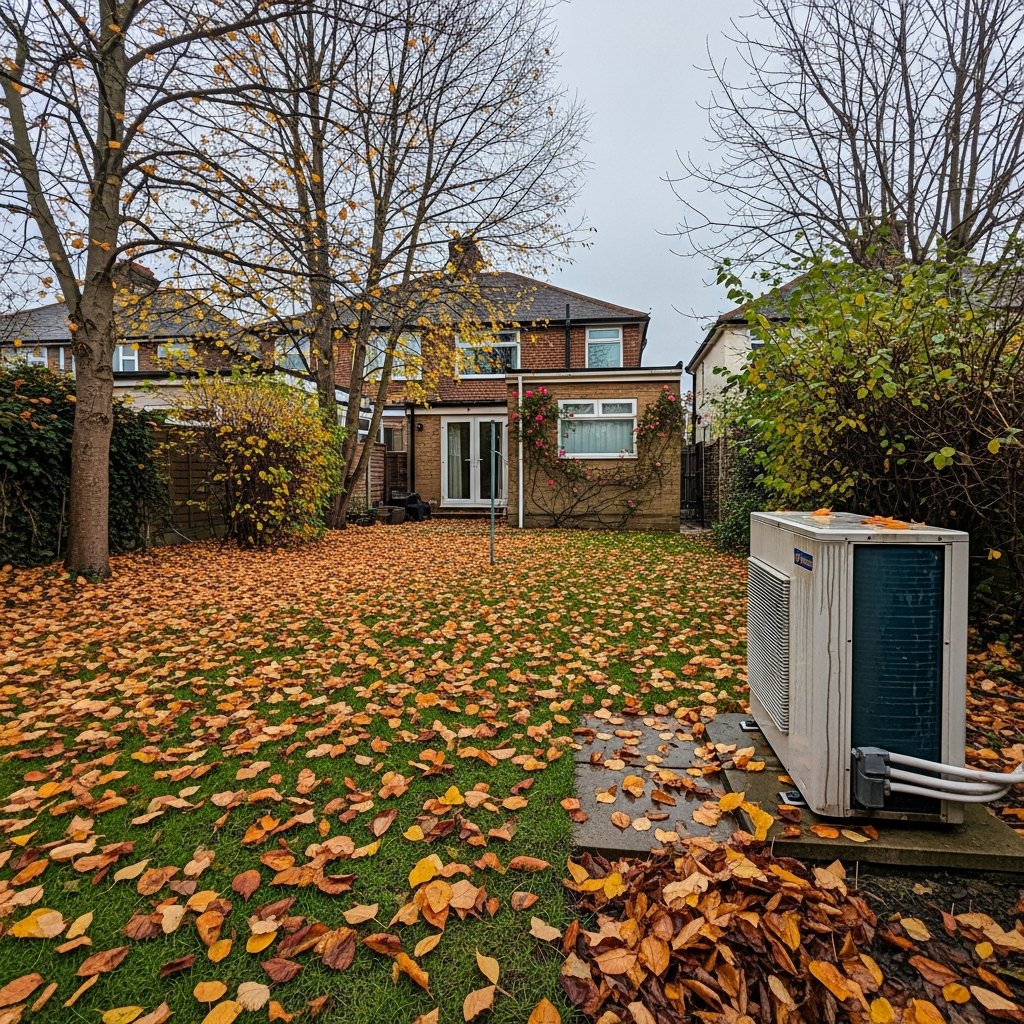
Detached homes account for 42% of all grants — significantly higher than their 25% share of the UK housing stock. This reflects the practical suitability of detached properties (more garden space, no shared walls affecting noise regulations) and the economic case (larger homes with higher fuel bills benefit more from switching).
Flats account for just 4% of grants, reflecting genuine technical challenges around outdoor unit placement, communal permissions, and the economics of smaller heating loads. As communal heat pump solutions develop, this share should increase, but for now the BUS grant primarily serves houses rather than flats.
Air Source vs Ground Source Split
91%
Air source heat pumps
7%
Ground source heat pumps
2%
Biomass boilers
Air source heat pumps overwhelmingly dominate the BUS grant, as expected. Ground source installations receive the same £7,500 grant but cost significantly more (typically £20,000-£35,000 before the grant), limiting uptake to larger properties where the higher efficiency justifies the premium. For more on ground source options, see our ground source heat pump guide.
Approval and Rejection Rates
The 94% approval rate is high, but the 6% rejection rate still represents approximately 4,600 rejected applications per year in 2025. The most common rejection reasons:
- Invalid or expired EPC (34% of rejections): The property must have a valid EPC with no outstanding loft or cavity wall insulation recommendations (this requirement was amended in 2024)
- Property not eligible (28%): New builds, properties built after 2000 with an existing low-carbon heating system, or social housing applying through the wrong scheme
- Installer not MCS-certified (18%): Some homeowners engage non-MCS installers who cannot apply for the grant
- Incomplete applications (12%): Missing documentation, incorrect property details, or incomplete system specifications
- Other (8%): Including duplicate applications and properties where work had already started
For the complete guide to eligibility and application, see our BUS grant guide.
Your MCS installer handles the grant application for you
Find MCS installers near youThe installer applies for the grant on your behalf. You just pay the net cost.
How Uptake Has Changed Over Time
| Period | Applications | Quarterly Average | Key Event |
|---|---|---|---|
| Apr 2022 – Mar 2023 | 25,200 | 6,300 | Scheme launch (£5,000 grant) |
| Apr 2023 – Sep 2023 | 16,800 | 8,400 | Growing awareness |
| Oct 2023 – Mar 2024 | 25,200 | 12,600 | Grant increased to £7,500 |
| Apr 2024 – Mar 2025 | 52,800 | 13,200 | Sustained growth |
| Apr 2025 – Feb 2026 | 64,200 | 17,500 | Record uptake |
Source: DESNZ quarterly BUS statistics
The October 2023 grant increase from £5,000 to £7,500 was a clear inflection point. Applications jumped approximately 50% in the quarter following the increase and have continued to grow since. This demonstrates the price sensitivity of heat pump decisions — the additional £2,500 tipped many borderline cases into viability, particularly for gas-heated homes where the cost-benefit calculation was marginal.
Where the Gaps Are
Our analysis reveals several concerning gaps in BUS grant distribution:
- Income gap: Grant recipients are disproportionately in higher-income areas. Analysis by Nesta found that postcodes in the top income quintile receive 2.8x more grants per capita than the bottom quintile. The flat-rate grant does not address the affordability barrier for lower-income households.
- Tenure gap: The scheme primarily serves owner-occupiers. Private renters and social housing tenants are largely excluded, despite living in some of the worst-insulated properties.
- Urban gap: Urban areas, particularly cities with predominantly terraced and flatted housing, are significantly underrepresented. The scheme's design suits suburban and rural detached properties best.
- Awareness gap: Surveys consistently show that 40-50% of homeowners are unaware the BUS grant exists, and those who are aware often do not know they are eligible.
For the postcode-level picture, see our companion analysis: heat pump grants guide.

Frequently Asked Questions
How many BUS grants have been awarded?
Approximately 155,000 grants have been awarded since the scheme launched in April 2022. The rate has accelerated from 25,000 in year one to over 72,000 applications in 2025.
What is the BUS grant approval rate?
Approximately 94%. Most rejections are due to invalid EPCs, ineligible property types, or non-MCS installers.
Which areas get the most BUS grants?
The South West leads on a per-capita basis, followed by the East of England and East Midlands. London receives the fewest grants per capita.
Can I get the BUS grant if I have solar panels?
Yes. Solar panels do not affect BUS grant eligibility. Around 22% of grant recipients also have solar PV. For more on combining solar and heat pumps, see Home Solar Guide.
See if you qualify for the £7,500 grant
Check eligibility nowQuick eligibility check plus personalised cost estimate. Free and instant.
BUS Grant in the Energy Transition Context
The Boiler Upgrade Scheme is central to the UK's heat decarbonisation strategy. Its effectiveness connects to installation costs, heat pump installation guide, and the competitiveness of heat pumps vs gas. As the scheme matures, extending support to lower-income households and flatted properties will be essential to ensure the transition is equitable. Alongside solar grants and incentives, the BUS grant represents a significant public investment in clean heating technology that is beginning to reshape the UK's heating landscape.