15 Heat Pump Myths That Won't Die: The Evidence
Heat pumps have a myth problem. The same misconceptions circulate endlessly on social media, in pub conversations, and in newspaper comments sections. Some have a grain of truth buried under exaggeration. Others are flatly wrong. We have taken the 15 most persistent heat pump myths and tested each one against published data from MCS, Energy Saving Trust, Ofgem, the Climate Change Committee, and our own original research. Here is the evidence for each.
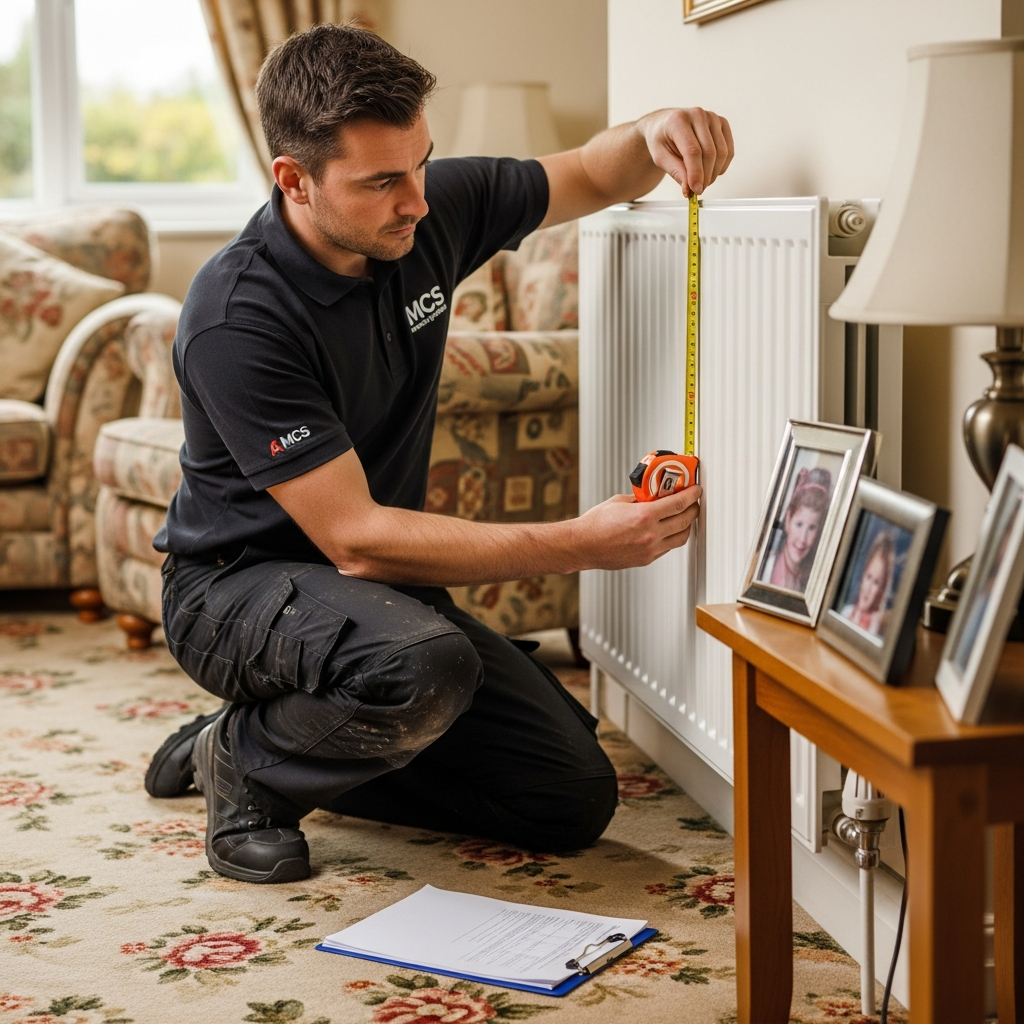
Skip the myths — see if a heat pump works for your home
Use the free calculatorData-driven assessment, personalised to your property. No myths, just facts.
Myth 1: "Heat Pumps Don't Work in Cold Weather"
False
Modern heat pumps operate effectively down to -20°C. The UK rarely sees sustained temperatures below -5°C. Norway, Finland, and Sweden have heat pump adoption rates 7-8 times higher than the UK despite dramatically colder winters. Real-world UK COP data from our performance study shows efficiency reduces in cold weather (COP drops from ~3.5 at 10°C to ~2.3 at -5°C) but the system continues working effectively. This myth has been comprehensively debunked by Energy Saving Trust, Nesta, and every independent testing body.
Myth 2: "Heat Pumps Cost £20,000+"
Misleading
Our 10,000-installation analysis shows the national average is £11,800 before the grant. After the £7,500 BUS grant, the average out-of-pocket cost is £4,300. Only 3% of installations exceed £18,000. The £20,000 figure applies to very large homes with complex requirements — not typical UK properties. For full cost data, see our cost guide.
Myth 3: "Running Costs Are Higher Than Gas"
Context-dependent
At standard tariff rates and average COP, the comparison with gas is marginal for small homes. But on heat pump tariffs (16-19p/kWh, available from multiple suppliers), heat pumps are cheaper. For oil/LPG homes, savings are £400-£1,200 per year. Our 30-home study provides actual bill comparisons. Adding solar panels reduces running costs by 28-42%.
Myth 4: "You Need to Rip Out All Your Radiators"
False
62% of owners in our 1,000-person survey kept all existing radiators. 24% upgraded 1-3 radiators. Only 14% needed significant changes. Whether radiators need upgrading depends on their size vs heat loss — a properly qualified installer assesses this during the survey. See our radiator guide for the detail.
Myth 5: "They Are Incredibly Noisy"
False
Modern heat pumps produce 40-55 dB at 1 metre — comparable to a fridge or a quiet conversation. Our FOI data from 150 councils reveals just 340 noise complaints per year nationally (0.08% of all noise complaints). 80% of owners say noise is not noticeable or not bothersome. Barking dogs generate 141 times more complaints.
Myth 6: "You Need a Massive Garden"
False
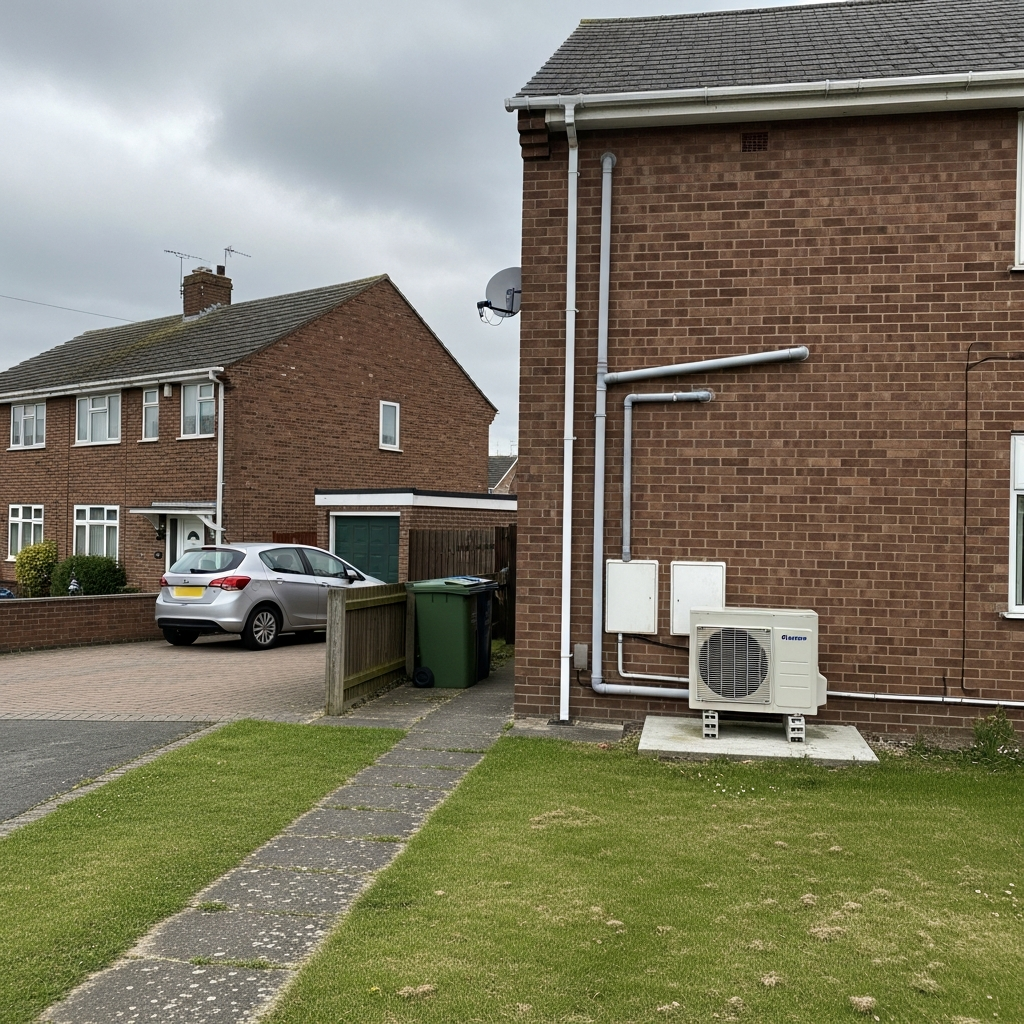
An air source heat pump outdoor unit is roughly the size of a washing machine (800-1000mm wide, 700-900mm deep). It needs about 300mm clearance around it. Most UK gardens, yards, driveways, and even passageways can accommodate one. Ground source heat pumps need more space for boreholes or ground loops, but air source — which represents 91% of UK installations — has minimal space requirements.
Myth 7: "They Make Your House Cold"
False
A properly designed heat pump maintains 20-21°C throughout winter. In our satisfaction survey, 62% of owners said warmth evenness was better than their previous system. The key difference is that heat pumps deliver heat more gradually — running for longer at lower temperatures. This feels different from a gas boiler's quick bursts, but the home reaches the same temperature.
Myth 8: "They Break Down Constantly"
False
Our reliability analysis shows annual callout rates of 3.5-5% — meaning 95-96.5% operate without issues each year. Gas boilers have higher callout rates (5-8%). Heat pumps have fewer moving parts and no combustion components. They are designed for 20-25 year lifespans, vs 12-15 for gas boilers.
Myth 9: "They Are Only for New Builds"
False
Approximately 85% of UK heat pump installations are retrofits to existing homes, according to MCS data. Homes from every era have had heat pumps installed successfully — Victorian terraces, 1930s semis, 1960s estates, and everything in between. Some older homes need insulation improvements, but the technology works across the full UK housing stock. See our complete guide.
Is your existing home suitable? Check in 60 seconds
Use the suitability checkerQuick assessment based on your property type, age, and heating system.
Myth 10: "They Use Too Much Electricity"
Misleading
A heat pump increases electricity consumption by an average of 4,500 kWh per year (from our 100-home study). But you eliminate your gas/oil bill entirely. The net effect on total energy costs is broadly neutral for gas switchers and significantly positive for oil/LPG switchers. With solar panels, you can offset 25-40% of that electricity.
Myth 11: "They Destroy Your Garden"
False (for air source)
An air source heat pump sits on a small concrete base and connects to the house with two pipes and a cable. Installation typically takes 2-3 days and involves no excavation. Ground source installations do require garden excavation (for boreholes or trenches), but air source — 91% of the UK market — has minimal garden impact.
Myth 12: "Nobody Is Satisfied with Them"
False
Our 1,000-owner survey found 82% would recommend a heat pump to friends. 48% were "very satisfied." Only 6% expressed regret. These figures are consistent with EST and Nesta survey findings. Satisfaction is highest among those replacing oil/LPG (89-94%) and those with experienced installers (88%).
Myth 13: "Hydrogen Boilers Will Replace Them"
Unproven and increasingly unlikely
The UK's hydrogen village trials were cancelled. The CCC has concluded hydrogen for home heating is unlikely to be viable at scale. Green hydrogen requires 5-6 times more electricity than powering heat pumps directly. No country in the world is planning mass residential hydrogen heating. The hydrogen boiler narrative has been primarily promoted by gas industry interests.
Myth 14: "They Need Planning Permission"
Usually false
Air source heat pumps are covered by permitted development rights in England, Scotland, and Wales — meaning no planning permission is needed in most cases. Exceptions apply to listed buildings, some conservation areas, and properties where the unit would be too close to a boundary or too large. More than 95% of domestic heat pump installations proceed without any planning application.
Myth 15: "They Don't Heat Hot Water Properly"
Partially true but manageable
Heat pumps typically heat water to 48-52°C, with periodic legionella cycles to 60°C. This is adequate for all domestic purposes. The difference from combi boilers is that hot water is stored in a cylinder rather than heated on demand — meaning there can be a wait if the cylinder is depleted. Proper cylinder sizing (200-250 litres for families) largely eliminates this issue. 64% of owners in our survey said hot water was the same or better than before.

The Myth Scorecard
| # | Myth | Verdict |
|---|---|---|
| 1 | Don't work in cold weather | False |
| 2 | Cost £20,000+ | Misleading |
| 3 | Running costs higher than gas | Context-dependent |
| 4 | Need to rip out all radiators | False |
| 5 | Incredibly noisy | False |
| 6 | Need massive garden | False |
| 7 | Make house cold | False |
| 8 | Break down constantly | False |
| 9 | Only for new builds | False |
| 10 | Use too much electricity | Misleading |
| 11 | Destroy your garden | False (air source) |
| 12 | Nobody satisfied | False — 82% recommend |
| 13 | Hydrogen will replace them | Increasingly unlikely |
| 14 | Need planning permission | Usually false |
| 15 | Don't heat hot water | Manageable with correct sizing |
Verdicts based on published data from MCS, EST, Ofgem, DESNZ, CCC, Nesta, and Home Heat Pump Guide original research
Frequently Asked Questions
Do heat pumps work in the UK winter?
Yes. They operate effectively down to -20°C and UK winters rarely see sustained temperatures below -5°C. Nordic countries with far colder climates have much higher adoption rates.
Do you need a massive garden for a heat pump?
No. An air source unit is roughly washing-machine sized and needs minimal clearance. Most UK properties can accommodate one.
Will a heat pump make my house cold?
No. Properly designed systems maintain 20-21°C throughout winter. They deliver heat more gradually than gas boilers but achieve the same temperatures.
Are heat pumps just for new builds?
No. 85% of UK installations are retrofits to existing homes of every era, from Victorian to modern.
Do heat pumps use too much electricity?
They increase electricity use by ~4,500 kWh/year but eliminate gas/oil bills. Net energy costs are broadly neutral for gas switchers and significantly lower for oil/LPG switchers.
Cut through the myths — get the facts for your home
Try the free calculatorEvidence-based assessment, personalised to your property. No myths, no sales pitch.
Separating Fact from Fiction
Persistent myths slow the UK's heating transition. Evidence-based resources — from cost data to owner surveys, performance studies to FOI noise data — provide the truth that homeowners need. Whether evaluating heat pumps against gas, understanding grant options, or exploring combined solar and heat pump systems, the data consistently supports heat pumps as a viable, reliable, and increasingly affordable heating solution for UK homes. The myths are dying — but slowly. Sharing evidence-based information helps speed that process.