The Complete Guide to Air Source Heat Pumps in the UK
An air source heat pump can cut your heating bills by up to 40% compared to oil or LPG, while slashing your home's carbon footprint to a fraction of what a gas boiler produces. With the government's £7,500 Boiler Upgrade Scheme grant, the upfront cost is now comparable to a new boiler for many UK homes.
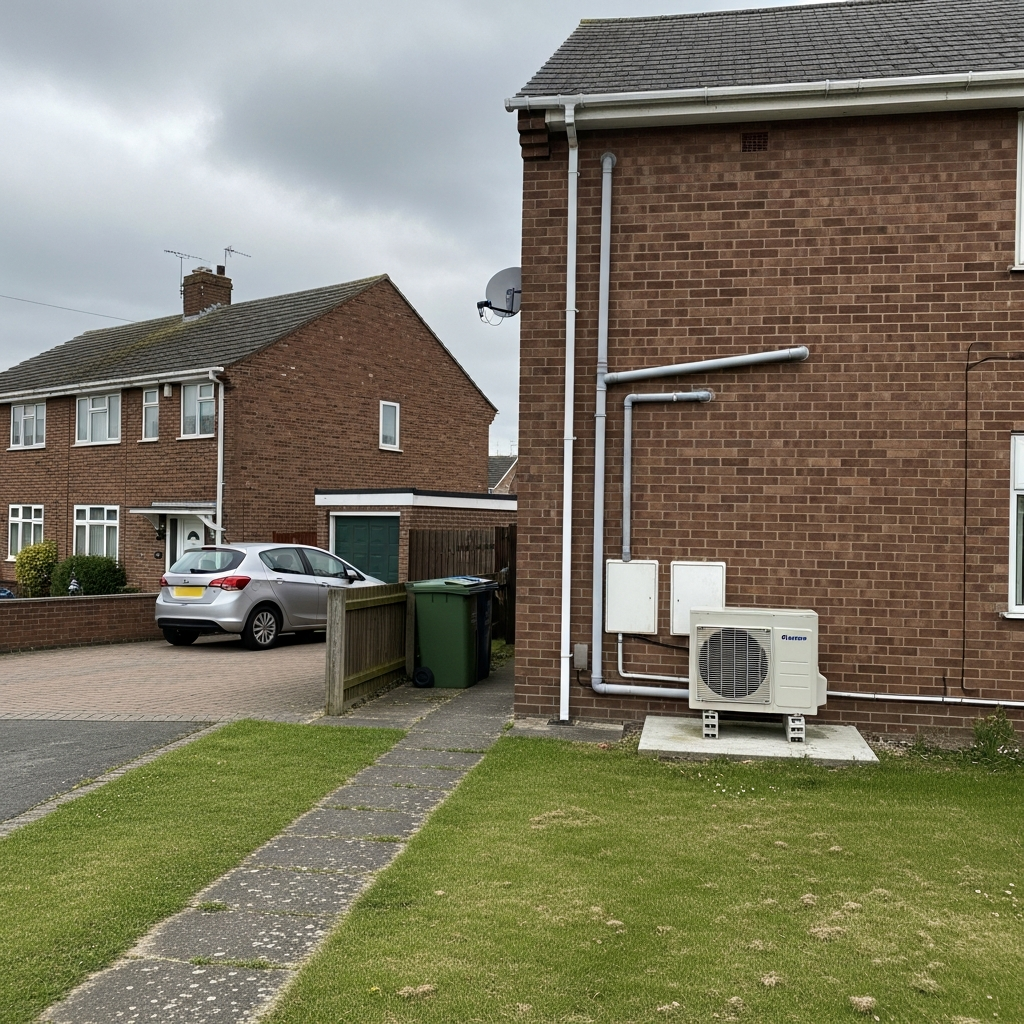
Air source heat pumps have gone from niche technology to mainstream heating solution in just a few years. With the UK government pushing hard to decarbonise home heating, over 250,000 households have already made the switch — and installations are accelerating year on year.
But cutting through the noise is difficult. Installers want to sell you one. Oil companies want you to stick with what you have. Social media is full of horror stories and miracle claims in equal measure.
This guide is different. We cover everything — how air source heat pumps work, what they genuinely cost, whether your home is suitable, and the honest pros and cons — so you can make an informed decision based on facts, not sales pitches.
See your exact running costs in 30 seconds
Use the free calculatorNo email required. Instant results based on your property details.
What Is an Air Source Heat Pump?
An air source heat pump (ASHP) extracts heat energy from the outside air and uses it to warm your home and hot water. Even when it feels cold outside, there is usable heat energy in the air — right down to temperatures of -20°C and below.
The technology works on the same principle as a fridge, but in reverse. Instead of pulling heat out of a box to keep food cool, a heat pump pulls heat from the outside air and concentrates it to a useful temperature for your radiators, underfloor heating, or hot water cylinder.
For a detailed explanation of the science behind this, read our guide on how air source heat pumps work.
Air-to-Water Heat Pumps
The most common type in the UK. An air-to-water heat pump heats water that then circulates through your radiators or underfloor heating system, just like a gas boiler does. It also heats your domestic hot water, stored in a cylinder.
This is what most people mean when they say "air source heat pump," and it is the type eligible for government grants.
Air-to-Air Heat Pumps
These blow warm air directly into rooms through wall-mounted units — similar to air conditioning systems that can also heat. They are cheaper to install but cannot heat your hot water, and they are not currently eligible for the Boiler Upgrade Scheme grant.
How Do Air Source Heat Pumps Work?
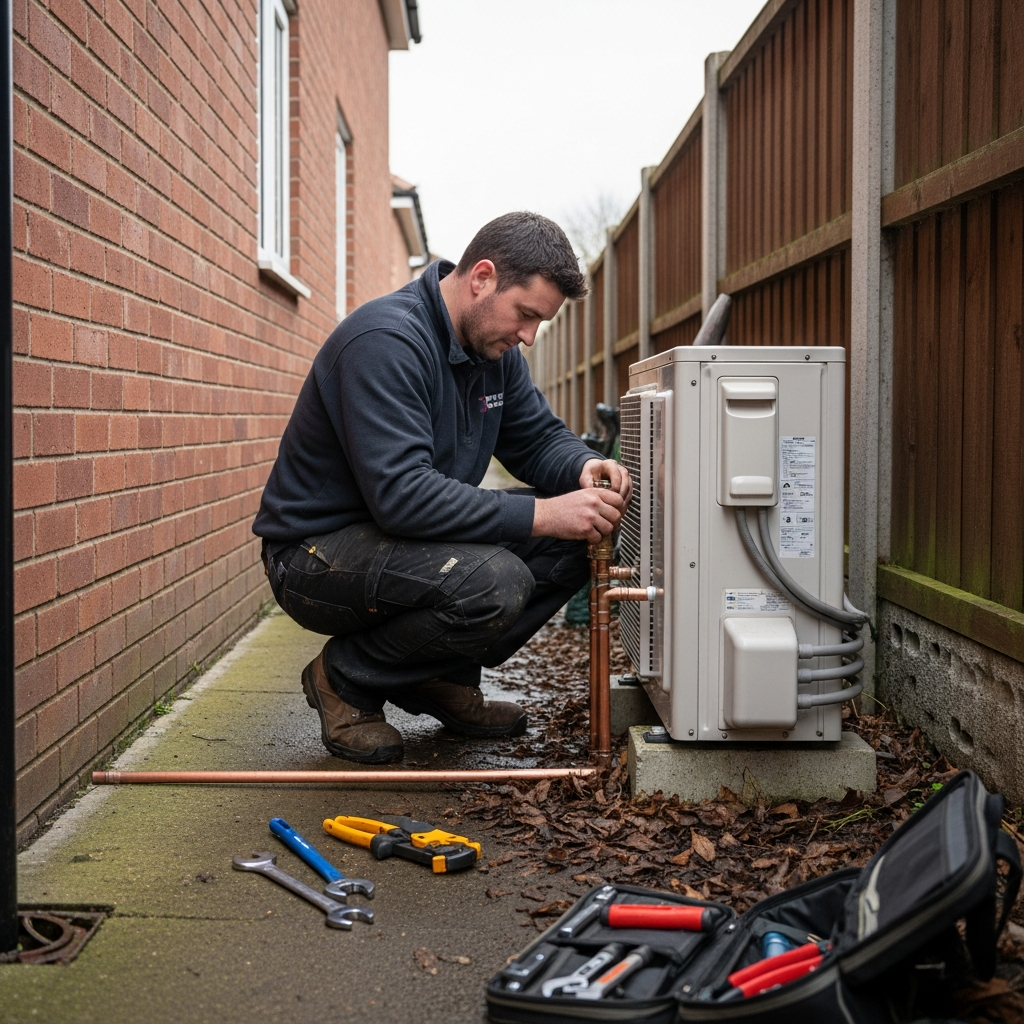
The process involves four key stages in what engineers call a refrigeration cycle:
- Evaporation: A fan draws outside air across a heat exchanger containing refrigerant fluid. Even in cold weather, this air is warm enough to cause the refrigerant to evaporate into a gas.
- Compression: An electrically driven compressor squeezes this gas, which dramatically increases its temperature — from perhaps 5°C to 55°C or higher.
- Condensation: The hot gas passes through another heat exchanger, transferring its heat to your central heating water. As it gives up heat, the refrigerant condenses back into a liquid.
- Expansion: The liquid passes through an expansion valve, dropping in pressure and temperature, ready to start the cycle again.
The key measure of efficiency is the Coefficient of Performance (COP). A COP of 3.0 means the heat pump produces 3kWh of heat for every 1kWh of electricity consumed. In real-world UK conditions, most modern ASHPs achieve a seasonal COP (SCOP) of between 2.8 and 3.5.
We explain COP, SCOP, and flow temperatures in much more detail in our dedicated article on how heat pumps work. If you are also considering ground source, our ground source heat pump guide covers how that alternative technology compares.
How Much Does an Air Source Heat Pump Cost?
This is the question everyone asks first, and the answer depends heavily on your property and existing heating system. Here is a realistic breakdown for 2026:
| Property Type | System Size | Total Cost (Before Grant) | After BUS Grant |
|---|---|---|---|
| 2-bed flat/terrace | 5-6 kW | £8,000 – £11,000 | £500 – £3,500 |
| 3-bed semi | 8-10 kW | £10,000 – £14,000 | £2,500 – £6,500 |
| 4-bed detached | 12-16 kW | £12,000 – £18,000 | £4,500 – £10,500 |
Prices based on MCS installer quotes, March 2026. Includes unit, cylinder, labour, pipework, and electrical work.
These figures include the heat pump unit, hot water cylinder, installation labour, pipework modifications, and electrical work. They do not include radiator upgrades (if needed) or underfloor heating, which can add £2,000–£5,000. For advice on whether your radiators will work, see our guide on whether you need new radiators for a heat pump.
For a full cost breakdown by component, see our detailed air source heat pump cost guide or use our heat pump cost calculator. You can also compare air source costs with ground source in our complete heat pump cost guide.

Government Grants and Funding
The Boiler Upgrade Scheme (BUS) currently offers £7,500 off the cost of an air source heat pump installation in England and Wales. This is applied directly as a discount by your MCS-certified installer — you do not need to pay upfront and claim back.
Additional funding is available depending on where you live:
- Scotland: Home Energy Scotland offers interest-free loans of up to £15,000, plus cashback grants of up to £7,500 for eligible households
- Wales: The Nest scheme provides free or subsidised heat pump installations for qualifying low-income households
- ECO4: Energy Company Obligation funding can cover the full cost for households on certain benefits
If you are also considering solar panels alongside your heat pump, separate grants and incentives exist for solar PV which can further reduce your electricity costs and make a heat pump even more affordable to run.
Our complete air source heat pump grants guide covers eligibility criteria, how to apply, and what to expect. You can also visit our grants information page for the latest figures.
Compare heat pump quotes from UK installers
Get free quotesMCS-certified installers. No obligation. Typical savings of 30-40% by comparing.
Installation Process
A typical air source heat pump installation takes between 2 and 4 days, depending on the complexity of your property and whether you need additional work like radiator upgrades or a new hot water cylinder.
The process usually follows these steps:
- Home survey: An MCS-certified installer visits your property to assess suitability, calculate heat loss, and design the system
- Day 1: The outdoor unit is positioned on a concrete base, and the indoor components (cylinder, controls) are installed
- Day 2-3: Pipework connections between outdoor and indoor units, electrical connections, and any radiator modifications
- Final day: System commissioning, testing at various temperatures, setting up controls, and a full handover
Read our step-by-step air source heat pump installation guide for more detail on what each stage involves and how to prepare your home. Our installation guide page also covers the key considerations.
Running Costs
Running costs depend on your property's heat demand, the heat pump's efficiency, and your electricity tariff. Here are realistic annual figures for a reasonably insulated home:
| Property Type | ASHP Annual Cost | Gas Boiler Annual Cost | Oil Boiler Annual Cost |
|---|---|---|---|
| 2-bed terrace | £450 – £600 | £500 – £650 | £700 – £900 |
| 3-bed semi | £650 – £900 | £700 – £950 | £1,000 – £1,400 |
| 4-bed detached | £900 – £1,300 | £1,000 – £1,400 | £1,500 – £2,200 |
Based on 2026 energy tariffs. ASHP assumes SCOP of 3.2 and standard electricity rate. Gas assumes 90% efficient boiler.
Heat pumps can be cheaper to run than gas in well-insulated homes, particularly with a heat pump electricity tariff (several energy suppliers now offer these). They are significantly cheaper than oil or LPG in almost all cases.
Pairing a heat pump with solar panels can reduce your electricity costs further — generating free daytime electricity to power the heat pump during its most efficient operating hours.
For a personalised estimate, try our heat pump calculator or read our detailed air source heat pump running costs breakdown. You can also compare figures on our running costs page.
Is Your Home Suitable?
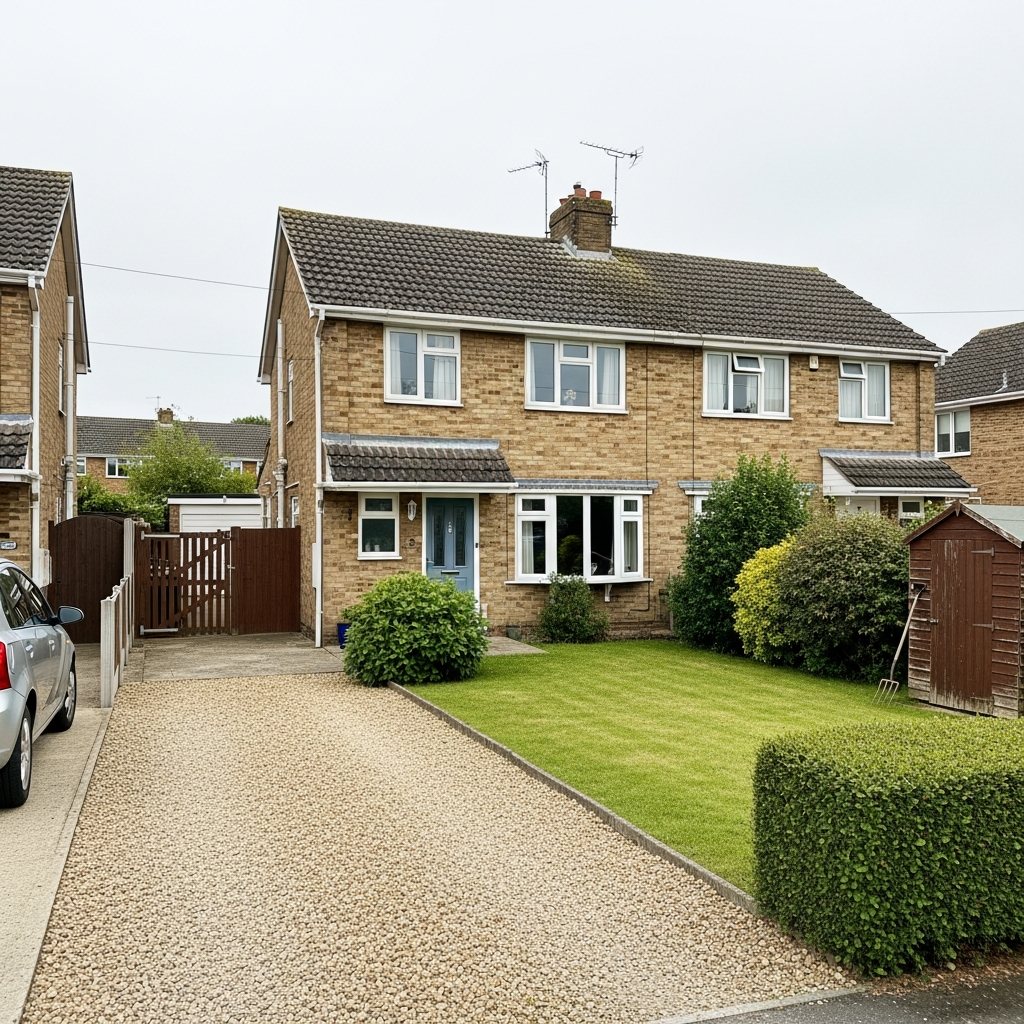
Most UK homes can have an air source heat pump fitted, but some are better suited than others. Key factors include:
- Insulation: Heat pumps work best in well-insulated homes. Cavity wall insulation, loft insulation to at least 270mm, and double glazing are strongly recommended before installation
- Outdoor space: You need room for the outdoor unit, typically about 1m x 1m of floor space, positioned at least 1 metre from any boundary
- Heating system: Larger radiators or underfloor heating work best because heat pumps deliver water at lower temperatures than boilers (typically 35-45°C versus 65-75°C)
- Hot water cylinder: You will need a cylinder — combi-boiler households will need to find space for one
Use our heat pump suitability checker to get a quick assessment based on your property details. To understand how sizing works, read our air source heat pump sizing guide.
85%
of UK homes
are suitable for an air source heat pump
1m x 1m
outdoor space
minimum footprint for a typical outdoor unit
35-45°C
flow temperature
lower than boilers, so radiators may need upsizing
200L+
hot water cylinder
recommended for most family homes
Best Air Source Heat Pump Brands
The UK market is dominated by a handful of established manufacturers, each with different strengths:
- Daikin: Market leader with excellent reliability and wide installer network. The Daikin Altherma range is a popular choice for many UK homes
- Vaillant: Strong reputation from their boiler heritage. The Arotherm plus is well-regarded for its quiet operation and high efficiency
- Mitsubishi Electric: The Ecodan range has been sold in the UK longer than most competitors and has a strong track record
- Samsung: Competitive pricing and improving reputation. The EHS Mono is a solid budget-friendly option
- Nibe: Swedish manufacturer with excellent cold-weather performance and smart controls
- Bosch: Compress range offers good value and integrates well with existing Bosch/Worcester systems
We compare these brands in much more detail — including COP ratings, noise levels, and warranty terms — in our best air source heat pumps comparison.
Pros and Cons of Air Source Heat Pumps
Advantages
- Lower carbon emissions: Even on today's electricity grid, a heat pump produces significantly less CO2 than a gas boiler. As the grid continues to decarbonise, emissions drop further
- Lower running costs than oil/LPG: If you are replacing an oil or LPG boiler, you will almost certainly save money on fuel bills
- Government grants available: The £7,500 BUS grant makes the upfront cost comparable to a new boiler installation for many homes
- Long lifespan: Air source heat pumps typically last 20-25 years with proper maintenance, compared to 12-15 years for a gas boiler
- Low maintenance: Annual servicing is simpler and cheaper than boiler servicing — typically £100-£150 per year
- Cooling capability: Some models can provide cooling in summer, acting as an air conditioning system in reverse
Disadvantages
- Higher upfront cost: Even with the grant, most installations cost more than a like-for-like boiler replacement
- May need radiator upgrades: Lower flow temperatures mean some or all radiators may need to be upsized
- Noise: The outdoor unit produces a low hum, similar to a fridge. It is not loud, but it is constant when the system is running
- Space requirements: You need outdoor space for the unit and indoor space for a hot water cylinder
- Performance varies: Efficiency drops in very cold weather, though modern units still perform well down to -15°C
- Running costs vs gas: In poorly insulated homes with standard electricity tariffs, running costs can be higher than mains gas
We explore this topic thoroughly in our honest pros and cons assessment. You can also check our are heat pumps worth it page for a balanced overview. For a direct comparison with your current system, our heat pump vs gas boiler guide lays out the numbers side by side.
What Do Owners Actually Think?

Owner satisfaction surveys consistently show that around 80-85% of heat pump owners are satisfied or very satisfied with their system. The most common praise points are lower bills (especially for off-gas-grid homes), consistent warmth, and the quiet operation of modern units.
The most common complaints centre on poor installation quality, higher-than-expected electricity bills (often due to incorrect system design), and the learning curve of adjusting to a different heating system.
We have compiled detailed air source heat pump owner reviews covering real experiences — both positive and negative.
Getting Quotes

If you are considering an air source heat pump, getting multiple quotes from MCS-certified installers is essential. Prices can vary by 30-40% for the same property, and the quality of the system design matters enormously to long-term performance.
We recommend getting at least three quotes. Use our free quote service to be matched with vetted, MCS-certified installers in your area.
Frequently Asked Questions
How long does an air source heat pump last?
Most air source heat pumps are designed to last 20-25 years. The compressor — the most expensive component — typically carries a 5-7 year manufacturer warranty, with some brands offering up to 10 years. With annual servicing, there is no reason a quality heat pump should not reach 20 years.
Do air source heat pumps work in cold weather?
Yes. Modern air source heat pumps are designed to work in temperatures as low as -20°C. Efficiency does decrease as temperatures drop, but UK winters rarely see sustained temperatures below -5°C, and most heat pumps maintain a good COP even at that level.
Can I keep my existing radiators?
Often, yes — but it depends on their size. Heat pumps operate at lower flow temperatures than boilers, so your radiators may need to be larger to deliver the same amount of heat. A good installer will calculate whether your existing radiators are sufficient or whether some need upgrading. Read more in our guide on whether you need new radiators for a heat pump.
Do I need planning permission?
In most cases, no. Air source heat pumps are covered by permitted development rights in England, Scotland, and Wales, provided they meet certain conditions around size, noise, and position. Listed buildings and properties in conservation areas may need planning consent.
How noisy is an air source heat pump?
Modern air source heat pumps typically produce between 40-55 dB(A) at 1 metre distance — roughly the volume of a quiet conversation or a fridge humming. Permitted development rules require that noise at the nearest neighbour's window does not exceed 42 dB(A).
Can an air source heat pump heat my hot water?
Yes. Air-to-water heat pumps heat a hot water cylinder, typically to around 48-52°C, with a periodic legionella pasteurisation cycle that heats to 60°C. You will need a cylinder of at least 170 litres — 200-250 litres is recommended for most families.
Next Steps
If an air source heat pump sounds like it could be right for your home, here is what we suggest:
- Check suitability: Use our suitability checker for a quick assessment
- Estimate costs: Try our heat pump calculator for a personalised cost estimate
- Learn about grants: Read our grants guide to understand what funding you can access
- Get quotes: Use our free quote service to compare prices from MCS-certified installers
For a deeper dive into any aspect, explore the related guides linked throughout this article. We have written on every topic from sizing and heat loss calculations to real-world running costs — all based on current UK data and real installer experience. If you are weighing up whether to add solar panels at the same time, that combination can significantly reduce your electricity bills and maximise your return on investment.
Ready to find out what a heat pump would cost for your home?
Get your personalised estimateFree, instant, no obligation. Based on your property type, size, and current heating system.
Understanding Air Source Heat Pumps in Context
Air source heat pumps are one part of a broader shift toward low-carbon home heating in the UK. They work alongside improved home insulation, solar energy systems, smart tariffs, and government incentives like the Boiler Upgrade Scheme to make renewable heating accessible and affordable. Whether you are replacing a gas boiler, coming off oil or LPG, or building a new home, understanding how these technologies connect helps you make better decisions about your home's energy future. For homes off the gas grid, ground source heat pumps offer an alternative worth exploring alongside air source options.