How Does an Air Source Heat Pump Work?
An air source heat pump delivers 3 to 4 times more heat energy than the electricity it consumes, making it one of the most efficient ways to heat a UK home. Understanding how this technology works helps you make better decisions about system design, running costs, and whether it suits your property.
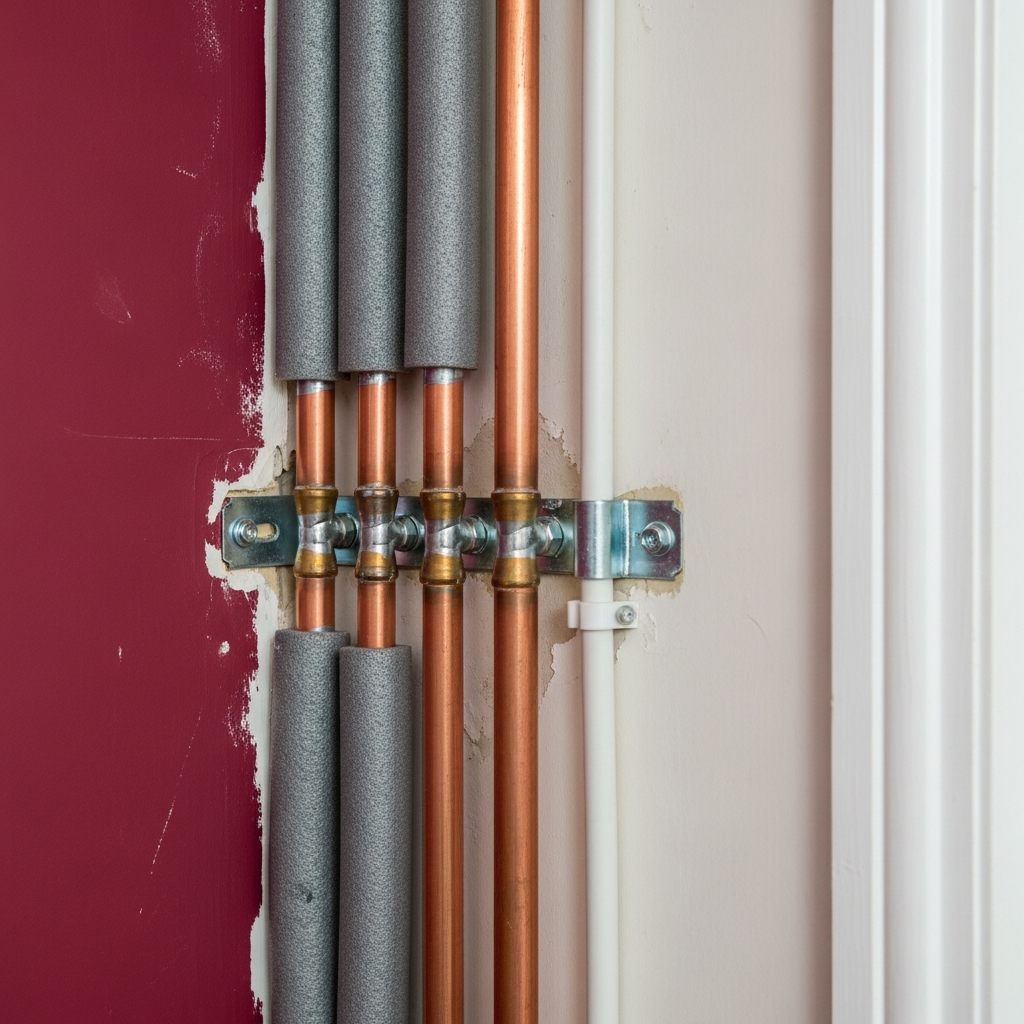
You already own a device that uses the same technology as a heat pump — your fridge. A fridge extracts heat from inside the box and dumps it into your kitchen (which is why the back of your fridge feels warm). An air source heat pump simply runs this process in the other direction: it extracts heat from the outdoor air and delivers it into your home.
This might sound too good to be true — pulling heat from cold air? But it works, and it has worked reliably for decades. Scandinavian countries, where winter temperatures routinely drop to -20°C, have been using heat pumps as their primary heating systems for years.
This article explains exactly how the technology works, in plain English, so you can understand what is happening when that box on your outside wall quietly heats your entire home.
See what a heat pump would cost for your home
Use the free calculatorNo email required. Instant results based on your property details.
The Basic Principle: Moving Heat, Not Creating It
This is the single most important thing to understand about heat pumps. A gas boiler creates heat by burning fuel. A heat pump moves heat from one place to another using a small amount of electricity.
Because it is moving existing heat rather than generating it from scratch, a heat pump can deliver significantly more heat energy than the electrical energy it consumes. For every 1 kilowatt-hour (kWh) of electricity used, a typical air source heat pump delivers between 2.5 and 4 kWh of heat.
This ratio is called the Coefficient of Performance, or COP, and it is the key measure of heat pump efficiency. We will explore COP in detail later in this article.
The Refrigeration Cycle Explained
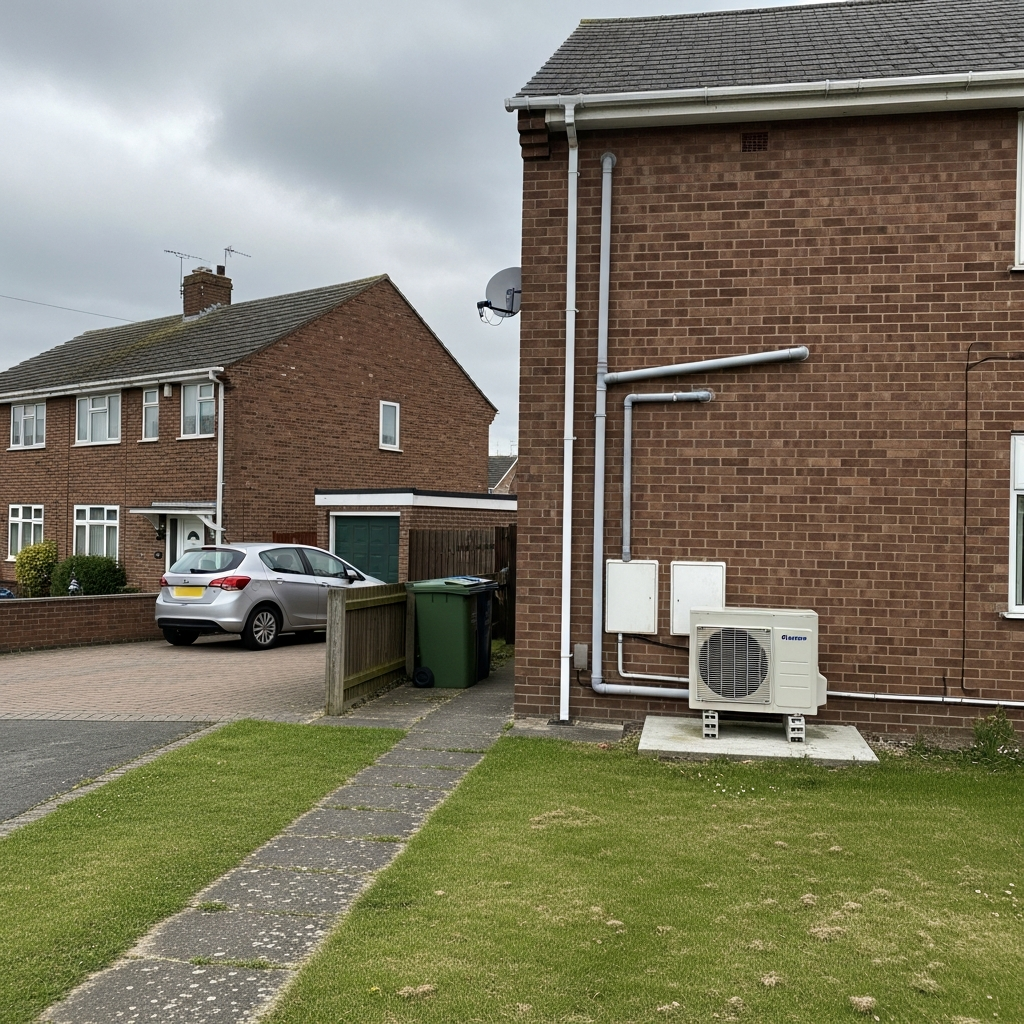
The heat pump achieves this apparent magic through the refrigeration cycle — a closed loop of four stages that continuously moves heat from outside to inside. Here is how each stage works:
Stage 1: Evaporation
A large fan on the outdoor unit draws air across a heat exchanger (the evaporator). Inside this heat exchanger is a special fluid called a refrigerant, which has a very low boiling point — typically around -25°C to -40°C, depending on the type.
Because the refrigerant's boiling point is far below the outdoor air temperature, even on a cold winter day, the air passing over the evaporator is warm enough to make the refrigerant boil and turn into a gas. This is where the heat is "captured" from the air.
Think of it this way: 5°C air feels cold to you, but to a fluid that boils at -30°C, it is extremely hot.
Stage 2: Compression
The refrigerant gas, now containing the heat absorbed from the outdoor air, passes into the compressor. This is the most important (and most expensive) component in the system.
The compressor squeezes the gas into a much smaller volume. When you compress a gas, its temperature rises — the same principle that makes a bicycle pump warm when you pump up a tyre. The compressor can increase the refrigerant temperature from perhaps 5°C to 60°C or higher.
This is the stage that requires electricity. The compressor is the main energy consumer in the system, and its efficiency largely determines the heat pump's overall COP.
Stage 3: Condensation
The hot, high-pressure refrigerant gas now passes through a second heat exchanger (the condenser), located inside your home. Here, the heat is transferred from the refrigerant to the water in your central heating system.
As the refrigerant gives up its heat to the water, it cools and condenses back into a liquid. The water, now heated to your target flow temperature (typically 35-50°C), circulates through your radiators or underfloor heating.
Stage 4: Expansion
The liquid refrigerant passes through an expansion valve, which rapidly reduces its pressure. This causes it to cool dramatically — dropping back to a very low temperature, ready to absorb heat from the outdoor air once again.
And the cycle repeats. Continuously. All winter long.
Understanding COP: The Efficiency Measure
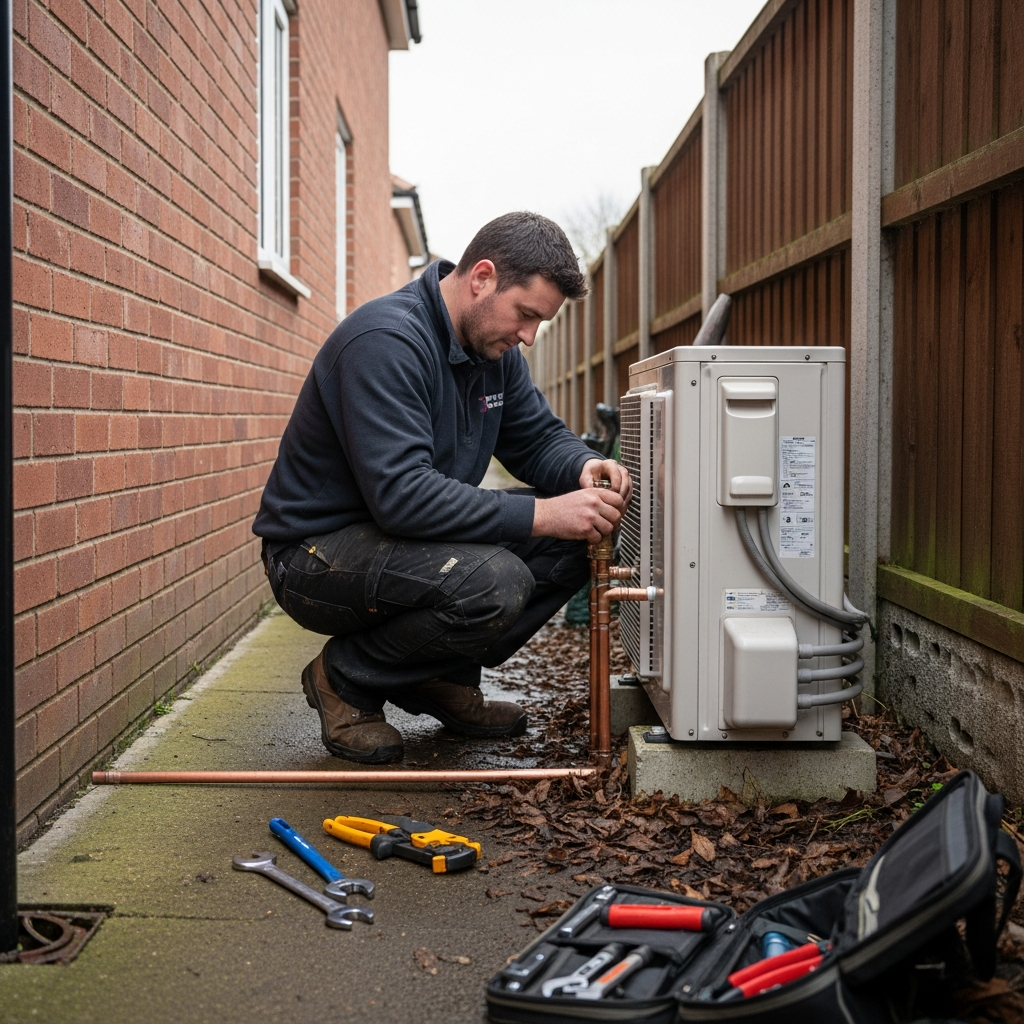
COP stands for Coefficient of Performance, and it is the single most useful number for understanding heat pump efficiency.
The calculation is simple:
COP = Heat output ÷ Electricity input
A COP of 3.0 means the heat pump delivers 3 kWh of heat for every 1 kWh of electricity it uses. In practical terms, you get three times more energy out than you put in. The remaining 2 kWh comes from the heat absorbed from the outdoor air — which is free.
However, COP is not a fixed number. It changes constantly based on conditions:
- Outdoor temperature: Higher outdoor temperatures mean more available heat, so COP increases. A heat pump might achieve a COP of 4.5 on a mild 12°C day but only 2.5 when it drops to -5°C
- Flow temperature: The temperature you ask the heat pump to deliver affects COP. Heating water to 35°C for underfloor heating requires less work than heating to 55°C for older radiators
- Humidity: Humid air contains slightly more heat energy, marginally improving COP
What Is SCOP and Why Does It Matter More?
Because COP fluctuates constantly, a more useful measure is the Seasonal Coefficient of Performance (SCOP). This is the average COP across an entire heating season, taking into account the full range of outdoor temperatures your heat pump operates in.
SCOP gives you a realistic picture of actual performance. In the UK climate, a well-installed modern air source heat pump typically achieves an SCOP of:
| Heating System Type | Typical Flow Temperature | Expected SCOP |
|---|---|---|
| Existing radiators (standard) | 45-50°C | 2.8 – 3.2 |
| Underfloor heating | 35-40°C | 3.2 – 3.8 |
| New-build (large radiators + good insulation) | 35-40°C | 3.5 – 4.2 |
Based on MCS real-world performance data from UK installations
The MCS (Microgeneration Certification Scheme) database publishes real-world SCOP data from thousands of UK installations, providing a reliable benchmark for expected performance.
For a personalised estimate of efficiency and running costs, use our heat pump calculator.
Find out your running costs in 30 seconds
Try the calculatorBased on your property size, insulation, and current fuel type.
Flow Temperature: Why It Matters So Much
Flow temperature is the temperature of the water leaving the heat pump to circulate through your heating system. This is arguably the most important factor affecting your heat pump's efficiency and running costs.
A gas boiler typically heats water to 65-75°C. A heat pump works most efficiently at much lower flow temperatures — typically 35-45°C. This is where the phrase "low temperature heating" comes from.
Here is why flow temperature matters so much:
| Flow Temperature | Typical COP | Best Suited For |
|---|---|---|
| 35°C | 3.5 – 4.2 | Underfloor heating, new-build radiators |
| 45°C | 2.8 – 3.5 | Adequately sized radiators in insulated homes |
| 55°C | 2.2 – 2.8 | Undersized radiators, poorly insulated homes |
Every degree you can reduce the flow temperature adds roughly 1-2% to efficiency. This is why system design is so critical — and why a good installer will always aim to get the flow temperature as low as possible.
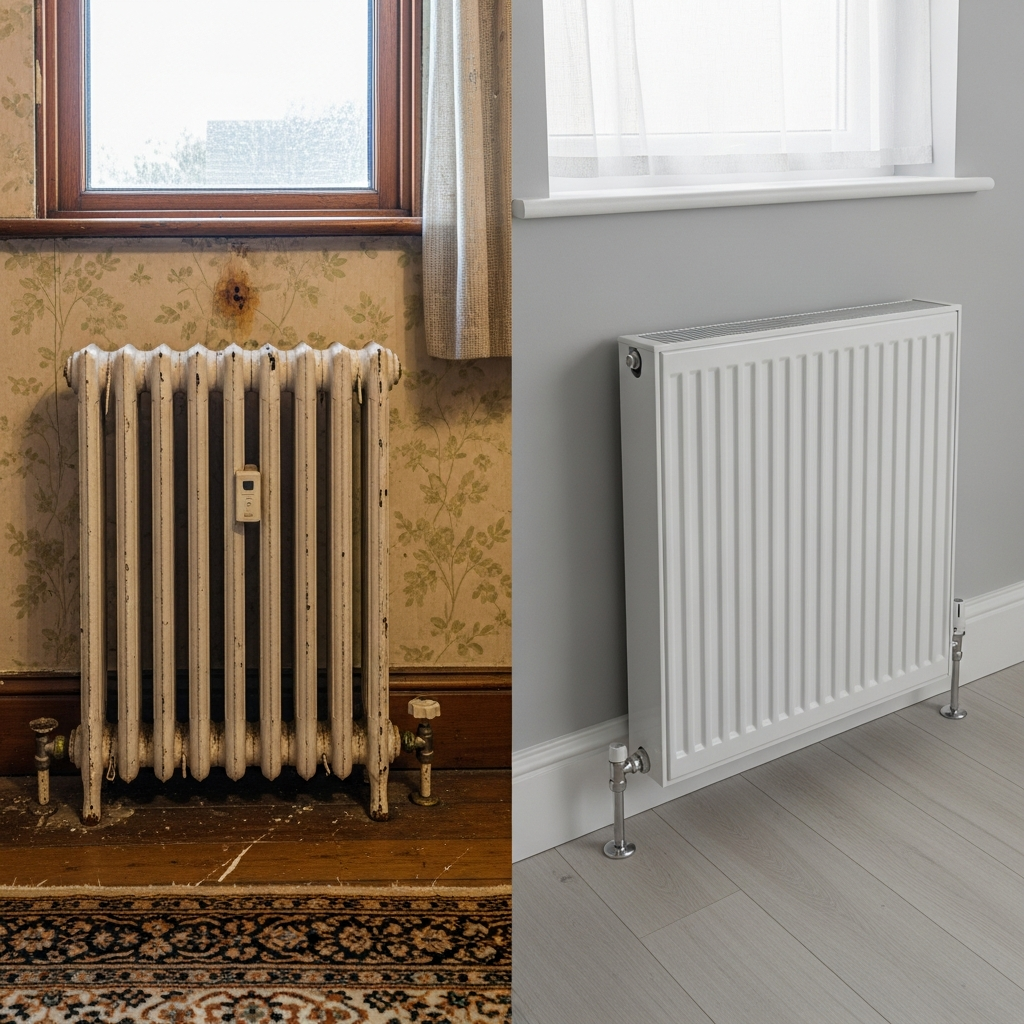
If your radiators are too small for low flow temperatures, you may need to upgrade some or all of them. Read more about this in our guide on whether you need new radiators for a heat pump.
The Defrost Cycle
When outdoor temperatures are between roughly -3°C and 5°C and humidity is high, frost can form on the outdoor heat exchanger. This is entirely normal and expected.
When frost builds up, it insulates the heat exchanger and reduces efficiency. To deal with this, the heat pump runs a defrost cycle — it briefly reverses the refrigeration cycle, sending hot refrigerant through the outdoor heat exchanger to melt the frost.
A defrost cycle typically lasts 2-10 minutes and happens every 30-90 minutes in frosty conditions. During defrost, you may notice:
- Steam or water vapour from the outdoor unit (this is completely normal)
- A brief drop in heating output (well-designed systems use a buffer tank to maintain comfort during defrost)
- A change in the sound from the outdoor unit
Modern heat pumps use intelligent defrost control, only running the cycle when sensors detect actual frost build-up, rather than on a fixed timer. This significantly improves efficiency compared to older systems.
Air-to-Water vs Air-to-Air: What Is the Difference?
The refrigeration cycle is identical in both types. The difference is in how the heat is delivered to your home:
Air-to-Water
The most common type in the UK. Heat is transferred to water, which circulates through radiators or underfloor heating. It also heats a hot water cylinder for your taps and showers. This type is eligible for the BUS grant. For full details on available funding, read our grants and funding guide.
Air-to-Air
Heat is transferred directly to indoor air via wall-mounted fan units (like air conditioning). It heats rooms quickly but cannot provide hot water. Not eligible for the BUS grant. Read more in our complete guide to air source heat pumps.
Monoblock vs Split Systems
Air source heat pumps come in two configurations:
Monoblock
All refrigerant-containing components are housed in the outdoor unit. Only water pipes connect the outdoor and indoor units. This means the installer does not need F-Gas certification to handle refrigerant, which simplifies installation and can reduce cost. Most modern ASHPs sold in the UK are monoblock designs.
Split System
The system is divided between an outdoor unit and an indoor unit, connected by refrigerant pipes. The installer must be F-Gas certified. Split systems can sometimes be more efficient because the refrigerant loop is shorter, but they are becoming less common in the domestic UK market.
For a comparison of the top brands using both configurations, see our best air source heat pump brands guide.
What About Very Cold Weather?
This is the most common concern. And it is understandable — the idea of extracting heat from air that feels bitterly cold seems counterintuitive.
But here are the facts: modern air source heat pumps are tested and rated for operation down to -20°C, and some models down to -25°C. In the UK, temperatures rarely drop below -5°C for sustained periods, so this is well within the operating range.
Yes, efficiency drops in colder weather. But a heat pump with a COP of 2.5 at -5°C is still producing 2.5 kWh of heat for every 1 kWh of electricity — that is still 250% efficient, far better than any direct electric heater.
Countries like Finland and Norway, with far harsher winters than the UK, have the highest heat pump adoption rates in Europe. The technology is proven in cold climates.
If you are considering pairing a heat pump with solar panels, they complement each other well — solar PV generates free electricity during milder months when the heat pump runs most efficiently, reducing your overall energy costs year-round.

Frequently Asked Questions
Does a heat pump use a lot of electricity?
A typical UK home with an air source heat pump uses 3,000-5,000 kWh of electricity per year for heating and hot water. At current rates with a heat pump tariff (around 17-20p/kWh), that is £500-£1,000 per year. Because the heat pump amplifies this electricity by a factor of 3 or more, it is significantly cheaper than direct electric heating. See our running costs guide for detailed figures.
Can a heat pump work with my existing radiators?
Often yes, but it depends on sizing. Your installer will calculate whether each radiator has enough surface area to deliver the required heat at a lower flow temperature. Many homes only need a few radiators upgrading, not all of them.
What refrigerant does a heat pump use?
Most modern air source heat pumps use R32 or R290 (propane) refrigerant. R290 is a natural refrigerant with very low global warming potential and is increasingly the industry standard for new models. R32 is being phased out under F-Gas regulations.
How does the heat pump know when to run?
Heat pumps use a weather compensation curve — a programmed relationship between outdoor temperature and flow temperature. As it gets colder outside, the heat pump automatically increases the flow temperature. Most systems also have room thermostats and timers for additional control. The aim is for the heat pump to run for longer periods at lower intensity, rather than cycling on and off like a boiler.
Does a heat pump make noise?
Yes, but modern units are quiet. Typical noise levels are 40-55 dB(A) at 1 metre — similar to a domestic fridge or a quiet conversation. Noise levels are higher during defrost cycles and when operating at full capacity in cold weather. Positioning the outdoor unit away from bedroom windows and neighbouring properties is important.
What is weather compensation?
Weather compensation is an automatic control strategy where the heat pump adjusts its output based on the outdoor temperature. When it is mild outside, the flow temperature is reduced, improving efficiency. When it gets colder, the flow temperature increases to maintain comfort. This is one of the key reasons heat pumps should be left running for longer periods rather than being switched on and off like a boiler.
Ready to see if a heat pump makes sense for your home?
Get your personalised estimateFree, instant, no obligation. Based on your property type, size, and current heating system.
Understanding Heat Pump Technology in Context
The refrigeration cycle that powers air source heat pumps is the same well-proven technology used in fridges, air conditioning units, and industrial cooling systems worldwide. In the context of UK home heating, understanding COP, SCOP, and flow temperatures helps homeowners make informed choices about system sizing, installation costs, and running costs. Combined with solar PV generation, a heat pump becomes an even more cost-effective and environmentally friendly heating solution. The Boiler Upgrade Scheme makes the technology accessible to a wider range of UK households than ever before.