Air Source Heat Pump Pros and Cons: Honest Assessment
Air source heat pumps are brilliant for some homes and a poor choice for others — the difference depends on insulation, current fuel type, budget, and installation quality. This is not a sales pitch. It is a fact-based guide to help you decide whether a heat pump makes sense for your situation.
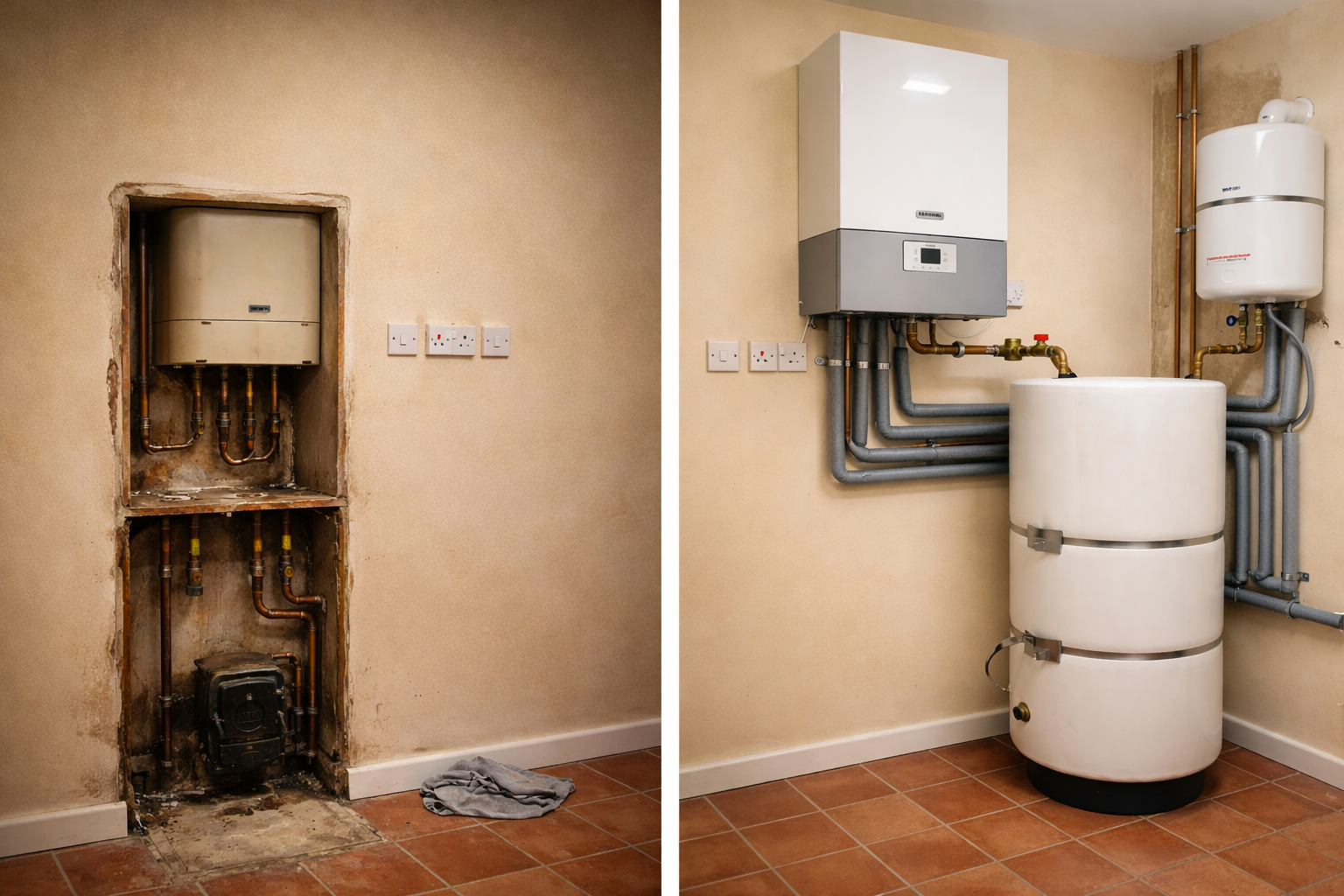
There is no shortage of articles telling you heat pumps are either the greatest invention since central heating or a government-imposed disaster. The truth, as usual, sits somewhere in between.
This is not a sales pitch. We are not here to convince you to get a heat pump. We are here to lay out the genuine advantages and disadvantages so you can decide whether one makes sense for your specific situation. Because the honest answer is: heat pumps are brilliant for some homes and a poor choice for others.
Check if a heat pump makes financial sense for you
Use the free calculatorNo email required. See costs, savings, and payback for your specific property.
The Pros
1. Significantly Lower Carbon Emissions
This is the core environmental argument for heat pumps, and it holds up well. A modern air source heat pump produces roughly 50-70% less CO2 than a gas boiler for the same amount of heating, based on the current UK electricity grid mix.
As the grid continues to decarbonise (with more wind, solar, and nuclear replacing gas-fired power stations), this advantage will only grow. By 2035, a heat pump is projected to produce around 80% less CO2 than a gas boiler.
If reducing your carbon footprint is a priority, a heat pump is the most impactful change you can make to your home's emissions.
2. Lower Running Costs Than Oil and LPG
If you currently heat with oil, LPG, or direct electric heating, a heat pump will almost certainly reduce your annual fuel bills. The savings can be substantial:
The comparison with mains gas is tighter — see the cons section for that honest assessment. For detailed figures, see our running costs breakdown.
3. Government Grants Reduce Upfront Cost
The £7,500 BUS grant in England and Wales has transformed the economics. For many smaller and mid-sized homes, the out-of-pocket cost of a heat pump installation after the grant is comparable to a new gas boiler installation.
In Scotland, the combination of interest-free loans and cashback grants can make the upfront cost even lower. And for households on benefits, ECO4 can cover the entire cost. Full details in our grants guide.
4. Long Lifespan
Air source heat pumps typically last 20-25 years, compared to 12-15 years for a gas boiler. This means you are likely to get through two boilers in the time a single heat pump keeps running. Over a 25-year period, that avoided boiler replacement (£3,000-£4,500) significantly improves the total cost of ownership.
5. Low Maintenance
Annual servicing is recommended and typically costs £100-£150. There is no gas safety inspection, no combustion check, no flue test. The outdoor unit needs occasional cleaning and the system needs a periodic check on refrigerant pressures, but overall maintenance demands are lower than a gas boiler.
6. Consistent Comfort
Heat pumps deliver a steady, even warmth rather than the on-off cycling of a gas boiler. Most owners describe the comfort level as superior — no cold periods between heating cycles, and a more uniform temperature throughout the house. Read real owner reviews to see this confirmed repeatedly.
7. Can Provide Cooling
Some air source heat pump models can reverse their operation in summer to provide cooling. As UK summers become warmer, this dual functionality adds genuine value — particularly compared to a gas boiler, which provides no cooling capability at all.

8. Future-Proofing
The UK government has confirmed that new gas boiler installations will be phased out in new-build homes, and there are strong signals that existing homes will face increasing pressure to decarbonise. Installing a heat pump now puts you ahead of the curve and avoids potential future disruption.
9. No Gas Supply Needed
For off-gas-grid properties — around 4 million homes in the UK — a heat pump eliminates reliance on oil or LPG deliveries, volatile fuel prices, and the hassle of managing fuel supply. It also removes the gas standing charge (around £100/year) for those on mains gas who fully switch.
See how the pros and cons apply to your specific home
Get a personalised estimateCosts, savings, and payback period based on your property details.
The Cons
1. Higher Upfront Cost Than a Gas Boiler
Even with the £7,500 BUS grant, most heat pump installations cost more than a like-for-like gas boiler replacement. A new gas boiler costs £2,000-£4,500 installed. A heat pump after the grant costs £2,500-£10,000+ depending on property size and complexity.
For a straightforward installation in a small-to-medium home, the difference may be only £1,000-£2,000 after the grant. For larger or more complex properties, the gap widens significantly. See our full cost breakdown for detailed figures.
2. Running Costs vs Mains Gas Are Not Always Lower
This is the honest truth that many pro-heat-pump articles gloss over. At current UK energy prices (electricity around 24p/kWh standard rate, gas around 6p/kWh), a heat pump needs to achieve an SCOP of 4.0 just to match gas on cost per kWh of heat delivered.
In practice, many heat pump installations achieve an SCOP of 2.8-3.5, which means running costs can be similar to gas or slightly higher — not lower. The picture improves with a heat pump electricity tariff (17-20p/kWh), which brings running costs below gas for most well-designed systems.
| Factor | Impact on Running Cost vs Gas |
|---|---|
| Heat pump tariff (17-20p/kWh) | Makes ASHP cheaper than gas in most cases |
| Standard tariff (24-25p/kWh) | ASHP may cost slightly more than gas |
| Good system design (SCOP 3.2+) | Significantly reduces gap or makes ASHP cheaper |
| Poor system design (SCOP below 2.8) | ASHP likely more expensive than gas |
| Well-insulated home | Lower demand favours heat pump economics |
3. May Require Radiator Upgrades
Heat pumps deliver water at lower temperatures than boilers (typically 35-45°C vs 65-75°C). This means your existing radiators may not be large enough to heat your rooms adequately. Some or all radiators may need to be replaced with larger models, adding £1,000-£5,000 to the installation cost.
Underfloor heating works perfectly with heat pumps because of the large surface area, but retrofitting it is expensive and disruptive.
4. You Need a Hot Water Cylinder
Heat pumps cannot work as combis — you need a hot water cylinder. If you currently have a combi boiler, you will need to find space for a cylinder (typically 200-250 litres, about 600mm diameter and 1600mm tall). In smaller homes, finding this space can be challenging.
5. Outdoor Unit Takes Up Space
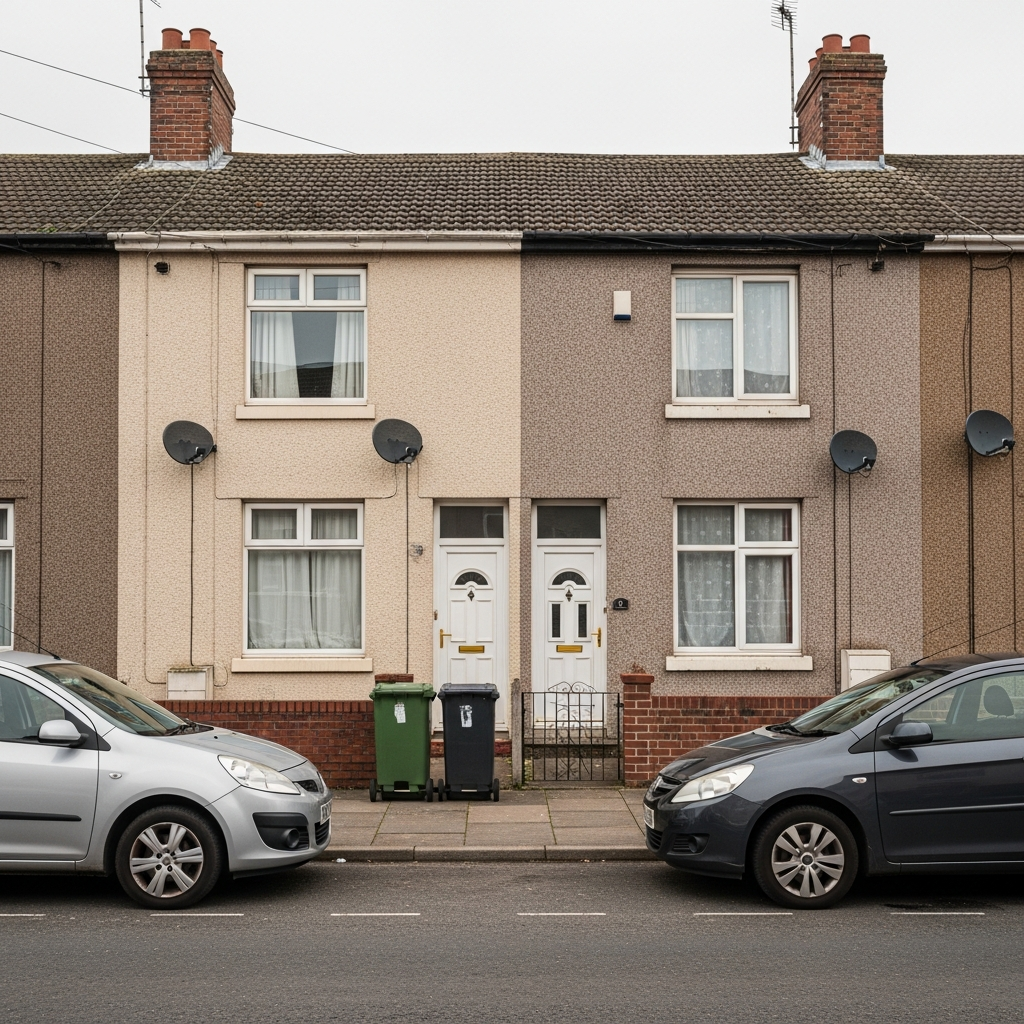
The outdoor unit is roughly the size of a large suitcase or washing machine. It needs to be positioned with adequate clearance for airflow (typically 300mm at the sides, 1000mm+ in front) and away from bedroom windows and boundary lines. For some properties — particularly small terraced houses with limited outdoor space — positioning can be difficult.
6. Noise
Modern heat pumps are quiet — typically 40-55 dB(A) at 1 metre, which is similar to a fridge. But they are not silent. The outdoor unit runs for many hours each day (and sometimes overnight), producing a constant low hum.
For most properties, this is not an issue. But in very quiet rural settings, for terraced houses where the unit is close to neighbouring properties, or where the unit is near a bedroom window, noise can be a concern. Permitted development rules limit noise to 42 dB(A) at the nearest neighbour's boundary. See our brand comparison for noise levels by model.
7. Performance Drops in Very Cold Weather
Heat pump efficiency decreases as outdoor temperatures drop. A system achieving a COP of 3.5 at 7°C might only manage 2.5 at -5°C. This means the heat pump uses more electricity on the coldest days — precisely when you need the most heat. Learn more about this in our guide to how heat pumps work.
8. More Disruptive to Install
A gas boiler swap takes 1-2 days with minimal disruption. A heat pump installation takes 2-4 days, involves work both inside and outside the property, and may require radiator changes, pipework modifications, and electrical work. Read our installation guide for a realistic assessment.
9. Finding a Good Installer Is Harder
The number of MCS-certified heat pump installers has grown rapidly, but there are still significantly fewer experienced heat pump installers than gas engineers. This means longer waiting times for installations and, in some areas, limited choice.
When a Heat Pump Is a Great Choice
- Off-gas-grid properties: Replacing oil, LPG, or direct electric heating with a heat pump is almost always financially and environmentally beneficial
- Well-insulated homes: Properties with good insulation, double/triple glazing, and adequately sized radiators or underfloor heating will see the best performance
- Renovations and extensions: If you are already replacing your heating system as part of a renovation, the marginal extra cost of a heat pump (vs a boiler) is small, especially with the grant
- New builds: Designed from scratch with a heat pump in mind, new builds deliver the best possible performance
- Environmental motivation: If reducing your carbon footprint is a priority, a heat pump is the single most impactful home improvement you can make
When a Heat Pump May Not Be Right
- Poorly insulated homes with no budget for improvement: A heat pump in a draughty, uninsulated home will struggle and cost a lot to run. Insulate first, heat pump second
- Very limited outdoor space: If there is genuinely nowhere to put the outdoor unit that meets planning and noise requirements
- No space for a hot water cylinder: If you have a combi boiler and absolutely cannot find space for a cylinder
- Very tight budget: If you can only afford the cheapest option and are not eligible for grants, a gas boiler is still cheaper upfront
- Temporary home: If you plan to move within 2-3 years, the payback period may not justify the investment (though it can add property value)
Combining a heat pump with solar panels can tip the economics further in favour of a heat pump, especially for properties with good roof orientation and adequate space.
Frequently Asked Questions
Are heat pumps worth it in the UK?
For many homes, yes — particularly off-gas-grid properties, well-insulated homes, and those eligible for grants. For poorly insulated homes on mains gas with no willingness to invest in improvements, the case is weaker. See our dedicated analysis.
Will heat pumps get cheaper?
Yes. Industry forecasts predict continuing cost reductions of 3-5% per year as manufacturing scales up and competition increases. However, the BUS grant may not continue indefinitely, so waiting could mean missing the grant even if the equipment is cheaper.
Do heat pumps work in old houses?
They can, but older houses often need preparation — insulation improvements, radiator upgrades, and careful system design. The investment in preparation pays off in lower running costs and better comfort.
What about hybrid heat pumps?
Hybrid systems pair a small heat pump with a gas boiler. The heat pump handles mild weather (when it is most efficient) and the boiler takes over during the coldest periods. This can be a good compromise for properties where a full heat pump replacement is not practical, though it does not eliminate gas use entirely.
Can I switch back to a gas boiler if I do not like the heat pump?
Technically yes, though it would be expensive and waste the investment. Very few heat pump owners actually switch back — most dissatisfaction is resolved by adjusting system settings or user behaviour rather than by removing the heat pump.
Will a heat pump add value to my home?
Evidence suggests that energy-efficient features, including heat pumps, do add value — particularly as EPC ratings become more important to buyers. Properties with heat pumps also tend to sell faster. However, quantifying the exact value addition is difficult.
Ready to see the numbers for your home?
Get your personalised estimateFree, instant, no obligation. See costs, savings, and payback for your specific situation.
Understanding Heat Pump Pros and Cons in Context
The pros and cons of air source heat pumps must be assessed in the context of each individual property and household. Key variables include the home's heat demand and sizing requirements, current fuel type, installation budget, and eligibility for government grants. Real owner experiences confirm that well-insulated homes with quality installations consistently report positive outcomes. Combining a heat pump with solar PV further improves the financial case by reducing electricity costs.