Home Heat Pump Guide

Heat Pump for a Barn Conversion

Barn conversions are some of the most characterful homes in the UK. They are also some of the most challenging to heat. High ceilings, large open-plan spaces, stone walls, and exposed timber frames create a unique set of requirements that conventional heating systems often struggle with.

A heat pump — particularly a ground source heat pump — is often the ideal solution for a barn conversion. This guide explains why, and walks through the practical considerations of sizing, insulation, installation, and cost.

Why Heat Pumps Suit Barn Conversions

Barn conversions and heat pumps are a natural pairing for several practical reasons:

  • Rural location: Most barns are in rural areas, off the gas grid. Without access to mains gas, the alternatives are oil, LPG, or electricity — all more expensive per kWh than a heat pump
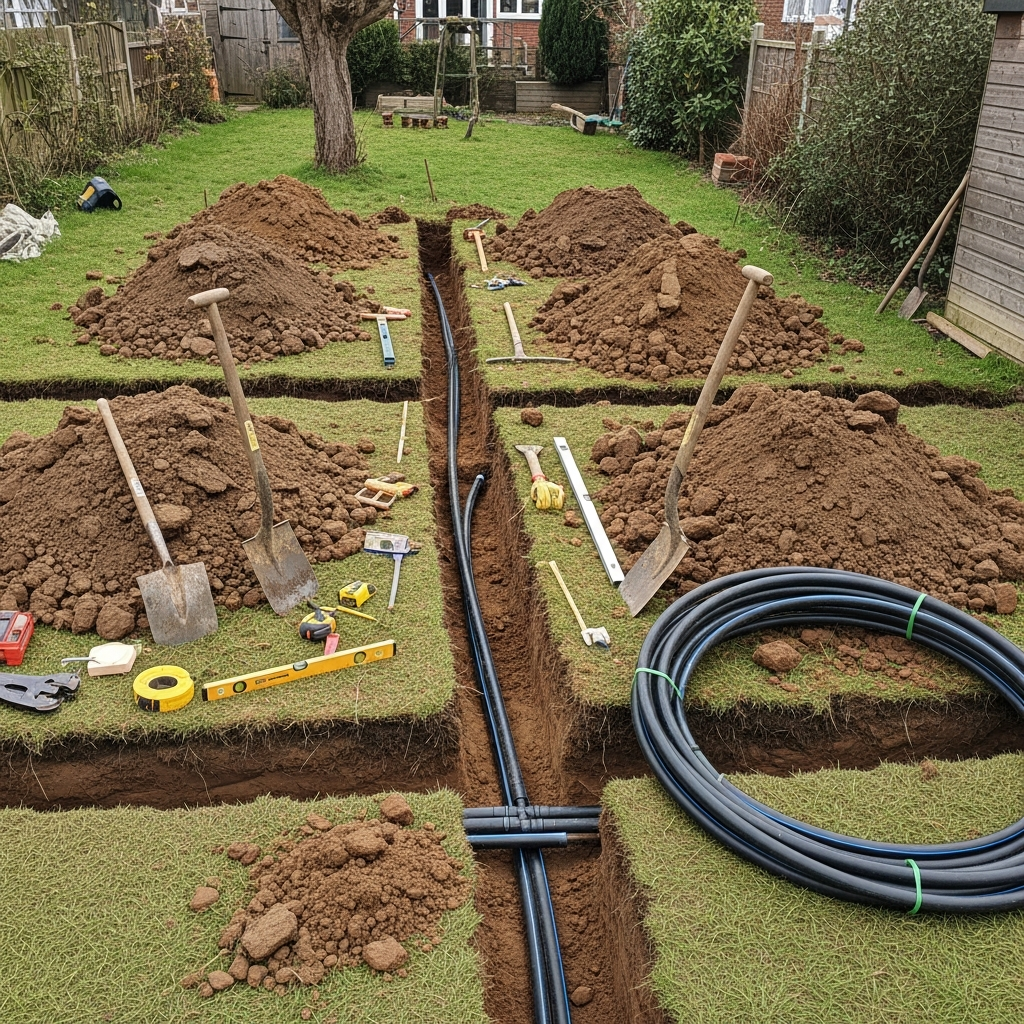
  • Land availability: Barns typically come with surrounding land, making ground source heat pump installation straightforward
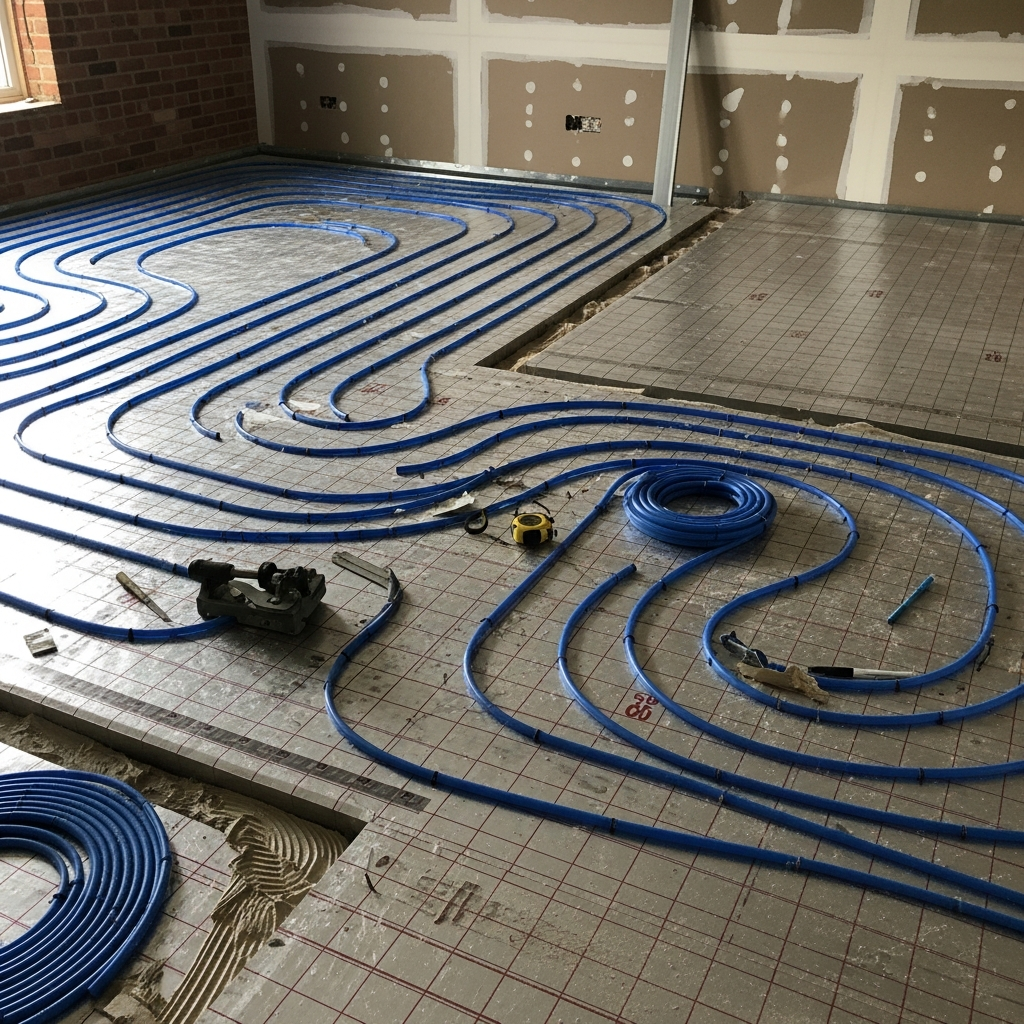
  • Low-temperature heating: Barn conversions often use underfloor heating, which operates at exactly the temperatures where heat pumps are most efficient (30-40°C)
  • New build standards: A barn conversion is treated as a new build for Building Regulations purposes, meaning it must meet current energy efficiency standards — and a heat pump is the most straightforward way to comply

The Insulation Challenge

The biggest challenge with barn conversions is insulation. Original barn structures were never designed to be heated, and their construction presents specific issues:

Stone or Brick Walls

Most barns have solid stone or brick walls, typically 300-600mm thick. While thick stone has some thermal mass (it stores heat and releases it slowly), it is a poor insulator. Options include:

  • Internal wall insulation: Rigid insulation boards or spray foam applied to the inside of external walls, then finished with plasterboard. This is the most common approach but reduces internal dimensions slightly
  • Breathable insulation: For stone barns, breathable materials like wood fibre or sheep's wool are preferable to plastic-based insulation, as they allow moisture to pass through and prevent damp problems
  • Lime render with insulation: External insulated render can be applied in some cases, though this alters the building's appearance and may not be permitted for listed barns

High Ceilings and Vaulted Spaces

Barn conversions often feature double-height spaces or vaulted ceilings with exposed trusses. While architecturally stunning, these spaces are expensive to heat:

  • Hot air rises to the apex of the roof where it is useless
  • The surface area of the building envelope is much larger than a conventional home of the same floor area
  • Heat loss through a large roof area is significant

Solutions include ceiling fans to push warm air back down, mezzanine floors that capture warm air at height, and ensuring the roof insulation is exceptional (300mm+ of insulation between and over the rafters).

Floor Insulation

Most barn conversions involve laying a new floor, which is the perfect opportunity to install both underfloor insulation and underfloor heating. A minimum of 100mm rigid insulation (typically PIR board) under the floor slab prevents heat loss to the ground.

Underfloor Heating: The Perfect Partner

Underfloor heating and heat pumps are an ideal combination, especially in barn conversions:

  • Low flow temperature: UFH operates at 30-40°C, exactly where heat pumps achieve their highest efficiency (COP 4.0-5.0)
  • Even heat distribution: The entire floor radiates heat evenly, essential in large open-plan spaces where radiators would create hot and cold spots
  • No visual impact: No radiators on walls means you can showcase the barn's original stonework and timber features
  • Thermal mass: A concrete screed floor with UFH acts as a thermal battery, storing heat and releasing it gradually

If you are converting a barn, specifying underfloor heating from the outset is strongly recommended. Retrofitting UFH is much more expensive and disruptive.

Ground Source vs Air Source for Barn Conversions

Ground Source Heat Pumps

Ground source heat pumps are often the best choice for barn conversions because:

  • Higher efficiency: GSHP achieves COP 4.0-5.0, compared to 3.0-4.0 for ASHP. For a large, hard-to-heat building, this efficiency advantage translates into meaningful savings
  • No visual impact: No outdoor unit — important if the barn is listed or in a conservation area
  • No noise: Virtually silent operation
  • Available land: Most barn conversions have enough surrounding land for horizontal ground loops or vertical boreholes
  • Consistent performance: Ground temperature remains at 10-12°C year-round, so there is no drop in performance during cold weather

Air Source Heat Pumps

Air source heat pumps are a viable alternative if:

  • Budget is tighter (ASHP is typically £3,000-£8,000 cheaper than GSHP)
  • Ground conditions are unsuitable for loops or boreholes (rocky ground, for example)
  • The barn is not listed and there are no visual impact concerns

For a large barn, you may need a larger ASHP (12-20 kW), which will be physically larger and potentially noisier than units for conventional homes. Placement should be carefully considered to minimise noise and visual impact.

Sizing a Heat Pump for a Barn Conversion

Barn conversions typically require larger heat pumps than standard homes of the same floor area, due to higher heat loss from high ceilings, large glazed openings, and stone walls.

Typical Sizing Guide

Floor area Insulation level Heat pump size
100-150 m² Well insulated 8-12 kW
100-150 m² Moderate insulation 12-16 kW
150-250 m² Well insulated 12-18 kW
150-250 m² Moderate insulation 16-24 kW
250+ m² Well insulated 18-30 kW

These are rough guides only. A detailed room-by-room heat loss calculation, accounting for ceiling heights, glazing areas, and insulation specifications, is essential. For accurate cost estimates, get a professional survey.

Costs for Barn Conversion Heat Pump Systems

Heating a barn conversion with a heat pump is a significant investment, but it is comparable to the cost of an oil or LPG system when you factor in ongoing running costs.

Component ASHP cost GSHP cost
Heat pump unit £5,000 – £10,000 £8,000 – £15,000
Ground loops/boreholes N/A £5,000 – £12,000
Underfloor heating (new build) £3,000 – £6,000 £3,000 – £6,000
Hot water cylinder £800 – £1,500 £800 – £1,500
Installation and commissioning £3,000 – £5,000 £3,000 – £5,000
Total before grant £12,000 – £22,000 £20,000 – £40,000
BUS grant -£7,500 -£7,500
Total after grant £4,500 – £14,500 £12,500 – £32,500

The BUS grant of £7,500 applies to barn conversions, subject to standard eligibility criteria. Get personalised quotes through our free service.

Planning and Building Regulations

Planning Permission

The barn conversion itself requires planning permission (Class Q permitted development or a full planning application). The heat pump installation is typically included within the conversion plans. If you are adding an ASHP to an already-converted barn, permitted development rights usually apply unless the building is listed or in a conservation area.

Building Regulations

Barn conversions must comply with current Building Regulations, including Part L (conservation of fuel and power). A heat pump system, especially combined with underfloor heating and good insulation, is one of the simplest ways to meet Part L requirements. Your building control officer will need to approve the heating system as part of the overall conversion.

Running Cost Comparison

For a 150m² barn conversion, approximate annual heating costs:

  • Oil boiler: £1,800 – £2,500/year
  • LPG boiler: £2,000 – £2,800/year
  • Air source heat pump: £900 – £1,400/year
  • Ground source heat pump: £700 – £1,100/year

The savings from a GSHP over oil or LPG can be £1,000-£1,700 per year, meaning a GSHP can pay for itself within 10-15 years even before considering the BUS grant. See our running cost guide for detailed calculations.

Design Tips for Barn Conversion Heating

  • Zone your heating: Barn conversions often have a mix of double-height living spaces and conventional-height bedrooms. Zone the UFH so you can heat different areas independently
  • Use thermal mass wisely: A stone floor with UFH acts as a heat store. Set the heat pump to warm the floor during off-peak electricity hours and let the thermal mass release heat gradually
  • Consider ceiling fans: In double-height spaces, a slow-turning ceiling fan pushes warm air back down to living level, improving comfort and reducing energy use
  • Plan the plant room: A barn conversion should include a dedicated plant room for the heat pump indoor unit, hot water cylinder, manifolds, and controls. This is much easier to plan during the conversion than to retrofit later
  • Buffer tank: For larger systems, a buffer tank helps manage the heating demand across different zones and prevents short-cycling

Frequently Asked Questions

Is a heat pump suitable for a large barn conversion?

Yes, heat pumps are available in sizes up to 40kW or larger for domestic use. Very large barn conversions may use a cascade system with two heat pumps working together. The key is proper sizing based on an accurate heat loss calculation that accounts for the barn's specific characteristics.

Can I use radiators instead of underfloor heating?

Yes, but underfloor heating is strongly recommended for barn conversions. Radiators need to be larger to work at heat pump flow temperatures, and in open-plan spaces they are less effective at distributing heat evenly. If you do use radiators, oversized aluminium models or fan convectors work best with heat pumps.

What if my barn is listed?

Many converted barns are listed buildings. A ground source heat pump is usually the best option as it has no visual impact. If you prefer an air source unit, you will need Listed Building Consent for the external unit. See our guide to heat pumps in listed buildings.

Should I install the heat pump during the conversion or after?

During the conversion, without question. Installing underfloor heating, pipework, and a plant room during the build is far cheaper and less disruptive than retrofitting. The heat pump system should be part of the conversion design from the outset.

Do barn conversions qualify for the BUS grant?

Yes, provided the barn conversion is complete (or being completed as a dwelling) and meets the standard BUS eligibility criteria: MCS-certified installer, valid EPC, and replacing a fossil fuel heating system or electric heating. New conversions that have never had a heating system also qualify.