Air Source vs Ground Source Heat Pump: Complete UK Comparison
Air source heat pumps suit 85% of UK installations — they are cheaper, faster to install, and work in almost any property. Ground source systems are more efficient and virtually silent, but cost roughly double and need either a large garden or expensive boreholes. Here is how to choose the right type for your home.
If you have decided that a heat pump is right for your home, the next question is which type. Both air source and ground source heat pumps extract renewable heat from the environment, but they do so in fundamentally different ways. For broader context on heat pumps versus other heating systems, see our comparison pillar guide.
See which type works for your property and budget
Use the free calculatorNo email required. Instant results for air source or ground source.
How Each Type Works
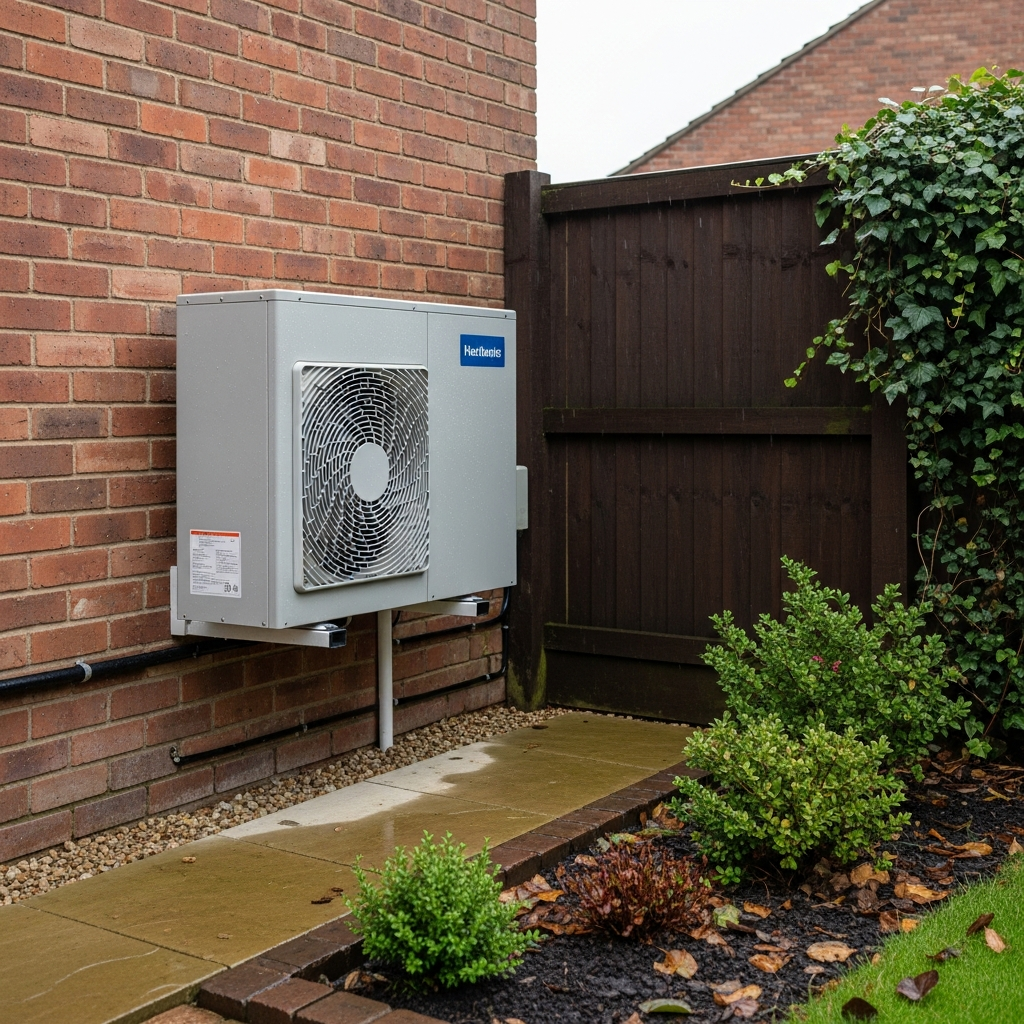
Air source (ASHP): Sits outside your home, absorbs warmth from ambient air via a fan and evaporator. Works in temperatures down to -25°C. Accounts for roughly 85% of UK heat pump installations.
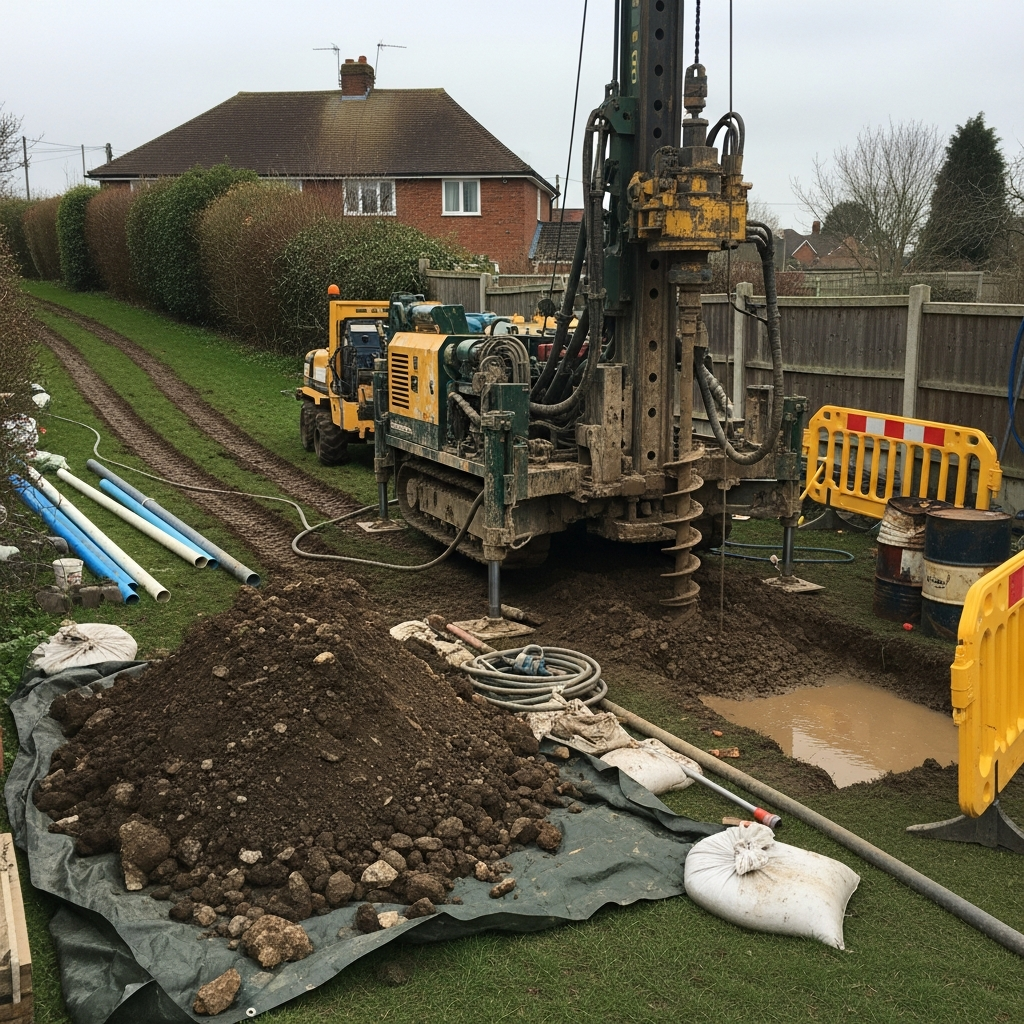
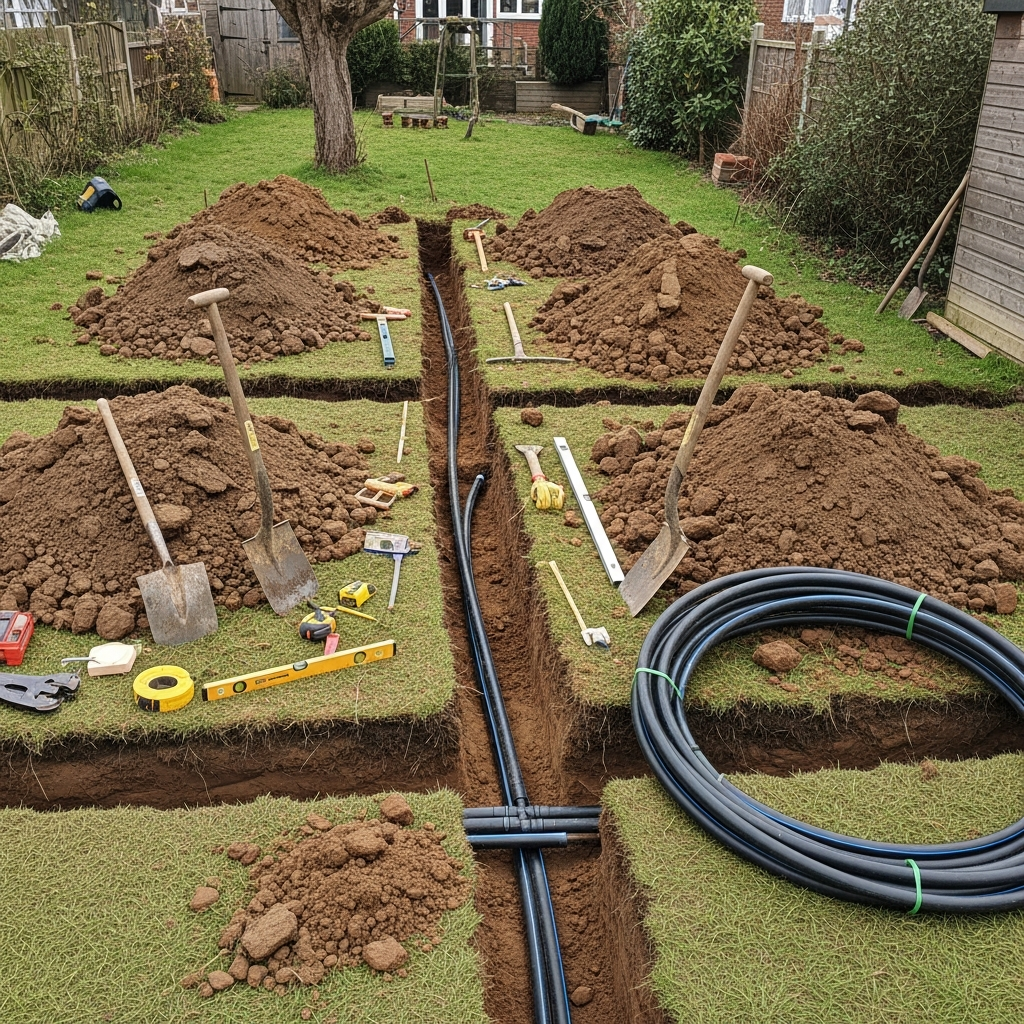
Ground source (GSHP): Extracts heat from the ground via buried pipe loops where temperature stays stable at 8-12°C year-round. Two options: horizontal trenches (1.5-2m deep, needing large garden) or vertical boreholes (60-200m deep, needing specialist drilling).
| Feature | Air Source | Ground Source |
|---|---|---|
| Heat source | Outdoor air | Ground (8-12°C constant) |
| Seasonal COP | 2.8 - 3.5 | 3.5 - 4.5 |
| Installation cost (after grant) | £4,000 - £8,500 | £10,500 - £27,500 |
| Installation time | 2-3 days | 1-2 weeks |
| Noise | 40-50 dB(A) at 1m | Virtually silent |
| Garden space needed | Minimal | Large (trenches) or drill access (boreholes) |
| Lifespan (unit) | 15-20 years | 20-25 years |
| Ground loop lifespan | N/A | 50+ years |
| UK market share | ~85% | ~15% |
Installation Cost Comparison
Air Source (After Grant)
£4,000 - £8,500
Before grant: £10,000 - £16,000
Ground Source (After Grant)
£10,500 - £27,500
Before grant: £18,000 - £35,000
Cost Difference
£6,500 - £19,000
Almost entirely due to ground loop
Both types qualify for the £7,500 BUS grant. The cost gap is driven by ground loop excavation or drilling. See our heat pump cost guide for detailed breakdowns.
Efficiency and Performance
GSHP saves ~£245/year. Over 20 years (3% inflation): ~£6,600 total saving.
The GSHP saves roughly £245 per year. Over 20 years, that adds up to approximately £6,600. But the additional installation cost is £8,000 to £19,000 — meaning ground source rarely pays for itself through efficiency alone. Pairing either type with solar panels reduces running costs further.
Get quotes for both air source and ground source
Compare installer quotesMCS-certified installers assess which type suits your property.
Land and Space Requirements
Air source: Outdoor unit roughly 1m x 0.4m x 1m on a concrete pad. Almost any house with a garden, patio, or side passage can accommodate one.
Ground source: Horizontal trenches need 100-200 square metres of garden. Vertical boreholes need less surface area but specialist drilling and access for a drill rig.
Noise
Air source: 40-50 dB(A) at 1 metre — comparable to a quiet conversation. Must comply with permitted development noise limits. Careful positioning reduces neighbour impact.
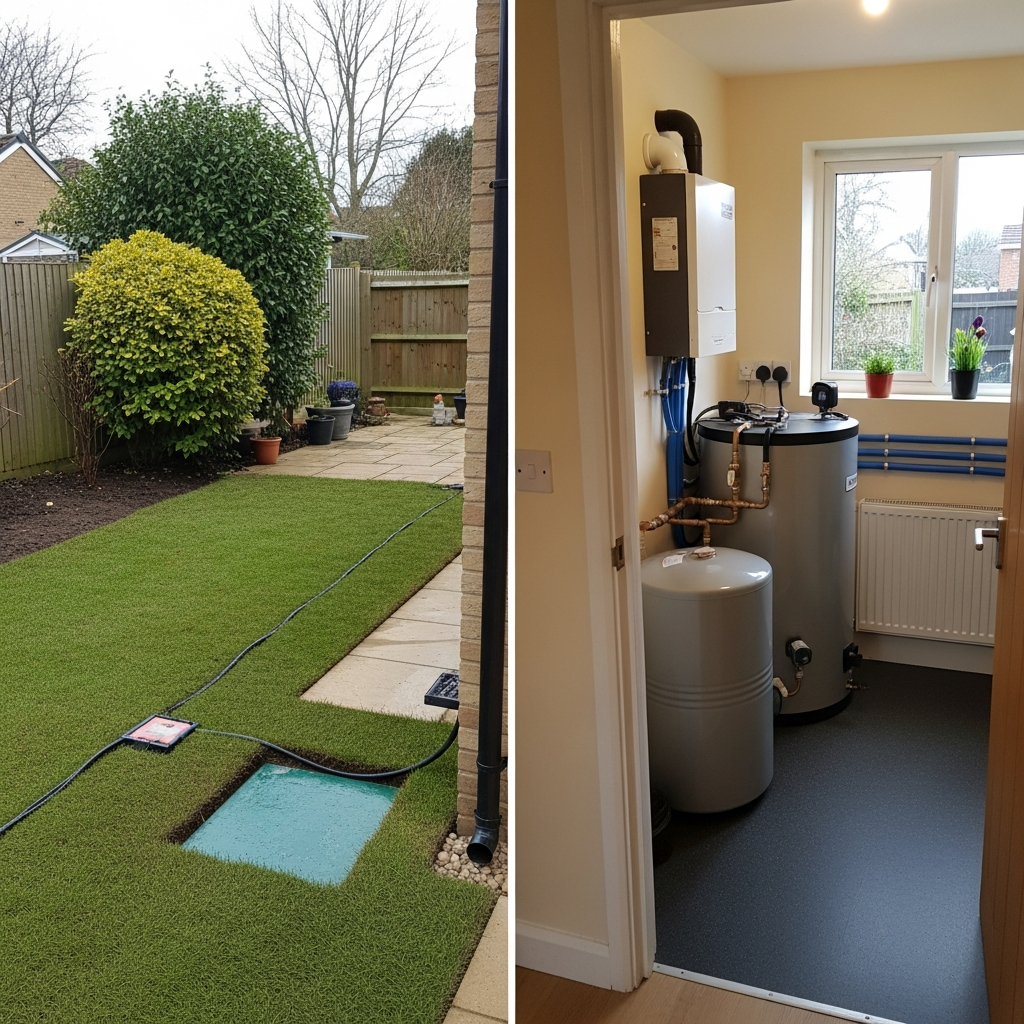
Ground source: Virtually silent. The unit sits indoors and the ground loop makes no noise. A clear advantage where noise sensitivity is a concern.
Lifespan and Reliability
Air source: 15-20 years. The outdoor unit is exposed to weather and the fan eventually needs replacement.
Ground source: 20-25 years for the indoor unit, and the ground loop lasts 50+ years. When the unit needs replacing, you connect a new one to the existing ground loop at a fraction of the original cost. This long-term durability is one of the strongest arguments for ground source in properties where you plan to stay for decades.
Which Type Suits Your Home?
Choose air source if: You have a standard suburban or urban home with limited garden space, moderate budget, or want the simplest, fastest installation.
Choose ground source if: You have a large garden or land, can afford the higher upfront cost, noise is a critical concern, you are building a new home, or you plan to stay 20+ years.
Use our suitability checker for guidance, or request quotes from MCS-certified installers who can assess your property for both types.
Find out which heat pump type suits your home
Free suitability checkerTakes 60 seconds. Or get quotes from MCS-certified installers directly.
Frequently Asked Questions
Is a ground source heat pump worth the extra cost?
For most homes, no — the running cost savings do not recover the additional installation expense. However, for large properties with high heat demands, very long-term ownership plans, or new builds where ground loop costs are lower, a GSHP can be excellent value over its lifetime.
Which is more efficient, air source or ground source?
Ground source heat pumps are more efficient, with typical seasonal COPs of 3.5 to 4.5 compared to 2.8 to 3.5 for air source. The ground provides a warmer, more stable heat source than cold winter air.
Do ground source heat pumps work in small gardens?
Vertical boreholes can work in smaller gardens, as they go deep rather than wide. However, drilling adds significant cost (£8,000 to £18,000). For most small gardens, an air source heat pump is more practical.
How long does each type last?
Air source heat pumps typically last 15 to 20 years. Ground source units last 20 to 25 years, and the ground loop itself can last 50+ years.
Which type qualifies for the BUS grant?
Both types qualify for the Boiler Upgrade Scheme grant of £7,500. The grant amount is the same regardless of type.
Can I install a ground source heat pump myself?
No. Ground source installations require MCS-certified installers and specialist groundwork contractors. DIY installation would also disqualify you from the BUS grant.
About this guide: This article is part of our comparison and decision hub. Both air source and ground source heat pumps are eligible for the £7,500 BUS grant. Pairing either type with solar panels creates a complete renewable energy system for your home.