Heat Pump Concrete Pad and Base Requirements
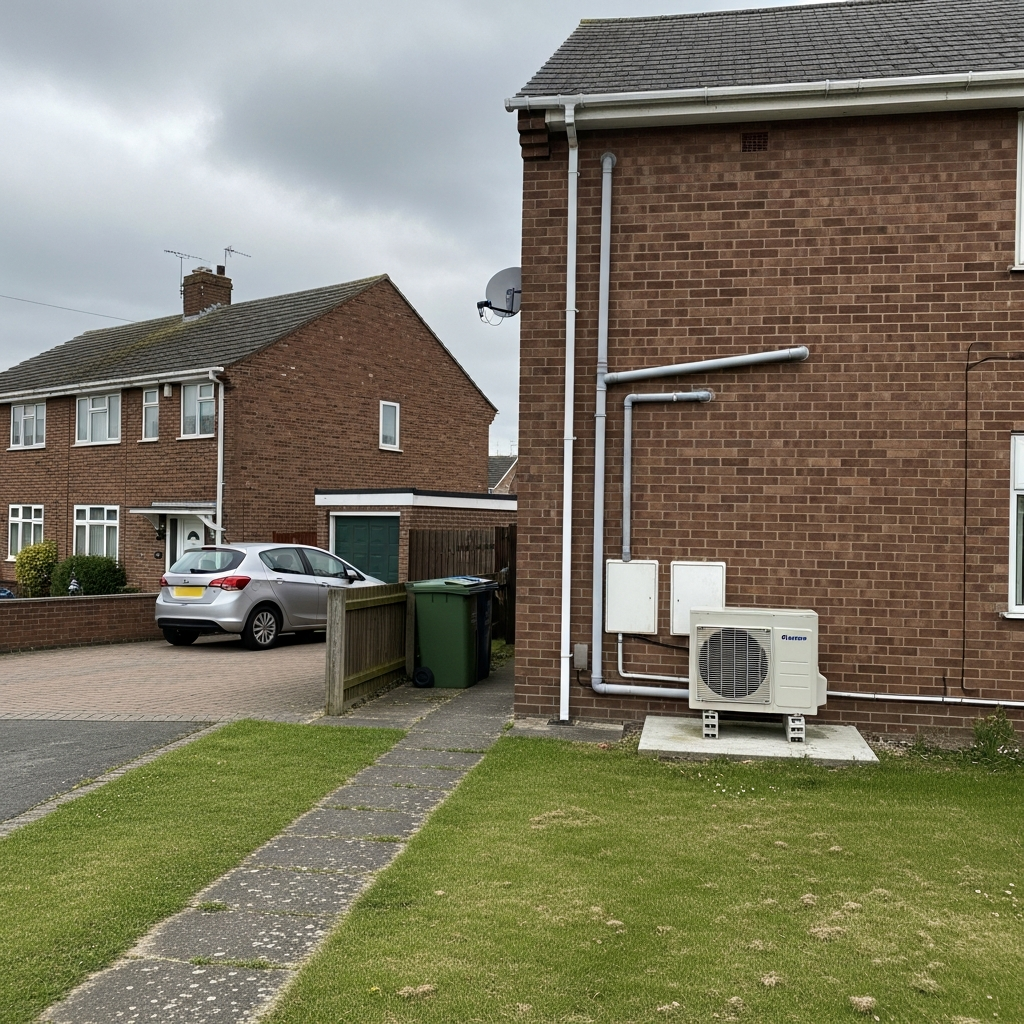
Every air source heat pump needs a solid, level base to sit on. This might sound like a minor detail compared to the heat pump itself, but getting the base right is important. A poor base can cause vibration problems, noise issues, water pooling, and in the worst case, damage to the unit itself.
The good news is that the base is one of the simpler parts of the installation, and it is something handy homeowners can prepare in advance to save on installation costs. This guide explains what is needed, the options available, and how to get it right.
Why the Base Matters
An air source heat pump outdoor unit typically weighs 60-120kg depending on the model. When running, the compressor generates vibrations that need to be absorbed rather than transmitted into the ground and building structure. The base serves several important functions:
- Structural support: Bearing the weight of the unit safely and permanently
- Level surface: Ensuring the unit sits perfectly flat — an unlevel heat pump can cause refrigerant and drainage problems
- Vibration isolation: Providing a stable foundation that, combined with anti-vibration mounts, minimises noise transmission
- Drainage: Allowing defrost water to drain away freely
- Height: Raising the unit above ground level to prevent snow accumulation and improve airflow
Base Options
1. Concrete Pad (Most Common)
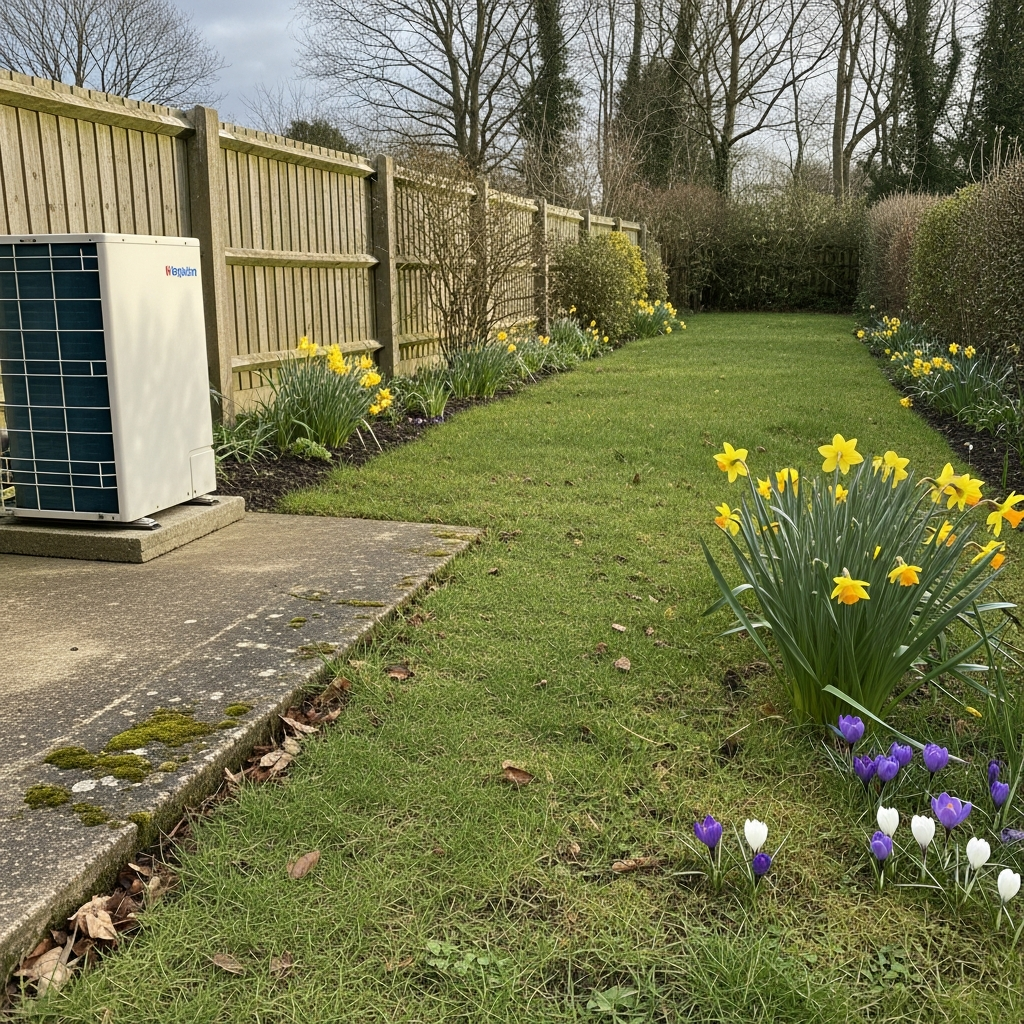
A poured concrete pad is the most widely used base for heat pumps in the UK. It is durable, affordable, and provides an excellent foundation.
Typical specifications:
- Size: At least 100-200mm larger than the heat pump footprint on all sides. For a typical domestic unit with a footprint of around 900mm x 350mm, a pad of approximately 1,200mm x 600mm is common.
- Depth: 100-150mm of concrete is standard for domestic installations. If the ground is soft or the unit is particularly heavy, 150mm is advisable.
- Concrete grade: Standard C25/30 mix — the same as used for garden slabs and shed bases
- Reinforcement: A layer of steel mesh (A142 or A193) is recommended but not always essential for smaller units
- Sub-base: 100-150mm of compacted hardcore or MOT Type 1 beneath the concrete, on firm ground
The total depth of excavation is typically 200-300mm (sub-base plus concrete). On a flat garden with firm ground, this is straightforward. On sloping ground or soft soil, additional preparation may be needed.
2. Pre-Cast Concrete Slabs
Heavy-duty pre-cast concrete paving slabs (600mm x 600mm, 50mm thick) laid on a compacted hardcore base can work well for smaller heat pumps. Two or three slabs side by side create an adequate base.
Advantages:
- Quick and easy to lay
- No waiting for concrete to cure
- Can be repositioned if needed
Limitations:
- May not be suitable for larger, heavier units
- Joints between slabs can settle unevenly over time
- Less robust than a poured concrete pad
3. Purpose-Built Heat Pump Stands
Several manufacturers produce purpose-built mounting frames or stands for heat pumps. These are typically made from galvanised steel or recycled plastic and sit on the ground or on a smaller concrete base.
- Ground-mounted frames: Steel or plastic frames with adjustable legs that sit directly on the ground or on paving slabs. Quick to install, often with built-in anti-vibration mounts.
- Raised stands: Elevate the heat pump 300-500mm off the ground, which improves airflow and drainage. Useful in areas prone to flooding or heavy snow.
- Wall brackets: Mount the heat pump on the external wall rather than the ground. Used where ground space is very limited. Requires a strong masonry wall and careful vibration isolation.
Purpose-built stands cost £100-£300 and can reduce installation time, though many installers still prefer a concrete pad for its long-term stability.
4. Existing Hard Standing
If you already have a concrete patio, driveway, or path where the heat pump will go, this may serve as the base — provided it is:
- Level (within a few millimetres)
- In good condition (no cracks, crumbling, or settlement)
- Thick enough (at least 75-100mm of concrete)
- On firm ground
Your installer will assess whether existing hard standing is suitable during the site survey.
Anti-Vibration Mounts
Anti-vibration mounts (also called anti-vibration feet or isolators) sit between the heat pump unit and the base. They are rubber or rubber-metal mounts that absorb the vibrations from the compressor, preventing them from transmitting into the base and the ground.
Why They Matter
Without anti-vibration mounts, the compressor's vibrations travel through the base into the ground, up the walls of the house, and into the living space. This can cause a low-frequency humming or buzzing noise inside the house — often more annoying than the direct airborne noise from the unit.
Good anti-vibration mounts reduce structure-borne vibration by 80-95%, making a significant difference to indoor noise levels. This is particularly important when the heat pump is installed close to the house or adjacent to living rooms and bedrooms.
Types of Anti-Vibration Mount
- Rubber pads: Simple rubber blocks placed under each foot. Basic but effective for most installations. Cost: £5-£15 per mount.
- Rubber-metal mounts: A rubber element bonded to metal plates, designed to absorb a specific frequency range. More effective than plain rubber. Cost: £10-£30 per mount.
- Spring isolators: Steel springs with rubber dampening, designed for heavy-duty vibration isolation. Used for larger units or where noise is a particular concern. Cost: £30-£80 per mount.
Most domestic heat pump installations use four mounts (one per foot). The total cost for anti-vibration mounts is typically £40-£200 and is included in the installation price.
Drainage Considerations
An air source heat pump produces water during defrost cycles — typically a few litres per cycle in cold weather. This water drains from the base of the outdoor unit and needs somewhere to go.
Drainage Options
- Gravel surround: The simplest approach — surround the concrete pad with a strip of gravel 200-300mm wide. Defrost water flows off the pad and soaks into the gravel. Works well in most situations.
- Slope the pad: The concrete pad should have a very slight fall (1-2%) away from the house, directing water away from the building.
- Drainage channel: In heavy-use areas or where the base is close to a doorway, a small drainage channel can direct water to a nearby drain.
- Soakaway: For larger installations or areas with poor drainage, a small soakaway below the gravel surround ensures water disperses safely.
Winter Ice
In cold weather, defrost water can freeze on the ground around the heat pump, creating a slip hazard. Good drainage reduces this risk. Some installers run a trace heating cable along the drain path to prevent ice formation, though this is not usually necessary unless the base is in a high-traffic area.
Can You DIY the Heat Pump Base?
Yes — preparing the base yourself before the installer arrives is one of the easiest ways to save money on a heat pump installation. Many installers are happy for the homeowner to provide a suitable base, and some actively encourage it.
What You Need
- Confirmed dimensions from your installer (size and position of the pad)
- Hardcore or MOT Type 1 aggregate for the sub-base
- Ready-mix or hand-mixed concrete (C25/30)
- Timber formwork (temporary boards to contain the wet concrete)
- A spirit level
- Optional: steel reinforcing mesh
Step-by-Step
- Confirm position and size with your installer — they need to approve the location considering distance from boundaries, airflow clearances, and pipe run lengths
- Excavate to a depth of 200-300mm (sub-base + concrete thickness)
- Compact the ground using a hand tamper or plate compactor
- Add and compact the sub-base — 100-150mm of hardcore, well compacted
- Set up formwork — timber boards secured around the perimeter at the correct height
- Lay reinforcing mesh if using, raised on spacers 30-40mm from the bottom
- Pour and level the concrete — use a straight edge to screed the surface flat, with a very slight fall away from the house
- Allow to cure — at least 3-5 days before the heat pump is placed on it, ideally 7 days
The materials for a typical 1200mm x 600mm pad cost around £50-£100. A professional would charge £200-£400 for the same job. So DIY can save £150-£300.
Important: Get Your Installer to Confirm the Position First
Do not pour the base before your installer has confirmed the exact position. The location needs to account for refrigerant pipe routes, electrical cable routes, distance from boundaries and windows, airflow clearances, and visual impact. If you pour the base in the wrong place, you may need to do it again.
Wall-Mounted Installations
When ground space is limited, some heat pumps can be wall-mounted using heavy-duty brackets. This is less common but can be the best solution for terraced houses or properties with very small gardens.
Requirements for Wall Mounting
- Strong masonry wall: The wall must be solid brick or block, able to support the weight of the unit (60-120kg) plus dynamic loads from vibration
- Heavy-duty brackets: Purpose-built heat pump wall brackets rated for the unit's weight. Cost: £100-£250
- Anti-vibration isolators: Even more important on a wall mount to prevent vibration transmitting directly into the building structure
- Adequate height: The unit should be mounted high enough to avoid snow accumulation and allow drainage, but accessible for maintenance
- Noise considerations: Mounting on a wall can increase noise transmission into the house. Discuss this with your installer.
Planning and Regulations
The base itself does not normally require planning permission — it is too small and low to qualify as a structure requiring consent. However, the heat pump installation as a whole must comply with permitted development rules, which include requirements about distance from boundaries and noise levels.
If you live in a conservation area, listed building, or flat, additional planning rules may apply. Check with your installer and local planning authority before starting any work.
Frequently Asked Questions
How big does a heat pump base need to be?
At least 100-200mm larger than the heat pump footprint on all sides. For a typical domestic unit, a base of approximately 1,200mm x 600mm is common. Your installer will specify the exact size based on your chosen heat pump model.
How deep should the concrete be?
100-150mm of concrete on top of 100-150mm of compacted hardcore sub-base. Total excavation depth of 200-300mm. This is sufficient for all standard domestic heat pumps.
Can I use paving slabs instead of a concrete pad?
Yes, for smaller heat pumps. Use heavy-duty slabs (at least 50mm thick) laid on compacted hardcore. Ensure they are perfectly level and stable. For larger or heavier units, a poured concrete pad is more reliable.
Do I need anti-vibration mounts?
Yes, always. Anti-vibration mounts are essential for reducing structure-borne noise. They are inexpensive and make a significant difference to indoor noise levels. Your installer will supply and fit them as standard.
Can I prepare the base myself to save money?
Yes — this is a common way to reduce installation costs. Materials cost around £50-£100. Confirm the exact position, size, and height with your installer before pouring. Allow at least 5-7 days for the concrete to cure before installation day.
What about drainage around the base?
The pad should slope very slightly (1-2%) away from the house. Surround the pad with gravel to absorb defrost water. In winter, defrost water can freeze — good drainage minimises ice formation near pathways.
Ready to prepare for your heat pump installation? Get free quotes from MCS-certified installers who will specify exactly what base you need. Read our full installation guide for the complete process, or check the suitability checker to see if a heat pump is right for your home.