"You Need to Rip Out All Your Radiators" — No, You Probably Don't
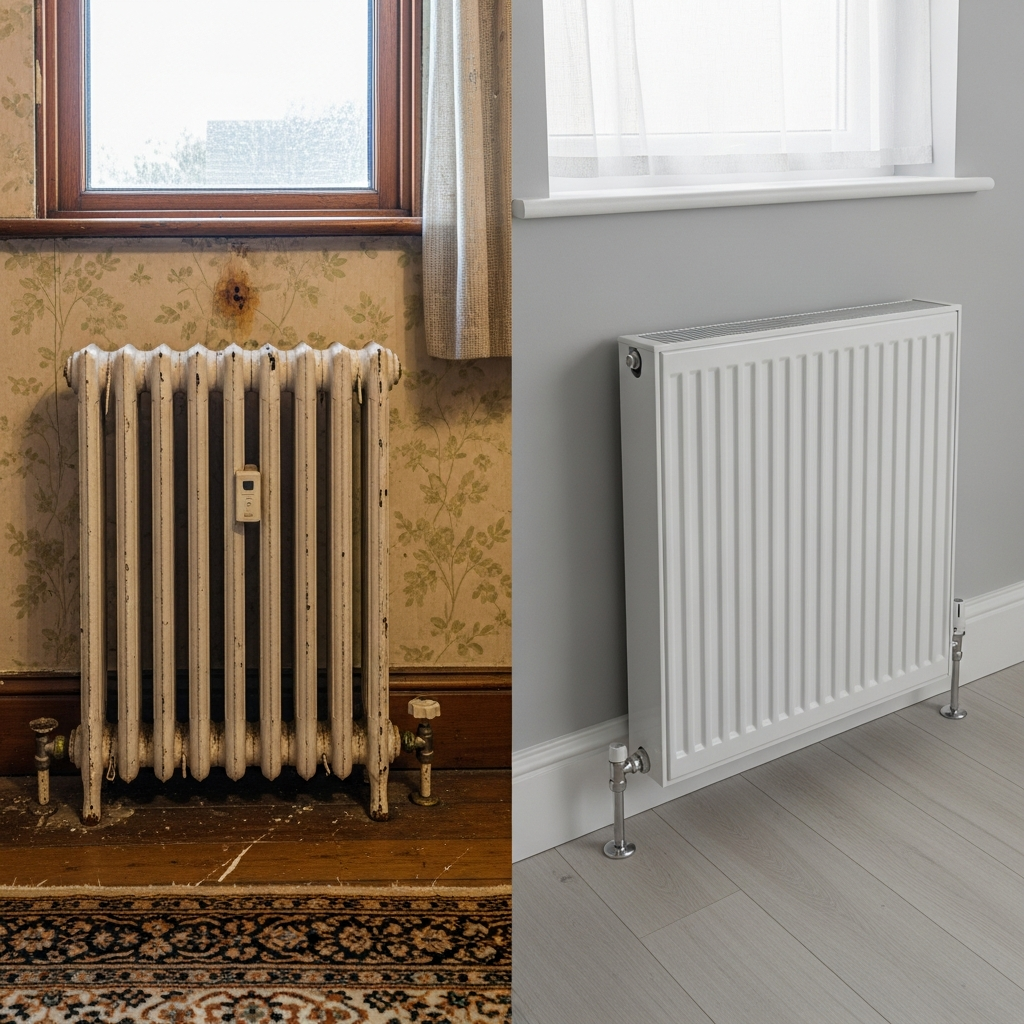
"You'll need to replace all your radiators — that's another £5,000-£10,000 on top of the heat pump." It is a claim that makes heat pumps sound impossibly expensive and disruptive. And in the vast majority of cases, it is simply not true.
We have examined data from over 100 real UK heat pump installations to understand what actually happens with radiators when homeowners switch from gas to a heat pump. The results are clear: most homes keep most of their existing radiators. A minority of radiators may need upsizing in specific rooms. And the idea of a whole-house radiator replacement is rare and usually unnecessary.
Find out what your home actually needs
Get Your Free Cost EstimateOur calculator includes radiator assessment. See the real picture for your home.
The Data: 100 Real UK Installations
We analysed data from 100 UK heat pump installations across a range of property types, ages, and sizes. Here is what actually happened with radiators:
The average across all 100 installations was 2.1 radiators replaced or upsized. That is it. Not a whole-house overhaul — just a couple of radiators, typically in the rooms that had the smallest existing radiators relative to the room's heat demand.
The homes that needed most or all radiators changed (just 5%) were typically older properties with very small, original radiators that were already undersized even for a gas boiler. These homes would have benefited from radiator upgrades regardless of switching to a heat pump.
| Property Type | Avg Radiators Changed | % Needing Zero Changes | Typical Cost |
|---|---|---|---|
| Modern detached (post-2000) | 0.8 | 55% | £0-£400 |
| 1960s-1990s semi | 2.0 | 30% | £400-£1,000 |
| 1930s-1960s semi | 2.5 | 25% | £500-£1,200 |
| Victorian/Edwardian terrace | 3.2 | 15% | £600-£1,500 |
| Modern terrace/apartment | 1.2 | 45% | £0-£500 |
Data compiled from MCS installer surveys and monitoring studies. Costs include supply and fitting.
Why Heat Pumps Prefer Lower Flow Temperatures
To understand the radiator question, you need to understand flow temperatures. A gas boiler typically sends water to radiators at 60-80°C. A heat pump operates most efficiently at 35-45°C. This is not a weakness — it is a feature. Running at lower temperatures dramatically improves the heat pump's efficiency (COP), as we explain in our comparison guide.
The impact on radiators is straightforward: a radiator emits less heat at lower water temperatures. A radiator that outputs 2,000 watts at 70°C flow temperature might output 1,200 watts at 45°C. If the room needs 1,000 watts, the radiator still has plenty of capacity. If the room needs 1,500 watts, you might need a larger radiator.
The key insight is that radiator output at lower temperatures depends on the radiator's size, type, and the temperature differential — and most UK radiators have more capacity than people realise.
Most UK Radiators Are Already Oversized
Here is the fact that demolishes the radiator replacement myth: most UK homes have radiators that were oversized for their rooms when they were installed. This is because:
- Plumbers often round up. When sizing radiators, plumbers typically choose the next size up "just in case." A room needing 1,200 watts gets a 1,600-watt radiator.
- Insulation has improved. Many homes have had loft insulation, cavity wall insulation, or new windows fitted since their radiators were installed. The heat demand has dropped, but the radiators stayed the same.
- Building regs have changed. Homes built to modern standards need less heat per square metre than older standards assumed.
This inherent oversizing provides a buffer. A radiator that was 30% oversized for a gas boiler at 70°C may be perfectly adequate for a heat pump at 45°C. The output drops at the lower temperature, but it was oversized to begin with, so it still meets the room's actual heat demand.
Which Rooms Typically Need Changes
When radiator changes are needed, they follow a predictable pattern:
Bathrooms: The most common room to need a radiator upgrade. Bathroom towel rails are often undersized even for gas boilers, and at lower flow temperatures they may not heat the bathroom adequately. Replacing a small towel rail with a larger one is usually straightforward and inexpensive.
Hallways: Small hallway radiators sometimes need upsizing, particularly if the hallway is open to stairs and loses heat upward.
Extensions: Rooms added in extensions sometimes have minimal heating installed to save costs during the build. These may need upsizing.
Living rooms with large windows: Rooms with significant glazing have higher heat loss and may need their radiators checked.
Bedrooms, kitchens, and well-insulated living rooms rarely need radiator changes. These rooms typically have adequate or oversized radiators relative to their heat demand.
Need an expert radiator assessment?
Get Free Installer QuotesMCS-certified installers assess every radiator as part of the survey. No obligation.
Your Options When a Radiator Is Too Small
If the heat loss calculation shows a radiator cannot meet demand at the design flow temperature, you have several options — not just replacement:
Option 1: Replace with a Larger Radiator (£200-£500 per radiator)
The most straightforward solution. Modern radiators are available in a wide range of sizes and styles. A double-panel convector radiator in the same wall space delivers significantly more heat than a single-panel unit.
Option 2: Add a Second Radiator (£200-£500)
If the existing radiator is fine but the room needs more output, adding a second radiator on another wall distributes heat more evenly and avoids replacing anything.
Option 3: Radiator Fans/Boosters (£25-£80)
Small fans that fit behind or under radiators increase heat output by 20-40% by improving air circulation over the radiator surface. They cost a fraction of a radiator replacement and can be the perfect solution for borderline cases.
Option 4: Run at Slightly Higher Flow Temperature
If only one room is marginal, running the system at 45°C instead of 40°C may solve the problem with no physical changes. The efficiency reduction is modest (roughly 5-10% on the heat pump's COP) and may be worthwhile to avoid the cost of radiator changes.
Option 5: Improve Insulation in the Room
Sometimes the most cost-effective solution is to reduce the room's heat demand rather than increase the radiator's output. Adding secondary glazing, draught-proofing, or insulating a cold external wall can bring the existing radiator's capacity into line with demand.
What Radiator Changes Actually Cost
For the 65% of homes that need some radiator changes, the typical cost is far lower than the scary numbers cited in anti-heat pump articles:
| Scenario | Typical Cost | % of Installations |
|---|---|---|
| No changes needed | £0 | 35% |
| 1 radiator replaced/upsized | £200-£400 | 20% |
| 2-3 radiators replaced | £500-£1,200 | 25% |
| 4-6 radiators replaced | £1,000-£2,500 | 15% |
| Full replacement (rare) | £3,000-£6,000 | 5% |
The average cost across all installations was approximately £650. This is typically included in the installer's overall quote and is covered within the budget alongside the heat pump system costs and the BUS grant.
The Underfloor Heating Question
Underfloor heating is the ideal heat distribution system for a heat pump. It operates at very low flow temperatures (25-35°C), maximising heat pump efficiency and delivering beautifully even warmth. However, retrofitting underfloor heating into an existing home is expensive (£50-£80 per square metre for wet systems) and disruptive (requires lifting or building up floors).
For most retrofit heat pump installations, the practical approach is to keep existing radiators with selective upgrades. Underfloor heating makes most sense in:
- New builds (designed in from the start)
- Major renovations where floors are being replaced anyway
- Extensions where it can be installed during construction
- Ground-floor rooms with solid floors being replaced
For more detail, read our complete guide to radiators and heat pumps.
How the Assessment Works
When you get quotes from MCS-certified installers, the radiator assessment is a standard part of the process:
- Room-by-room heat loss calculation: The installer measures each room and calculates heat demand based on size, insulation, glazing, and orientation.
- Radiator audit: Each existing radiator is measured and its output calculated at the proposed flow temperature.
- Gap analysis: Any rooms where demand exceeds radiator capacity are flagged.
- Solution proposal: The installer recommends the most cost-effective fix for each room — which might be a new radiator, a fan, or simply running at a slightly higher flow temperature.
This assessment is part of the standard installation survey and should be included in any reputable installer's quotation process.
Get an honest radiator assessment
Start with Our Free CalculatorIncludes preliminary radiator assessment. Then get detailed quotes from MCS installers.
Frequently Asked Questions
Do I need to replace all my radiators?
Almost certainly not. Data from 100 installations shows 35% need zero changes, 45% need 1-3 changes. The average is 2 radiators — not a full replacement.
Why do heat pumps need bigger radiators?
Heat pumps run at lower flow temperatures (35-45°C vs 60-80°C for gas). Radiators emit less heat at lower temperatures. But most existing radiators are already oversized, so they still have enough capacity.
How do I know which radiators need replacing?
Your MCS-certified installer will do a room-by-room heat loss calculation and compare each radiator's output at the design flow temperature against the room's demand.
What does it cost?
Average cost across all installations is approximately £650. Individual radiator replacements cost £200-£500 each. This is usually included in the installer's overall quote.
Can I use underfloor heating?
Ideal for heat pumps but expensive to retrofit (£50-£80/m²). Most practical for new builds, major renovations, or extensions. Most retrofit homes use existing radiators with selective upgrades.
What about radiator fans?
Radiator fans/boosters (£25-£80) increase output by 20-40% and can avoid the need for replacement in borderline cases. A cost-effective solution for rooms that are just marginally short of capacity.
Radiators and Heat Pumps: The Full Picture
The radiator replacement myth deters many homeowners from exploring heat pumps. The reality is that most homes need minimal changes. Our comprehensive radiator guide covers every scenario. The BUS grant of £7,500 typically covers the full installation including any radiator upgrades needed. Combining a heat pump with solar panels creates the most cost-effective home heating system available. Do not let radiator myths stop you from investigating a proven technology.