Radiator Sizing for Heat Pumps: The Visual Calculator
One of the biggest concerns about switching to a heat pump is radiators. As we debunked in our radiator replacement myth article, most homes keep most or all of their existing radiators. But how do you know which ones might need attention? This visual calculator walks you through the assessment process step by step, so you can estimate your situation before getting professional quotes.
Important: this guide provides estimates for planning purposes. Your MCS-certified installer will conduct precise room-by-room heat loss calculations as part of the installation survey. This is not a substitute for professional assessment — it is a way to understand the process and set realistic expectations.
Get a professional radiator assessment
Get Free Installer QuotesMCS installers assess every radiator as standard. No obligation.
Why Radiator Size Matters for Heat Pumps
Heat pumps run most efficiently at lower flow temperatures (35-45°C) compared to gas boilers (60-80°C). At lower flow temperatures, each radiator produces less heat. If a radiator cannot produce enough heat to warm its room at the lower temperature, either the radiator needs upgrading or the flow temperature must be increased — which reduces the heat pump's efficiency and increases running costs.
The good news: most UK radiators are oversized for their rooms, providing a buffer that accommodates the lower flow temperature. Only rooms with unusually small radiators relative to their heat demand typically need changes.
Understanding Delta T: The Key Concept
Radiator output depends on the temperature difference between the radiator and the room — called Delta T (ΔT). Manufacturer catalogues typically quote output at ΔT50, which assumes:
- Flow temperature: 75°C
- Return temperature: 65°C
- Average water temperature: 70°C
- Room temperature: 20°C
- Delta T: 70 - 20 = 50°C
With a heat pump at 45°C flow:
- Flow temperature: 45°C
- Return temperature: 40°C
- Average water temperature: 42.5°C
- Room temperature: 20°C
- Delta T: 42.5 - 20 = 22.5°C
At ΔT22.5, the radiator produces approximately 35-40% of its catalogue output. This conversion is the core of radiator sizing for heat pumps.
Radiator Output at Different Flow Temperatures
| Flow Temp | Delta T | % of Catalogue Output | Example: 2000W Radiator |
|---|---|---|---|
| 75°C (gas boiler) | ΔT50 | 100% | 2,000W |
| 55°C | ΔT35 | 62% | 1,240W |
| 50°C | ΔT30 | 51% | 1,020W |
| 45°C (typical HP) | ΔT25 | 40% | 800W |
| 40°C | ΔT20 | 31% | 620W |
| 35°C | ΔT15 | 21% | 420W |
Conversion factors based on EN 442 radiator standard. Actual output varies by radiator type (single/double panel, convector fins).
Estimating Room Heat Demand
To check whether a radiator is adequate, you need to compare its output (at heat pump temperatures) against the room's heat demand. A simplified estimate:
| Room Type | Approx Heat Demand (W/m²) | Example: 15m² Room |
|---|---|---|
| Well-insulated (modern build) | 40-50 W/m² | 600-750W |
| Average insulation (cavity walls, double glazing) | 60-70 W/m² | 900-1,050W |
| Poor insulation (solid walls, single glazing) | 80-100 W/m² | 1,200-1,500W |
| Very exposed (corner room, lots of glazing) | 90-120 W/m² | 1,350-1,800W |
The Quick Check Method
Here is a practical test you can do today with your existing gas boiler:
- Turn your boiler's flow temperature down to 50°C (check your boiler manual for how)
- Set your thermostat to 21°C
- Wait 2-3 hours for the system to stabilise
- Check each room: does it reach 21°C?
If all rooms reach temperature at 50°C flow, your radiators are very likely adequate for a heat pump at 45°C. If some rooms struggle, those specific rooms may need radiator upgrades. This is not a definitive test (heat pump systems operate differently), but it gives a useful indication.
Get a definitive assessment from a professional
Start with Our Free CalculatorThen get detailed quotes with room-by-room radiator analysis from MCS installers.
Room-by-Room Assessment Guide
Based on data from over 100 UK installations, here is how each room type typically performs:
| Room | Usually Fine | Sometimes Needs Upgrade | Common Solution |
|---|---|---|---|
| Living room | 70% | 30% | Larger double-panel convector |
| Kitchen | 85% | 15% | Rarely needed (cooking adds heat) |
| Bedrooms | 80% | 20% | Radiator fan or slight size increase |
| Bathroom | 40% | 60% | Larger heated towel rail |
| Hallway | 55% | 45% | Larger radiator or second unit |
| Dining room | 75% | 25% | Larger double-panel convector |
Bathrooms and hallways are the most common rooms to need attention. Bathrooms often have small towel rails that were marginal even with a gas boiler. Hallways lose heat through the front door and up the stairwell.
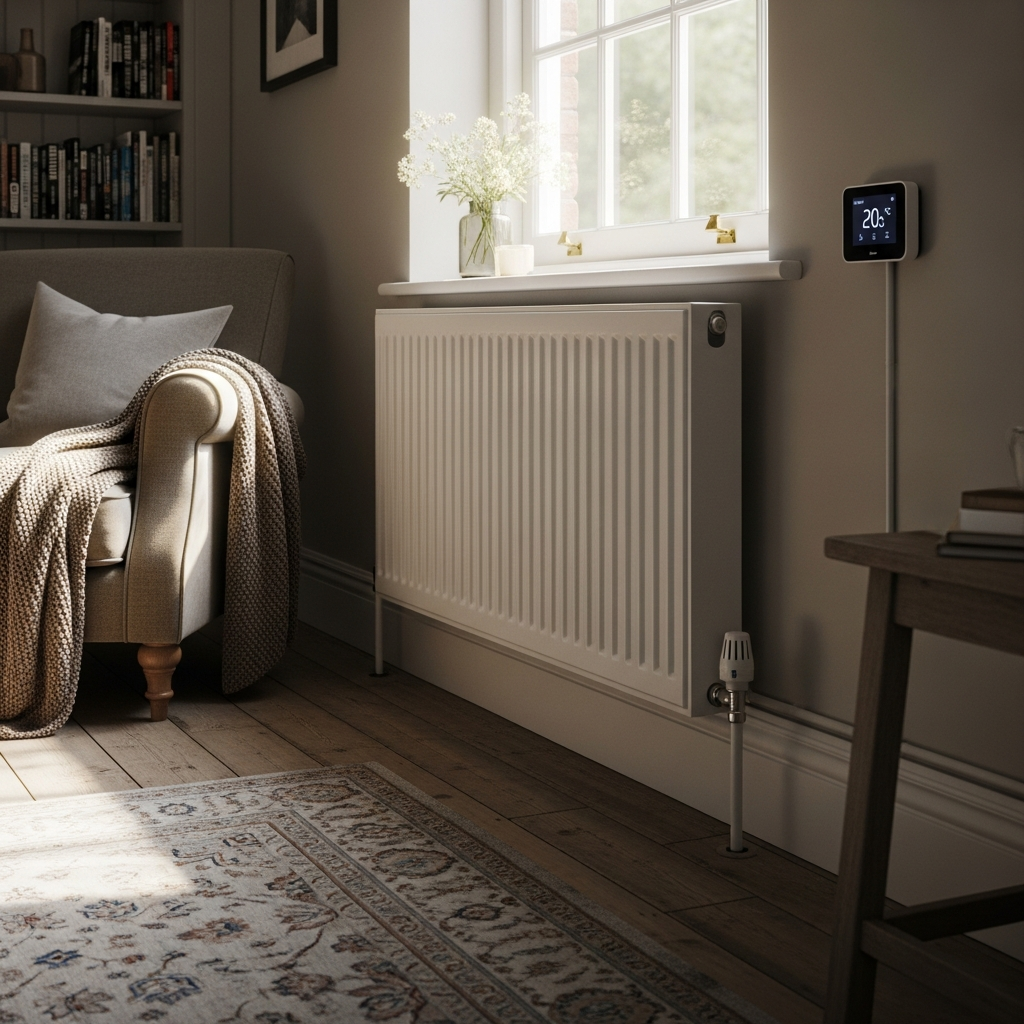
Solutions for Undersized Radiators
| Solution | Cost | Output Increase | Disruption |
|---|---|---|---|
| Radiator fan/booster | £25-£80 | 20-40% | None (clip-on) |
| Replace with larger radiator | £200-£500 | 50-100% | Half day per radiator |
| Add second radiator | £200-£500 | Up to 100% | Half day + pipework |
| Increase flow temperature | Free | 10-30% | None (settings change) |
| Improve room insulation | £100-£1,000 | Reduces demand 10-30% | Varies |
Get expert radiator assessment included in your quote
Get Free Installer QuotesRoom-by-room assessment included as standard in every MCS installer survey.
Frequently Asked Questions
How do I know if my radiators are big enough?
Quick test: turn your gas boiler flow to 50°C and check if rooms reach 21°C. If yes, they are likely fine. Your MCS installer will do precise calculations.
How much less output at lower temperatures?
At 45°C flow (typical heat pump), radiators produce approximately 40% of catalogue output (quoted at 75°C). But most are oversized to begin with.
What is Delta T?
The temperature difference between average radiator temperature and room temperature. Lower Delta T means lower output. It is the key to understanding radiator sizing for heat pumps.
Do I need to replace all radiators?
Almost certainly not. Average is 2 radiators replaced. 35% of homes need zero changes. See our full analysis.
What are the alternatives to replacement?
Radiator fans (£25-£80, +20-40% output), adding a second radiator, slightly higher flow temperature, or improving room insulation.
How do I calculate room heat demand?
Room area × 40-100 W/m² depending on insulation level. Your MCS installer uses professional software for precise results.
Getting Radiators Right
Radiator sizing is an important part of heat pump design — but as our comprehensive guide shows, most homes need minimal changes. The BUS grant typically covers the full installation including any radiator work. Running costs improve with proper radiator sizing, and combining with solar panels maximises your overall savings. Do not let radiator concerns prevent you from exploring a proven technology.