Heat Pump Installation: A Visual Step-by-Step Guide
One of the biggest barriers to getting a heat pump is not knowing what the installation process actually involves. Will it take weeks? Will the house be torn apart? Will you be without heating for days? The reality is far less dramatic than most people imagine. A typical air source heat pump installation takes 2-3 days, involves minimal disruption, and transforms your home's heating system from fossil fuel to renewable energy in less time than most kitchen renovations.
This guide walks you through every stage of the process — from the initial survey to the final handover — so you know exactly what to expect. We have documented real UK installations to show what actually happens, not what you might fear.
Ready to start the process?
Get Free Installer QuotesThe first step is a survey. Get quotes from MCS-certified installers. No obligation.
Stage 1: The Survey (2-3 Hours)
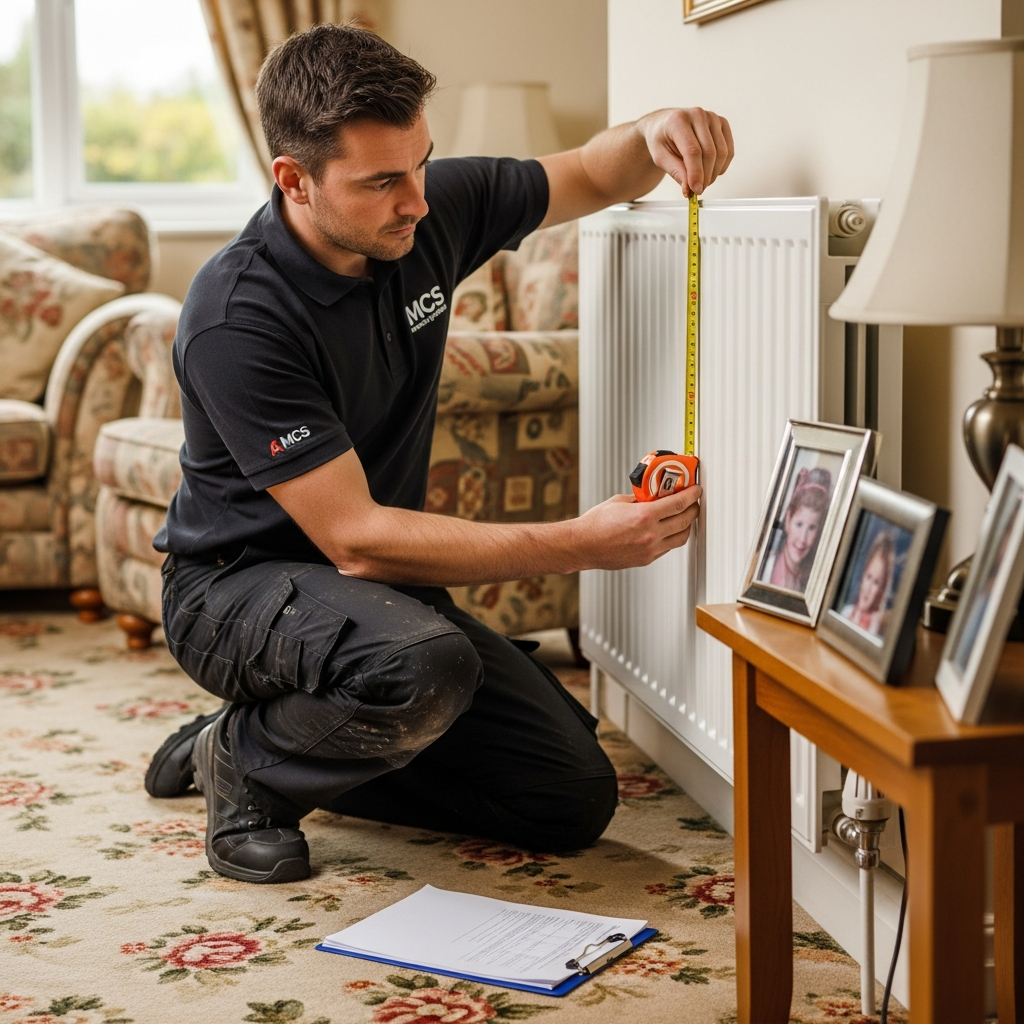
Everything starts with a thorough home survey by an MCS-certified installer. This is the most important stage — a good survey prevents problems later. Here is what the surveyor does:
- Room-by-room measurements: Every room is measured for area, ceiling height, window sizes, wall construction, and insulation levels.
- Heat loss calculation: Using the room measurements, the surveyor calculates how much heat each room needs on the coldest design day. This determines the heat pump size.
- Radiator audit: Every radiator is measured and its output calculated at the proposed flow temperature. Rooms where the radiator is insufficient are flagged for upgrade. As our radiator myth article shows, most homes need only 0-3 radiator changes.
- Outdoor unit placement: The surveyor identifies the best position for the outdoor unit, considering airflow, noise impact, pipework routes, and aesthetics.
- Indoor cylinder location: The location for the hot water cylinder is confirmed — typically an existing airing cupboard, utility room, or garage.
- Electrical assessment: The existing electrical supply is checked to ensure it can accommodate the heat pump's requirements.
- EPC check: Your EPC is reviewed to confirm eligibility for the BUS grant.
A thorough survey should take 2-3 hours. If an installer spends less than an hour, or quotes without visiting, that is a red flag.
Stage 2: Design and Quote
After the survey, the installer prepares a detailed design and quote. This document should include:
- Heat pump make, model, and output capacity
- Hot water cylinder specification
- Design flow temperature
- Any radiator changes needed (with room-by-room detail)
- Pipework route and insulation specification
- Electrical work required
- Controls and smart functionality
- Total cost, BUS grant deduction, and your net payment
- Payment schedule and warranty terms
Get at least 3 quotes to compare. The costs should be transparent — if a quote is vague or does not break down components, ask for clarification.
Stage 3: BUS Grant Application
Once you accept a quote, the installer applies for the BUS grant on your behalf through the Ofgem portal. This requires your EPC reference, property details, and the proposed system specification. Approval is typically received within 1-3 weeks. The grant is confirmed before installation begins, so you know the exact amount you will pay.
Stage 4: Installation Day 1 — The Outdoor Unit
This is the most visible day of work. Here is what typically happens:
- Morning: The installation team arrives (usually 2-3 engineers) with the heat pump unit, cylinder, and materials. They lay protective sheeting and set up work areas.
- Base preparation: A concrete pad or anti-vibration mounting frame is prepared for the outdoor unit. Some installers pour a concrete base a few days earlier; others use pre-formed pads.
- Outdoor unit placement: The heat pump unit is positioned on the base, levelled, and secured. This takes 30-60 minutes.
- Pipework routing: Insulated refrigerant or heating pipes are routed from the outdoor unit through the wall to the indoor components. Holes are drilled neatly and sealed.
- Old boiler removal: If the old boiler is being removed on day 1, it is disconnected and taken out. The gas supply is capped.
Stage 5: Installation Day 2 — Indoor Work
Day 2 focuses on the indoor components:
- Cylinder installation: The hot water cylinder is positioned and connected to the heating circuit, hot water distribution, and cold water supply.
- Pipework connections: All heating pipework is connected, including any radiator modifications or additions.
- Electrical work: A dedicated electrical circuit is installed for the heat pump, including an isolator switch and any metering requirements.
- Controls installation: The weather compensation sensor is fitted outside, and the control panel/thermostat is installed inside.
- System filling and pressure testing: The heating circuit is filled, pressurised, and checked for leaks.
See what an installation would look like at your home
Get Your Free AssessmentIncludes system design overview based on your home details.
Stage 6: Commissioning and Handover
Commissioning is the process of setting up and optimising the system — arguably the most important stage for long-term performance. As our bill troubleshooting guide shows, poor commissioning is the most common cause of high running costs.
- System startup: The heat pump is powered on and run through its startup sequence.
- Weather compensation setup: The heating curve is programmed based on your home's heat loss characteristics.
- Flow temperature optimisation: The initial flow temperature is set based on the design calculation.
- Hot water programming: The hot water schedule is configured to use the heat pump efficiently.
- Radiator balancing: Flow rates to each radiator are balanced for even heat distribution.
- Homeowner handover: The installer explains how to operate the system, adjust settings, and what to expect in the first few weeks.
Stage 7: Post-Installation Check
Good installers follow up within 2-4 weeks to check the system is performing correctly. This may include reviewing performance data, fine-tuning settings, and answering any questions. The MCS certification process also generates documentation — including the MCS certificate, commissioning report, and warranty details — which you should receive and keep safely.
The Full Timeline: Survey to Warm Home
| Stage | Duration | Timeline |
|---|---|---|
| Get quotes (3+ installers) | 1-3 weeks | Weeks 1-3 |
| Choose installer, sign contract | 1 week | Week 4 |
| BUS grant application and approval | 1-3 weeks | Weeks 5-7 |
| Waiting for installation slot | 2-8 weeks | Weeks 8-15 |
| Installation | 2-3 days | Week 15-16 |
| Post-installation check | 1 visit | Week 18-20 |
| Total: enquiry to warm home | Approximately 3-5 months | |
The longest wait is typically for the installation slot, as good installers are in high demand. Booking well in advance — especially if you want a spring or autumn installation — is advisable.
Start your installation journey
Get Free Installer QuotesThe sooner you start, the sooner you save. MCS-certified installers, no obligation.
Frequently Asked Questions
How long does installation take?
2-3 days from start to finish. Day 1: outdoor unit and pipework. Day 2: indoor components and connections. Day 3 (if needed): commissioning and handover.
What preparation do I need?
Clear the outdoor unit area and indoor cylinder location. Remove items from the airing cupboard if needed. The installer handles everything else.
Will I be without heating?
Briefly — typically 12-24 hours while the old system is removed and the new one connected. Experienced installers minimise this gap. Temporary electric heaters can bridge the period.
Do I need to be home?
Yes, for access and for the commissioning handover. You do not need to supervise every moment but should be available.
What happens to my old boiler?
The installer disconnects, removes, and disposes of it. The gas supply is capped. You can then arrange gas meter removal to save on standing charges.
When is the best time to install?
Spring and early autumn are ideal. Summer works well too. Winter installations are possible but require planning around the brief heating gap.
Your Installation Journey
Heat pump installation is straightforward, takes 2-3 days, and transforms your home's heating. The BUS grant of £7,500 makes it affordable. Proper installation by MCS-certified professionals ensures reliability and performance. Combining with solar panels — which can often be installed alongside — maximises your savings from day one.